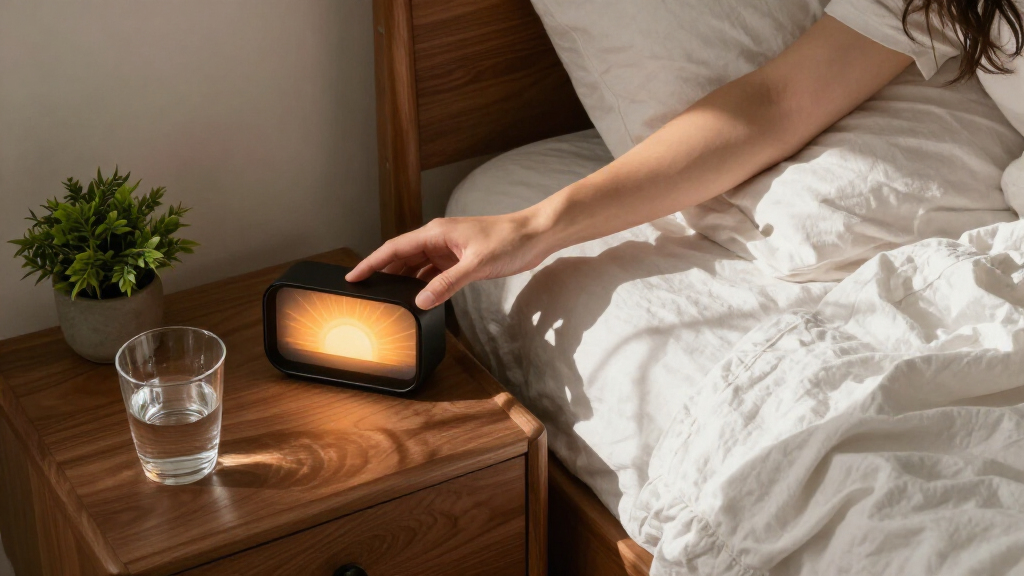
Smart sunrise alarm clocks combine a gradually brightening wake-up light with features such as alarms, sleep sounds, radios, or app controls. My best overall pick is the ecozy 3-in-1 Sunrise Alarm Clock, which pairs app control with a wake-up light and white noise in one device. The Philips SmartSleep Wake-Up Light stands out for focused sunrise and sunset simulation, while the Hatch Sleep Clock suits buyers who want sleep tracking and personalized features. The main tradeoff is between a simple, dedicated light and a more connected bedside hub, with added features often bringing more setup and reliance on apps. Read on for the full comparison, buying advice, and picks for different needs.

Get wellness gear delivered free with Prime
- Fast, free delivery on millions of items
- Prime Video, Amazon Music and more included
- Member-only deals all year
Key Takeaways
- ecozy is my best overall pick because its app control, sunrise alarm, and white-noise functions combine the core smart-clock benefits without making one feature the whole point.
- Philips SmartSleep is the focused wake-up-light choice: sunrise and sunset simulation take priority over the multi-function speaker and radio combinations found in many alternatives.
- Hatch is the most feature-led option in this group, adding contactless sleep tracking and personalized insights; those extras make most sense if you will use its connected sleep tools.
- App control is not universal. Several clocks emphasize physical controls, radios, sounds, or Bluetooth instead, so buyers should distinguish remote scheduling from simply streaming audio.
- Sound and lighting flexibility shape the shortlist. Models such as Vangoa offer a wide range of night-light colors and Bluetooth, while linen and wood-grain designs prioritize a more discreet bedside look.
| Smart Sunrise Alarm Clock with App Control, Sound Machine, FM Radio, and Night Light |  | Best for App-Based Scheduling | Brand and model: BIB_WJ JN01-Wood Grain | Connectivity: Bluetooth; no Wi-Fi | App and alarms: Halo Light app; up to 4 app alarms and 2 device-button alarms | VIEW LATEST PRICE | See Our Full Breakdown |
| Vangoa Sunrise Alarm Clock with Sleep Sound Machine, Bluetooth 5.3 Speaker, FM Radio, Dual Alarm, and 18-Color Night Light |  | Best for Sound Variety | Sound options: 25 natural sounds | Connectivity: Bluetooth 5.3 and FM radio | Alarms: 2 independent alarms with memory | VIEW LATEST PRICE | See Our Full Breakdown |
| Smart Sunrise Alarm Clock with App Control, Wake-Up Light, Sound Machine, FM Radio, and Wireless Speaker |  | Best for a Narrow Nightstand | Display and shape: Digital; 2.5 in W × 6.5 in H | Power: Corded electric; adapter and power cable included | Control and alarms: App control without signup; up to 4 app alarms and 2 on-device alarms | VIEW LATEST PRICE | See Our Full Breakdown |
| Odokee Sunrise Alarm Clock and White Noise Machine |  | Best for App-Free Controls | Sunrise simulation: Customizable 5–60 minutes | Sleep sounds: 25 calming sounds | Speaker: 5W stereo | VIEW LATEST PRICE | See Our Full Breakdown |
| Philips SmartSleep Wake-Up Light with Sunrise and Sunset Simulation |  | Best for a Focused Wake-Up Routine | Model: HF3520/60 | Shape and mounting: Round; tabletop | Wake-up sounds: 5 natural sounds | VIEW LATEST PRICE | See Our Full Breakdown |
| JALL K6 Sunrise Alarm Clock and White Noise Machine with Bluetooth, Beige Linen |  | Best for an All-in-One Bedside Setup | Dimensions: 7 × 4 × 7 inches | Power: Corded electric | Sunrise duration: 0–60 minutes | VIEW LATEST PRICE | See Our Full Breakdown |
| ANJANK Smart Sunrise Alarm Clock with Sound Machine and Multicolor Night Light |  | Best for Multiple Schedules | Connectivity: Wi-Fi with app control | Custom alarms: Up to 15 | Sunrise duration: 0–30 minutes | VIEW LATEST PRICE | See Our Full Breakdown |
| JALL Sunrise Alarm Clock and White Noise Machine with Bluetooth Speaker |  | Best for a Simple Sunrise-and-Sound Combo | Power source: Corded electric | Sunrise simulation: 10–60 minutes; gradually brightens from 10% to 100% | Sleep sounds: 25 | VIEW LATEST PRICE | See Our Full Breakdown |
| ecozy 3-in-1 Sunrise Alarm Clock and White Noise Machine with App Control |  | Best for Custom Ambient Lighting | Model: AC-SCE50S | Mounting type: Tabletop | Connectivity: 2.4GHz Wi-Fi | VIEW LATEST PRICE | See Our Full Breakdown |
| Hatch Sleep Clock with Contactless Sleep Tracking, Personalized Insights, and Sunrise Alarm, Greige |  | Best for Contactless Sleep Tracking | Mounting type: Tabletop | Connectivity: Wi-Fi and Bluetooth | Control method: App | VIEW LATEST PRICE | See Our Full Breakdown |
| Sunrise Alarm Clock with Natural Wake-Up Light and White Noise Machine (Khaki) |  | Best for App-Free Flexibility | Dimensions: 6.5 in W × 6.23 in H | Color and material: Khaki; ABS | Connectivity: Bluetooth 5.3; USB-C | VIEW LATEST PRICE | See Our Full Breakdown |
| JALL Sunrise Alarm Clock with White Noise, Nature Sounds, and FM Radio |  | Best for FM Radio Fans | Dimensions: 12.4 × 10.2 × 3.2 in | Weight and material: 1.2 lb; ABS | Power: USB, corded electric | VIEW LATEST PRICE | See Our Full Breakdown |
| NCVI Sunrise Alarm Clock with Wake Up Light and Sleep Sound Machine |  | Best for Family Sleep Routines | Alarm settings: 4 | Sunrise duration: 0–90 minutes | Wake-up sounds: 10 soundscapes | VIEW LATEST PRICE | See Our Full Breakdown |
| KACLUT Sunrise Alarm Clock with App Control & White Noise |  | Best for App-Controlled Scheduling | Dimensions and weight: 2.75 in W × 7 in H; 1.1 lb | Display and frame: Digital display; plastic frame | Power: Corded electric | VIEW LATEST PRICE | See Our Full Breakdown |
| REACHER Wood Grain Sunrise Alarm Clock with Sound Machine and Nightlight |  | Best Compact, App-Free Pick | Model: R7W | Dimensions and weight: 6.7 × 2.7 × 6 in; 11.2 oz | Color and material: Wood grain; wood | VIEW LATEST PRICE | See Our Full Breakdown |
| smart sunrise alarm clock | Connectivity | Power |
|---|---|---|
| Smart Sunrise Alarm Clock with | Bluetooth; no Wi-Fi | Corded electric, 5 V |
| Vangoa Sunrise Alarm Clock wit | Bluetooth 5.3 and FM radio | Plug-in operation; adapter included |
| Smart Sunrise Alarm Clock with | — | Corded electric; adapter and power cable included |
| Odokee Sunrise Alarm Clock and | — | — |
| Philips SmartSleep Wake-Up Lig | — | — |
| JALL K6 Sunrise Alarm Clock an | — | Corded electric |
| ANJANK Smart Sunrise Alarm Clo | Wi-Fi with app control | — |
| JALL Sunrise Alarm Clock and W | Bluetooth | — |
| ecozy 3-in-1 Sunrise Alarm Clo | 2.4GHz Wi-Fi | — |
| Hatch Sleep Clock with Contact | Wi-Fi and Bluetooth | — |
| Sunrise Alarm Clock with Natur | Bluetooth 5.3; USB-C | Corded electric; backup battery saves settings |
| JALL Sunrise Alarm Clock with | — | USB, corded electric |
| NCVI Sunrise Alarm Clock with | — | — |
| KACLUT Sunrise Alarm Clock wit | Bluetooth and app control | Corded electric |
| REACHER Wood Grain Sunrise Ala | — | Corded electric; built-in battery preserves settings |
More Details on Our Top Picks
Smart Sunrise Alarm Clock with App Control, Sound Machine, FM Radio, and Night Light
For households that want several wake schedules without navigating clock buttons, this BIB_WJ JN01-Wood Grain stands out for app control: the Halo Light app supports up to four alarms, while the device itself handles two. Its 10–60-minute sunrise and longer sunset setting give you room to shape both sides of a sleep routine, and Bluetooth playback plus FM radio add bedside audio options. Compared with the Odokee Sunrise Alarm Clock, it offers remote app adjustments, while Odokee keeps operation entirely on the clock with physical controls. The tradeoff is that this model needs a power adapter and does not connect to Wi-Fi; its sound selection also lacks pure white noise. I’d choose it for flexible scheduling, not for a dedicated white-noise setup.
Pros:- Halo Light app manages up to four alarms and remote light and sound settings
- Sunrise duration can be set from 10 to 60 minutes, with sunset settings up to 180 minutes
- Eleven light colors, seven nature sounds, FM radio, and Bluetooth playback provide varied bedside options
- App use does not require signup
Cons:- Requires corded power and does not support Wi-Fi
- Only two alarms can be set from the clock buttons
- Sleep-aid sound modes do not include pure white noise
Best for: Couples or households who want up to four app-managed alarms and adjustable sunrise and sunset routines.
Not ideal for: People who want Wi-Fi control, battery operation, or a pure white-noise option for sleep.
- Brand and model:BIB_WJ JN01-Wood Grain
- Connectivity:Bluetooth; no Wi-Fi
- App and alarms:Halo Light app; up to 4 app alarms and 2 device-button alarms
- Sunrise and sunset:10–60-minute sunrise; 5–180-minute sunset
- Sound:7 natural sounds; 20 volume levels
- Lighting:11 night-light colors
- Power:Corded electric, 5 V
- Dimensions and weight:6.5 × 6.5 in; 11.2 oz
- Warranty:1 year
Our verdict“Choose this if you want app-managed alarms and a customizable light routine; skip it if white noise or Wi-Fi control is a must.”
Vangoa Sunrise Alarm Clock with Sleep Sound Machine, Bluetooth 5.3 Speaker, FM Radio, Dual Alarm, and 18-Color Night Light
The Vangoa makes its case with 25 natural sounds, more variety than the seven built-in nature sounds on the BIB_WJ JN01-Wood Grain and the five wake-up sounds on the Philips SmartSleep HF3520/60. That range is useful if one sound does not suit both bedtime and waking, while Bluetooth 5.3 and FM radio add ways to play audio beyond the built-in library. Its dual alarms with memory suit two schedules, and the rear USB port can charge a phone at the bedside. There is no app control in the supplied details, though, and its 18 lighting modes and multiple sound features may take longer to learn than the straightforward physical controls on the Odokee. It also depends on plug-in power, so this is a feature-rich bedside station rather than a portable clock.
Pros:- Twenty-five natural sound options offer more variety than several alternatives in this group
- Two independent alarms include memory to retain settings through power outages
- Bluetooth 5.3 and FM radio support multiple audio sources
- Rear USB port adds a convenient phone-charging point
Cons:- Requires plug-in power and is not battery-operated
- Feature-rich controls may take time to learn
- No app control is listed for adjusting settings remotely
Best for: People who want a broad built-in sound library, two independent alarm schedules, and bedside USB charging.
Not ideal for: Buyers who prefer app-based settings, a simple interface, or a clock that works without an outlet.
- Sound options:25 natural sounds
- Connectivity:Bluetooth 5.3 and FM radio
- Alarms:2 independent alarms with memory
- Lighting:18 modes: 10 dynamic and 8 solid RGB
- Charging:Rear USB port
- Power:Plug-in operation; adapter included
Our verdict“Pick the Vangoa for sound variety and two remembered alarm schedules, but choose another model if you want app control or a simpler interface.”
Smart Sunrise Alarm Clock with App Control, Wake-Up Light, Sound Machine, FM Radio, and Wireless Speaker
With a listed footprint of 2.5 inches wide, this app-controlled clock is the clearest fit here for a crowded nightstand. It keeps the key routine features found in the similarly equipped BIB_WJ JN01-Wood Grain: sunrise and sunset simulation, 11 light colors, seven nature sounds, FM radio, and app management for up to four alarms. The app needs no signup, which makes remote setup simpler, while two alarms remain available on the clock itself. Compared with the broader BIB_WJ model, this one uses a tall, narrow shape rather than a 6.5-inch square footprint; that can free bedside space but may be less suited to someone who wants a wider light source. It still requires corded power, and its limited device-button alarm count makes app access central to using all four schedules.
Pros:- Listed 2.5-inch width suits narrow or crowded nightstands
- App supports up to four alarms without requiring signup
- Sunrise and sunset settings allow gradual light changes for waking and winding down
- Includes FM radio, Bluetooth music playback, 11 colors, and seven nature sounds
Cons:- Requires a power adapter and corded operation
- Only two alarms can be set directly on the clock
- Seven sound modes offer less choice than the Vangoa’s 25 natural sounds
Best for: People with narrow bedside tables who want app-managed alarms and sunrise lighting without a wide clock footprint.
Not ideal for: Buyers who want a battery-powered clock, more than two alarms accessible on the device, or a wider light panel.
- Display and shape:Digital; 2.5 in W × 6.5 in H
- Power:Corded electric; adapter and power cable included
- Control and alarms:App control without signup; up to 4 app alarms and 2 on-device alarms
- Sunrise and sunset:10–60-minute sunrise; 5–180-minute sunset countdown
- Light colors:11
- Sound and volume:7 natural sounds; 20 volume levels
- Radio:FM, 76–108 MHz
- Weight and material:12 oz; plastic
- Warranty:1 year
Our verdict“Choose this for a narrow nightstand and app-based scheduling; the Vangoa is a stronger match if built-in sound variety matters more.”
Odokee Sunrise Alarm Clock and White Noise Machine
The Odokee suits buyers who want sunrise lighting and sleep sounds without managing a phone app. Its physical buttons and dials handle the settings directly, unlike the BIB_WJ JN01-Wood Grain and the other app-controlled clock in this group. The adjustable 5–60-minute sunrise gives you a gradual wake option, and its 25 calming sounds match the Vangoa for a broad sleep library. A 5W stereo speaker and Bluetooth support make it more capable for personal audio than a clock focused mainly on wake sounds, while a display that dims from 0–100% helps limit nighttime glare. The compromise is less remote convenience: there is no app control, and the supplied details do not list multiple alarm schedules or sunset simulation. I’d pick it for tactile, phone-free operation over maximum scheduling flexibility.
Pros:- Physical buttons and dials control the clock without an app
- Twenty-five calming sounds provide a broad sleep-aid selection
- Customizable 5–60-minute sunrise supports a gradual wake-up routine
- 5W stereo speaker, Bluetooth audio, and a 0–100% dimmable display add useful bedside flexibility
Cons:- No app-based control for changing settings remotely
- Sunset simulation and multiple alarm schedules are not listed in the supplied details
- Offers fewer night-light colors than the Vangoa’s 18 lighting modes
Best for: People who want physical bedside controls, a large sleep-sound selection, and adjustable display brightness without using an app.
Not ideal for: App-dependent users or buyers who specifically want sunset simulation and clearly specified multiple alarms.
- Sunrise simulation:Customizable 5–60 minutes
- Sleep sounds:25 calming sounds
- Speaker:5W stereo
- Clock display:Dimmable from 0–100%
- Night light:12 color options
- Alarm sounds and modes:7 alarm sounds; 3 wake-up modes
- Controls:Physical buttons and dials; no app needed
Our verdict“Choose the Odokee if you prefer direct physical controls and sleep sounds; look elsewhere for app scheduling or a specified sunset routine.”
Philips SmartSleep Wake-Up Light with Sunrise and Sunset Simulation
The Philips SmartSleep HF3520/60 keeps the experience centered on the wake-up routine rather than app features or a large sleep-sound library. Its sunrise and sunset simulation, five natural wake-up sounds, FM radio, tap snooze, and automatically dimming display cover the basics without the app setup found on the BIB_WJ JN01-Wood Grain or the narrow smart clock in this lineup. A reading lamp with 20 brightness settings gives it a practical role after the alarm, while tap snooze makes a quick extra few minutes easy to trigger. Compared with the Odokee, Philips lists fewer sound choices and no Bluetooth speaker, so it is less flexible for playing personal audio. It also needs corded power and has no app-based scheduling in the supplied details. I’d favor it for a straightforward light-and-radio routine.
Pros:- Sunrise and sunset simulation support gradual changes at wake-up and bedtime
- Reading lamp has 20 brightness settings for bedside use beyond alarm time
- Tap snooze and automatic display dimming suit quick nighttime operation
- Five natural wake-up sounds and FM radio provide alarm audio choices
Cons:- Requires corded electric power
- No app-based controls or Bluetooth music playback are listed
- Five wake-up sounds offer less variety than the Vangoa and Odokee sound libraries
Best for: Buyers who want a dedicated sunrise alarm with a reading lamp, tap snooze, and FM radio rather than app-driven features.
Not ideal for: People who want Bluetooth streaming, a large sleep-sound library, or app control for multiple schedules.
- Model:HF3520/60
- Shape and mounting:Round; tabletop
- Wake-up sounds:5 natural sounds
- Brightness:20 settings
- Light and display features:Sunrise and sunset simulation; automatically dimming display
- Additional features:FM radio, tap snooze, reading lamp
- Power and connectivity:Corded electric; USB connectivity
- Material and weight:Plastic; 1113 g
Our verdict“Choose the Philips for a focused light-based wake-up routine with a useful reading lamp; choose the Odokee or Vangoa for a broader sound library.”
JALL K6 Sunrise Alarm Clock and White Noise Machine with Bluetooth, Beige Linen
The JALL K6 makes the most sense for someone who wants a sunrise alarm, sleep sounds, mood lighting, Bluetooth playback, and a charging port in one bedside unit. Its 0–60-minute sunrise ramp gives you more lead time to wake gradually than the ANJANK, whose ramp tops out at 30 minutes. At night, the display can switch fully off while the light or sound functions continue, a useful distinction for light-sensitive sleepers. The 25 sleep sounds and adjustable timer also make it more than a basic wake-up lamp. The tradeoff is control flexibility: it has one daily alarm, unlike ANJANK’s multiple scheduled alarms, and it needs corded power. Choose this version for its beige linen finish and broad bedside feature set, not for a highly customized household schedule.
Pros:- Combines sunrise lighting, 25 sleep sounds, a night light, Bluetooth audio, and USB charging
- Sunrise duration adjusts from 0 to 60 minutes
- Display can be turned fully off without stopping light or sound
- Settings are retained through power interruptions
Cons:- Only one daily alarm limits schedule flexibility
- Corded power restricts placement
- Bluetooth playback and the other functions share one bedside device, so it is not a dedicated speaker setup
Best for: Solo sleepers who want a long sunrise ramp, plenty of sleep sounds, and several bedside functions in one device.
Not ideal for: Couples or households with different weekday and weekend schedules, since it supports only one daily alarm; also skip it if you need a battery-powered clock.
- Dimensions:7 × 4 × 7 inches
- Power:Corded electric
- Sunrise duration:0–60 minutes
- Sleep sounds:25
- Wake-up sounds:7
- Light modes and brightness:17 modes; 20 brightness levels
- Display:5 brightness levels, including fully off
- Sleep timer:10 minutes to 8 hours
- Alarms:1 daily alarm
Our verdict“Choose the JALL K6 if you want a feature-packed bedside hub and do not need multiple daily alarms.”
ANJANK Smart Sunrise Alarm Clock with Sound Machine and Multicolor Night Light
For households that need different wake times across the week, the ANJANK is the most schedule-friendly choice in this group: it supports up to 15 customizable alarms, compared with the single daily alarm on the JALL K6. Wi-Fi app control adds a way to adjust routines and lighting without relying only on the clock’s onboard controls, while scheduled display dimming can keep the room darker overnight. Its 256 night-light colors and 25 soothing sounds also make it flexible as a bedside light and sound machine. The main compromise is the sunrise window: it reaches only 30 minutes, half the maximum duration offered by the JALL K6. The listed brightness range starting at 50% may also be too strong for anyone seeking a very faint first glow. App features require Wi-Fi, so this is a better fit for connected routines than a simple standalone setup.
Pros:- Supports up to 15 alarms for different days and schedules
- App control covers alarms, lighting, and sound settings
- Offers 25 soothing sounds and 256 night-light colors
- Scheduled display dimming can reduce nighttime light
Cons:- Sunrise duration is limited to 30 minutes
- Listed sunrise brightness starts at 50%, limiting low-light customization
- App features require Wi-Fi
Best for: Families, couples, and shift workers who need separate alarms for different days and want app-based routine control.
Not ideal for: Light-sensitive sleepers who want a very dim sunrise or buyers who prefer a clock that works without Wi-Fi for app features.
- Connectivity:Wi-Fi with app control
- Custom alarms:Up to 15
- Sunrise duration:0–30 minutes
- Sunrise modes:5
- Soothing sounds:25
- Alarm sounds:10
- Night-light colors:256
- Display brightness:Adjustable from 0–100%
- Sleep timer:1 minute to 24 hours
Our verdict“Pick the ANJANK when flexible alarm scheduling matters more than a longer or gentler sunrise ramp.”
JALL Sunrise Alarm Clock and White Noise Machine with Bluetooth Speaker
This JALL is a straightforward choice for sleepers who want a gradual wake-up light and sound machine without adding app-based routines. It pairs 25 sleep sounds with a sunrise that brightens over 10–60 minutes, matching the longer ramp of the beige-linen JALL K6. Both JALL models also let you turn the display off and retain settings through power interruptions; the K6, however, adds a listed night light and a sleep timer, while this white version keeps its appeal centered on the core alarm, sound, and Bluetooth functions. Its fully dimmable display suits dark bedrooms, and Bluetooth provides another way to play audio. The tradeoffs are a corded setup and a modest 5V, 1A USB port, which is better treated as basic charging than a fast-charging hub.
Pros:- Sunrise gradually brightens over 10–60 minutes
- Includes 25 sleep sounds and 16 volume levels
- Display can be dimmed fully off
- Memory function retains settings during power outages
Cons:- Requires corded power
- USB port is rated at 5V, 1A
- Does not list the multiple alarms or app scheduling found on the ANJANK
Best for: Buyers who want a simple, app-free sunrise clock with sleep sounds, Bluetooth, and a display that can go dark.
Not ideal for: People who need multiple alarms, Wi-Fi app scheduling, or a faster USB charging option.
- Power source:Corded electric
- Sunrise simulation:10–60 minutes; gradually brightens from 10% to 100%
- Sleep sounds:25
- Volume levels:16
- Light modes:17
- Display:Fully dimmable; can be turned off
- Connectivity:Bluetooth
- USB port:5V, 1A
- Weight:10.24 ounces
Our verdict“Choose this JALL for a no-app sunrise and sound setup, but favor the K6 if you want a broader list of listed bedside functions.”
ecozy 3-in-1 Sunrise Alarm Clock and White Noise Machine with App Control
The ecozy stands apart through its 360° RGB lighting and app-managed routines, making it a strong match for buyers who want the bedside light to shape the room’s atmosphere as well as support a sunrise alarm. Its app handles alarms, sleep plans, timers, sounds, and lighting; the 26 soothing sounds give it a slight selection advantage over the 25-sound JALL options. Compared with the ANJANK, ecozy lists nine lighting effects and eight solid colors rather than a broad set of 256 night-light colors, so the appeal is more about ambient effects than color count. It also syncs time automatically over Wi-Fi. The key limitation is network compatibility: it supports 2.4GHz Wi-Fi only, so homes relying on 5GHz alone may not be able to use the app features. The supplied details do not specify a sunrise duration or alarm count.
Pros:- App supports sleep plans, alarms, timers, sounds, and lighting
- Offers 26 soothing sounds
- 360° RGB lighting includes nine effects and eight solid colors
- Automatically synchronizes time over Wi-Fi
Cons:- Supports 2.4GHz Wi-Fi only, not 5GHz
- Sunrise duration and alarm count are not specified in the supplied product data
- App-based controls depend on a compatible Wi-Fi connection
Best for: App-oriented sleepers who want customizable sleep plans, sound choices, and room-filling ambient light from a tabletop clock.
Not ideal for: Buyers with only 5GHz Wi-Fi or those who need confirmed details about sunrise duration and multiple-alarm support before choosing.
- Model:AC-SCE50S
- Mounting type:Tabletop
- Connectivity:2.4GHz Wi-Fi
- Sounds:26
- Alarm sounds:7
- Lighting:360° RGB; 9 effects and 8 solid colors
- Time synchronization:Automatic Wi-Fi sync
- Weight:14.11 ounces
Our verdict“Choose ecozy for app-led routines and 360° ambient effects, provided your network supports 2.4GHz Wi-Fi.”
Hatch Sleep Clock with Contactless Sleep Tracking, Personalized Insights, and Sunrise Alarm, Greige
The Hatch is the distinct choice here for buyers who want more than a sunrise alarm: it pairs a gentle wake-up light with contactless movement and breathing tracking, then offers personalized sleep insights and recommendations. Unlike the JALL K6, which emphasizes bedside hardware such as Bluetooth audio and a USB port, Hatch focuses on sleep monitoring and app-guided routines. It also combines sleep sounds, a smart light, and bedtime reminders, which can make it a better fit for someone building a broader sleep routine rather than simply adding a gradual alarm. That added software dependence is a real tradeoff: control runs through an app over Wi-Fi and Bluetooth, so it is less appealing to people who want direct, standalone operation. The product description states 97% sensor accuracy, but that is a manufacturer claim, not an independently established result in the supplied data.
Pros:- Tracks movement and breathing without a wearable
- Provides personalized sleep insights and recommendations
- Combines a sunrise alarm, smart light, sleep sounds, and bedtime reminders
- Uses both Wi-Fi and Bluetooth connectivity
Cons:- Requires app control and Wi-Fi for its connected features
- Not waterproof
- Supplied data does not specify sunrise duration, sound count, or alarm count
Best for: Sleep-focused buyers who want wearable-free tracking and app-based insights alongside a sunrise alarm and bedtime reminders.
Not ideal for: People who want a simple clock with less app dependence, or anyone who needs a waterproof device.
- Mounting type:Tabletop
- Connectivity:Wi-Fi and Bluetooth
- Control method:App
- Features:Alarm, noise machine, smart light, contactless sleep tracking
- Power input:120 V AC
- Sensor accuracy:97% as stated in product description
- Waterproof:No
- Color:Greige
Our verdict“Choose Hatch if contactless sleep tracking and personalized guidance matter more to you than a simpler standalone sunrise clock.”
Sunrise Alarm Clock with Natural Wake-Up Light and White Noise Machine (Khaki)
This model suits buyers who want a feature-rich bedside alarm without putting setup or daily use behind an app. Its 10–60-minute sunrise, dual alarms and weekday/weekend scheduling cover different wake times, while 30 soothing sounds give it more sleep-noise variety than the KACLUT, which lists seven sound options. Bluetooth 5.3 adds a way to play personal audio, but it does not control the clock’s settings.
The tradeoff is that its functions do not all run together: white noise switches off during sunrise simulation. Its backup battery preserves settings rather than sounding the alarm in a power cut, so it is not a substitute for reliable mains power. I’d choose it over the app-controlled KACLUT for a child’s room or an app-free setup, but skip it if uninterrupted overnight sound or outage alarms matter most.
Pros:- Adjustable 10–60-minute sunrise offers a gentler alternative to an abrupt alarm.
- Thirty soothing sounds and 17 lighting modes give sleepers options for different routines.
- Dual alarms include daily, weekday and weekend schedules.
- App-free operation avoids phone setup, while Bluetooth 5.3 supports audio playback.
Cons:- White noise turns off while sunrise simulation is active.
- Backup battery saves settings but does not power the alarm during an outage.
- Bluetooth is for audio playback only and cannot change alarm or light settings.
Best for: Families and light-sensitive sleepers who want dual alarms, varied sound options and controls that do not require Wi-Fi or an app.
Not ideal for: People who need white noise to continue through the sunrise or want an alarm that sounds during a power outage.
- Dimensions:6.5 in W × 6.23 in H
- Color and material:Khaki; ABS
- Connectivity:Bluetooth 5.3; USB-C
- Power:Corded electric; backup battery saves settings
- Sound options:30 soothing sounds; 10 wake-up sounds
- Lighting:17 modes; 0–20 brightness levels
- Alarms:Two independent alarms; daily, weekday and weekend schedules
- Volume:32 levels
Our verdict“Choose it for an app-free sunrise clock with broad sound and scheduling options, provided you can accept the white-noise interruption and need mains power for the alarm.”
JALL Sunrise Alarm Clock with White Noise, Nature Sounds, and FM Radio
The JALL is the most radio-oriented pick in this group: alongside a gradual full-screen sunrise, it combines FM radio, Bluetooth audio and 25 nature sounds. That mix makes it a better match for someone who likes waking to broadcast radio than the REACHER, whose strengths are its wood-grain finish, sound library and settings backup rather than radio.
Dual alarms and everyday, weekday or weekend schedules make it practical for two people or changing routines, and the sleep timer can help limit overnight playback. The tradeoff is its 12.4-inch-wide tabletop footprint, which takes more bedside space than the compact REACHER. It also relies on USB power, and the product information does not clearly explain its timekeeping or Bluetooth auto-sync behavior. I’d pick it for radio variety, not for a small nightstand or buyers who need clear setup details.
Pros:- Gradual 10–60-minute sunrise provides an adjustable lead-in to the alarm.
- FM radio, Bluetooth audio and 25 nature sounds offer several listening options.
- Dual alarms support everyday, weekday and weekend schedules.
- Sleep timer supports timed sound playback at bedtime.
Cons:- At 12.4 inches wide, it takes more bedside space than the REACHER R7W.
- Requires USB power, with no battery backup specified.
- Timekeeping and Bluetooth auto-sync claims are unclear in the product information.
Best for: Listeners who want an FM radio as well as a sunrise alarm, nature sounds and separate schedules for two wake times.
Not ideal for: People with crowded nightstands or buyers who need clearly documented time synchronization and power-backup behavior.
- Dimensions:12.4 × 10.2 × 3.2 in
- Weight and material:1.2 lb; ABS
- Power:USB, corded electric
- Display and mounting:LED; tabletop
- Alarms:Two alarms; everyday, weekday or weekend schedules
- Sounds:25 nature sounds and white noise
- Lighting:17 modes; sunrise simulation adjustable from 10–60 minutes
- Audio:FM radio, 76–108 MHz; 5 W Bluetooth speaker
Our verdict“Choose the JALL if FM radio and a broad set of listening options matter more than compact size or clearly specified timekeeping.”
NCVI Sunrise Alarm Clock with Wake Up Light and Sleep Sound Machine
NCVI stands out for a flexible bedtime-to-morning routine rather than connectivity. Its sunrise duration runs from 0 to 90 minutes, a wider range than the REACHER R7W’s 5–60 minutes, so buyers can choose a very gradual wake-up or a shorter ramp. Ten sleep sounds include white, pink and brown noise, and the four alarm settings help accommodate different schedules in a household.
Soft candlelight, breathing light and ambient lighting also give it a nighttime role beyond waking, including for feeding or nursing. Compared with the app-controlled KACLUT, NCVI does not offer documented app or smart-home control; the available information also leaves its power source and battery backup unspecified. That makes it harder to judge whether it fits a particular bedside setup. I’d favor it for families seeking varied routines and night lighting, but not for buyers who prioritize connected control or detailed power specifications.
Pros:- Sunrise duration ranges from 0 to 90 minutes for a broad choice of wake-up timing.
- Ten sleep sounds include white, pink and brown noise.
- Four alarm settings can support multiple household schedules.
- Candlelight, breathing light and ambient modes add uses beyond the morning alarm.
Cons:- No app connectivity or smart-home integration is listed.
- Power source and battery-backup details are not provided.
- Sound options are more limited than the 26 sleep sounds on the REACHER R7W.
Best for: Households with children or varied sleep schedules that want a broad sunrise range, multiple alarms and gentle nighttime lighting.
Not ideal for: App-first buyers or anyone who needs confirmed power and battery-backup details before choosing a clock.
- Alarm settings:4
- Sunrise duration:0–90 minutes
- Wake-up sounds:10 soundscapes
- Sleep sounds:10, including white, pink and brown noise
- Snooze:Up to 5 snoozes
- Lighting modes:Sunrise animation, candlelight, breathing light and ambient lighting
- Timer:5–120 minutes or continuous
Our verdict“Pick NCVI for flexible family schedules and nighttime lighting, but choose a better-documented model if app control or power backup is a priority.”
KACLUT Sunrise Alarm Clock with App Control & White Noise
KACLUT is the clearest choice here for buyers who want to set up a sunrise routine from a phone. Its app control manages alarms, brightness and colors, and the four alarms offer more schedule slots than the dual-alarm Sunrise Alarm Clock in khaki. Sunset mode adds a wind-down option, while FM radio and Bluetooth audio broaden its bedside role beyond the gradual wake-up.
That convenience comes with a real dependence on the app: alarms three and four can only be configured through it, so this is less suitable for anyone who wants every control available on the clock. The seven listed white-noise and nature sounds are also fewer than the 26 sleep sounds on the REACHER R7W. I’d choose KACLUT when phone-based scheduling and sunset lighting matter more than a large sound library or independent, on-device setup.
Pros:- App control manages alarms, brightness and colors from a phone.
- Four alarms provide more schedule slots than the dual-alarm khaki model.
- Sunrise and sunset modes support wake-up and bedtime routines.
- FM radio, Bluetooth audio and 11 ambient light options add bedside flexibility.
Cons:- Alarms three and four require app setup.
- Full functionality depends on using a smartphone app.
- Seven listed sound options are fewer than the REACHER R7W’s 26 sleep sounds.
Best for: Phone-comfortable users who want to manage several alarms, colors and brightness settings through an app, with sunrise and sunset lighting.
Not ideal for: People who avoid smartphone apps or want to configure every alarm directly on the clock.
- Dimensions and weight:2.75 in W × 7 in H; 1.1 lb
- Display and frame:Digital display; plastic frame
- Power:Corded electric
- Connectivity:Bluetooth and app control
- Alarms:4; alarms 3 and 4 configured via app
- Sound options:7 white-noise/nature sounds; FM radio
- Lighting:11 ambient light options; sunrise and sunset simulation
Our verdict“Choose KACLUT if app-managed schedules and sunset lighting are the priority, and skip it if you want app-independent control or a larger sleep-sound library.”
REACHER Wood Grain Sunrise Alarm Clock with Sound Machine and Nightlight
The REACHER is a strong fit for a smaller bedside setup that favors straightforward sunrise and sleep-sound features over app connectivity. At 6.7 × 2.7 × 6 inches, it has a narrower profile than the JALL FM-radio clock, and its wood-grain finish offers a different look from the plastic-bodied options. The light ramps from 1% to 100% over 5–60 minutes, while 26 sleep sounds and a 5–180-minute timer give bedtime playback a useful range.
Unlike NCVI, it documents a battery that preserves settings during a power outage, though that battery does not run the clock or alarm. Its limits are equally clear: corded power is still required, and the product data does not list dual alarms, app control or radio. I’d choose it for compact, app-free use and setting retention, not for multiple users or wireless operation.
Pros:- Compact 2.7-inch depth takes less space than the wide JALL clock.
- Sunrise brightness ramps from 1% to 100% over 5–60 minutes.
- Twenty-six sleep sounds pair with a 5–180-minute timer.
- Built-in battery preserves settings during power outages.
Cons:- The battery preserves settings but does not power the clock or alarm.
- Corded electric power is required for operation.
- No app control, FM radio or dual-alarm feature is listed.
Best for: Solo sleepers with limited nightstand space who want a compact sunrise light, a substantial sound library and settings preservation.
Not ideal for: Couples needing separate alarms, app-control users, or anyone who expects battery operation during a power cut.
- Model:R7W
- Dimensions and weight:6.7 × 2.7 × 6 in; 11.2 oz
- Color and material:Wood grain; wood
- Power:Corded electric; built-in battery preserves settings
- Sunrise simulation:Brightens from 1% to 100% over 5–60 minutes
- Sleep sounds:26
- Nightlight:8 colors; adjustable
- Sound and nightlight timer:5–180 minutes
- Warranty:1 year
Our verdict“Choose the REACHER for a compact, app-free sunrise clock with many sleep sounds, but not for dual schedules or outage-powered alarms.”
How We Picked
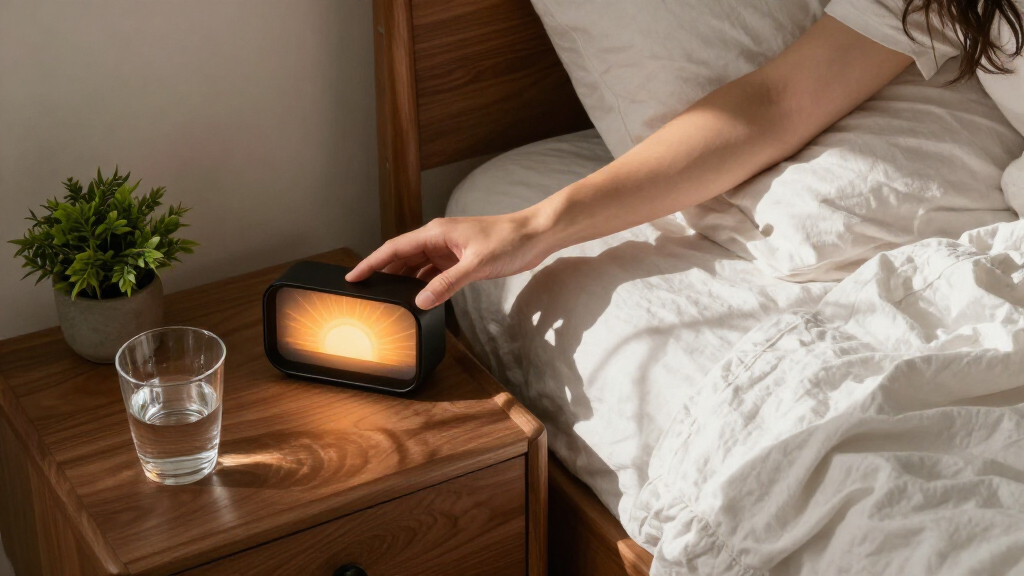
I compared these 15 clocks through the needs that make a sunrise alarm useful day to day: how the wake-up light fits into an alarm routine, how clearly the product describes its sound and night-light functions, and whether smart features add practical control or mostly add complexity. I also looked at the breadth of bedside functions, including white noise, nature sounds, FM radio, Bluetooth, dual alarms, and sleep tracking, along with the design cues that can matter on a nightstand.
The ranking favors products that offer a balanced, understandable set of wake-up and sleep features over models that rely on one extra alone. That puts the ecozy first for combining app control and core sleep functions, while Philips SmartSleep ranks well for dedicated sunrise and sunset simulation and Hatch for buyers who want connected sleep insights. The other picks remain useful for narrower priorities, but a feature list does not by itself establish light intensity, sound quality, app reliability, or long-term performance; buyers should check current specifications and compatibility before choosing.
Factors to Consider When Choosing Smart Sunrise Alarm Clocks
Choosing among these clocks is less about counting features than matching them to your morning routine. I would start with how you want to control the alarm, then decide whether the light, sounds, or connected extras will make a meaningful difference in your bedroom.
Decide Whether You Need App Control
An app is useful when you want to adjust schedules or settings from your phone rather than reach across the nightstand. It can also bring more configuration options, but adds another point of setup and may make everyday changes less direct than using buttons. Before buying, check whether the app is required for normal alarm operation or only for optional controls. Also verify phone compatibility and whether the clock can retain a schedule if the phone is elsewhere or unavailable. If you prefer a simple routine, a model centered on physical controls may be easier to live with than a connected device. Pick smart control for a real convenience, not just because it appears in the product name.
Match the Light to Your Wake-Up Routine
A sunrise alarm is only useful if its timing and brightness suit your sleep schedule and room. Check whether the product specifies a gradual light period and adjustable brightness, rather than assuming every wake-up light behaves the same way. If you share a room, a bright lamp can disturb a partner, so investigate dimming and whether the display or night light can be reduced separately. Sunset simulation can matter if you also want a light-based wind-down routine, which makes Philips SmartSleep a different proposition from clocks focused on radios or Bluetooth. Do not expect a wake-up light to replace a room lamp unless its lighting specifications support that use. Think about where the clock will sit and whether its light can reach you from that position.
Choose Sound Features You Will Actually Use
White noise, nature sounds, FM radio, and Bluetooth solve different problems, even when they appear on the same device. Built-in sleep sounds can work without a separate phone, while Bluetooth is more flexible for personal playlists but depends on another device and pairing. FM radio is a better fit for listeners who want live broadcasts than for someone seeking a quiet, repeatable sound routine. Check whether the clock supports separate alarm and sleep-sound settings, since combining them can make a routine less convenient. A long list of sounds is less valuable than a few suitable choices with controls you can operate in the dark. If audio matters as much as the light, prioritize clear information about speaker and sound controls before buying.
Think Through Shared Bedrooms and Multiple Schedules
One alarm does not fit every household. If two people wake at different times, a dual-alarm feature can prevent daily resetting and reduce the chance that one person’s schedule disrupts the other. Confirm whether the alarms can use separate wake times and settings, rather than relying on the phrase “dual alarm” alone. In a shared room, consider display brightness, alarm volume controls, and how much the light spreads. Sleep tracking and personalized insights may appeal to someone who wants more data, but they are not a substitute for checking whether both sleepers can keep their routines separate. For a solo sleeper with a fixed schedule, those household features may add little value.
Weigh Smart Extras Against Setup and Ongoing Use
Sleep tracking, personalized insights, and app-based routines can make a clock feel more like a bedroom system than a basic alarm. Those additions are most worthwhile when you plan to check the insights or adjust routines; otherwise, a simpler clock may be easier to manage. Find out whether any key feature depends on an account, an internet connection, or ongoing app access, and read the maker’s current terms before relying on it. Contactless tracking may sound convenient, but buyers should understand what data is collected and how it is handled. A model with fewer connected services can be a better match for someone who values straightforward controls and limited data sharing. Pay for added functions only when they solve a specific problem in your routine.
Check Nightstand Fit, Display, and Bedroom Style
A clock that looks appealing online can still be awkward if it takes up too much space or has controls that are hard to find at night. Compare the product’s dimensions with the available bedside area and check whether its buttons, display, and brightness controls are easy to reach. The JALL K6’s beige linen styling and REACHER’s wood-grain finish show how some choices lean toward a softer, less electronic appearance. Multicolor night lights, such as the Vangoa’s, can offer more mood-setting flexibility but may not suit buyers who want an understated lamp. Think about whether the clock will face you, a partner, or the whole room, since position affects both visibility and light spill. Treat materials and styling as practical fit questions, not just decoration.
Frequently Asked Questions
Is a sunrise alarm clock a good choice if I already wake to a phone alarm?
It can be, if a gradual light cue is the main benefit you want to add; the clock can complement a phone alarm rather than replace it. A phone remains useful as a backup, especially while you learn how the light and sound settings fit your schedule. Check whether your chosen model allows an audible alarm alongside the sunrise feature, since the light alone may not wake every sleeper. If you already use a lamp or smart lighting routine, compare whether a dedicated clock offers enough added convenience to justify another device. The best reason to switch is a morning routine that benefits from both light and a separate alarm, not simply a longer feature list.
Do I need an app for a smart sunrise alarm clock to work?
No; the products in this roundup vary, and several emphasize built-in sounds, radios, Bluetooth, or direct controls rather than app management. App control can make schedule changes easier from across the room, but it introduces setup and compatibility questions. Before choosing an app-connected model, check whether its core alarm still works without a phone nearby and whether settings are retained after a power interruption. If you rarely adjust your alarm, physical buttons may be simpler. For buyers who value remote changes or connected routines, app control can be useful, but it is not a requirement for a sunrise alarm.
Should I choose a clock with sleep tracking or one focused on the wake-up light?
Choose based on what you expect to use after the first week. A dedicated light such as Philips SmartSleep makes more sense when sunrise and sunset simulation are your priority, while Hatch adds contactless tracking and personalized insights for buyers who want connected sleep information. Tracking features can add setup, data-sharing questions, and another interface to manage. They also do not replace medical advice or guarantee better sleep. If your main need is a dependable light-led alarm, prioritize its wake-up controls; pay attention to tracking only if you intend to review and act on those insights.
Are white noise, FM radio, and Bluetooth interchangeable?
No, each serves a different routine. Built-in white noise or nature sounds are suited to repeatable background audio without choosing a playlist, FM radio suits listeners who prefer broadcasts, and Bluetooth lets you stream audio from a phone or other compatible device. Bluetooth can be flexible, but it relies on pairing and another device, while a built-in sound option is usually more direct at bedtime. Check whether the clock can play the sound you want while keeping its alarm settings intact. If you need only one kind of audio, do not let extra sound modes outweigh controls and light features that matter more.
What should I check before buying a sunrise alarm for a shared bedroom?
Start with whether the clock offers separate alarm schedules, since a dual alarm may help when sleepers wake at different times. Next, check adjustable light and display brightness so one person’s wake-up routine is less disruptive to the other. Placement matters too: a light aimed across the bed can affect a partner more than one directed toward the sleeper. Look for controls that make it easy to turn off an alarm without changing the other person’s settings. If one sleeper is especially sensitive to light or sound, a sunrise clock may still need to be paired with a separate alarm strategy.
Conclusion
For most buyers, I recommend the ecozy 3-in-1 as the best overall choice because it brings app control, a sunrise alarm, and white noise together. The Vangoa is my best value-style pick for shoppers drawn to a broad bedside feature mix, including Bluetooth, FM radio, dual alarms, and multicolor lighting; compare its controls with your needs before choosing. For a best premium, feature-led option, Hatch is the pick for contactless sleep tracking and personalized insights, while Philips SmartSleep is better for buyers who want a more focused sunrise-and-sunset light. Beginners who want a straightforward wake-up-light routine should start with Philips rather than paying for tracking or app features they may not use. For style-focused bedrooms, consider the linen-look JALL K6 or wood-grain REACHER; for Bluetooth and sound options, compare the JALL and Vangoa models. The right clock is the one whose light, controls, and extras fit your actual morning—not the one with the longest feature list.