
The Philips SmartSleep HF3650/60 is my best overall pick for a focused sunrise-and-sunset routine, while the Hatch Restore 3 stands out for app-guided sleep habits and the JALL full-screen model for an all-in-one light, sound, and speaker setup. The main tradeoff is choosing between a dedicated, straightforward wake-up lamp and a more feature-packed device with extra controls or connected services. I also weigh light customization, sound options, nighttime usability, and how much setup each style asks of you. These products range from simple alarm clocks to broader sleep assistants, so the right choice depends on whether light, audio, or smart features matter most. Read on for the full breakdown and my picks for different bedrooms and routines.

Get wellness gear delivered free with Prime
- Fast, free delivery on millions of items
- Prime Video, Amazon Music and more included
- Member-only deals all year
Key Takeaways
- The Philips HF3650/60 leads for a light-first routine: sunrise and sunset simulation take priority over bundled speaker and radio extras.
- Hatch Restore 3 is the more app-centered option: it suits people who want a guided sleep routine, while buyers who prefer physical, direct controls may favor a conventional sunrise clock.
- JALL models lean toward bundled utility: the full-screen version pairs a broad light face with FM radio, white noise, and Bluetooth, but more functions can mean more controls to manage.
- The Philips HF3520/60 offers a different balance from the HF3650/60: it adds colored sunrise and sunset, natural sounds, FM radio, and a reading lamp, while the HF3650/60 is the more focused simulation pick.
- Many of the remaining clocks combine light with sound-machine features: Vivilumens, Odokee, REACHER, and several generic sunrise models may suit buyers seeking one bedside unit, but their value depends on whether those extras will be used.
| Vivilumens Sunrise Alarm Clock with Sound Machine |  | Best for Dual-Alarm Households | Display: Digital | Power: Corded electric | Dimensions: 8.9 × 8.9 inches | VIEW LATEST PRICE | See Our Full Breakdown |
| ANTDALIS Sunrise Alarm Clock with Dimmable Night Light and Touch Controls |  | Best for Simple Bedside Use | Model: AK-005 | Light source: LED | Brightness: 20 levels | VIEW LATEST PRICE | See Our Full Breakdown |
| Sunrise Alarm Clock with Moon Lamp and Sound Machine | 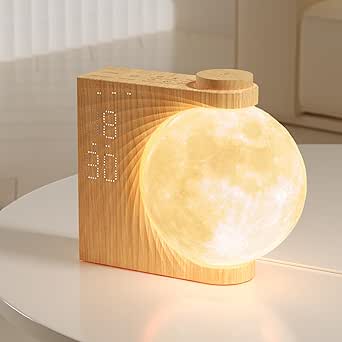 | Best for Colorful Bedside Ambience | Dimensions: 6.5 × 4.3 × 6.1 inches | Weight: 1.4 lb | Power: Corded USB-C | VIEW LATEST PRICE | See Our Full Breakdown |
| Odokee Sunrise Alarm Clock with White Noise Machine – Natural Wake-Up Light |  | Best for Customizable Sound and Sunrise Timing | Sunrise duration: 5–60 minutes | Alarm sounds: 7 | Sound library: 25 sounds, including noise colors and natural sounds | VIEW LATEST PRICE | See Our Full Breakdown |
| Philips SmartSleep Wake-Up Light with Sunrise and Sunset Simulation (HF3650/60) |  | Best Premium Wind-Down and Wake-Up System | Model: HF3650/60 | Wake-up simulation: Customizable sunrise with sound profiles | Wind-down simulation: Customizable sunset with sound profiles | VIEW LATEST PRICE | See Our Full Breakdown |
| Smart Sunrise Alarm Clock with App Control, Wake-Up Light, Sound Machine, FM Radio, and Wireless Speaker |  | Best for App-Based Customization | Sunrise duration: 10–60 minutes | Alarms: Up to 4 via app; 2 using device controls | Light colors: 11 | VIEW LATEST PRICE | See Our Full Breakdown |
| Hatch Restore 3 Smart Sleep Assistant (Greige) |  | Best Premium Smart Sleep Routine | Model: Restore 3 | Sleep sounds: Over 80 | Connectivity: 2.4GHz Wi-Fi and Bluetooth | VIEW LATEST PRICE | See Our Full Breakdown |
| Sunrise Alarm Clock and White Noise Machine with Bluetooth Speaker, Khaki |  | Best Sound Variety Without an App | Wake-up sounds: 10 | Sleep sounds: 30 | Light modes: 17 | VIEW LATEST PRICE | See Our Full Breakdown |
| JALL Sunrise Alarm Clock with Full-Screen Light, FM Radio, White Noise Sounds, and Bluetooth Speaker |  | Best for a Large Wake-Up Display | Display: 7-inch LED screen | Alarms: 2 | Sunrise duration: 10–60 minutes | VIEW LATEST PRICE | See Our Full Breakdown |
| Sunrise Alarm Clock with Sound Machine and Gentle Wake Up Light |  | Best for Simple Sound-Machine Wake-Ups | Sunrise duration: 10–60 minutes | Sound options: 30: 10 white-noise and 20 nature sounds | Brightness levels: 13 | VIEW LATEST PRICE | See Our Full Breakdown |
| REACHER Wood-Grain Sunrise Alarm Clock and Sound Machine with Nightlight |  | Best for a Warm, Screen-Dim Bedside Setup | Model: R7W | Sunrise duration: 5–60 minutes | Sleep sounds: 26 | VIEW LATEST PRICE | See Our Full Breakdown |
| Hatch Restore 3 Smart Sleep Assistant (Cocoa) |  | Best for App-Based Sleep Routines | Model: Restore 3 | Sleep sounds: 80+ | Connectivity: 2.4 GHz Wi-Fi and Bluetooth | VIEW LATEST PRICE | See Our Full Breakdown |
| Philips SmartSleep Wake-Up Light, HF3520/60 |  | Best for a Dedicated Sunrise-and-Sunset Routine | Model: HF3520/60 | Light routines: Sunrise and sunset simulation | Alarm sounds: 5 natural sounds | VIEW LATEST PRICE | See Our Full Breakdown |
| Hatch Restore 3 Sleep Sound Machine and Sunrise Alarm Clock, Putty |  | Best for a Streamlined Bedroom Routine | Model: Restore 3 | Color: Putty | Sleep sounds: 80+ | VIEW LATEST PRICE | See Our Full Breakdown |
| JALL Sunrise Alarm Clock with White Noise, Nature Sounds, FM Radio, and Bluetooth Speaker |  | Best for Audio Variety and Dual Alarms | Model: K8 | Sunrise duration: 10–60 minutes | Alarms: Dual, with everyday, weekday, and weekend schedules | VIEW LATEST PRICE | See Our Full Breakdown |
| smart wake up light | Power | Model |
|---|---|---|
| Vivilumens Sunrise Alarm Clock | Corded electric | — |
| ANTDALIS Sunrise Alarm Clock w | — | AK-005 |
| Sunrise Alarm Clock with Moon | Corded USB-C | — |
| Odokee Sunrise Alarm Clock wit | — | — |
| Philips SmartSleep Wake-Up Lig | — | HF3650/60 |
| Smart Sunrise Alarm Clock with | Corded electric | — |
| Hatch Restore 3 Smart Sleep As | Corded | Restore 3 |
| Sunrise Alarm Clock and White | 5V 2A adapter | — |
| JALL Sunrise Alarm Clock with | Corded electric | — |
| Sunrise Alarm Clock with Sound | — | — |
| REACHER Wood-Grain Sunrise Ala | Corded electric | R7W |
| Hatch Restore 3 Smart Sleep As | Corded | Restore 3 |
| Philips SmartSleep Wake-Up Lig | Corded electric | HF3520/60 |
| Hatch Restore 3 Sleep Sound Ma | Corded | Restore 3 |
| JALL Sunrise Alarm Clock with | USB; requires 1 AA battery | K8 |
More Details on Our Top Picks
Vivilumens Sunrise Alarm Clock with Sound Machine
The Vivilumens is a practical pick when two people need different wake-up times but want one bedside device. Its dual alarms give it an advantage over the ANTDALIS, which lists a single alarm, while 20 soothing sounds and timed playback make it useful beyond the morning wake-up. The gradual light and touch-sensitive night light cover the core wake-up-light and bedside-light jobs without adding many setup layers.
The tradeoff is a corded, tabletop design rather than a more flexible smart-home setup: its USB port charges a device, but the supplied details do not describe app control or wireless audio. Cable placement also matters because cords can interfere with the touch sensors, and the instructions may take some attention during setup. I’d choose it for shared routines, not for buyers who want a highly connected alarm.
Pros:- Dual alarm settings accommodate different wake-up schedules
- Gradually brightening light supports a gentler wake-up routine
- Twenty sounds with adjustable volume and 30-, 60-, and 90-minute timers
- Touch-sensitive night light and built-in USB charging port add bedside utility
Cons:- Cord placement can interfere with the touch sensors
- Setup instructions may be needed to configure it correctly
- Requires corded power and does not list app or wireless audio controls
Best for: Couples or roommates who need two separate alarm times and want soothing sounds and device charging in one bedside unit
Not ideal for: Buyers seeking app control, wireless operation, or a setup that works without careful cable placement
- Display:Digital
- Power:Corded electric
- Dimensions:8.9 × 8.9 inches
- Weight:1.4 lb
- Materials:Aluminum frame and ABS
- Sound options:20 soothing sounds
- Sound timers:30, 60, or 90 minutes
- Charging:Built-in USB port
Our verdict“Choose the Vivilumens if two sleepers need separate alarms and a broad sound selection matters more than app-based controls.”
ANTDALIS Sunrise Alarm Clock with Dimmable Night Light and Touch Controls
The ANTDALIS keeps the wake-up routine straightforward: a 30-minute sunrise, seven natural alarm sounds, and touch snooze are the main draws. Its adjustable light doubles as a bedside or reading lamp, making it a simpler choice than the Vivilumens if a second alarm and a larger sound library are not priorities. Brightness has 20 levels, so buyers can tune the light for a dim bedroom or use it more directly for reading.
This is a basic corded light, not a connected sleep system. Unlike the Odokee, it does not list Bluetooth streaming or a broad library of sound-machine options, and its plastic construction is less feature-rich than that model’s speaker-focused setup. It also has no water resistance, so it belongs indoors and away from spills. I’d pick it for a bedroom or kids’ room where accessible touch controls matter more than advanced audio features.
Pros:- Thirty-minute gradual brightening supports a less abrupt wake-up
- Twenty brightness levels let users adjust the light for waking or reading
- Touch snooze offers simple bedside operation
- Seven natural alarm sounds have adjustable volume
Cons:- Corded power limits placement and use during outages
- Plastic construction may feel less substantial than the Odokee’s more audio-oriented setup
- Not waterproof and supplied details do not list app or Bluetooth controls
Best for: People who want a straightforward sunrise alarm with a touch snooze and a lamp for bedside reading
Not ideal for: Buyers who want Bluetooth audio, extensive sound choices, dual alarms, or a more durable water-resistant light
- Model:AK-005
- Light source:LED
- Brightness:20 levels
- Sunrise duration:30 minutes
- Alarm sounds:7 natural sounds
- Volume:10 levels
- Controls:Touch
- Power and material:Corded electric; ABS
Our verdict“Choose the ANTDALIS for an uncomplicated touch-controlled sunrise light that can also serve as a bedside lamp.”
Sunrise Alarm Clock with Moon Lamp and Sound Machine
This compact unit combines a sunrise alarm, moon lamp, and sound machine, making it the most atmosphere-focused option in this group. Ten color modes and ten natural sounds give it more varied ambient-light choices than the ANTDALIS, while two alarm settings make it more adaptable to different schedules. A 10-minute snooze and 30-, 60-, or 90-minute sleep timer round out a routine that can extend from bedtime to morning.
The tradeoff is that its lighting versatility has limits: the listed brightness levels number three, and the RGB lighting brightness is not adjustable. The moon lamp also cannot rotate, so it is less flexible as a directional light than the ANTDALIS’s reading-lamp design. Unlike the Vivilumens, it relies on continuous USB-C power and has no built-in battery. I’d choose it for mood lighting and sound variety, not for portable or finely adjustable illumination.
Pros:- Combines a sunrise alarm, moon lamp, and sound machine
- Ten color modes and ten natural sounds offer varied bedtime ambience
- Two alarm settings support different wake-up schedules
- Sleep timer and 10-minute snooze support a complete bedside routine
Cons:- Requires continuous USB-C power and has no built-in battery
- Only three brightness levels are listed, and RGB brightness is not adjustable
- Moon lamp cannot rotate for directional lighting
Best for: Sleepers who want a colorful ambient lamp, natural sounds, and two alarm settings in one compact bedside device
Not ideal for: Buyers who need battery backup, precise color-light brightness control, or a directional reading lamp
- Dimensions:6.5 × 4.3 × 6.1 inches
- Weight:1.4 lb
- Power:Corded USB-C
- Alarm settings:2
- Alarm tones:15
- Nature sounds:10
- Color modes:10
- Sleep timer:30, 60, or 90 minutes
Our verdict“Choose this model if colorful ambience and multiple bedtime functions matter more than adjustable lighting or backup power.”
Odokee Sunrise Alarm Clock with White Noise Machine – Natural Wake-Up Light
The Odokee is the strongest fit for buyers who want to tune both the sunrise duration and bedtime audio. Its adjustable 5–60-minute wake-up period offers more control than the fixed 30-minute ANTDALIS, while a 25-sound library spans several noise colors and natural sounds. Bluetooth streaming and a 5W stereo speaker also let it serve as a bedside audio device, not just an alarm. The fully dimmable display and 12 night-light colors give more nighttime flexibility than the Vivilumens’s simpler light setup.
That breadth comes with practical compromises. Controls are physical buttons rather than an app, the footprint is described as relatively large, and the speaker may not be loud enough for a noisy room. Its listed seven alarm sounds are fewer than the Vivilumens’s 20 soothing sounds, even though Odokee offers Bluetooth and a broader sound-machine library. I’d choose it for adjustable routines and streaming, not for a compact or app-led setup.
Pros:- Sunrise duration adjusts from 5 to 60 minutes
- Twenty-five sleep sounds include multiple noise colors and natural sounds
- Bluetooth streaming and a 5W stereo speaker add audio flexibility
- Display dims from 0–100% and the night light offers 12 colors
Cons:- Physical-button controls are less convenient for app-oriented users
- Relatively large footprint can crowd a small bedside table
- Speaker volume may not suit louder environments
Best for: People who want to set their own sunrise ramp and stream audio while using a large sound library for sleep
Not ideal for: Light sleepers in noisy environments, small bedside tables, or buyers who want app-based controls
- Sunrise duration:5–60 minutes
- Alarm sounds:7
- Sound library:25 sounds, including noise colors and natural sounds
- Bluetooth audio:Yes
- Speaker:5W stereo
- Display brightness:0–100% dimming
- Night-light colors:12
- Sleep timer:Adjustable
Our verdict“Choose the Odokee if adjustable sunrise timing and Bluetooth audio are worth a larger, button-controlled bedside device.”
Philips SmartSleep Wake-Up Light with Sunrise and Sunset Simulation (HF3650/60)
The Philips SmartSleep is the most routine-focused pick here: it pairs customizable sunrise and sunset simulations with sound profiles and light-guided RelaxBreathe sessions. That bedtime support sets it apart from the ANTDALIS, which centers on waking and bedside lighting, and the Vivilumens, which puts more emphasis on a large sound selection and dual alarms. FM radio, a bedside lamp, midnight light, and smart snooze make the Philips feel like a fuller bedside system rather than a sunrise alarm alone.
Its feature set is not automatically the right fit for every sleeper. The product requires a powered bedside location, and the listed phone charging dock does not specify which charging connection it supports. The supplied details also do not state alarm counts, sound-library size, or light-level ranges, so buyers seeking those exact controls have less to compare than with the Odokee. I’d choose it for a guided wind-down routine, not for portability or clearly documented charging compatibility.
Pros:- Customizable sunrise and sunset simulations support both waking and winding down
- RelaxBreathe uses light-guided breathing for bedtime relaxation
- FM radio, midnight light, bedside lamp, and smart snooze add bedside functions
- Power backup can help preserve alarm operation during an interruption
Cons:- Requires a powered bedside location for regular use
- The phone charging connection is not specified in the supplied details
- Sound-library size and brightness ranges are not provided for direct comparison
Best for: Sleepers who want guided breathing and a coordinated sunset-to-sunrise routine alongside a bedside lamp and radio
Not ideal for: Buyers who need a portable light, clearly specified phone-charging compatibility, or detailed published sound and brightness ranges
- Model:HF3650/60
- Wake-up simulation:Customizable sunrise with sound profiles
- Wind-down simulation:Customizable sunset with sound profiles
- Relaxation feature:RelaxBreathe light-guided breathing
- Radio:FM radio
- Lighting:Bedside lamp and midnight light
- Display:Auto-dimming
- Other features:Phone charging dock, power backup, speaker, smart snooze
Our verdict“Choose the Philips if guided wind-down features matter as much as a gradual morning wake-up and you have a permanent powered bedside spot.”
Smart Sunrise Alarm Clock with App Control, Wake-Up Light, Sound Machine, FM Radio, and Wireless Speaker
I’d choose this model for a bedside routine that needs more scheduling flexibility than a basic clock provides. Its app can store up to four alarms, while the device itself handles two, and the 10–60-minute sunrise plus sunset timer lets you set both a gradual wake-up and a wind-down. That makes it more adaptable than the JALL Sunrise Alarm Clock, which offers two alarms but no app control. The tradeoff is that this clock connects through Bluetooth, not Wi-Fi, and its app is needed to access all four alarms. It also has useful bedside extras—FM radio, Bluetooth audio, and seven nature sounds—but no pure white-noise option. I’d pick it for flexible routines, not for buyers seeking a dedicated sleep-sound library.
Pros:- App supports up to four alarms, with no registration required.
- Sunrise duration and sunset timer can be adjusted for personalized routines.
- Combines 11 light colors, seven natural sounds, FM radio, and Bluetooth playback.
- Basic controls remain available on the clock when the app is not in use.
Cons:- Only two alarms can be set from the device controls; the other two require the app.
- Bluetooth connectivity does not provide Wi-Fi features.
- Sleep sounds do not include pure white noise.
Best for: People who want to set several weekday and weekend alarms in an app, with a sunrise light and sunset timer in one bedside device.
Not ideal for: Buyers who want Wi-Fi-connected routines, four alarms without using an app, or pure white noise for sleep.
- Sunrise duration:10–60 minutes
- Alarms:Up to 4 via app; 2 using device controls
- Light colors:11
- Natural sounds:7
- Connectivity:Bluetooth; no Wi-Fi
- Power:Corded electric
- Dimensions:2.5 in W x 6.5 in H
- Sunset timer:5–180 minutes
Our verdict“Choose this clock if app-set multiple alarms and adjustable sunrise and sunset routines matter more than Wi-Fi or a broad white-noise selection.”
Hatch Restore 3 Smart Sleep Assistant (Greige)
I’d rank the Hatch Restore 3 highest for buyers who want a connected bedtime-and-wake-up system, rather than a clock with a few extra features. It pairs a sunrise alarm and circadian lighting with more than 80 sleep sounds, customizable light-and-audio combinations, and a dimmable display. Compared with the BIB_WJ Smart Sunrise Alarm Clock, Hatch offers a much larger stated sound library and Wi-Fi app connectivity; BIB_WJ, by contrast, includes FM radio and does not require Wi-Fi. The Hatch’s main compromise is access: premium content requires a paid Hatch+ subscription after the trial, and full functionality depends on the app and Wi-Fi. Its plastic build also doesn’t suggest a more substantial finish. I’d select it for an integrated routine, but skip it if subscription-free, offline operation is the priority.
Pros:- Combines sunrise alarms, circadian lighting, and sleep sounds in one device.
- Offers more than 80 sleep sounds and customizable light-and-audio pairings.
- Dimmable display can be set low to limit light in a dark bedroom.
- Wi-Fi and Bluetooth support app-controlled routines.
Cons:- Premium content requires a paid Hatch+ subscription after the trial period.
- Full functionality depends on Wi-Fi and app connectivity.
- Plastic construction may feel less substantial than buyers expect from a premium sleep device.
Best for: Sleep-focused buyers who want app-managed bedtime and wake-up routines, a dimmable display, and a broad sound library in one device.
Not ideal for: People who prefer offline controls, do not want to depend on Wi-Fi, or want ongoing access to all content without a paid subscription.
- Model:Restore 3
- Sleep sounds:Over 80
- Connectivity:2.4GHz Wi-Fi and Bluetooth
- Display:2.5-inch digital screen with dimming
- Power:Corded
- Dimensions:2.43 in W x 5.31 in H
- Material:Plastic
- Warranty:1-year limited
Our verdict“Choose the Hatch Restore 3 if you want connected, customizable sleep routines and accept subscription-dependent content and app reliance.”
Sunrise Alarm Clock and White Noise Machine with Bluetooth Speaker, Khaki
This is my pick for buyers who want plenty of sound and lighting choices without adding an app or Wi-Fi setup. It provides 30 sleep sounds, 10 wake-up sounds, and 17 light modes, plus Bluetooth playback and a sunrise that can start up to an hour before the alarm. The JALL Sunrise Alarm Clock also combines sunrise lighting, FM radio, and Bluetooth, but this model lists substantially more sleep sounds and wake-up sounds; JALL instead adds FM radio and a large full-screen display. The key limitation here is a functional one: sunrise simulation and white noise cannot run together, so it may not support a continuous sound-to-light wake-up routine. Its settings backup memory helps after a brief power interruption, but the alarm won’t sound through a complete outage. I’d favor it for variety and straightforward, app-free operation.
Pros:- Offers 30 sleep sounds and 10 separate wake-up sounds.
- Provides 17 light modes and 20 brightness levels for bedside lighting choices.
- Sunrise simulation can begin 10–60 minutes before the alarm.
- Bluetooth audio and settings backup memory add convenience without app control.
Cons:- Sunrise simulation and white noise cannot operate at the same time.
- The alarm will not sound during a complete power outage.
- Bluetooth is for audio playback, not changing settings from a phone.
Best for: People who want a wide choice of sleep and wake sounds, adjustable color lighting, and Bluetooth audio without app setup.
Not ideal for: Buyers who need white noise to continue during the sunrise alarm or want an alarm that works through a complete power outage.
- Wake-up sounds:10
- Sleep sounds:30
- Light modes:17
- Brightness levels:20
- Sunrise simulation:10–60 minutes before alarm
- Connectivity:Bluetooth 5.3; USB-C
- Sleep timer:10–480 minutes
- Power:5V 2A adapter
Our verdict“Choose this model for broad sound and color choices without an app, provided you can live without simultaneous white noise and sunrise lighting.”
JALL Sunrise Alarm Clock with Full-Screen Light, FM Radio, White Noise Sounds, and Bluetooth Speaker
I’d put the JALL on the shortlist for anyone who wants the sunrise effect to be the main event. Its 7-inch LED screen gradually brightens 10–60 minutes before the alarm, and the 10–100% sunrise brightness range gives buyers control over how pronounced that light feels. It’s more display-focused than the BIB_WJ Smart Sunrise Alarm Clock, which offers app-set alarms and sunset lighting but has no similarly sized screen listed. JALL keeps operation simple with two alarms and no app or Wi-Fi, while adding 25 sleep sounds, FM radio, Bluetooth audio, and 17 ambient colors. The tradeoff is that this is a corded clock with no app-based scheduling; its two alarms also provide less flexibility than BIB_WJ’s four via app. I’d choose it for a bright, easy-to-read bedside face, not connected control.
Pros:- Large 7-inch LED screen supports a prominent sunrise-style wake-up.
- Sunrise brightness adjusts from 10% to 100%, with a 10–60-minute duration.
- Includes two alarms, 25 sleep sounds, FM radio, and Bluetooth audio.
- Offers 17 ambient light colors and 20 brightness levels.
Cons:- Requires corded electric power for operation.
- No Wi-Fi or app control for remote setup or scheduling.
- Limited to two alarms.
Best for: People who want a large, full-screen sunrise display with two alarms, radio, and sleep sounds but no app setup.
Not ideal for: Buyers who need Wi-Fi or app control, more than two alarms, or a cordless bedside light.
- Display:7-inch LED screen
- Alarms:2
- Sunrise duration:10–60 minutes
- Sunrise brightness:10–100%
- Sleep sounds:25
- Ambient light colors:17
- Connectivity:Bluetooth; no Wi-Fi or app
- Power:Corded electric
Our verdict“Choose JALL if a large sunrise display and built-in radio matter more than app control or extra alarm schedules.”
Sunrise Alarm Clock with Sound Machine and Gentle Wake Up Light
For buyers who want a straightforward light-and-sound alarm rather than app features, this model keeps its pitch focused: a 10–60-minute sunrise, 30 soothing sounds, a sleep timer, and simple physical controls. Its sound selection includes 10 white-noise options and 20 nature sounds, giving it a clearer sleep-machine emphasis than the JALL Sunrise Alarm Clock, which adds FM radio and Bluetooth audio but lists 25 sleep sounds. This clock instead offers 32 volume settings, 13 brightness levels, five display-dimmer levels, and continuous play, so sleepers can tune the environment more precisely. The tradeoff is that the listing provides no app, Wi-Fi, radio, or Bluetooth features, and the product may still feel too bright or loud for especially sensitive users. I’d choose it for uncomplicated bedside sound and gradual light, not smart-home control.
Pros:- Gradual sunrise can be set for 10–60 minutes before the alarm.
- Includes 30 sounds, split between white noise and nature options.
- 32 volume settings and 13 brightness levels support fine adjustment.
- Memory function, snooze, backlit buttons, and continuous play support everyday use.
Cons:- No app, Wi-Fi, Bluetooth audio, or FM radio is listed.
- Low settings may still feel too bright or loud for highly sensitive sleepers.
- Needs bedside-table space for suitable light projection.
Best for: People who want a simple sunrise alarm with a varied white-noise and nature-sound library, adjustable controls, and no need for app features.
Not ideal for: Buyers who want phone control, Bluetooth streaming, FM radio, or a small bedside footprint for light projection.
- Sunrise duration:10–60 minutes
- Sound options:30: 10 white-noise and 20 nature sounds
- Brightness levels:13
- Volume levels:32
- Sleep timer:30–480 minutes
- Display dimmer:5 levels
- Features:Snooze, memory function, continuous play, backlit buttons
Our verdict“Choose this clock if you want adjustable sunrise lighting and a dedicated sound machine, not a connected or audio-streaming device.”
REACHER Wood-Grain Sunrise Alarm Clock and Sound Machine with Nightlight
The REACHER pairs an adjustable 5–60-minute sunrise with 26 sleep sounds, giving it a useful balance of wake-up light and bedtime audio without requiring an app. Its fully dimmable display and eight-color nightlight also make it easier to keep the bedside glow low after lights-out. Compared with the app-centered Hatch Restore 3, this is a simpler, more self-contained choice; compared with the larger feature mix of the JALL K8, it gives up Bluetooth audio, FM radio, and dual alarms for a smaller, wood-grain design. The tradeoff is corded-only power and a sunrise window capped at 60 minutes, so it offers less flexibility than models with longer routines or broader controls. I’d choose it for straightforward light-and-sound routines, not smart-home integration.
Pros:- Sunrise duration adjusts from 5 to 60 minutes.
- Includes 26 sleep sounds and a 5–180-minute sleep timer.
- Clock display and nightlight brightness are adjustable.
- Eight nightlight colors and wood-grain styling suit a softer bedside setup.
Cons:- Corded power limits where it can be placed.
- Sunrise simulation is limited to a maximum of 60 minutes.
- Does not list app control, Bluetooth audio, or FM radio.
Best for: Bedside users who want a gradual wake-up light, adjustable nightlight, and sleep sounds without managing an app or subscription.
Not ideal for: People who want Bluetooth or radio playback, dual alarms, or a sunrise schedule longer than 60 minutes.
- Model:R7W
- Sunrise duration:5–60 minutes
- Sleep sounds:26
- Sleep timer:5–180 minutes
- Display brightness:0–100% dimmable
- Nightlight colors:8
- Dimensions:6.7 x 2.7 x 6 inches
- Power:Corded electric
Our verdict“Choose the REACHER if you want a compact, app-free sunrise alarm with flexible bedside lighting and sleep sounds.”
Hatch Restore 3 Smart Sleep Assistant (Cocoa)
The Restore 3 is the most app-led option in this group: its sunrise alarm, circadian lighting, and 80+ sleep sounds can be arranged into a broader bedtime and morning routine through the Hatch Sleep App. That flexibility sets it apart from the REACHER, which offers useful light and sound controls but no listed app connectivity. It also makes the Hatch more dependent on your home setup: Wi-Fi and Bluetooth are part of the control experience, and premium content requires a paid subscription after the new-subscriber trial. The compact footprint helps it fit a crowded nightstand, though its plastic body is less wood-like than the REACHER. I’d pick this for someone who wants a customizable routine in one device; someone seeking a simple alarm that works without connected features may prefer the REACHER or Philips HF3520/60.
Pros:- Combines sunrise alarm, white noise, and circadian lighting.
- Offers more than 80 sleep sounds and customizable lighting.
- App control supports tailored sleep and wake routines.
- Compact tabletop footprint.
Cons:- Continued access to premium content requires a subscription after the trial.
- Full functionality depends on Wi-Fi and Bluetooth connectivity.
- Plastic construction may feel less substantial than the REACHER’s wood-grain design.
Best for: App-comfortable sleepers who want to customize lighting, sound, and sunrise routines together in a compact bedside device.
Not ideal for: Buyers who avoid subscriptions, depend on a fully offline control experience, or prefer wood or metal construction.
- Model:Restore 3
- Sleep sounds:80+
- Connectivity:2.4 GHz Wi-Fi and Bluetooth
- Control:Hatch Sleep App
- Display:Digital, 3.5-inch screen
- Dimensions:2.43 in W x 5.31 in H
- Power:Corded
- Warranty:1-year limited
Our verdict“Pick the Hatch Restore 3 if app-based routine control and a large sound library matter more than subscription-free simplicity.”
Philips SmartSleep Wake-Up Light, HF3520/60
Philips HF3520/60 earns its place for a more focused light routine: it pairs sunrise and sunset simulation with five natural alarm sounds, so the same bedside unit supports both waking and winding down. Its 20-level reading lamp adds practical use beyond the alarm, while tap snooze and a motion sensor offer convenient bedside controls. Compared with the REACHER, Philips adds sunset simulation and FM radio, but the REACHER provides many more sleep sounds and a more adjustable colored nightlight. The JALL K8 is a better fit for people who want Bluetooth audio and dual alarms; Philips is more about a dedicated light-led routine. Its corded power and relatively bulky 1113 g build make it less convenient to move, and the supplied data does not give a sunrise-duration range.
Pros:- Includes both sunrise and sunset simulation.
- Reading lamp has 20 brightness levels.
- Offers five natural sounds, FM radio, tap snooze, and a motion sensor.
- Combines wake-up lighting with a usable bedside reading light.
Cons:- Corded power limits placement flexibility.
- At 1113 g, it is heavier than the REACHER and less convenient to reposition.
- The listed product data does not specify a sunrise-duration range.
Best for: Sleepers who want sunrise and sunset lighting, a reading lamp, and natural-sound alarms in one dedicated bedside unit.
Not ideal for: People who need a lightweight clock, flexible placement, Bluetooth playback, or detailed control over sunrise duration.
- Model:HF3520/60
- Light routines:Sunrise and sunset simulation
- Alarm sounds:5 natural sounds
- Reading lamp:20 brightness levels
- Additional audio:FM radio
- Controls:Tap snooze and motion sensor
- Weight:1113 g
- Power:Corded electric
Our verdict“Choose the Philips HF3520/60 if sunset lighting and a dimmable reading lamp matter more than portability or Bluetooth audio.”
Hatch Restore 3 Sleep Sound Machine and Sunrise Alarm Clock, Putty
This Putty version of the Hatch Restore 3 brings customizable lighting, a dimmable clock, more than 80 sounds, and a sunrise alarm into a compact tabletop unit. Its strongest appeal is the combination: bedtime audio and lighting can sit alongside the morning alarm, rather than requiring separate devices. Like the Cocoa Restore 3, it relies on Wi-Fi and Bluetooth and offers Hatch+ premium content only through a trial before paid access, so it is not the pick for subscription-free simplicity. Compared with the REACHER, Hatch offers a larger sound library and app-based control, while REACHER avoids the connected-service dependence and includes eight nightlight colors. The Putty model is best viewed as another finish option within the Restore 3 family, not a different feature tier. Corded power also keeps it tethered to an outlet.
Pros:- Combines sleep sounds, lighting, a dimmable clock, and sunrise alarm.
- Includes more than 80 sleep sounds.
- Compact tabletop form fits small bedside spaces.
- Wi-Fi and Bluetooth support connected controls.
Cons:- Corded power restricts placement.
- Hatch+ premium content requires a paid subscription after the 30-day trial.
- Plastic construction offers less material variety than the wood-grain REACHER.
Best for: People who want to consolidate a sound machine, dimmable clock, customizable light, and sunrise alarm into one app-connected bedside device.
Not ideal for: Buyers who want an offline, subscription-free wake-up light or need a battery-powered option.
- Model:Restore 3
- Color:Putty
- Sleep sounds:80+
- Connectivity:2.4 GHz Wi-Fi and Bluetooth
- Dimensions:2.43 in W x 5.31 in H
- Power:Corded
- Subscription trial:30 days for new subscribers
- Warranty:1-year limited
Our verdict“Choose the Putty Restore 3 if you want a compact connected sleep routine and accept its corded power and subscription-based premium content.”
JALL Sunrise Alarm Clock with White Noise, Nature Sounds, FM Radio, and Bluetooth Speaker
The JALL K8 stands out when a wake-up light needs to handle more than one schedule and several audio sources. Its dual alarms include everyday, weekday, and weekend settings, while 25 sounds, FM radio, and a 5W Bluetooth speaker give it more playback flexibility than the REACHER. The 10–60-minute sunrise is adjustable, and the screen blackout mode supports a darker bedroom at night. Compared with the Philips HF3520/60, JALL adds Bluetooth audio and dual alarms, while Philips includes sunset simulation and a dimmable reading lamp. This is the most feature-packed audio choice here, but the ABS tabletop body is larger than the compact Hatch Restore 3, and USB power still ties it to an outlet. Its broad feature set suits households with different schedules better than minimalists.
Pros:- Dual alarms support everyday, weekday, and weekend schedules.
- Offers 25 nature and white-noise sounds, FM radio, and Bluetooth audio.
- Sunrise duration adjusts from 10 to 60 minutes.
- Screen blackout mode and adjustable sleep timer support a darker bedtime.
Cons:- USB power and a required AA battery limit placement flexibility.
- The ABS tabletop design is less compact than the Hatch Restore 3.
- Does not list app control or sunset simulation.
Best for: Couples or households with different wake times who want dual schedules, radio, Bluetooth audio, and a gradual sunrise in one clock.
Not ideal for: Minimalist bedside users who want a small, app-controlled device or a sunset and reading-light routine.
- Model:K8
- Sunrise duration:10–60 minutes
- Alarms:Dual, with everyday, weekday, and weekend schedules
- Sounds:25 nature and white-noise sounds
- Audio:FM radio and 5W Bluetooth speaker
- Lighting modes:17: 8 solid colors and 9 dynamic RGB effects
- Sleep timer:10–480 minutes
- Power:USB; requires 1 AA battery
Our verdict“Choose the JALL K8 if dual alarms and varied audio matter more than a compact design or app-based controls.”
How We Picked
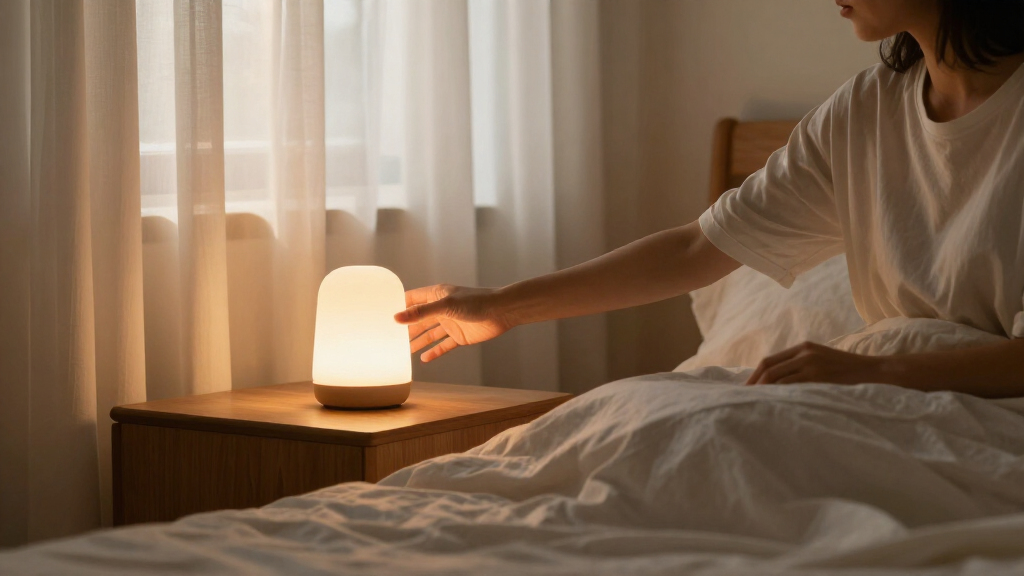
I ranked these smart wake-up lights by how well their central job—creating a gradual, usable wake-up routine—comes through, then weighed the supporting features against everyday ease. The main criteria were sunrise and sunset functions, light and alarm customization, sound choices, controls and app reliance, and whether added features such as FM radio, Bluetooth, or a reading lamp have a clear bedside purpose. I also considered how much complexity a buyer takes on when a device combines several jobs.
The order favors models with a distinct advantage for a defined buyer, not the longest feature list. The Philips HF3650/60 ranks first as a focused light-based choice; Hatch Restore 3 ranks highly for guided, app-based routines; and the JALL full-screen clock earns a place for its broad feature mix. Other products are better fits for narrower needs, such as a wood-grain look, touch controls, or a simple light-and-sound-machine combination. Similar models are grouped by their differences rather than treated as interchangeable.
Factors to Consider When Choosing Smart Wake Up Lights
Choosing among these devices is less about collecting features and more about deciding what should make mornings easier. I would start with the light routine, then check whether sound, app access, and bedside controls match how you actually go to sleep and wake.
Decide How Much the Light Itself Matters
A sunrise lamp can be the main event or one part of a larger alarm clock, and that distinction should guide your shortlist. If you want a gradual light cue to carry most of the wake-up routine, prioritize adjustable sunrise and sunset behavior over a long list of audio features. A device with a reading lamp or colored light may be more useful if it will also serve your evening routine. Avoid assuming that a larger lamp face automatically means a better fit; placement, brightness settings, and whether the light reaches your eyes from your usual sleeping position matter more. If you share a room, think about whether the lamp’s glow could disturb someone with a different schedule. My rule is to choose the light behavior first and treat extras as tie-breakers.
Choose Between App Control and Direct Controls
App-based sleep assistants can make routines and settings easier to shape, but they also tie some interactions to a phone. That can be appealing if you already manage bedtime habits digitally; it may feel like extra friction if you want to set an alarm from the bedside without opening an app. Physical buttons, touch controls, or a simple display can be easier to use when you are half asleep, though menus may be less flexible. Before buying, check which tasks the device can handle on its own, such as changing the alarm, snoozing, or adjusting light. Do not equate the word “smart” with voice control, remote access, or broad device integration unless those functions are specifically listed. Pick the control style you will use consistently, not the one that sounds most advanced.
Treat Audio Features as a Separate Decision
White noise, nature sounds, FM radio, and Bluetooth solve different problems, even when a clock bundles them together. A sound machine can help mask changing household or street noise, while radio and Bluetooth are better for listeners who want familiar programming or their own audio. Check whether you need a broad sound selection or only one steady background option; extra tracks have little value if you never change them. Also consider whether the clock will replace a speaker or sit beside one, since duplicate functions can add clutter rather than convenience. A common mistake is choosing by the number of sound options without asking how the audio starts, stops, or interacts with the alarm. For a light-first buyer, audio should support the routine rather than distract from it.
Check Bedroom Fit, Display, and Nighttime Use
A bedside device needs to work in the dark as well as at wake-up time. Look at whether the display can be dimmed or switched off, how easily you can reach snooze, and whether indicator lights might be bothersome. A prominent full-screen light may suit someone who wants a visible sunrise, while a more restrained design can feel less intrusive on a crowded nightstand. Materials and styling matter too, particularly if the clock stays visible all day; a wood-grain finish may blend into a different room than a fabric-covered sleep assistant. Measure your available space and account for the power connection before choosing a larger multifunction model. Do not overlook controls you may need to find by touch in the dark.
Know What You Are Paying More For
A more elaborate sleep assistant makes sense when its routine tools, app controls, and bedtime features will replace separate habits or devices. If you mainly want a gradual alarm and occasional sound masking, a simpler clock may cover the need without extra setup. Bundled FM radio, Bluetooth, white noise, and reading light can add versatility, but only if you will use those functions regularly. Compare the daily routine, not the feature count: ask what you would adjust each night and what should happen automatically in the morning. Also check whether key features depend on an app, account, or connectivity, since that can change how self-contained the device feels. Paying for convenience is reasonable; paying for unused functions is not.
Match the Alarm to Your Household
Wake-up needs differ between a solo sleeper, a couple, and someone who shares a room with a light-sensitive partner. A gradual lamp may be gentler for the person waking, but its glow can affect someone who would rather stay asleep. In a shared room, compare the light schedule with the alarm sound and consider whether either can be adjusted independently. People with changing work hours may benefit more from easy alarm changes than from a large set of preset routines. If more than one person will use the device, check whether the controls make separate schedules practical rather than assuming a single alarm will suit everyone. A clock that fits your household’s timing is a better buy than one with extra features that cannot resolve schedule conflicts.
Frequently Asked Questions
Can a wake-up light replace my regular alarm?
That depends on how you respond to light and how dependable you need the wake-up cue to be. Many buyers prefer using a sound alarm alongside the gradual light, especially while learning whether the lamp alone is enough. Check whether the model lets you set the light and sound separately, since that gives you room to adjust the routine. If you sleep through softer alarms or need to wake at a strict time, keep an audible alarm available. You can then decide whether the light becomes your primary cue after seeing how your own mornings go.
Is an app-controlled wake-up light worth choosing over a button-operated one?
An app is most useful when you want to create or revise routines from your phone and do not mind using a connected device at bedtime. A button-operated clock may be a better match if you want quick changes without handling a phone or navigating menus. Check which functions remain available from the device itself, especially alarm edits and snooze. Also think about who else in the household may need to operate it; an app-centered setup may be less convenient for someone who does not use the companion app. Choose based on your likely daily interactions rather than the size of the feature list.
Should I prioritize a sunrise light or a sound machine?
Start with the problem you most want to address. If waking to a sudden alarm feels unpleasant, a gradual light routine may be the higher priority; if noise around your bedroom makes it hard to settle, sound masking may matter more. Some clocks combine both, but a combined device is only useful if its controls let you set each part in a way that suits your routine. You may also prefer a separate sound machine if audio quality or sound choice matters more than having one bedside unit. For mixed needs, favor a model that lets light and audio work independently rather than forcing one preset routine.
Do I need FM radio or Bluetooth in a smart wake-up light?
Those features help when you already listen to radio or want to play audio from a phone through the bedside device. They add little if you use a separate speaker or prefer built-in white noise and nature sounds. Bluetooth and FM radio are also distinct: one connects to your own audio source, while the other receives radio broadcasts. Before choosing a feature-rich clock, ask whether it will replace another device or simply add controls to your nightstand. If the main goal is a gradual morning light, do not let optional audio features outweigh the wake-up functions you will use every day.
What should I check before buying a wake-up light for a shared bedroom?
Check how the light and alarm sound can be adjusted independently, because one person may want a brighter sunrise while the other needs less light or a different wake time. Look for controls that make it practical to change the schedule without disturbing the sleeping partner. A display that dims or turns off can also reduce light at night. If schedules vary, confirm whether the device can support the routines your household needs rather than assuming one alarm setting will work for both people. When the light itself could wake the other sleeper, a separate alarm or a different placement may be a better solution.
Conclusion
For the best overall light-first choice, I recommend the Philips SmartSleep HF3650/60, while the Philips HF3520/60 is a strong alternative if colored simulation, radio, and a reading lamp matter to you. For app-guided bedtime habits, choose Hatch Restore 3; its connected approach is a better fit for buyers who want a sleep assistant, not just a lamp. The JALL full-screen model is my pick for someone seeking one clock with FM radio, Bluetooth, and white noise, while the REACHER wood-grain clock suits buyers who care about a bedside-friendly finish and sound-machine features. For beginners, I would start with a simpler light-and-sound option such as ANTDALIS if touch controls appeal, or Vivilumens for a straightforward bundled clock and sound machine. I would not treat any one model as the best fit for everyone: decide whether light quality, app-based routines, bundled audio, or simple operation deserves priority, then choose the product whose tradeoffs match that need.