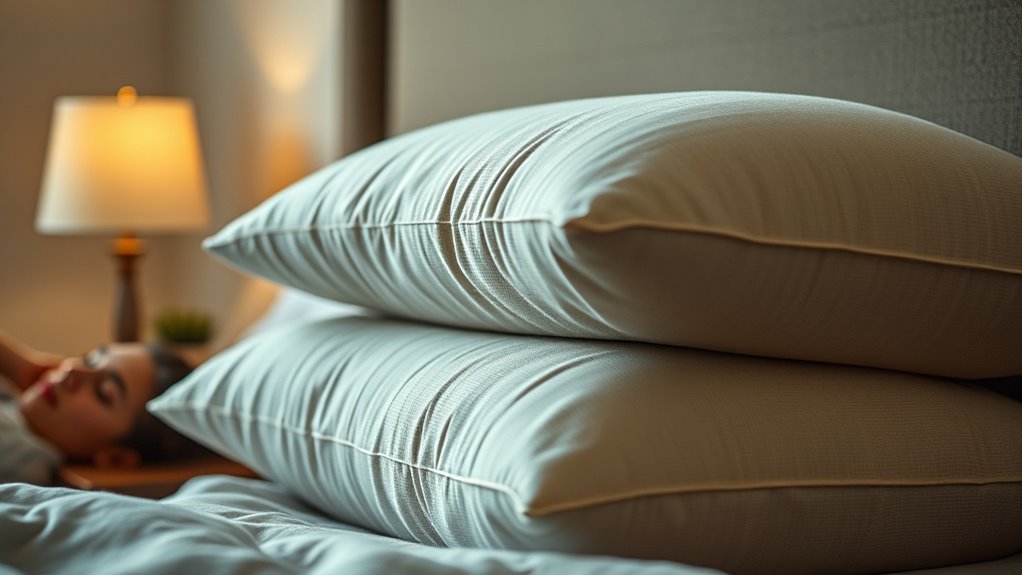

Taller pillows can help quiet snoring by keeping your head and neck properly aligned, which keeps your airways open during sleep. When your airway stays unobstructed, you’re less likely to vibrate and produce snoring sounds. However, the right pillow height varies for each person and sleep position. If you want to discover how choosing the proper pillow can improve your sleep and reduce snoring, there’s more to evaluate below.
Key Takeaways
- Taller pillows can elevate the head, helping keep airways open and reducing airway obstruction during sleep.
- Proper pillow height supports natural neck alignment, minimizing tissue collapse that causes snoring.
- Excessively tall pillows may push the chin forward, potentially narrowing the airway and increasing snoring.
- Adjustable or ergonomic pillows allow customization to find the optimal height for reducing snoring.
- The effectiveness of taller pillows varies by sleep position; back and side sleepers may benefit most from increased height.
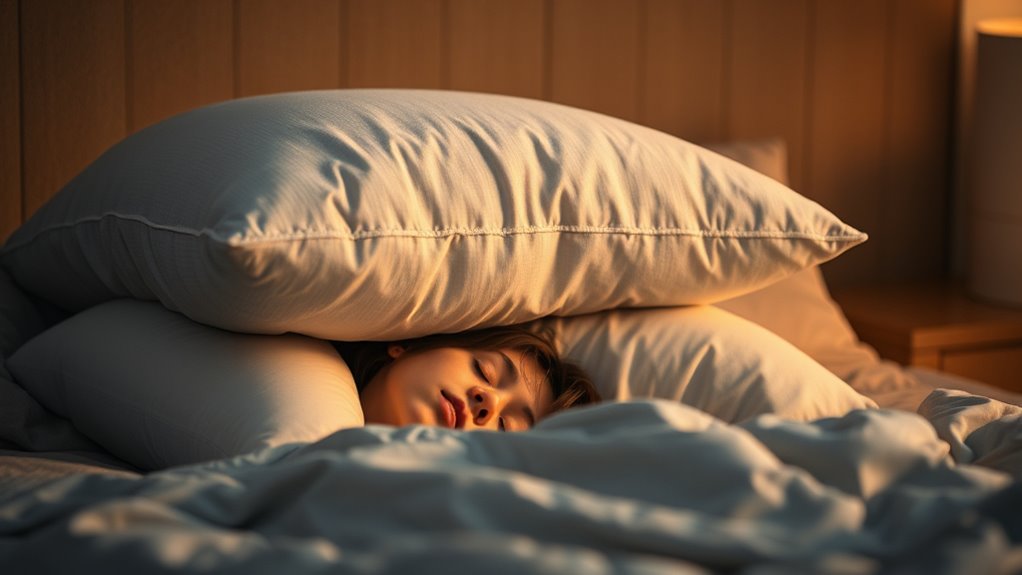
If you often wake up feeling tired or notice yourself snoring more than usual, your pillow might be part of the problem. The height of your pillow greatly impacts your sleep posture, which in turn influences your airway openness. A pillow that’s too high or too low can cause your neck to bend unnaturally, restricting airflow and increasing the likelihood of snoring. Conversely, the right pillow height supports a neutral sleep posture, keeping your head aligned with your spine and minimizing airway obstruction.
When your pillow is too tall, it tends to push your chin downward, causing your head to tilt forward. This position can narrow your airway, making it harder to breathe freely during sleep. On the other hand, a pillow that’s too flat might not provide enough support, leading to neck strain and a similar compromise of airway space. The key is finding a pillow height that promotes a natural, relaxed sleep posture. This helps keep your airways open and reduces vibrations in your throat, which are responsible for snoring sounds.
Your sleep posture plays a vital role here. If you sleep on your back, a taller pillow might help keep your head elevated just enough to prevent your tongue and soft tissues from collapsing backward, which often causes snoring. Side sleepers might need a slightly thicker pillow to fill the gap between their neck and mattress, maintaining proper alignment. If you’re a stomach sleeper, a flatter pillow is usually better, as a tall pillow can strain your neck and worsen snoring. Regardless of your preferred sleep position, the goal is to support your head and neck without forcing your airway into an awkward position.
Proper pillow height varies by sleep position to support healthy airway alignment.
Adjusting pillow height can be a simple yet effective way to improve your sleep quality and reduce snoring. Some people find that switching to an ergonomic pillow designed for their sleep posture makes a noticeable difference. Memory foam or adjustable pillows allow you to customize the height until you find the most comfortable and supportive setting. Keep in mind that every person’s anatomy is different, so what works for someone else might not work for you. Experimenting with different pillow heights can help you discover the ideal support that promotes a healthy sleep posture and minimizes snoring.
Ultimately, choosing the right pillow height isn’t just about comfort; it’s about maintaining an open airway and supporting your natural sleep posture. When you pay attention to these factors, you’re more likely to enjoy quieter, more restful nights and wake up feeling refreshed. Understanding sleep ergonomics can further enhance your efforts to improve sleep quality and reduce snoring.
Frequently Asked Questions
Can Taller Pillows Improve Sleep Quality Overall?
Taller pillows can improve your sleep quality by enhancing pillow height and sleep comfort. When your pillow supports your head and neck properly, you reduce strain and wake up less often. If you tend to sleep on your back or side, a taller pillow might help keep your spine aligned. Just make certain it’s not too high, as excessive height can cause discomfort. Finding the right pillow height boosts overall sleep quality.
Do Taller Pillows Cause Neck Pain or Discomfort?
Taller pillows can cause neck pain or discomfort if they lead to neck strain or if the pillow’s firmness isn’t suitable for you. When a pillow is too high or too firm, it forces your neck into an unnatural position, resulting in soreness or stiffness. To avoid this, choose a pillow that supports your neck comfortably and matches your sleeping position, ensuring it’s not excessively tall or overly firm.
Are Taller Pillows Suitable for All Sleep Positions?
Taller pillows can suit most sleep positions if they support your neck properly. For example, a side sleeper might find a higher pillow ideal for maintaining spinal alignment, while back sleepers may prefer a medium height. Pillow height directly influences sleep posture, ensuring comfort and reducing strain. However, if the pillow is too tall, it could cause discomfort. Always choose a height that keeps your head aligned with your spine.
How Do Taller Pillows Compare to Other Snoring Remedies?
Taller pillows often provide better snoring reduction than other remedies by elevating your head and keeping your airways open. Unlike some solutions, pillow height directly targets airway obstruction caused by relaxed tissues. You notice less snoring when you choose a pillow that supports your sleeping position properly. However, results vary, so it’s best to find a height that aligns with your comfort and sleep style for ideal snoring relief.
Do Taller Pillows Help With Sleep Apnea Symptoms?
Think of a taller pillow as a gentle lighthouse guiding your sleep posture toward calmer waters. While it can slightly elevate your head, helping open your airways, it doesn’t directly treat sleep apnea symptoms. Pillow height influences comfort and alignment, but don’t rely solely on it. For effective relief, consult a healthcare professional for all-encompassing solutions tailored to your needs.
Conclusion
So, does a taller pillow really quiet your snoring? While it might lift your head and keep airways open, it’s not a one-size-fits-all fix. Think of it like trying to fit a square peg in a round hole — what works for one person may not work for another. Give it a try, but remember, sometimes the key to silent nights is a mix of solutions, not just one pillow’s height.