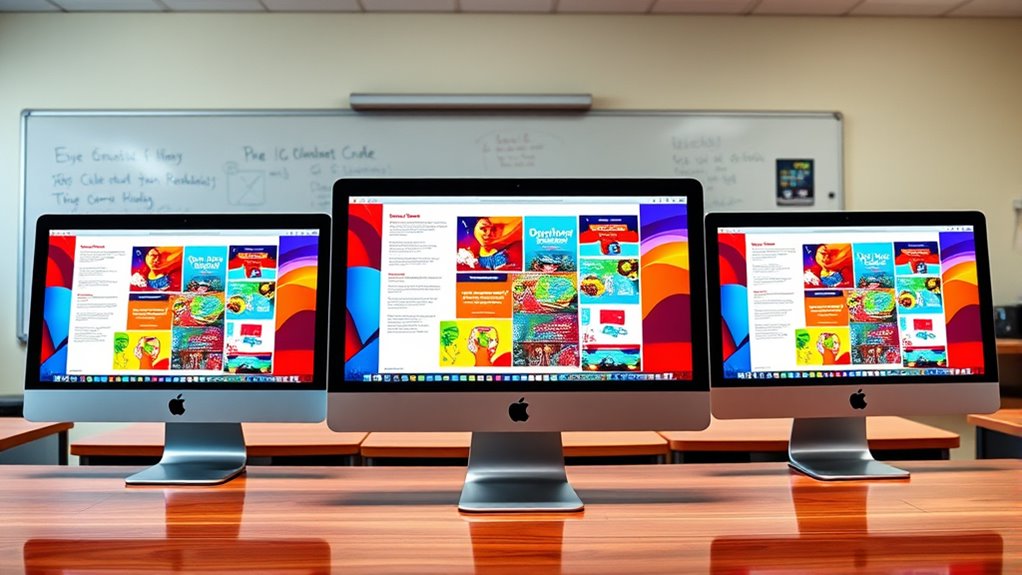

Based on current options, I recommend the Apple 2024 iMac with the M4 chip for classroom labs. Its powerful 10-core CPU and GPU manage diverse tasks, while the vibrant 4.5K Retina display enhances creativity and clarity. Its seamless integration with macOS and the Apple ecosystem guarantees compatibility with educational software. Durable design and security features safeguard student data. Keep reading to find out which models excel for different classroom needs and budgets.
Key Takeaways
- Choose iMac models with powerful M4 chips, at least 16GB RAM, and ample SSD storage for smooth multitasking and software compatibility.
- Opt for 4.5K Retina displays with high brightness and color accuracy to enhance visual learning and creative projects.
- Ensure multiple Thunderbolt 4, USB, Wi-Fi 6E, and Bluetooth 5.3 ports for versatile connectivity with peripherals and classroom equipment.
- Select sleek, durable all-in-one designs with security features like FileVault and Touch ID to protect student data and support long-term use.
- Prioritize models supporting macOS with educational software, bulk discounts, and cost-effective configurations for sustainable classroom investment.
Apple 2024 iMac Desktop with M4 Chip

The Apple 2024 iMac Desktop with M4 Chip is an excellent choice for classroom labs that require powerful performance in a sleek, space-saving design. Its 24-inch Retina display, with support for 1 billion colors and 4.5K resolution, makes visuals vibrant and clear. Powered by the M4 chip, it offers fast processing speeds, making tasks like photo editing, presentations, and multimedia work effortless. The ultra-thin, colorful design fits easily into any classroom environment, enhancing both functionality and aesthetics. With seamless integration into the Apple ecosystem, it supports multitasking and connectivity, making it a versatile tool for students and teachers alike.
Best For: educators, students, and classroom settings seeking a powerful, stylish, and space-efficient desktop with seamless Apple ecosystem integration.
Pros:
- Vibrant 24-inch Retina display with 1 billion colors and 4.5K resolution for stunning visuals
- Powerful M4 chip with 10-core CPU and GPU ensures fast performance for diverse tasks
- Sleek, ultra-thin, colorful design that enhances classroom aesthetics and saves space
Cons:
- Limited to 512GB SSD storage, which might be insufficient for extensive multimedia projects
- Price point may be higher compared to other classroom desktop options
- Limited port options with up to four Thunderbolt 4 ports, potentially restricting peripheral connectivity
Apple 2024 iMac Desktop Computer with M4 Chip

If you’re looking for a sleek, powerful computer that can handle a variety of classroom tasks, the Apple 2024 iMac with M4 chip is an excellent choice. It features a 10-core CPU and GPU, a stunning 24-inch 4.5K Retina display supporting a billion colors, and a vibrant, modern design available in seven colors. With 16GB of unified memory and a 256GB SSD, it offers fast multitasking and storage. The iMac’s advanced camera, spatial audio, and studio-quality microphones make it ideal for video calls and media projects. Seamlessly integrating with Apple devices and running macOS, it’s perfect for boosting creativity and productivity in any classroom setting.
Best For: educators, students, and creative professionals seeking a sleek, powerful all-in-one desktop that excels in multitasking, media creation, and classroom collaboration.
Pros:
- Stunning 24-inch 4.5K Retina display with Support for a billion colors enhances visual clarity and color accuracy.
- Seamless integration with Apple ecosystem simplifies workflows and communication.
- Powerful M4 chip with 10-core CPU and GPU delivers fast performance for multitasking and creative tasks.
Cons:
- Limited storage options with 256GB SSD may require external drives for larger files.
- Premium price point could be a barrier for budget-conscious users.
- Limited upgradeability due to all-in-one design and integrated components.
Apple 2024 iMac Desktop Computer with M4 Chip

For educators seeking a powerful yet sleek desktop option for classroom labs, the Apple 2024 iMac with M4 chip stands out thanks to its impressive processing speed and vibrant display. Its 10-core CPU and GPU deliver rapid performance for tasks like photo editing, presentations, and multimedia. The 24-inch 4.5K Retina display supports up to 1 billion colors, making visuals pop. Its ultra-thin, colorful design fits seamlessly into any space, while features like a 12MP camera, spatial audio, and Thunderbolt 4 ports enhance multimedia and connectivity. This iMac combines style, performance, and versatility—ideal for fostering creativity and productivity in the classroom.
Best For: educators and classroom labs seeking a powerful, stylish, and versatile desktop computer to enhance teaching, creativity, and multimedia experiences.
Pros:
- Exceptional processing speed with M4 chip, 10-core CPU and GPU for demanding tasks.
- Stunning 24-inch 4.5K Retina display supports up to 1 billion colors for vivid visuals.
- Sleek, all-in-one design available in vibrant colors that seamlessly fits into various classroom environments.
Cons:
- Premium price point may be a consideration for budget-conscious schools.
- Limited to a 24-inch display size, which might be small for some collaborative or large-group settings.
- As an all-in-one, upgrading components or expanding storage could be more challenging compared to traditional desktops.
Factors to Consider When Choosing an Imac for Classroom Labs
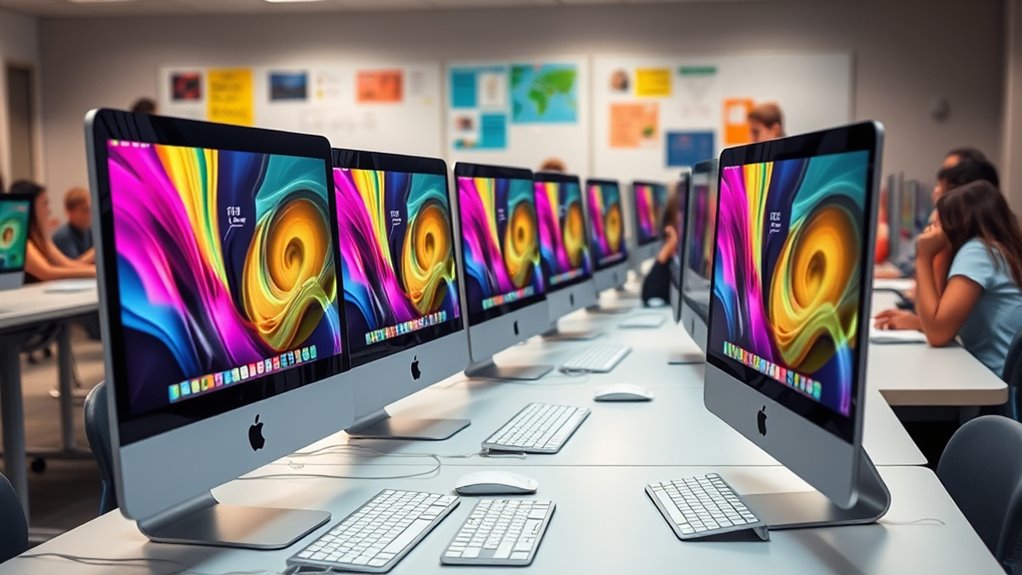
When selecting an iMac for classroom labs, I focus on key factors like performance capabilities and display quality to guarantee smooth operation and clear visuals. Connectivity options matter too, so students can easily connect peripherals and accessories, while software compatibility keeps everything running seamlessly. Finally, I consider the design and durability to make sure the iMac can withstand daily use in a busy educational environment.
Performance Capabilities
Choosing an iMac for classroom labs requires careful attention to performance capabilities that support smooth operation and multitasking. I look for models with powerful processors, like the M4 chips featuring a 10-core CPU and GPU, ensuring seamless handling of intensive applications and multitasking. Adequate unified memory is essential; I recommend at least 16GB to manage multiple tasks efficiently without lag. Storage capacity matters too—256GB or 512GB SSDs provide enough space for educational software, files, and projects. High-quality graphics are vital for multimedia editing and high-resolution displays, so I check for models with robust graphics capabilities. Additionally, features like Thunderbolt 4 ports and external display support optimize data transfer and expand classroom productivity, making the iMac a versatile learning tool.
Display Quality
A high-quality display is fundamental for classroom iMacs because it directly impacts how students see and interact with content. A 4.5K Retina display delivers sharp text and detailed visuals, which are essential for both learning and creative tasks. Supporting a billion colors ensures vibrant, accurate images, enhancing multimedia projects and art classes. Brightness levels of at least 500 nits improve visibility in well-lit classrooms and help reduce eye strain during long sessions. Wide color support further boosts color accuracy, key for photo editing and design work. Additionally, an anti-reflective or Nano-Texture Glass display minimizes glare, providing clearer viewing angles and reducing distractions. All these factors combined create an engaging, comfortable, and precise visual experience that supports educational excellence.
Connectivity Options
Ensuring your classroom iMac has the right connectivity options is essential for smooth teaching and learning experiences. I look for models with sufficient Thunderbolt 4 ports to support multiple external devices and high-resolution displays, making it easy to connect projectors, cameras, and storage solutions. Wi-Fi 6E compatibility is a must for fast, reliable wireless internet, ensuring seamless streaming and online activities. Bluetooth 5.3 enables effortless connection with peripherals like keyboards, mice, and audio devices, reducing clutter and improving usability. Additionally, multiple USB ports are crucial for connecting external drives, peripherals, and classroom equipment. Finally, I verify that the iMac’s connectivity options integrate smoothly with existing classroom infrastructure, preventing compatibility issues and ensuring a hassle-free setup for educators and students alike.
Software Compatibility
When selecting an iMac for classroom labs, it’s essential to confirm that the device supports the operating system required for your curriculum’s software. Many educational applications, like Microsoft 365 and Adobe Creative Cloud, are optimized for macOS, so compatibility is important. I recommend verifying that the iMac’s hardware specifications, such as RAM and storage, meet the minimum requirements for smooth operation during lessons. Additionally, check whether any specialized or proprietary software used in your courses is compatible with the iMac’s architecture and will continue to receive updates. Ensuring software support and security updates is critical for long-term reliability. By paying close attention to these factors, you’ll guarantee that the iMacs can handle your educational software needs now and in the future.
Design and Durability
Because classroom environments demand reliable and space-efficient equipment, the design and durability of an iMac are essential considerations. Its all-in-one design minimizes clutter and makes setup straightforward, which is crucial in busy labs. The ultra-thin profile and sturdy build help it withstand accidental bumps and knocks, ensuring longevity despite frequent use. Bright, vibrant color options can also boost the classroom’s aesthetic, creating a lively, engaging atmosphere. The durable materials, including high-quality display glass, help maintain the device’s appearance and function over time. Additionally, the compact form factor offers flexible placement options, allowing seamless integration into various classroom layouts. Overall, a well-designed, durable iMac not only looks great but can stand up to the demands of everyday educational use.
Privacy and Security
Choosing an iMac for classroom labs means paying close attention to privacy and security features that protect student information and maintain a safe digital environment. I look for models with hardware-based encryption and secure boot to safeguard data from unauthorized access. Advanced privacy protections in macOS, like app permission controls and data security enhancements, are essential. Support for security protocols such as FileVault encryption and Touch ID ensures secure login and data protection. Built-in privacy settings allow administrators to restrict access to specific applications or network features, adding an extra layer of control. Additionally, compatibility with enterprise security systems and management tools enables centralized oversight of user accounts. These features help create a secure, manageable environment conducive to learning without compromising student privacy.
Budget Considerations
Budget considerations play a key role in selecting the right iMac for classroom labs, ensuring that the devices meet both educational needs and financial constraints. I start by calculating the total cost, including accessories and warranties, to stay within the school’s budget. It’s important to compare models with different storage and RAM options to find a balance between performance and affordability. I also look into bulk purchasing discounts or educational offers from Apple or suppliers, which can substantially reduce costs. Long-term expenses like software licenses, maintenance, and potential upgrades should also be factored into the budget plan. Ultimately, I aim to choose an iMac that delivers the necessary performance without exceeding financial limits, ensuring a sustainable and effective investment for the classroom.
Frequently Asked Questions
How Do Imacs Enhance Collaborative Learning in Classrooms?
I find that iMacs enhance collaborative learning by making teamwork seamless and engaging. Their large, high-resolution screens let students share ideas visually and work on projects together effortlessly. With powerful performance and user-friendly interfaces, I see students quickly collaborating in real-time, exchanging feedback, and building on each other’s work. This fosters creativity and communication, making learning more dynamic and interactive, which ultimately boosts student engagement and understanding.
Are Imacs Suitable for Both Elementary and High School Labs?
Think of iMacs as versatile tools, like a Swiss Army knife for schools. They’re suitable for both elementary and high school labs because they’re user-friendly, powerful, and adaptable. I’ve seen younger students easily navigate them, boosting creativity, while older students leverage their advanced features for complex projects. Their sleek design and robust performance make iMacs an excellent choice across all grade levels, encouraging learning and innovation in every classroom.
What Maintenance Is Required for Imacs in a Classroom Setting?
I make certain to regularly clean the iMac screens and keyboards to prevent dust buildup and maintain performance. I also keep the software updated to ensure security and compatibility. Checking for hardware issues, like overheating or unusual noises, helps prevent downtime. Additionally, I back up data frequently and monitor storage space. These simple steps keep the iMacs running smoothly, supporting a productive and creative classroom environment.
Can Imacs Be Used for Specialized Educational Software?
Yes, I can use iMacs for specialized educational software. They run macOS, which supports a wide range of applications, including industry-specific and creative tools. I simply make sure that the software I need is compatible with macOS and meets the system requirements. With powerful processors and ample memory, iMacs handle demanding programs smoothly, making them excellent for advanced learning activities, creative projects, and specialized software use in a classroom setting.
How Do Imacs Compare to Other Computers for Creative Projects?
I find that iMacs excel in creative projects because of their powerful processors, high-resolution displays, and seamless integration with creative software like Adobe Photoshop and Final Cut Pro. Compared to other computers, they offer a more streamlined, user-friendly experience that boosts productivity. While some PCs are customizable and cheaper, I prefer iMacs for their reliability, sleek design, and optimized performance, making them ideal for creative work.
Conclusion
So, after all that, it turns out the best iMac for your classroom might just be the one you overlook—since with Apple’s latest M4 chip, even the most modest model packs a punch. Who knew that choosing a device to boost learning and creativity could be as simple as picking the right one? Irony aside, these iMacs prove that sometimes, the most powerful tools are the ones that seem the least intimidating.