

Weighted blankets work by applying gentle, even pressure that activates your nervous system’s calming pathways. This pressure mimics a hug, which triggers the release of soothing hormones like serotonin and melatonin, helping you feel relaxed and secure. As your body responds, stress hormones like cortisol decrease, promoting better sleep and reduced anxiety. To learn more about how pressure influences your calm, keep exploring how these tools can support your relaxation and well-being.

Get wellness gear delivered free — and shop member deals
- Fast, free delivery on millions of items
- Access to Prime Big Deal Days deals on October 6–7
- Prime Video, Amazon Music and more included
Key Takeaways
- Deep touch pressure from weighted blankets stimulates skin receptors, triggering calming neural responses and promoting relaxation via the parasympathetic nervous system.
- Pressure activates mechanoreceptors that reduce cortisol and increase serotonin, aiding stress relief and enhancing mood.
- The sensation of being embraced from weighted blankets mimics natural touch, fostering feelings of safety and emotional comfort.
- Elevated serotonin levels from pressure promote melatonin production, supporting faster sleep onset and improved sleep quality.
- Advances in materials and sensor integration aim to personalize and optimize pressure therapy for better mental health and sleep benefits.
The Science of Deep Touch Pressure

Deep touch pressure (DTP) is a form of gentle, evenly distributed pressure that actively stimulates your nervous system. When you experience DTP, it engages your neural pathways, sending signals through your body that promote relaxation. This tactile stimulation helps calm your nervous system by activating receptors in your skin and muscles. As these receptors respond, they send messages to your brain, which interprets the sensation as soothing and safe. The consistent pressure influences your body’s stress response, reducing cortisol levels and increasing serotonin production. This process helps you feel more grounded and relaxed. Understanding how DTP works at a neural level reveals its ability to create a calming effect, making weighted blankets an effective tool for promoting tranquility through tactile stimulation. Additionally, research into sound healing science suggests that incorporating calming sounds alongside DTP can enhance overall relaxation. Incorporating tactile stimulation with other sensory inputs can further amplify its calming benefits. Moreover, exploring auditory processing techniques can provide additional support for individuals seeking comprehensive calming strategies. Recognizing the role of neural pathways underscores the importance of consistent sensory input in achieving optimal relaxation. Recent studies also indicate that neuroplasticity plays a role in how repeated sensory experiences can strengthen calming neural circuits over time.
How Weighted Blankets Mimic a Hug

Weighted blankets create a sensation similar to being embraced, which can evoke feelings of safety and comfort. This hug simulation works through gentle, consistent pressure that closely resembles a comforting hug. When you’re wrapped in a weighted blanket, the pressure applies evenly across your body, mimicking the natural touch of someone holding you. This comfort mimicry triggers your brain to interpret the sensation as a form of reassurance, reducing anxiety and promoting relaxation. The feeling of being gently held or hugged activates your body’s calming response, helping you unwind. Because of this, weighted blankets are especially effective for those seeking the emotional warmth and security of a hug, even when alone. This mimicry of a hug creates a soothing environment, encouraging calmness and restful sleep. Understanding how pressure affects the nervous system can help explain why this calming effect occurs, especially considering the role of pressure and touch in modulating stress responses. Additionally, the even distribution of pressure enhances sensory processing, further contributing to the sense of security and relaxation. Recognizing the connection between pressure touch and relaxation underscores how these blankets support mental and emotional well-being. Furthermore, research shows that the gentle pressure can positively influence autonomic nervous system regulation, promoting a state of calmness and balance.
The Nervous System’s Response to Pressure

When you experience pressure, your nervous system activates mechanisms that help reduce stress and promote relaxation. This sensory input signals your brain to feel calmer and more centered. Understanding how pressure influences your sensory processing can reveal why weighted blankets are so effective at calming the mind and body. Incorporating smart appliances that respond to sensory cues can further enhance relaxation techniques. Additionally, these devices can adapt to individual needs by monitoring sensory input, offering personalized comfort and support. Recognizing the role of sensory processing can help tailor environments that optimize relaxation and comfort. Moreover, understanding the nervous system’s response can guide the development of targeted relaxation strategies. Leveraging home automation can create environments that dynamically adjust to your sensory needs, promoting better stress management.
Stress Reduction Mechanisms
Pressure from a weighted blanket stimulates the nervous system’s natural relaxation response by activating touch receptors in your skin. This triggers a series of stress reduction mechanisms that help calm your body. First, it promotes cortisol reduction, lowering the stress hormone levels. Second, it decreases adrenaline, which reduces feelings of anxiety and hyperalertness. Third, this activation encourages your parasympathetic nervous system to take over, supporting rest and digestion. These effects work together to create a sense of calm, making it easier to relax and fall asleep. Additionally, the sensation of pressure may also influence ear wax odor, as comfort can sometimes affect overall sensory perception. By gently pressing on your body, a weighted blanket influences your nervous system’s response, effectively reducing stress hormones and promoting a peaceful state. Moreover, understanding the pressure and sensory input involved helps explain the effectiveness of weighted blankets for many users. This process explains why many find weighted blankets helpful for anxiety and sleep issues, as the neural pathways involved are activated to promote relaxation. Recognizing the body’s stress response can further clarify how sensory input from weighted blankets facilitates relaxation. Furthermore, the calming effects are supported by the activation of mechanoreceptors, which play a key role in transmitting pressure signals to the nervous system.
Sensory Processing and Calm
The gentle pressure from a weighted blanket interacts with your body’s sensory processing system, sending signals that help calm your nervous system. This process, known as sensory integration, allows your brain to interpret the pressure as soothing rather than overwhelming. When pressure is applied, your sensory receptors send calming signals to your brain, reducing feelings of anxiety and stress. This activation promotes a sense of safety and relaxation, helping you feel more grounded. The calming effects of weight through gentle pressure can improve your overall sense of calm, especially for those with sensory processing challenges or heightened sensitivities. As a result, you may experience better sleep, decreased agitation, and a more balanced nervous system response. Recognizing the importance of sensory processing can guide effective use of weighted blankets for various needs. Incorporating body awareness techniques alongside weighted blankets can further enhance relaxation and promote a deeper sense of calm. Additionally, the use of AI tools in developing personalized weighted blanket designs can optimize comfort and effectiveness for individual needs. Understanding how the nervous system reacts to pressure can help you tailor your relaxation strategies more effectively.
Benefits of Pressure Therapy for Anxiety and Sleep

Have you ever wondered why weighted blankets are gaining popularity for anxiety and sleep issues? Pressure therapy offers several benefits that can help you feel calmer and more rested. Here are three key advantages:
Weighted blankets and pressure therapy promote calmness, relaxation, and better sleep through gentle pressure and mindfulness.
- It promotes relaxation by mimicking a gentle hug, reducing cortisol levels.
- It enhances mindfulness practices, helping you stay present and reduce racing thoughts.
- It complements aromatherapy benefits, amplifying calming effects and improving sleep quality.
Using pressure therapy regularly can create a soothing environment, easing anxiety and encouraging better sleep. The combination of gentle pressure, mindfulness, and aromatherapy helps calm your nervous system. This holistic approach supports your mental health and promotes restful nights. If you struggle with stress or insomnia, pressure therapy might be a simple, effective solution.
The Role of Melatonin and Serotonin in Relaxation

You might notice that weighted blankets can help your body produce more melatonin, which regulates your sleep cycle. At the same time, increased serotonin levels can boost your mood and promote relaxation. The pressure from the blanket may also influence hormone balance, supporting both sleep and emotional well-being.
Melatonin’s Sleep Regulation
Ever wonder how your body naturally prepares for sleep? It all starts with melatonin, often called the sleep hormone. Your body increases melatonin production as it gets dark, helping regulate your sleep cycle. This hormone signals your brain that it’s time to wind down. Here are three key points to understand:
- Melatonin levels rise in the evening, promoting sleepiness.
- Light exposure can suppress melatonin production, disrupting your sleep cycle.
- Proper melatonin regulation supports a consistent sleep schedule.
Serotonin’s Mood Effects
Serotonin plays a crucial role in your mood and sense of relaxation, acting as a key neurotransmitter that helps regulate your emotional state. When serotonin production increases, you often feel calmer, more balanced, and happier. Weighted blankets can stimulate this process by providing gentle pressure, which may boost serotonin mood. Enhanced serotonin levels not only promote relaxation but also support overall emotional well-being. As your serotonin levels rise, you might notice reduced anxiety and improved mood, making it easier to unwind. Maintaining healthy serotonin production is essential for feeling calm and centered. By encouraging this natural chemical release, weighted blankets help create a soothing environment that supports your mental health and promotes restful relaxation.
Pressure-Induced Hormone Balance
Have you ever wondered how gentle pressure from a weighted blanket influences your body’s hormone balance? When you’re under pressure from the blanket, it triggers your nervous system to release certain pressure hormones that help regulate your hormonal balance. This process can boost the production of melatonin and serotonin, which are essential for relaxation and sleep. Here’s how it works:
- The pressure hormone signals your body to produce more serotonin, improving mood and calming nerves.
- Increased serotonin then promotes the release of melatonin, helping you fall asleep faster.
- This pressure-induced hormonal balance creates a soothing cycle, reducing stress and enhancing sleep quality.
Choosing the Right Weighted Blanket for Optimal Calm
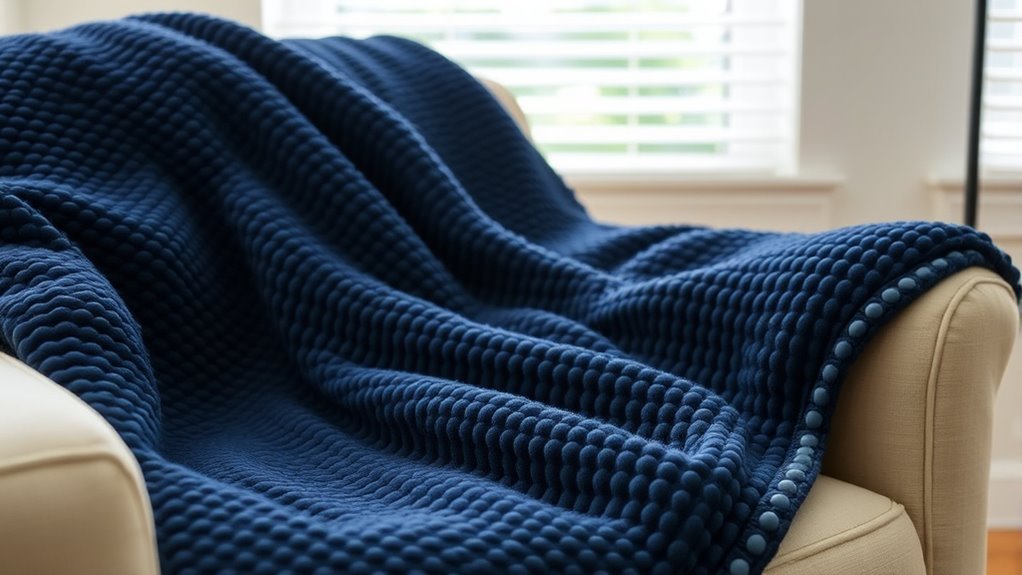
Choosing the right weighted blanket can substantially enhance your sense of calm, but it requires some careful consideration. Start by examining the fiber content; natural fibers like cotton or bamboo tend to be breathable and comfortable, especially if you tend to overheat. Synthetic options, such as polyester or microfiber, can offer durability and softness but may trap heat. Fabric choice also matters—look for a cozy, smooth texture that feels good against your skin. The weight should be proportional to your body—generally about 10% of your body weight—so you feel the gentle pressure without discomfort. Prioritize quality materials and fabric that suit your preferences for temperature regulation and tactile comfort. Making the right choice guarantees your blanket promotes relaxation and restful sleep.
Future Directions in Pressure-Based Relaxation Techniques

As research continues to uncover the benefits of pressure-based relaxation techniques, future developments are poised to make these methods more effective and accessible. Innovation will focus on creating personalized therapy options that adapt to individual needs. You can expect to see:
- Advanced materials that enhance comfort and responsiveness
- Smarter weighted products with integrated sensors for real-time feedback
- Customizable pressure levels tailored to your specific relaxation goals
These innovations aim to improve how pressure-based techniques support mental health, sleep, and stress reduction. By combining innovative application with personalized therapy, future tools will offer more precise, effective relief. This progress will make pressure-based relaxation techniques a more integral part of your wellness routine, helping you achieve calm more effortlessly.
Frequently Asked Questions
How Does Individual Body Weight Affect Weighted Blanket Effectiveness?
Your body weight considerations directly impact how effective a weighted blanket feels. If you’re lighter, a blanket with less weight provides personalized comfort without feeling restrictive. Conversely, if you’re heavier, a heavier blanket offers adequate pressure to promote relaxation. Finding the right weight depends on your body weight, ensuring the pressure feels soothing rather than overwhelming, making your sleep or relaxation experience more calming and tailored to your needs.
Can Weighted Blankets Help With Sensory Processing Disorders?
Weighted blankets can help with sensory processing disorders by enhancing sensory integration and providing calming tactile stimulation. You might find that the gentle pressure helps reduce anxiety and improves focus, as it mimics the feeling of being hugged or held. This calming effect can ease sensory overload, making it easier for you to relax and manage sensory sensitivities more effectively.
Are There Any Risks or Contraindications for Using Weighted Blankets?
Yes, there are some risks and contraindications to contemplate with weighted blankets. You should follow safety precautions, like ensuring the blanket isn’t too heavy or restrictive, especially for children or those with respiratory or circulatory issues. Also, check for allergy concerns, such as materials that might cause skin irritation. Always consult a healthcare professional if you’re unsure, and monitor for discomfort or difficulty breathing while using the blanket.
How Long Should I Use a Weighted Blanket During Sleep?
You should use a weighted blanket for the duration of your sleep, typically 7-9 hours, aligning with your usual sleep duration. To get the best benefits, aim for ideal timing, such as starting the blanket 30 minutes before bed to help you relax and fall asleep faster. Keep in mind that individual preferences vary, so listen to your body and adjust the usage accordingly for comfort and effectiveness.
Do Different Materials Influence the Pressure and Calming Effects?
Did you know that fabric textures and material density can substantially impact your blanket’s calming effects? Thicker, denser materials like memory foam or Minky fabric provide more consistent pressure, enhancing relaxation. Softer textures like cotton or fleece may feel lighter but still offer calming benefits. Choosing a material that suits your preferences and needs guarantees ideal pressure and comfort, helping you relax and sleep better.
Conclusion
Understanding how weighted blankets work helps you appreciate their calming effects. By applying gentle pressure, they mimic a comforting hug, activating your nervous system to promote relaxation and better sleep. Did you know that studies show about 80% of users experience reduced anxiety with regular use? So, when you choose the right blanket, you’re not just investing in comfort—you’re tapping into a scientifically proven method to find calm and improve your well-being.
Fall Picks
fall essentials
As an affiliate, we earn on qualifying purchases.