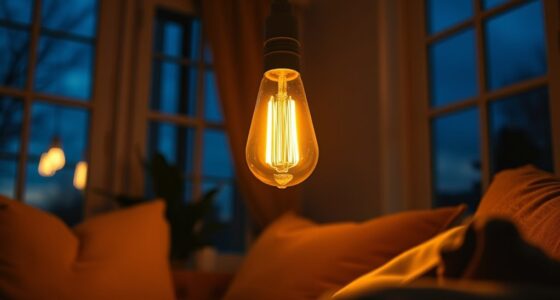

To avoid fully waking up during bathroom trips at night, opt for low-intensity, warm-colored lights placed along your floor or low on the wall. Motion-activated LEDs or small portable nightlights let you navigate comfortably without bright flashes that disrupt sleep. Keep essentials close to minimize movement and turn on only what’s necessary. Using gentle lighting helps you stay relaxed and makes returning to sleep easier—continue to explore ways to improve your night-time routine.
Key Takeaways
- Use low-intensity, warm-colored nightlights placed along pathways to provide gentle illumination without startling wakefulness.
- Opt for motion-activated LEDs that turn on only when needed, reducing unnecessary light exposure during bathroom trips.
- Position lights on low wall mounts or along the floor to prevent direct brightness into eyes or partner’s view.
- Keep bathroom essentials within easy reach to minimize search time and reduce the need for bright lighting.
- Establish routines that limit the use of bright overhead lights, supporting smoother, less disruptive nighttime visits.
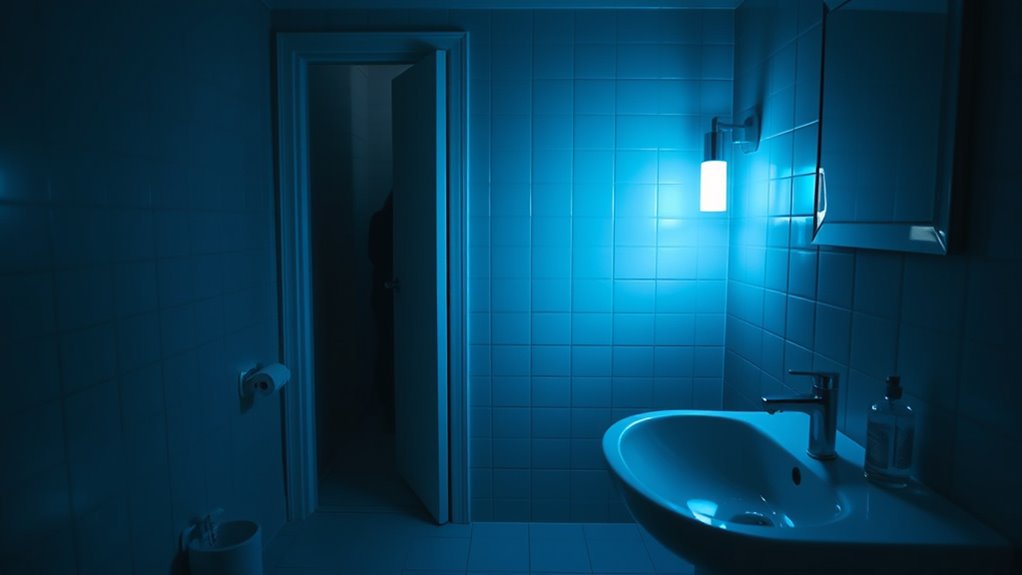
Getting up to use the bathroom during the night is a common issue that can disrupt your sleep and leave you feeling tired the next day. One of the biggest culprits is the way your bedroom lighting affects your sleep disruption. Bright lights can instantly wake you up fully, making it harder to fall back asleep, while dim or poorly placed lighting can help you navigate the space without causing a jarring awakening. If you’re tired of feeling groggy or tossing and turning after nighttime bathroom trips, paying attention to lighting can make a big difference.
Proper bedroom lighting can reduce sleep disruptions during nighttime bathroom trips.
When you wake up in the dark, your natural instinct might be to reach for the bright overhead light, but that sudden brightness can send a jolt through your system. It signals your brain that it’s time to be alert, which can prolong your awakening and delay your return to restful sleep. Instead, consider using low-intensity lighting, such as nightlights or motion-activated LEDs. These options provide enough illumination to see your way without overwhelming your senses. The goal is to create a gentle pathway that minimizes sleep disruption, helping you return to bed more quickly and peacefully.
You should also think about the placement of these lights. Position them along the floor or on the walls at a low height, so they cast a soft glow rather than a harsh beam. This way, you avoid shining bright light directly into your eyes or into your sleeping partner’s face. Some people find that using a small, portable nightlight that can be turned on and off easily works best. You can keep it plugged in near your bed or on the hallway wall, turning it on just enough to see where you’re going. Additionally, using appropriate lighting technology can further reduce sleep disturbance by adjusting brightness levels automatically based on your environment.
Another helpful tip is to adjust the color temperature of your lighting. Warm-toned lights tend to be less disruptive than cooler, bluish hues, which can interfere with melatonin production. Many modern nightlights come with adjustable color settings, allowing you to choose a gentle amber or orange glow that doesn’t interfere with your sleep cycle. This small change can considerably reduce the chances of sleep disruption during nighttime bathroom visits.
Finally, establish a routine that minimizes the need for full awakenings. Keep your bathroom essentials close and visible, so you don’t have to search in the dark or turn on bright lights. The combination of strategic bedroom lighting, smart placement, and mindful habits will help you navigate nighttime trips more smoothly, preserving your sleep quality and leaving you feeling more refreshed in the morning.
Frequently Asked Questions
Can Certain Medications Increase Nighttime Bathroom Trips?
Yes, certain medications can increase nighttime bathroom trips due to their side effects. Some drugs, like diuretics, are known to cause nocturia, which is the need to urinate frequently at night. These medications alter your body’s fluid balance or bladder function, leading to more trips to the bathroom. If you notice this happening, consult your doctor, as they can adjust your medication or suggest ways to reduce nocturia causes.
How Does Sleep Quality Affect Nighttime Bathroom Frequency?
Poor sleep quality or frequent sleep disruptions can increase your nighttime bathroom trips. When your rest is interrupted, your body may produce more urine or become more sensitive to bladder signals. This means you wake up more often to pee, which further hampers your sleep quality. To reduce these trips, focus on improving your sleep environment and routines, helping you achieve more restful sleep and fewer bathroom visits during the night.
Are There Specific Dietary Habits That Influence Nighttime Urination?
Think of your dinner plate as a gatekeeper to your night’s rest. Your hydration timing matters—drink too much before bed, and you’ll flood your bladder like a rising tide. Caffeine acts as a mischievous spark, igniting the urge to go. To keep sleep smooth, limit fluids in the evening and cut back on caffeine, letting your body stay calm and your night stretch peaceful and uninterrupted.
What Are the Long-Term Health Risks of Frequent Nocturnal Bathroom Trips?
Frequent nighttime bathroom trips can impact your bladder health over time, leading to issues like weakened bladder muscles or increased urgency. It may also disrupt your sleep, affecting overall health. To minimize these risks, maintain proper hydration habits during the day and avoid excessive fluids before bed. If you’re concerned, consult a healthcare professional to address underlying causes and protect your long-term bladder health.
How Can I Reduce Nighttime Urination Without Medications?
You can reduce nighttime urination by practicing hydration management and bladder training. Limit fluid intake a few hours before bed, avoiding caffeine and alcohol. During the day, strengthen your bladder with timed voiding, gradually increasing intervals between bathroom visits. Establish a calming bedtime routine, and keep a consistent sleep schedule. These steps help your bladder hold more overnight, letting you sleep undisturbed without medications.
Conclusion
To keep those nighttime bathroom trips smooth sailing, consider using a dim nightlight—it’s like a gentle lighthouse guiding you back to bed without waking you fully. With the right lighting, you can navigate the dark without stumbling or disturbing your sleep. Remember, a little planning can turn those midnight jaunts into effortless steps, so you wake refreshed, not groggy. Sleep tight, knowing your nighttime routine is just a soft glow away from being perfectly peaceful.