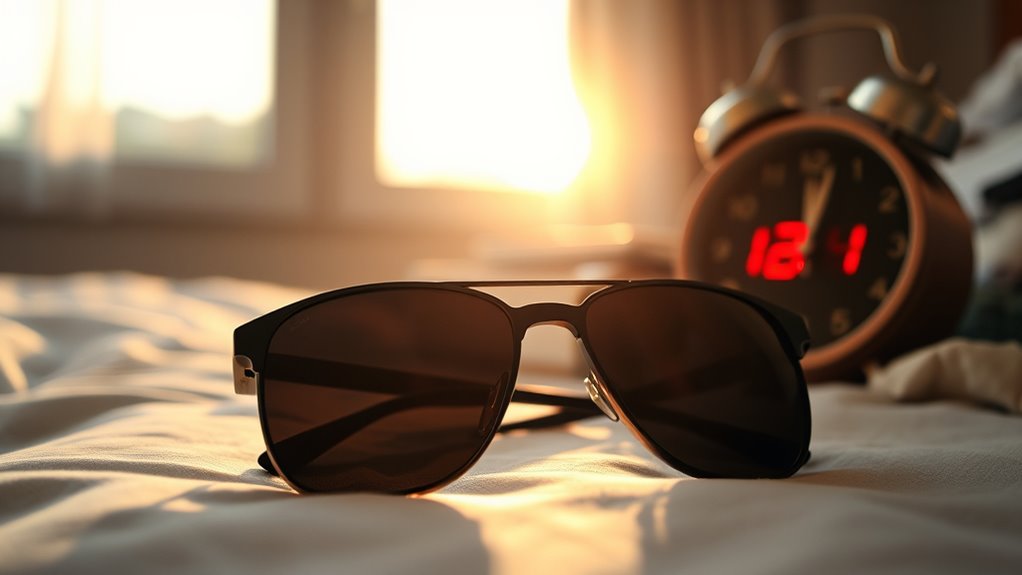
Wearing sunglasses in the morning can delay your internal clock because it blocks the sunlight signals your body needs to set your circadian rhythm properly. Sunlight, especially in the morning, tells your brain it’s time to wake up, helping regulate sleep and alertness. When you block these signals, your body might interpret it as nighttime, making it harder to wake up early or fall asleep on time. Keep exploring to discover how to optimize your light exposure.
Key Takeaways
- Wearing sunglasses in the morning blocks sunlight that signals your body to wake up, delaying your circadian clock.
- Reduced morning light exposure can cause your internal rhythms to stay misaligned, making it harder to wake early.
- Blocking natural light with sunglasses prevents proper circadian entrainment, which can delay sleep onset and morning alertness.
- Consistent morning light exposure without sunglasses helps reset your internal clock and maintain healthy sleep patterns.
- Using sunglasses later in the day is okay, but in the morning, they may hinder your body’s natural wake-up signals.
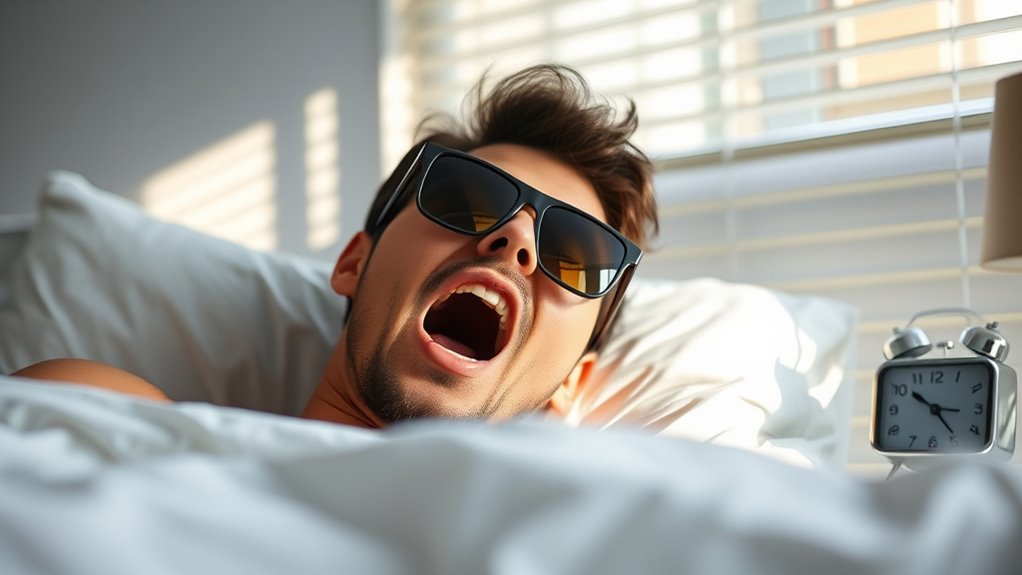
Many people underestimate the importance of natural light for setting their circadian rhythms. Instead of seeking out sunlight, they hide behind sunglasses, thinking it simply reduces glare or protects their eyes. But by doing so, you’re effectively telling your body that it’s still nighttime, even when it’s dawn. This confusion can lead to a delayed sleep phase, where you find it difficult to fall asleep at night and struggle to wake up early. The longer this pattern persists, the more your internal rhythms become misaligned with the environment, affecting your overall health and mood. Additionally, the timing and intensity of light exposure are crucial factors in circadian rhythm regulation, emphasizing the importance of morning light. To keep your circadian rhythms on track, you should aim for direct light exposure in the morning without unnecessary sunglasses. Even a few minutes of sunlight can help reset your internal clock, signaling your body that it’s time to wake up. If you’re concerned about bright sunlight or glare, consider wearing sunglasses later in the day, once your internal clock has been adequately set. Ultimately, understanding the impact of light exposure and minimizing unnecessary blocking of morning sunlight can help you maintain a healthy, synchronized circadian rhythm and improve your sleep quality.
Frequently Asked Questions
Can Sunglasses Harm My Eye Health Long-Term?
Wearing sunglasses can harm your eye health long-term if they lack proper UV protection and lens polarization. Without UV protection, your eyes are exposed to harmful rays that can increase risks of cataracts and other issues. Lens polarization reduces glare, but if your sunglasses don’t have it, you might strain your eyes more. Always choose sunglasses with quality UV protection and polarization to protect your eyes effectively and maintain long-term eye health.
Do Different Sunglass Tints Affect Circadian Rhythms?
Think of your circadian rhythm as a delicate dance, and different sunglass tints as the music’s tempo. Blue light-blocking tints can shield you from melatonin suppression, helping your internal clock stay in sync. Darker or amber lenses filter more blue light, potentially delaying your body’s response to morning light. So, choosing the right tint matters if you want to keep your rhythm in harmony and wake up feeling refreshed.
How Does Artificial Light Exposure Impact Morning Alertness?
Artificial light exposure in the morning can markedly impact your alertness. Bright light boosts your alertness by signaling your brain that it’s daytime, helping you wake up and stay alert. However, exposure to dim or blue light can reduce this alertness impact, making you feel sluggish. To optimize your morning alertness, aim for natural sunlight or bright artificial light, especially shortly after waking.
Are There Specific Sunglasses Recommended for Sleep Regulation?
You should choose sunglasses that block blue light and offer UV protection to help regulate your sleep cycle. Look for glasses with high-quality blue light filters, especially if you’re exposed to screens often. UV protection is essential for outdoor use, preventing eye damage. These sunglasses help reduce artificial light interference, supporting your body’s natural melatonin production and improving sleep quality. Always opt for well-reviewed options designed for sleep regulation.
Can Sunglasses Influence Vitamin D Production?
Imagine missing out on sunlight’s gift because of sunglasses—you could be blocking crucial UV protection needed for vitamin D production. Wearing sunglasses can decrease your skin’s ability to produce vitamin D, which depends on sunlight exposure. Without proper sunlight, your body struggles to synthesize this essential nutrient. So, yes, sunglasses influence vitamin D production, and wearing them excessively may hinder your health benefits from natural sunlight.
Conclusion
So, next time you reach for your sunglasses at sunrise, remember the story of Rip Van Winkle—how missing the morning light can make time seem to slip away. Your internal clock relies on natural cues, and blocking the sun’s early rays might delay your wake-up call. Don’t let your mornings turn into a fairy tale; embrace the sunlight and keep your rhythm in sync. After all, time waits for no one.