If you want to improve your mornings, try dawn simulation lights first, as they mimic natural sunrise and help regulate your circadian rhythm for a gentle wake-up. Blue-blocking glasses are better for evening use, protecting melatonin levels and supporting restful sleep by filtering blue light from screens. Both options support better sleep and alertness, but choosing the right one depends on your routine. Keep exploring to find out which might fit your goals best.
Key Takeaways
- Start with blue-blocking glasses if you experience digital eye strain or want to improve evening melatonin production.
- Use dawn simulation lights if your main goal is to establish a natural, consistent wake-up routine.
- Blue-blocking glasses are effective for evening use to reduce blue light exposure before bedtime.
- Dawn simulators are ideal for morning wakefulness and supporting circadian rhythm entrainment.
- Combining both methods can optimize sleep quality and circadian health, but choosing depends on your primary sleep concerns.
How Dawn Simulation Lights Mimic Natural Sunrise
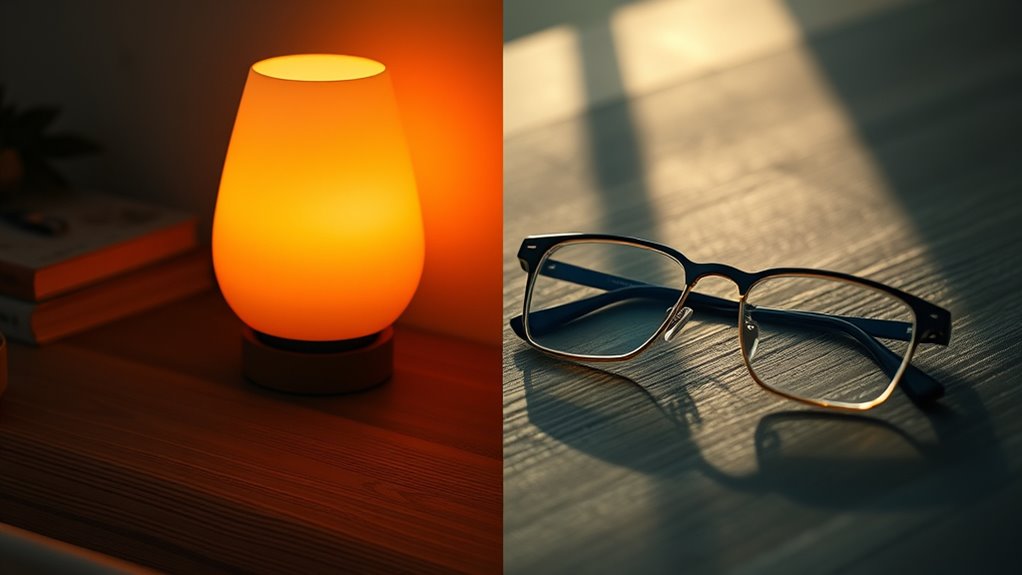
Dawn simulation lights mimic natural sunrise by gradually increasing their brightness to replicate how the sun slowly rises in the morning. You’ll notice that the light intensity starts low and steadily ramps up, creating a gentle awakening rather than a sudden shock. This gradual change helps regulate your circadian rhythm and prepares your body for wakefulness. The key to this mimicry lies in adjusting the color temperature, which shifts from warm, amber tones to cooler, bluish hues as the light intensifies. This progression closely resembles the natural progression of sunlight during dawn. By carefully controlling both light intensity and color temperature adjustment, dawn simulation lights provide a realistic sunrise experience that can improve your mornings and set a positive tone for the day ahead. Incorporating energy-efficient LED technology ensures that these lights are sustainable and cost-effective over time. Additionally, many models feature customizable light schedules, allowing you to tailor your wake-up routine to your personal preferences. Understanding natural light patterns can further enhance the effectiveness of your dawn simulation setup.
The Science Behind Blue-Blocking Glasses
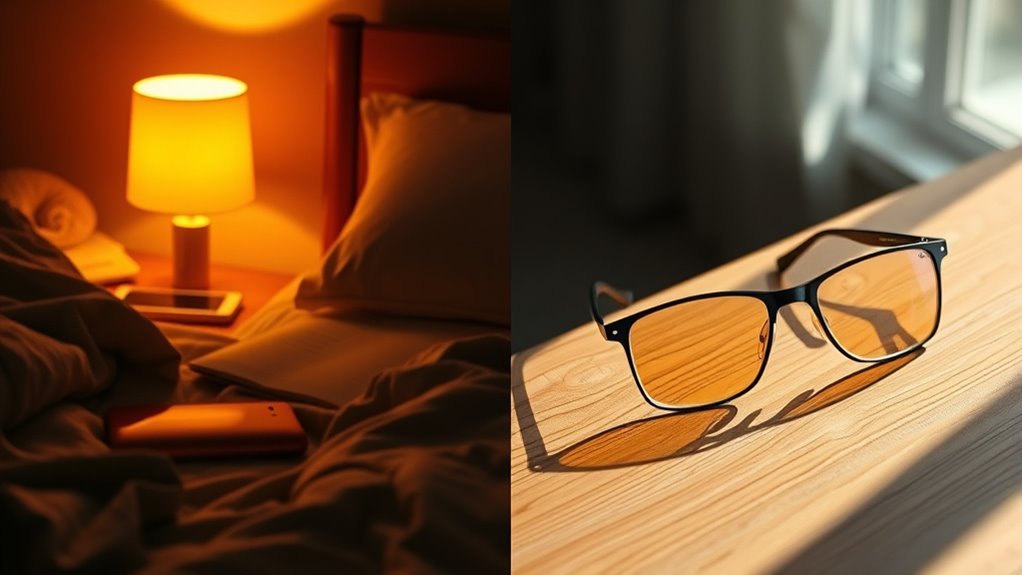
Blue-blocking glasses work by filtering out specific wavelengths of light, mainly in the blue spectrum, which can disrupt your sleep patterns. By reducing blue light exposure, they help maintain your melatonin levels and support healthy circadian rhythms. Understanding how these glasses influence your body’s natural processes explains their growing popularity for better sleep and overall well-being. Additionally, research shows that managing light exposure is crucial for maintaining optimal circadian rhythm and sleep quality. Proper light management can also prevent disruption of sleep cycles, ensuring you rest more soundly throughout the night.
Light Spectrum Filtering
Light spectrum filtering is the core mechanism that makes blue-blocking glasses effective. By selectively reducing specific wavelengths, especially blue light, these glasses alter the apparent color temperature and light intensity reaching your eyes. Lowering blue light shifts the spectrum toward warmer tones, which can create a more relaxing ambiance in the evening. This filtering also diminishes light intensity, making screens and artificial lighting less harsh. As a result, your eyes experience less strain, and your circadian system is less disrupted by artificial light exposure. The design and quality of the filters determine how much blue light is blocked and how natural the colors appear. Understanding this process helps you choose the right glasses for your needs, balancing effective filtering with visual comfort. Light spectrum filtering is also essential in designing effective light management strategies to support overall well-being. Additionally, the effectiveness of these glasses depends on the filter quality, which influences both the amount of blue light blocked and the preservation of color accuracy. Properly engineered filters optimize both visual clarity and health benefits, making them a crucial part of light management solutions.
Melatonin Production Impact
Filtering out blue light not only improves visual comfort but also plays a significant role in regulating your body’s production of melatonin, the hormone responsible for sleep. Exposure to blue light late at night can cause melatonin suppression, disrupting your natural sleep cycle. When blue light reaches your eyes, it inhibits hormone regulation, making it harder to fall asleep. Incorporating blue light filters into your routine can help mitigate these effects and support better sleep hygiene. Additionally, understanding the impact of blue light on circadian rhythms can guide you in choosing effective blue-blocking solutions. Implementing blue-light blocking strategies can further enhance your sleep quality by minimizing disruptions to your internal clock.
Circadian Rhythm Regulation
Have you ever wondered how your body keeps a natural sleep-wake cycle? It all hinges on photoreceptor activation in your eyes, especially cells called intrinsically photosensitive retinal ganglion cells (ipRGCs). When exposed to blue light, these photoreceptors send signals to your brain’s circadian clock, helping regulate your circadian rhythm. Blue-blocking glasses filter out specific wavelengths, reducing blue light exposure and supporting proper circadian entrainment. This keeps your internal clock aligned with the day-night cycle, promoting better sleep and alertness. Without adequate photoreceptor activation at the right times, your circadian rhythm can become disrupted, leading to sleep issues and fatigue. By using blue-blocking glasses, you help your body maintain a balanced circadian rhythm, even during late-night screen use or artificial lighting. Proper light management strategies play a crucial role in maintaining your body’s internal clock. Additionally, photoreceptor activation is essential for signaling your brain to adapt to environmental light changes, further emphasizing the importance of managing light exposure effectively. Furthermore, understanding how different light wavelengths impact melatonin production can enhance your strategy for better sleep hygiene.
Key Benefits of Using Dawn Simulators
Using a dawn simulator gives you a natural wake-up signal, helping your body start the day calmly. It can also improve your sleep quality by encouraging a healthier sleep cycle. These benefits make dawn simulators a simple way to enhance your overall well-being. Incorporating evidence‑informed guidance can further optimize your sleep environment and habits for better rest. Additionally, integrating smart home technology can create a more seamless and personalized sleep experience. Leveraging connected equipment allows you to customize your sleep setting and monitor your progress over time. Understanding lighting control systems can help you automate and fine-tune your morning routines for maximum comfort. Employing personalized lighting schedules can further support your circadian rhythm and overall sleep health.
Natural Wake-Up Signal
When dawn simulators gradually brighten your room, they mimic the natural light cues your body expects to wake up feeling refreshed. This gentle increase in light intensity signals your brain that it’s time to wake, aligning with your sleep cycle. Using a dawn simulator helps you wake up more naturally, avoiding sudden alarms that can jolt you awake feeling groggy. Imagine starting your day feeling energized and ready, instead of sluggish. Here’s why it works:
- Boosts your mood by creating a positive morning routine
- Reduces stress caused by abrupt wake-ups
- Reinforces your body’s natural sleep-wake rhythm
- Enhances overall sense of well-being through consistent light cues
Additionally, integrating light therapy techniques can further improve your sleep quality and daytime alertness. Incorporating natural light cues helps synchronize your internal clock with environmental signals, promoting healthier sleep patterns and waking experiences. Proper maintenance of your dawn simulator ensures it functions effectively and lasts longer, maximizing these benefits and keeping the light consistent.
Improves Sleep Quality
Dawn simulators enhance sleep quality by creating a more natural shift from sleep to wakefulness. They help you improve your sleep environment by reducing abrupt awakenings and promoting a smoother progression into wakefulness. By gradually increasing light levels, these devices reinforce your body’s natural circadian rhythms, leading to deeper, more restorative sleep at night. Incorporating a dawn simulator into your morning routines can also help reset your internal clock, making it easier to fall asleep and wake up refreshed. This consistent, gentle wake-up process minimizes grogginess and sleep disturbances. With better sleep quality, you’ll feel more energized, alert, and ready to face the day, all while supporting overall health and well-being. Circadian rhythm regulation is a key factor in achieving optimal sleep, and dawn simulators play a vital role in maintaining it.
Advantages of Incorporating Blue-Blocking Strategies
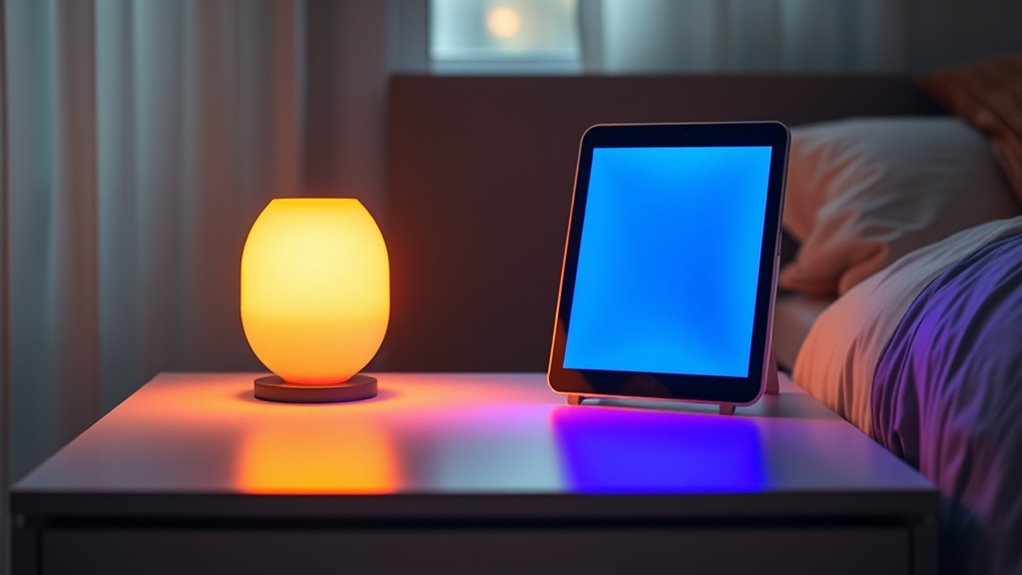
Incorporating blue-blocking strategies offers a range of health benefits, especially for those who spend significant time in front of screens. By reducing blue light exposure, you can improve your sleep environment, making it easier to fall asleep and wake refreshed. Additionally, these strategies support mental health by minimizing eye strain and preventing digital fatigue. Here are four key advantages:
- Enhanced sleep quality—less disruption to your circadian rhythm.
- Reduced eye strain—less discomfort during prolonged screen use.
- Better mood regulation—less digital stress impacts mental health positively.
- Increased productivity—clearer focus and fewer headaches.
Factors to Consider When Choosing Between the Two
Choosing between dawn simulation and blue-blocking strategies depends on your specific needs and lifestyle. Your sleep environment plays a vital role—consider how your bedroom lighting, windows, and electronics impact your sleep quality. If your environment is naturally dark but you struggle with morning wakefulness, dawn simulation can help mimic natural sunlight to regulate your circadian rhythm. On the other hand, if you spend evenings on screens or have disruptive artificial lighting, blue-blocking tools may be more effective. Think about necessary lifestyle adjustments, like changing your evening routines or making your sleep space more conducive to rest. Both options require some commitment, so choose based on how well each fits into your daily habits and environment for the best results.
Practical Tips for Incorporating These Solutions Into Your Routine
To successfully integrate dawn simulation or blue-blocking tools into your routine, start by evaluating your current habits and environment. Improving sleep hygiene is key to maximizing these solutions. Here are four practical tips:
- Set consistent sleep and wake times to help your body adapt to light therapy or blue-blocking routines.
- Use light therapy devices or blue-blocking glasses gradually, so your body adjusts comfortably.
- Create a calming bedtime environment free of screens and artificial light to reinforce your sleep goals.
- Track your progress to notice how these tools influence your sleep quality and adjust accordingly.
Frequently Asked Questions
Can Dawn Simulation Lights Improve Sleep Quality for Shift Workers?
Yes, dawn simulation lights can improve your sleep quality as a shift worker by helping regulate your circadian rhythm. These lights mimic natural sunrise, signaling your body it’s time to wake up and promoting better sleep during your rest periods. Using dawn simulation for sleep enhancement can reduce fatigue and improve alertness, making it easier to adapt to irregular schedules. Incorporate them into your routine to support your sleep and overall well-being.
Are Blue-Blocking Glasses Effective for Preventing Digital Eye Strain?
Think of blue-blocking glasses as your modern-day shield, much like Odysseus’s armor, protecting your eye health from blue light. They are effective for reducing digital eye strain by filtering out harmful blue light emitted by screens. If you spend hours on devices, wearing these glasses can lessen eye fatigue, dryness, and discomfort, helping you maintain healthier eyes while keeping your focus sharp and your vision clear.
How Long Should I Use Dawn Simulators Each Morning?
You should use dawn simulators for about 20 to 30 minutes each morning to support your circadian regulation. Incorporate it into your morning routine consistently to help reset your internal clock naturally. This gradual light exposure mimics sunrise, boosting alertness and sleep quality. Adjust the duration if needed, but sticking to this timeframe guarantees you get the most benefit without overstimulation.
Do Blue-Blocking Strategies Interfere With Natural Sunlight Exposure?
Imagine your eyes as windows to a garden of light. Blue-blocking strategies act like shades, dimming harsh sunlight and protecting your circadian rhythm, but if overused, they can block essential light exposure, risking circadian disruption. While they don’t completely block natural sunlight, excessive use might interfere with your body’s internal clock. Balance is key—use blue-blocking thoughtfully to preserve your natural light cues without hindering your circadian health.
Are There Any Health Risks Associated With Prolonged Blue Light Exposure?
Prolonged blue light exposure can pose health risks like circadian disruption and retinal damage. You might experience sleep issues if your circadian rhythm gets thrown off, and there’s potential for retinal harm over time. To protect yourself, consider limiting screen time before bed and using blue-blocking glasses or filters. Being mindful of blue light exposure helps safeguard your sleep quality and eye health.
Conclusion
So, whether you’re waking up gently with a dawn simulator or blocking out blue light like a nocturnal ninja, the choice is yours. Just remember, one’s designed to coax you out of bed, the other to keep you from staring at screens all night—both promise a better sleep, or at least a good excuse to splurge on gadgets. Pick your hero, and may your mornings be bright, your nights dark, and your sleep legendary.