
TL;DR

Get wellness gear delivered free with Prime
- Fast, free delivery on millions of items
- Prime Video, Amazon Music and more included
- Member-only deals all year
A Tiny Buddha first-person essay describes five habits its author says can make recovery after a stressful day harder: prolonged scrolling, suppressing emotions, blaming yourself for stress, pushing through without rest, and neglecting small comforts. The article offers personal suggestions, not clinical findings, and does not establish that these habits cause specific health effects.
Tiny Buddha has published a first-person essay listing five habits its author says can make a stressful day harder to recover from, including prolonged social-media scrolling and ignoring emotions. The piece recommends quieter, more comforting routines, but presents personal experience and advice rather than results from a scientific study.
The author describes growing up between a strict household and a grandmother’s warmer, more creative home, saying the contrast taught them about balance and the value of doing some things from enjoyment rather than obligation. The essay applies that lesson to stressful evenings: the author argues that a difficult day need not be followed by more pressure at home.
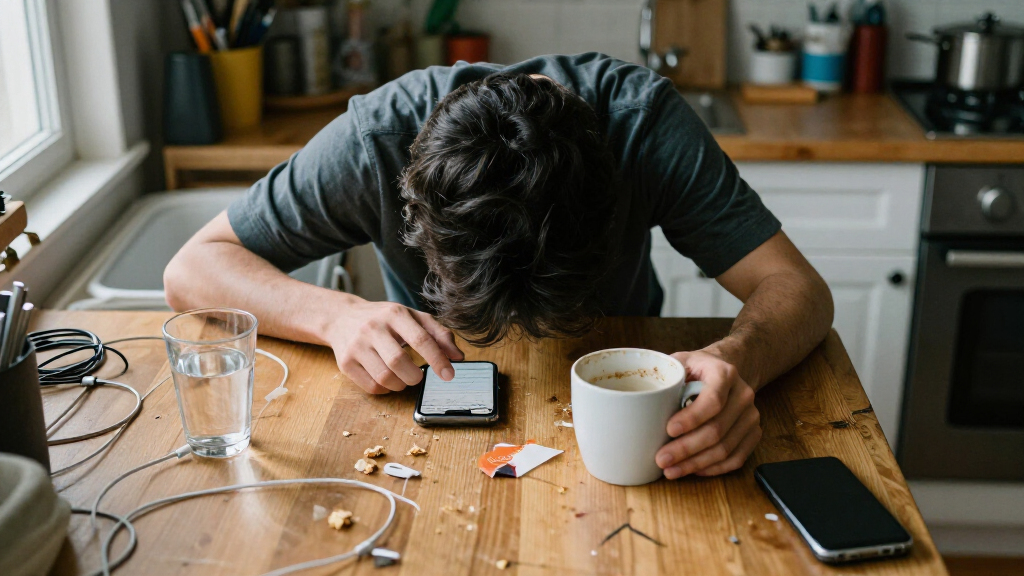
The five habits identified are scrolling for long periods, pushing away difficult feelings, treating stress as a personal failure, continuing to push through instead of resting, and overlooking simple comforts. For scrolling, the author suggests taking a short break from screens, making tea, watching the sunset, or spending quiet time by an open window or near water.
For emotional avoidance, the essay encourages naming a hard day rather than insisting everything is fine. It also suggests treating stress as information that may prompt reflection about workload, rest, or boundaries. The source offers examples such as a bath, a meal the person enjoys, a favorite blanket, or an earlier bedtime. These are the author’s suggestions; the essay does not report controlled evidence that they work for everyone.
Small Choices After a Stressful Day
The essay’s practical point is that the way someone spends the hours after a demanding day can shape how that evening feels. It contrasts more stimulation and self-criticism with pauses, emotional acknowledgment, and ordinary comforts. That framing may give readers a way to notice habits that do not feel restorative to them.
Its limits also matter. The article is a personal essay, not a clinical assessment or a set of tested treatment recommendations. Stress has many possible causes, and individual responses differ. The suggestions should not be read as a substitute for professional support when distress is persistent or interfering with daily life.
As an affiliate, we earn on qualifying purchases.
The Essay’s Personal Starting Point
The author grounds the piece in childhood memories of two different homes: one described as orderly but emotionally cold, and the other as welcoming and full of creative activity. The grandmother’s approach, as recalled by the author, emphasized pleasure alongside responsibility, rather than enduring every task without question.
That family history is the lens for the five habits, not evidence that the recommendations apply universally. The essay also recounts the author’s experience of learning to acknowledge feelings and of not expecting their daughter to pretend to be okay. No research study, expert interview, or clinical data is included in the supplied source material.
“Today was hard.”
— Tiny Buddha essay author
comfortable blanket for relaxation
As an affiliate, we earn on qualifying purchases.
As an affiliate, we earn on qualifying purchases.
What the Essay Does Not Establish
The source does not provide a publication date, identify a clinical or research basis for the five-item list, or measure whether the suggested alternatives change stress. Its statements about emotions potentially returning as anxiety, irritability, exhaustion, or numbness are presented in the essay without supporting study details in the supplied material.
It is also unclear how broadly the author intends the advice to apply. A short period away from a phone or a comforting routine may not address the causes of ongoing stress, and the essay does not discuss individual circumstances or professional care. The material supports reporting what the author recommends, not treating the recommendations as established health guidance.
As an affiliate, we earn on qualifying purchases.
How Readers Can Use the Advice
The source describes no follow-up study, expert review, or planned next step. Readers who find the suggestions useful can treat them as low-pressure options to try—such as pausing before opening a social app, naming how the day felt, or choosing a simple restful activity—rather than as a prescribed program.
If stress is persistent, severe, or disrupting everyday activities, readers may want to speak with a qualified health professional. The essay’s broader message is to notice what follows a hard day and consider whether a habit is genuinely helping, while recognizing that no single routine suits everyone.
As an affiliate, we earn on qualifying purchases.
Key Questions
What five habits does the Tiny Buddha essay identify?
It names prolonged scrolling, ignoring emotions, treating stress as personal failure, pushing through without rest, and neglecting simple comforts. These are the author’s personal list, not a diagnostic checklist.
What does the author suggest instead of scrolling?
The author suggests taking a quiet pause, making a comforting drink, watching the sunset, sitting by an open window, or spending time near water. The essay does not claim these activities will reduce stress for every reader.
Is the article based on scientific research?
The supplied source is a first-person essay and does not cite a study or present research data. Its recommendations should be understood as personal advice, not proven clinical treatment.
When should someone seek professional support?
The essay does not set out clinical guidance. As a general precaution, someone whose stress is persistent, severe, or interfering with daily life can consider talking with a qualified health professional.
Source: rss
Halloween Picks
halloween
As an affiliate, we earn on qualifying purchases.