
Afternoon slumps happen because your body’s natural circadian rhythms and blood sugar levels dip, making you feel tired just when you need to stay alert. Eating sugary foods causes spikes and crashes, worsening fatigue, while skipping meals and dehydration can also contribute. To prevent the crash, try balanced snacks, stay hydrated, and incorporate quick physical activity. Keep going to discover effective strategies to stay energized and beat that midday slump.
Key Takeaways
- Circadian rhythms naturally cause energy dips in the early afternoon, leading to sluggishness.
- Blood sugar levels drop after meals, especially if consuming sugary foods, causing fatigue.
- Skipping breakfast or irregular meal times can worsen energy crashes later in the day.
- Lack of physical activity and poor hydration contribute to decreased alertness during the slump.
- Managing stress, improving sleep, and maintaining balanced meals help stabilize energy levels throughout the day.
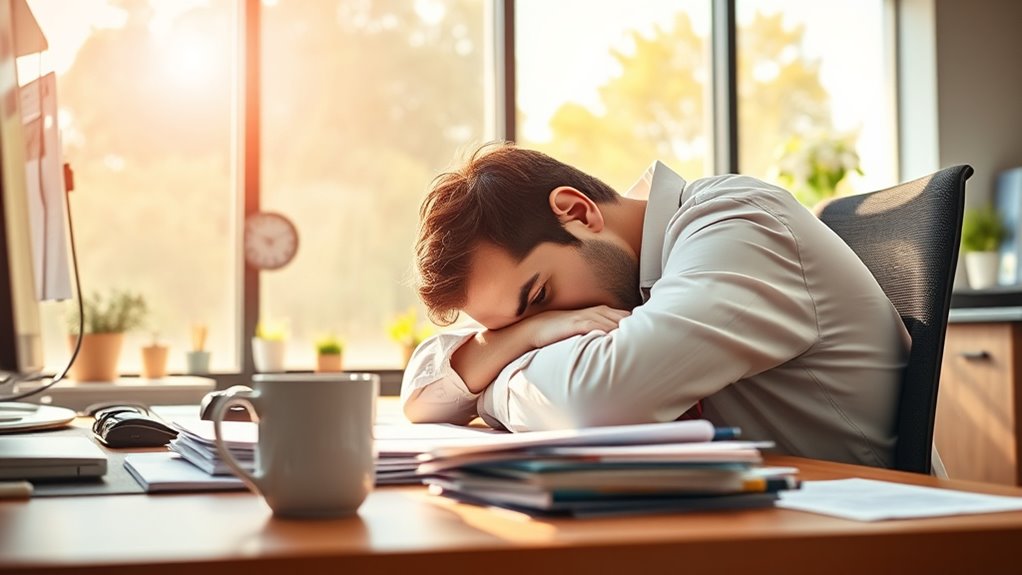
Many people experience a dip in energy and focus during the afternoon, commonly known as the afternoon slump. This period can leave you feeling sluggish, unproductive, and craving a quick fix like coffee or sugary treats. But understanding why these energy dips happen is key to preventing the crash and maintaining your productivity. Your body’s natural circadian rhythms play a significant role, causing your energy levels to fluctuate throughout the day. Around mid-afternoon, your blood sugar levels tend to drop after a morning of eating, and your body signals that it needs a boost. Without proper nourishment, this leads to feelings of fatigue and decreased alertness.
Many experience energy dips in the afternoon due to circadian rhythms and blood sugar drops.
One effective way to combat these energy dips is to choose healthy snacks over processed junk. Instead of reaching for a candy bar or a bag of chips, opt for nutrient-dense options that provide sustained energy. Think nuts, seeds, fresh fruit, or Greek yogurt. These snacks contain a balanced mix of protein, healthy fats, and complex carbohydrates that slowly release energy, keeping you alert longer. Healthy snacks also help stabilize blood sugar levels, preventing the sharp spikes and crashes associated with sugary foods. When your blood sugar remains steady, you’ll find it easier to stay focused and avoid the mid-afternoon slump.
Timing your meals and snacks is just as important as what you eat. Instead of skipping breakfast or relying heavily on caffeine, start your day with a balanced meal that includes protein and fiber. This sets a stable energy foundation. Then, plan to have small, healthy snacks throughout the day, especially in the early afternoon. This approach prevents your blood sugar from dropping too low, which can trigger fatigue. Staying hydrated with water is equally essential, as dehydration can worsen feelings of tiredness and reduce cognitive function. Understanding how home theatre projectors work can also inspire you to create an environment that minimizes distractions and optimizes your focus during work or relaxation, helping you maintain energy levels. Additionally, consider incorporating light physical activity during the day. A quick walk or stretching break can boost circulation and increase alertness, helping you push through the slump. Managing stress and ensuring adequate sleep at night also play roles in how your energy levels fluctuate. When you’re well-rested and less stressed, your body can better regulate its energy, making afternoon dips less severe.

belVita Energy Snack Bites, Banana, Dark Chocolate and Sunflower Seed, 5 oz
- Package Size: 5 oz bag
- Flavor Combination: Banana, dark chocolate, sunflower seed
- Made With Real Ingredients: Real fruit and seeds
As an affiliate, we earn on qualifying purchases.
As an affiliate, we earn on qualifying purchases.
Frequently Asked Questions
Can Specific Foods Help Prevent Afternoon Energy Dips?
Yes, specific foods can help prevent afternoon energy dips. Choosing healthy snacks like nuts, fruits, or yogurt provides sustained energy, while foods rich in protein and fiber keep you full longer. Also, staying hydrated by drinking water throughout the day boosts hydration levels, preventing fatigue. Incorporate these foods into your routine to maintain your energy and beat those sluggish feelings in the afternoon.
How Does Sleep Quality Impact Afternoon Alertness?
Sleep quality is the secret sauce to your afternoon alertness. If your sleep cycles are disrupted, you’ll feel like a car running on empty by midday, making naps less effective. Good sleep helps regulate your energy levels and keeps your mind sharp. When you prioritize quality sleep, you’re fueling your body properly, so those afternoon slumps become less of a mountain to climb and more like a gentle hill to cross.
Are There Effective Exercises to Boost Afternoon Energy?
You can boost your afternoon energy with simple stretching routines and breathing exercises. Try short stretches like neck rolls, shoulder shrugs, or leg stretches to increase blood flow. Incorporate deep breathing exercises, such as inhaling deeply through your nose and exhaling slowly through your mouth, to oxygenate your brain and reduce fatigue. These quick activities help refresh your mind, improve alertness, and keep you energized throughout the day.
Does Caffeine Consumption Influence Afternoon Slump Severity?
Caffeine consumption can temporarily boost your energy, but it might also increase caffeine dependency and lead to a more intense afternoon slump once the stimulant effects wear off. If you rely heavily on caffeine, you may experience heightened fatigue later in the day. To prevent this, consider moderating your intake and opting for natural energizers like short walks or hydration, which support sustained alertness without the dependency risks.
Can Mental Breaks Improve Afternoon Productivity?
Yes, mental breaks can boost your afternoon productivity. Research shows that practicing mindfulness techniques during short breaks helps refresh your focus and reduces fatigue. By integrating effective time management strategies, like scheduled pauses, you prevent burnout and stay alert. Taking intentional mental breaks recharges your mind, improves concentration, and keeps you energized for the rest of your workday. So, give yourself permission to pause—your productivity will thank you.

Sahara Sailor Water Bottle 32oz, Durable and Leakproof Water Bottles Motivational with Time Marker, Tritan, BPA Free, Wide Mouth with Easy Clean Brush for Gym, Travel, Home, School, Office (1 Bottle)
- Hydration Tracking with Time Marker: Helps monitor daily water intake
- Leakproof Flip-Lock Lid: Prevents spills and easy one-handed opening
- BPA-Free Tritan Material: Safe, non-toxic, and reusable
As an affiliate, we earn on qualifying purchases.
As an affiliate, we earn on qualifying purchases.
Conclusion
To beat the afternoon slump, try taking a short walk or having a healthy snack instead of reaching for sugar. For example, imagine you’re at work and feel your energy dip around 3 pm. A quick five-minute stretch or a glass of water can refresh you and keep you productive. Small changes like these can make a big difference, helping you stay focused and energized all afternoon long.

Nzwnxdtq Figure 8 Fitness Resistance Bands, Elastic Bands with Handles for Working Out,Arm|Back|Shoulder Training Elastic Ropes,Exercise Equipment for Physical Therapy Stretching Yoga Pilates
- Upgraded Resistance Material: Made of durable thermoplastic elastomer
- Anti-slip Handle Design: Handles with anti-slip particles for safety
- Versatile 3-Pack Set: Suitable for home, gym, travel
As an affiliate, we earn on qualifying purchases.
As an affiliate, we earn on qualifying purchases.

Blood Sugar Balance Breakfasts: 52 Simple, High-Protein Meals for Stable Energy & Glucose Support (Blood Sugar Balance Series)
As an affiliate, we earn on qualifying purchases.
As an affiliate, we earn on qualifying purchases.