To quiet bedroom allergens that trigger nighttime congestion, start by washing your linens weekly in hot water and use allergen-proof mattress and pillow covers. Keep humidity between 30-50%, clean regularly, and minimize clutter to reduce dust buildup. Avoid pet access on beds and consider adding a HEPA air purifier to filter airborne allergens. These steps create a healthier sleep environment, and if you keep exploring, you’ll find more simple ways to breathe easier at night.
Key Takeaways
- Use allergen-proof mattress and pillow encasements to block dust mites and mold spores.
- Wash bedding weekly in hot water (≥130°F) to eliminate dust mites and allergens.
- Maintain indoor humidity between 30-50% to prevent mold growth and dust mite proliferation.
- Install HEPA air purifiers to trap airborne allergens and improve room air quality.
- Regularly clean and vacuum carpets, upholstery, and soft furnishings to reduce allergen buildup.
Regularly Wash Bedding and Linens
Regularly washing your bedding and linens is one of the most effective ways to reduce allergens in your bedroom. Dust mites thrive in warm, humid environments and feed on skin flakes, making bedding a prime habitat. Mold spores can settle on sheets and pillowcases, especially in areas with high humidity. Washing your sheets, pillowcases, and blankets weekly in hot water—at least 130°F—helps kill dust mites and remove mold spores. Using fragrance-free detergents minimizes irritation, and drying items thoroughly prevents mold growth. Don’t forget to wash other bedding items like pillow protectors and mattress covers regularly. Additionally, maintaining proper ventilation can help control humidity levels that support allergen growth. Incorporating smart home devices like humidity sensors and automated ventilation systems can further optimize your bedroom environment for allergy prevention. Ensuring good air quality by reducing indoor humidity can further limit allergen proliferation. Regular cleaning routines help minimize dust buildup and allergen accumulation, creating a cleaner, healthier sleeping environment free from irritants that cause congestion. Proper humidity control is essential for preventing the growth of mold and dust mites, which thrive in moist conditions.
Use Allergen-Proof Mattress and Pillow Encasements

Using allergen-proof mattress and pillow encasements creates a barrier that prevents dust mites, mold spores, and other irritants from settling into your bedding. These encasements, including mattress protection covers and pillow covers, are designed to be airtight and tightly woven, blocking allergens from penetrating. By investing in high-quality covers, you reduce exposure to common allergens that trigger nighttime congestion. These encasements also help contain existing allergens, making cleaning easier and more effective. Guarantee your mattress protection and pillow covers are labeled allergen-proof or dust mite-proof for ideal results. Regularly check for tears or wear, and replace covers when necessary. Incorporating allergen-proof features into your bedding further enhances the barrier against irritants. Additionally, choosing covers with proper breathability can improve comfort and prevent heat buildup. Ensuring your bedding materials are hypoallergenic can further minimize allergen accumulation and improve sleep quality. Using encasements according to the manufacturer’s instructions can maximize their effectiveness over time. For added protection, consider the use of air purifiers in your bedroom to further reduce airborne allergens, creating an even healthier sleep environment. This simple step markedly improves your sleep environment and reduces allergy symptoms, creating a healthier, more restful night.
Maintain a Clean and Dust-Free Environment
Keeping your bedroom clean and dust-free is essential for reducing allergens that can trigger symptoms. Regular dust prevention involves dusting surfaces with a damp cloth to trap allergens rather than dispersing them into the air. Vacuum your floors and carpets frequently using a HEPA filter vacuum to remove dust mites and other particles. Consider installing allergen barriers, such as air purifiers with HEPA filters, to catch airborne allergens before they settle. Wash bedding weekly in hot water to eliminate dust mites and other irritants. Keep clutter to a minimum to reduce dust collection areas. Additionally, understanding exposure and health effects can help you tailor your cleaning practices for better allergy management. Using appropriate cleaning tools designed for dust removal can further enhance your efforts. Selecting a professional carpet cleaning service periodically can help reduce deep-seated dust and allergens in carpets and upholstery. Incorporating consistent cleaning routines ensures persistent allergen control and minimizes symptom flare-ups. By maintaining a tidy, dust-free environment, you lower the chances of allergen buildup, creating a healthier space that promotes better sleep and less congestion at night.
Control Humidity Levels in the Bedroom

When your bedroom is cluttered with dust and debris, it can create a perfect environment for allergens to thrive. Proper humidity control is essential for reducing airborne allergens like mold and dust mites. Aim to keep your bedroom’s humidity level between 30% and 50%, as this range discourages mold growth and dust mite proliferation. Using a dehumidifier or humidifier helps with moisture regulation, maintaining consistent levels. Too much moisture can promote mold, while too little can dry out nasal passages, making congestion worse. Regularly monitor humidity with a hygrometer, adjusting devices as needed. Maintaining appropriate humidity levels also helps prevent the growth of mold and dust mites, which are common allergens. By controlling moisture levels, you create a less hospitable environment for allergens, helping you breathe easier and sleep more soundly at night.
Minimize Clutter and Keep Surfaces Clear
Cluttered surfaces can trap dust and allergens, making it harder to breathe comfortably at night. To combat this, focus on clutter reduction by organizing your belongings with effective storage solutions. Use bins, shelves, or under-bed storage to keep surfaces tidy and free of unnecessary items. Regularly clearing off nightstands, dressers, and other surfaces minimizes dust accumulation and reduces allergen build-up. Keep items in closed containers whenever possible to prevent dust from settling. Staying disciplined about maintaining a clutter-free environment not only improves air quality but also creates a more calming, peaceful bedroom. Simplifying your space makes cleaning easier and lessens the chance of dust and allergens lingering, helping you breathe easier and enjoy better sleep. Additionally, organizing your space can prevent dust from settling on surfaces in the first place, further improving indoor air quality. Incorporating dust-resistant storage solutions can also help keep allergens at bay and maintain a healthier sleeping environment. Paying attention to airflow and ventilation can further enhance air quality and reduce allergen accumulation. Using air purifiers with HEPA filters can greatly reduce airborne dust and allergens, contributing to a healthier bedroom environment.
Choose Hypoallergenic and Non-Toxic Products

Start by selecting hypoallergenic bedding to reduce allergen buildup. Use non-toxic paints to improve indoor air quality and avoid chemical fumes. Also, choose natural cleaning products to keep your space fresh without introducing irritants. Incorporate proper rug care practices to prevent dust accumulation from fine rugs that can exacerbate allergies and consider using air purifiers to further enhance indoor air cleanliness.
Select Hypoallergenic Bedding
Are you aware of how much your bedding can impact allergy symptoms? Choosing the right hypoallergenic bedding can make a considerable difference in reducing nighttime congestion. Look for allergy-proof linens that are specifically designed to block dust mites, mold, and pet dander. These products often feature tightly woven fabrics that prevent allergens from settling in. When shopping for hypoallergenic bedding, opt for covers and pillowcases labeled as non-toxic and free from harmful chemicals. Regularly washing your bedding in hot water also helps eliminate allergens. Additionally, selecting Free Floating materials can improve airflow and reduce moisture buildup, further decreasing allergen proliferation. Properly maintaining your bedding and understanding Individual evidence can help identify specific triggers, leading to more targeted allergy management. By selecting high-quality hypoallergenic bedding, you create a barrier against common triggers, helping you breathe easier and enjoy restful sleep. It’s a simple step that substantially improves your bedroom’s allergy resilience.
Use Non-Toxic Paints
After upgrading your bedding to hypoallergenic options, paying attention to the paint on your walls can further reduce indoor allergens. Choose eco-friendly wall options, such as natural paint finishes, which emit fewer volatile organic compounds (VOCs). These non-toxic paints help create a healthier environment by minimizing airborne irritants that can trigger congestion. Look for products labeled as hypoallergenic and free from harsh chemicals, ensuring your bedroom air stays cleaner. Natural paint finishes often contain plant-based ingredients and avoid synthetic dyes, making them safer for sensitive respiratory systems. Additionally, Garage Door Openers can be integrated with smart home systems to improve overall home safety and convenience. By selecting non-toxic paints, you not only improve indoor air quality but also support environmentally friendly practices. Using VOC-free paints is especially beneficial in bedrooms, where prolonged exposure can affect respiratory health. This small change can profoundly contribute to a more restful, allergen-reduced bedroom environment.
Opt for Natural Cleaning Products
Choosing natural cleaning products can substantially reduce indoor allergens, especially if you have allergies or respiratory sensitivities. Opt for natural disinfectants that eliminate germs without harmful chemicals, helping create a safer sleeping environment. Look for eco friendly cleaners made from plant-based ingredients; these are less likely to trigger allergic reactions or irritate your lungs. Avoid conventional household cleaners that contain synthetic fragrances, dyes, or harsh chemicals, which can worsen congestion at night. Instead, select hypoallergenic and non-toxic options to keep your bedroom fresh and allergen-free. Regularly using natural disinfectants and eco friendly cleaners ensures your space stays clean without compromising your health. Making this switch not only improves air quality but also supports a healthier, more comfortable bedroom environment.
Improve Ventilation and Air Quality

Improving ventilation and air quality in your bedroom is essential for reducing allergens and creating a healthier sleeping environment. You can achieve better air exchange by regularly opening windows or using exhaust fans to bring in fresh air and remove indoor pollutants. Installing quality ventilation systems, like HEPA air purifiers or HVAC filters, helps trap airborne allergens such as dust, pollen, and pet dander. These systems continuously circulate and clean the air, preventing buildup of irritants that trigger congestion. Keep vents unobstructed and maintain your ventilation equipment for *ideal* performance. By enhancing airflow and filtering the air, you create a space where allergens are minimized, making it easier to breathe and sleep peacefully through the night.
Keep Pets Out of the Bedroom or Off the Bed
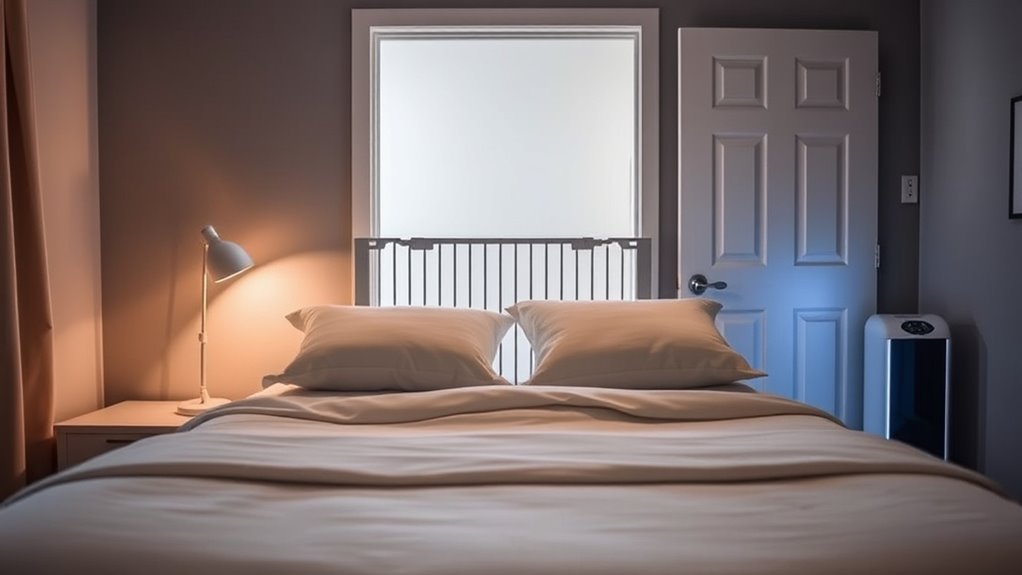
Keeping pets out of the bedroom or off the bed reduces allergens and creates a healthier sleeping environment. You can set up pet-free zones and wash bedding frequently to minimize allergen buildup. Using air purifiers can also help filter out pet dander and improve air quality.
Designate Pet-Free Zones
To reduce allergens in your bedroom, it is pivotal to create pet-free zones by keeping your pets out of the room or off the bed. This helps minimize pet allergies and improves allergy management. Designating specific areas limits allergen buildup, making it easier to breathe at night. Consider establishing a clear boundary or using barriers to reinforce these zones. To understand how different pets impact allergy management, review the table below:
| Pet Type | Allergens Contributed | Zone Recommendations |
|---|---|---|
| Dogs | Dander, saliva | No access to bedroom or bed |
| Cats | Dander, hair | Keep off furniture and bed |
| Small pets | Fur, droppings | Limit access to designated areas |
| Birds | Feathers, dander | Keep out of sleeping areas |
Creating pet-free zones is a simple but effective step toward quieter, allergen-free nights.
Regular Bedding Washing
Regularly washing your bedding is one of the most effective ways to reduce allergens caused by pets. Dust mites thrive in bedding, feeding on dead skin cells, so frequent washing helps eliminate these allergens. Use hot water, ideally at least 130°F, to break down dust mite proteins and remove pet dander. Consider allergen barriers like allergen-proof mattress and pillow covers to prevent dust mites from settling and triggering congestion. Wash sheets, pillowcases, and blankets weekly to keep allergens at bay and maintain a cleaner sleeping environment. Keeping pets out of the bedroom or off the bed also minimizes the introduction of new allergens, making your bedding less hospitable to dust mites and pet dander. Consistent cleaning creates a fresher, healthier space for restful sleep.
Use Air Purifiers
Using air purifiers can substantially reduce airborne allergens in your bedroom, especially pet dander and dust mites. To maximize their effectiveness, ensure proper air purifier placement—ideally near sources of allergens or in the center of the room. Regular air purifier maintenance is essential; replace filters as recommended and keep vents unobstructed. This helps maintain ideal air quality and prevents the buildup of allergens on filters, which can decrease efficiency. Avoid placing purifiers in corners or behind furniture, as airflow may be restricted. By positioning your air purifier correctly and maintaining it well, you create a cleaner environment that minimizes nighttime congestion triggers. This simple step makes a noticeable difference in your sleep quality and allergy relief.
Consider Air Purifiers With HEPA Filters

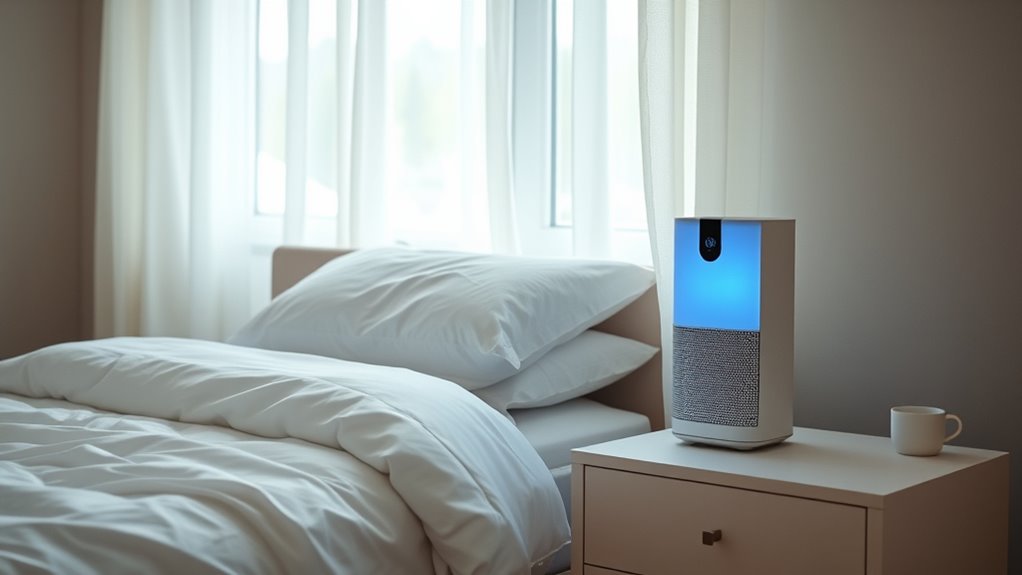
Are airborne allergens lingering in your bedroom making it harder to breathe? Consider using an air purifier with HEPA filters. These filters are highly effective at capturing tiny particles like dust mites, pet dander, mold spores, and pollen, all of which can trigger nighttime congestion. By improving your air quality, a HEPA-equipped purifier helps create a healthier sleeping environment. Look for models that are quiet and energy-efficient to avoid disrupting your sleep. Regularly changing the filters guarantees maximum performance. Investing in a HEPA filter air purifier can greatly reduce airborne allergens, making it easier to breathe freely and enjoy restful sleep. With better air quality, you’re less likely to wake up congested and stuffy.
Frequently Asked Questions
Can Herbal Remedies Help Reduce Nighttime Allergy Symptoms?
Herbal remedies can help reduce nighttime allergy symptoms. Drinking natural remedies like herbal teas with ingredients such as ginger, chamomile, or peppermint can soothe your airways and promote relaxation. These teas may help lessen congestion and inflammation, making it easier to breathe at night. While herbal remedies aren’t a cure, incorporating them into your bedtime routine might provide relief and improve your sleep quality naturally.
Are There Specific Fabrics That Are Better for Allergy Sufferers?
Think of your bedding as a fortress against allergens. Natural fabric choices like cotton, silk, and bamboo are softer and breathe better, making them ideal for allergy sufferers. Hypoallergenic bedding minimizes dust mites and mold, creating a cleaner sleep environment. By choosing these fabrics, you build a barrier that keeps allergens out, helping you breathe easier and enjoy restful nights without irritation.
How Often Should I Replace My Allergen-Proof Mattress Encasements?
You should replace your allergen-proof mattress encasements every 1 to 2 years to prevent allergen buildup and maintain effective mattress maintenance. Over time, encasements can develop tears or wear that allow allergens to accumulate, reducing their protective benefits. Regularly inspecting them and replacing when necessary helps guarantee you keep allergens at bay, creating a healthier sleep environment and minimizing nighttime congestion caused by allergens.
Do Indoor Plants Improve or Worsen Bedroom Air Quality?
Indoor plants can improve your bedroom air quality by increasing indoor air circulation and adding humidity. However, if not properly maintained, they may worsen it by encouraging mold growth and dust accumulation. To prevent this, water plants carefully, avoid overwatering, and ensure good ventilation. Keep mold prevention in mind, and select low-allergen, easy-to-maintain plants to enjoy cleaner, fresher air while reducing nighttime congestion triggers.
What Are the Signs of an Allergic Reaction to Household Cleaning Products?
You might notice signs of an allergic reaction to household cleaning products like skin irritations, such as redness, itching, or rash. Chemical sensitivities can also cause sneezing, coughing, or watery eyes. If you experience difficulty breathing or tightness in your chest, seek medical help immediately. These reactions indicate your body is responding negatively to certain chemicals, so consider switching to hypoallergenic or natural cleaning options to reduce your symptoms.
Conclusion
By taking these simple steps, you can transform your bedroom into a sanctuary, much like a calm harbor amid stormy seas. Just as a sailor relies on a steady compass, your vigilance against allergens guides you toward restful nights. Clear clutter, control humidity, and keep allergens at bay—your efforts create a peaceful refuge, allowing you to drift into restorative sleep and wake up refreshed, ready to face whatever new day awaits.