During allergy season, airborne allergens like pollen and dust increase, causing nasal congestion and inflammation that can lead to louder, more frequent snoring. You can stay ahead by using air purifiers, keeping your bedroom clean, and taking allergy medications before symptoms worsen. Elevate your head and stay hydrated to keep airways clear. Managing these triggers helps prevent flare-ups and improves your sleep quality—keep going to discover more tips for staying comfortable all season long.
Key Takeaways
- Use HEPA air purifiers to reduce airborne allergens and improve sleep quality during allergy season.
- Take antihistamines or nasal sprays proactively to minimize nasal congestion that worsens snoring.
- Keep bedrooms clean, dust-free, and avoid pet dander to prevent allergy flare-ups affecting breathing.
- Elevate your head with extra pillows and stay hydrated to reduce nasal congestion at night.
- Consult healthcare professionals for personalized allergy management strategies to prevent snoring during peak season.

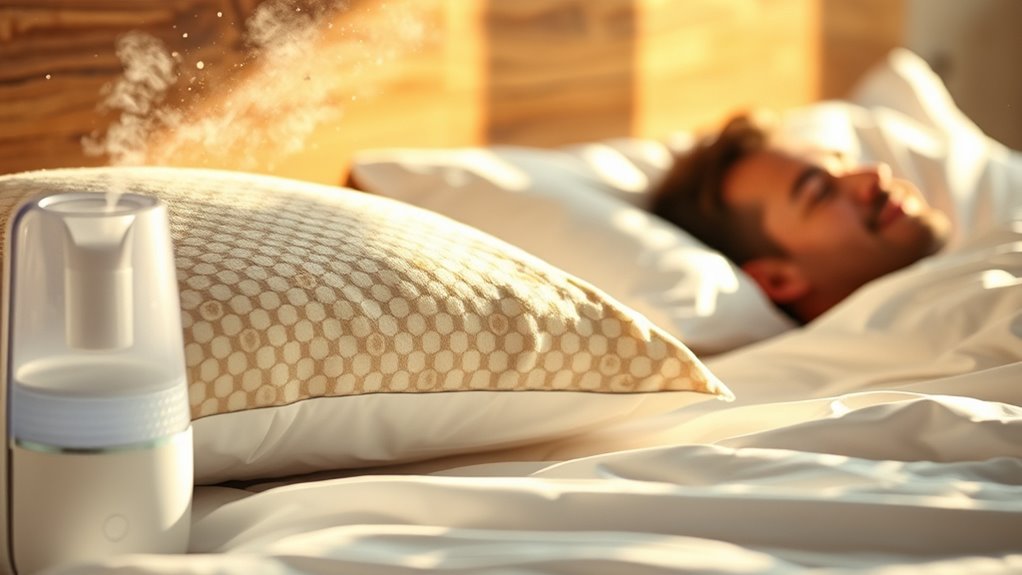
As allergy season ramps up, many people notice their sleep quality suffers, and one common culprit is increased snoring. When your air quality declines due to pollen, dust, and other allergens, it can cause nasal congestion and inflammation, making it harder to breathe easily at night. This congestion forces you to breathe through your mouth more often, which can lead to louder, more frequent snoring. Improving your air quality becomes essential during this time because it directly impacts how well you breathe while you sleep. Using air purifiers with HEPA filters can help reduce airborne allergens in your bedroom, creating a cleaner environment that minimizes congestion and promotes smoother breathing.
Boost sleep quality during allergy season by improving air quality with HEPA filters to reduce congestion and snoring.
In addition to improving air quality, managing your allergy symptoms with medications can make a notably difference in your sleep quality. Over-the-counter allergy medications like antihistamines can help reduce nasal swelling and congestion, allowing for easier airflow through your nasal passages. When your airways are less inflamed, you’re less likely to snore loudly or wake up feeling unrested. It’s important to take these medications as directed and consider starting them before allergy symptoms peak, so you don’t wake up feeling congested or exhausted. Sometimes, combining allergy medications with nasal sprays or decongestants can provide even more relief, especially during severe flare-ups.
You should also pay attention to your sleeping environment. Keep your bedroom free of dust and pet dander, wash bedding regularly, and vacuum carpets frequently to remove allergens that could worsen congestion. Elevating your head slightly with an extra pillow can also help reduce nasal congestion overnight, making it easier to breathe. Staying hydrated is another simple but effective approach—drinking plenty of water thins mucus, helping keep your airways clearer and reducing the likelihood of snoring caused by congestion. Avoiding irritants like cigarette smoke or strong perfumes in your bedroom can further improve air quality and decrease allergy symptoms. Additionally, using an air purifier with a HEPA filter can significantly enhance indoor air cleanliness, thereby reducing allergen levels and improving sleep quality.
Finally, it’s wise to monitor your symptoms and your environment. If allergies persist or worsen despite these measures, consult with a healthcare professional. They can recommend specific allergy medications or treatments tailored to your needs, and in some cases, suggest allergy testing to identify specific triggers. Staying proactive about managing air quality and allergy medications during allergy season not only helps you breathe easier but also considerably reduces the chances of snoring disrupting your sleep. By taking these steps, you’re better equipped to enjoy restful nights even during the peak of allergy season.
Frequently Asked Questions
Can Allergy Medications Worsen Snoring?
Yes, allergy medications can worsen your snoring by affecting sleep quality and causing dryness or congestion. Some medications may interact with other drugs you’re taking, leading to increased nasal inflammation or relaxation of throat muscles. These effects can block airflow and make snoring more intense. To avoid this, consult your doctor about your medications, and consider options that minimize sleep disruptions while managing allergy symptoms effectively.
Are There Specific Allergies Linked to Increased Snoring?
Yes, allergies to dust mites and pet dander can increase your snoring. When you’re exposed to these allergens, your nasal passages can become inflamed and congested, making it harder to breathe through your nose. This forces you to breathe through your mouth during sleep, which can cause or worsen snoring. To reduce this, keep your sleeping environment clean, wash bedding frequently, and consider allergy treatments to minimize exposure.
How Does Humidity Affect Allergy-Related Snoring?
You might think humidity doesn’t matter, but it actually plays a big role in allergy-related snoring. Too high humidity can increase dust mites and mold, worsening allergies and snoring. Humidity control helps keep indoor air balanced, reducing these triggers. Managing humidity and dust mites effectively creates a healthier sleeping environment, easing your breathing and minimizing snoring during allergy season. Stay proactive to breathe easier and sleep soundly.
Can Allergy Shots Reduce Snoring During Allergy Season?
Yes, allergy shots can help reduce snoring during allergy season. Allergy shot benefits include decreasing your sensitivity to allergens, which can lessen inflammation and nasal congestion. When you experience less congestion, your airways stay clearer, leading to snoring reduction strategies’ effectiveness. Consistent allergy shots combined with other measures like nasal strips or humidifiers can markedly improve your sleep quality and reduce snoring caused by allergies.
What Lifestyle Changes Minimize Allergy-Induced Snoring?
To minimize allergy-induced snoring, focus on improving your sleep hygiene by maintaining a consistent sleep schedule and keeping your sleeping environment allergen-free. Dietary adjustments, like reducing dairy and processed foods, can also help lessen mucus production that worsens snoring. Use hypoallergenic pillow covers and wash bedding regularly. Avoid allergens before bedtime, and consider using a humidifier to keep nasal passages moist, making breathing easier overnight.
Conclusion
As allergy season peaks, staying ahead of flare-ups is vital to prevent increased snoring and disrupted sleep. Did you know that over 30 million Americans suffer from allergies, many of whom experience worse sleep quality? By managing your allergies proactively, you can reduce snoring and enjoy more restful nights. Don’t let allergy symptoms control your sleep—take steps today to breathe easier and wake up refreshed. Your better sleep starts with staying prepared.