
Nasal strips and cones work by mechanically opening your nasal passages to improve airflow. Strips gently lift the nostrils, reducing resistance and preventing inward collapse, while cones fit inside your nostrils to direct airflow and calm turbulence. These devices are designed with materials that balance comfort and effectiveness. To get the most out of them, understanding how they support your breathing can help you choose the right option and use it properly. Keep exploring to learn more.
Key Takeaways
- Nasal strips mechanically lift the nostrils to open nasal passages and reduce airflow resistance.
- Nasal cones fit inside the nostrils to direct airflow, minimizing turbulence and congestion.
- Both devices work by improving airflow, decreasing tissue vibrations that cause snoring.
- Made from flexible, breathable materials for comfort and effective support during sleep or activity.
- They are simple to use, providing immediate relief by enhancing nasal passage openness.
The Anatomy of the Nasal Passages

Your nasal passages are a complex network of structures designed to filter, warm, and humidify the air you breathe. When you inhale, nasal airflow travels through these passages, passing over mucous membranes that trap dust, germs, and other particles. These mucous membranes also help warm and humidify the air, making it easier for your lungs to absorb oxygen. The nasal cavity contains bones, cartilage, and tiny hairs called cilia, which work together to keep debris out. As air moves through, it’s directed into your sinuses, which lighten your skull and help regulate temperature and moisture. Understanding this anatomy reveals how your nose plays a essential role in protecting your respiratory system and preparing the air for your lungs.
How Snoring and Breathing Difficulties Occur

When the structures within your nasal passages become narrowed or obstructed, airflow is disrupted, which can lead to snoring and breathing difficulties. Your sleep position plays a role here—lying on your back can cause your tongue and soft tissues to block airflow, worsening the problem. Nasal congestion from allergies, colds, or sinus issues further constricts your airway, making it harder to breathe easily through your nose. This obstruction forces you to breathe through your mouth, increasing the likelihood of snoring. The reduced airflow creates vibrations in your throat tissues, causing the snoring sound. Understanding how these factors interact helps explain why some nights are more troublesome than others and highlights the importance of managing nasal congestion and sleep position for better breathing. Nasal airflow can be significantly impacted by these conditions, emphasizing the need for effective treatment options. Additionally, using aromatherapy with essential oils, such as eucalyptus or peppermint, may help reduce nasal congestion and improve airflow. Properly addressing nasal obstructions can also enhance oxygen intake, leading to more restful sleep. Recognizing the role of airway patency is crucial in finding effective solutions for snoring and breathing issues, especially as ventilation improvements can make a notable difference.
The Design and Materials of Nasal Strips and Cones
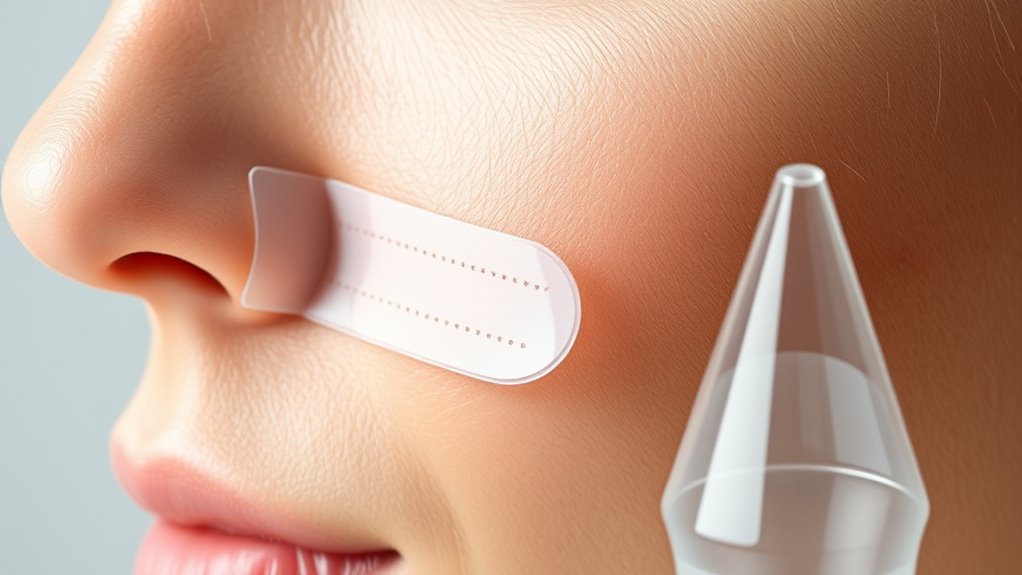
The design and materials of nasal strips and cones directly affect their effectiveness and comfort. You’ll find they use various materials like flexible plastics, adhesives, and breathable fabrics to suit different needs. Structural features, such as venting and shape, are carefully crafted to optimize airflow and fit. Additionally, European cloud innovation influences the development of materials that enhance durability and user experience. Incorporating smart material technology can further improve the adaptability and longevity of these devices.
Material Composition and Types
Nasal strips and cones are crafted from a variety of materials designed to maximize comfort, flexibility, and effectiveness. The choice of materials impacts material durability, guaranteeing they withstand regular use without losing shape or function. Common materials include medical-grade adhesives, flexible plastics, and soft fabrics, selected for their hypoallergenic properties and skin safety. Manufacturing processes like lamination, molding, and adhesive coating ensure the materials are securely bonded and maintain integrity during use. These processes also influence the product’s durability and performance. The materials are carefully chosen to balance strength and comfort, so you can breathe easier without irritation. material durability is essential to ensure long-lasting performance and user satisfaction. Additionally, selecting skin-friendly components can help minimize skin irritation and improve overall user comfort during prolonged wear. Using biocompatible materials further ensures that nasal strips and cones are safe for sensitive skin and reduce the risk of adverse reactions. Incorporating hypoallergenic materials can also help prevent allergic responses and skin sensitivities over time.
Structural Design Features
Structural design features of nasal strips and cones are carefully engineered to optimize airflow and fit. These features directly impact their effectiveness and cosmetic benefits, making them more appealing to users. Here are four key design elements:
- Flexible materials that contour comfortably around your nose for a natural look. These materials also contribute to the discreet appearance of the devices, encouraging regular use.
- Adhesive strips designed for strong grip yet easy removal, supporting various skin types.
- Openings and perforations that enhance airflow without compromising structural integrity. The precise placement of these features is informed by nanotechnological advancements in material engineering to improve performance.
- Manufacturing processes that ensure consistency, durability, and smooth finishes, contributing to a better cosmetic appearance. Proper airflow is essential for maximizing the functionality of nasal strips and cones. These design features not only improve functionality but also make nasal strips and cones discreet and comfortable, encouraging consistent use. Their thoughtful construction aligns with user needs for both performance and aesthetic appeal.
The Mechanical Action of Nasal Strips
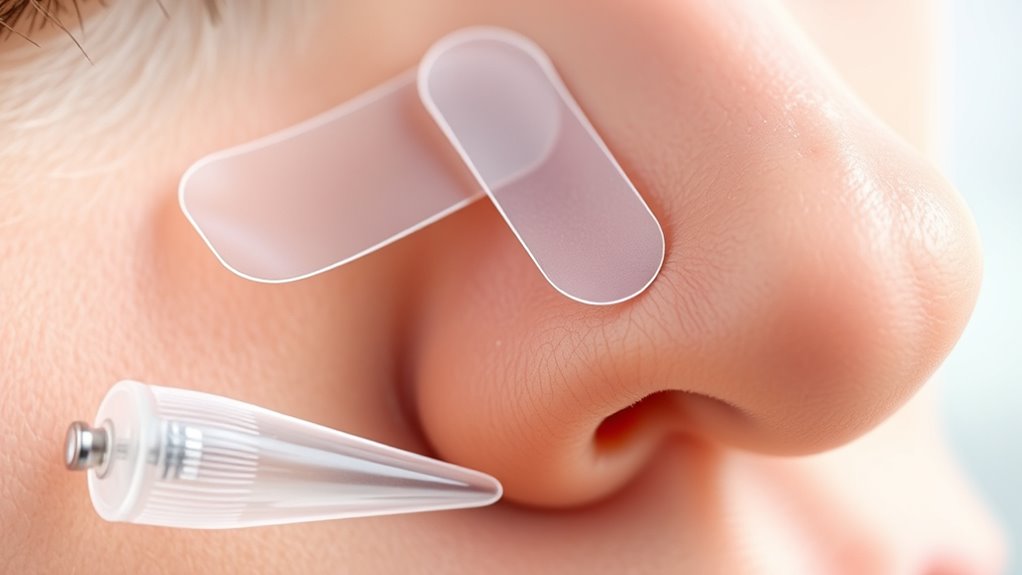
When you apply a nasal strip, it works by physically pulling open the nostrils, reducing airway resistance. This mechanical action improves nasal airflow by expanding the nasal passages outward, making it easier to breathe through your nose. The strip’s design relies on device ergonomics, ensuring it fits comfortably on your nose without slipping or causing discomfort. As the strip adheres to your skin, its flexible bands gently lift the sides of your nose, counteracting inward collapse of the nasal valves. This tension maintains an open airway during inhalation, especially during sleep or exercise. The straightforward mechanical act of the strip effectively enhances airflow without relying on medicines or complex mechanisms, making it a simple yet efficient solution for nasal congestion. Additionally, understanding how airflow resistance and other factors influence breathing can help optimize the use of nasal strips for better airflow. Recognizing how mechanical support influences nasal airflow can further improve their effectiveness and comfort. Awareness of airway dynamics can also aid in selecting the right nasal device for individual needs.
The Functionality of Nasal Cones

Nasal cones work by directing airflow more efficiently into your nasal passages, reducing resistance and easing breathing. They enhance ventilation efficiency by guiding air smoothly through your nasal cavity, minimizing turbulence. Here are four key benefits:
- Improve airflow resistance, making breathing easier during physical activity or sleep.
- Increase ventilation efficiency, helping you get more oxygen with less effort.
- Reduce nasal congestion by maintaining open airways.
- Provide a customizable fit for comfort and ideal performance.
- They also help promote nasal airflow, supporting overall respiratory health and better oxygen intake. Additionally, by optimizing airflow, nasal cones can contribute to sleep quality, especially for those with breathing difficulties during rest. Properly designed nasal cones can also reduce the work of breathing, making respiratory effort less taxing for users. Furthermore, their adjustable design allows users to achieve the most comfortable and effective fit for their individual needs. Enhanced airway patency can lead to improved breathing comfort and overall well-being.
Comparing the Effects of Strips and Cones
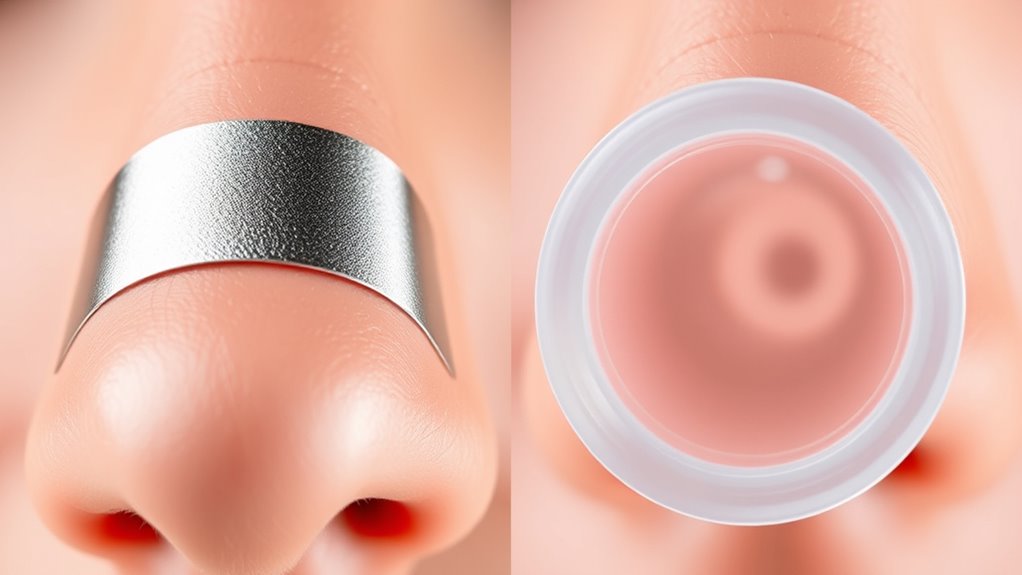
Have you ever wondered how nasal strips and cones compare in their ability to improve breathing? Both devices aim to enhance airflow, but their effects on sleep quality can differ based on user preferences. Nasal strips are easy to apply and often preferred for their simplicity and quick results, helping reduce snoring and improve sleep depth. Cones, on the other hand, fit inside the nostrils and are more discreet, which some users find more comfortable. While strips tend to offer a broader opening of nasal passages, cones provide targeted airflow. Understanding the airflow technology behind each device can help you select the most effective option. Your choice depends on comfort, ease of use, and how each device impacts your sleep quality. Trying both can help determine which option best supports your breathing and overall rest. Additionally, knowing about nasal airflow mechanisms can clarify how these devices modify breathing pathways for better sleep.
Limitations and Considerations of Using Nasal Devices
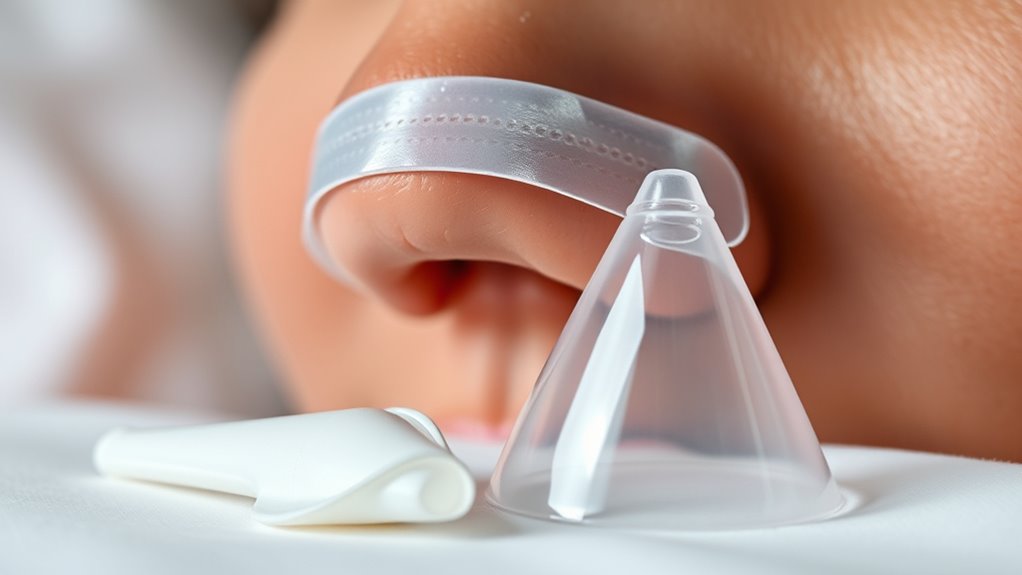
Although nasal devices can improve airflow, they also come with certain limitations that you should consider. First, some users notice a cosmetic impact, as nasal strips or cones may be visible or affect appearance. Second, long-term safety isn’t fully established; prolonged use could cause skin irritation or discomfort. Third, these devices might not be effective for severe nasal obstructions or structural issues. Fourth, comfort varies—some find nasal strips or cones uncomfortable, especially during sleep. Keep in mind that while they can be helpful, nasal devices aren’t a universal solution. You should weigh these limitations against potential benefits and consult with a healthcare professional if you have ongoing breathing issues or concerns about safety.
Tips for Maximizing the Benefits of Nasal Support Devices

To get the most out of your nasal support devices, it’s vital to choose the right type and fit for your needs. Properly fitted nasal strips or cones enhance airflow and comfort. Combine their use with alternative therapies like breathing exercises to improve nasal passage strength and flexibility. Regular practice can reduce reliance on devices over time. Additionally, make sure your environment minimizes irritants, such as dust or allergens. Consider consulting a healthcare professional for personalized advice. Here’s a quick comparison:
| Device Type | Key Benefit | Best For |
|---|---|---|
| Nasal strips | Easy to use | Mild congestion |
| Nasal cones | Targeted support | Moderate to severe issues |
| Breathing exercises | Strengthens nasal muscles | Long-term relief |
| Alternative therapies | Complements devices | Overall nasal health |
Integrating these tips maximizes benefits and supports healthier breathing.
Frequently Asked Questions
Are Nasal Strips or Cones Safe for Long-Term Use?
Nasal strips and cones are generally safe for long-term use, but you should be cautious if you have allergy concerns or skin sensitivity. Some people may experience irritation or allergic reactions, especially if they have sensitive skin or allergies to adhesives. It’s a good idea to consult your doctor if you plan to use them regularly, and always follow the manufacturer’s instructions to minimize potential skin issues or allergic reactions.
Can Nasal Supports Be Used During Exercise or Sports Activities?
A stitch in time saves nine; yes, you can use nasal supports during exercise or sports activities. They help improve your breathing enhancement, allowing better airflow and potentially boosting sports performance. Just make sure they fit well and don’t cause discomfort. Using nasal supports during physical activity can be beneficial, but always listen to your body and consult a healthcare professional if you experience any issues.
Do Nasal Strips or Cones Cause Any Skin Irritation or Discomfort?
Nasal strips and cones can sometimes cause skin irritation or discomfort, especially if you have sensitive skin or wear them for long periods. You might notice redness, itching, or a slight pinching sensation. To reduce these concerns, make certain proper placement, keep the skin clean and dry, and avoid using them excessively. If discomfort persists, consider trying different sizes or materials, or consult a healthcare professional for personalized advice.
How Do Nasal Devices Affect Sleep Quality Over Time?
You might find that nasal devices can truly turn the tide on your sleep quality over time. They improve sleep by enhancing breathing efficiency, helping you breathe easier throughout the night. As a result, you may experience more restful sleep and fewer awakenings. However, consistency is key—use them regularly and monitor how they affect your sleep improvement. With patience, you could wake up feeling more refreshed and energized each day.
Are There Specific Conditions That Prevent the Use of Nasal Strips or Cones?
You should avoid nasal strips or cones if you have allergy restrictions or skin sensitivities. Allergies can cause irritation or worsening of symptoms, while sensitive skin might react badly to adhesives or materials used in these devices. Always consult your healthcare provider before use, especially if you have underlying allergies or skin issues, to make certain these devices won’t cause discomfort or complications during sleep.
Conclusion
So, next time you struggle with snoring or blocked nostrils, don’t forget those tiny nasal strips and cones might be your best friends—until they aren’t. It’s almost funny how such simple devices promise big relief, yet sometimes fall short. But hey, at least they’re easy to try, right? Just don’t be surprised if your quiet nights end up being a little more “interesting” than you expected. Sometimes, relief comes in the smallest, most ironic packages.