

To quiet snoring, start by sleeping on your side, which keeps your airways open and prevents tissues from collapsing. Elevate your head with a wedge pillow or adjustable bed to further ease breathing. Use supportive pillows and body supports to maintain your side position comfortably. Avoid sleeping on your back or stomach, as these positions worsen airway blockage. Create a calming sleep environment, and you’ll find small adjustments can make a big difference—learn more about effective strategies to stop snoring.
Key Takeaways
- Sleep on your side instead of your back to keep airways open and reduce snoring episodes.
- Elevate your head with pillows or adjustable beds to support airway openness during sleep.
- Avoid sleeping on the stomach or in semi-reclined positions that can obstruct airflow.
- Use body pillows or supports between knees to maintain proper side sleeping posture.
- Create a comfortable sleep environment with proper support and airflow to encourage side sleeping habits.
Understanding How Sleep Position Affects Snoring

Your sleep position plays a considerably important role in whether you snore or not. When you sleep on your back, gravity can cause your tongue and soft tissues to block your airway, disrupting your breathing patterns. This often leads to partial airway obstruction, which produces snoring sounds. Your sleep cycle also influences how your body responds to these obstructions; during deep sleep stages, muscles relax further, increasing the likelihood of airway narrowing. As a result, your breathing becomes more labored, and snoring worsens. Conversely, sleeping on your side helps keep your airway open, promoting smoother breathing patterns. By understanding how your sleep position affects your sleep cycle and breathing, you can make simple adjustments that considerably reduce snoring. Additionally, adopting proper sleep postures can further enhance airway openness and reduce the frequency of snoring episodes. Research shows that changing sleep positions can be a simple yet effective positional therapy to improve sleep quality and minimize snoring. Incorporating body alignment techniques can also support proper sleep posture and further decrease snoring.
The Benefits of Sleeping on Your Side

Sleeping on your side offers a simple yet effective way to reduce snoring. When you lie on your side, your airway remains open, which improves breathing ease and minimizes airway obstruction. This position prevents the tongue and soft tissues from collapsing into the throat, decreasing the chances of snoring. As a result, your sleep quality improves because you’re less likely to experience disruptions caused by airway blockages. Side sleeping also helps reduce pressure on your neck and spine, promoting more comfortable rest. Additionally, it encourages deeper, more restful sleep without the need for complex devices or interventions. Incorporating this habit can lead to quieter nights and more refreshed mornings, making it a practical strategy for snoring relief. Proper sleep posture can enhance the benefits of side sleeping and contribute to overall sleep health. Using appropriate pillows can further support proper alignment and maximize these benefits. Proper sleep environment adjustments, such as controlling room temperature and minimizing noise, can also improve sleep quality and reduce snoring. Maintaining awareness of your sleep position throughout the night can help reinforce this beneficial habit.
Elevating Your Head to Reduce Airway Obstruction

Elevating your head during sleep can greatly reduce airway obstruction and lessen snoring. When your head is raised, it helps keep your airways open, making breathing easier. This simple adjustment supports better sleep hygiene and can enhance breathing exercises you practice during the day. To visualize this, imagine:
- A wedge pillow gently lifting your head
- A stack of firm pillows supporting your neck
- An adjustable bed positioning you comfortably upright
- A sleep position that encourages open airways
- A cozy sleep environment promoting consistent elevation
- Using connected equipment can further improve airflow and reduce snoring. Additionally, proper ergonomic setup can contribute to maintaining optimal head and neck positioning during sleep. Incorporating smart home automation can also help monitor and maintain your preferred sleep elevation settings for consistent relief. Understanding sleep ergonomics can help optimize your overall sleep posture and effectiveness of elevation strategies.
Techniques for Maintaining a Side-Sleeping Position

Maintaining a side-sleeping position can considerably reduce snoring by preventing the airway from collapsing. To keep this position, try using pillows strategically—placing one behind your back to prevent rolling onto your stomach or between your knees for alignment. Incorporate breathing exercises into your routine to strengthen your airway muscles and promote relaxed breathing during sleep. Good sleep hygiene also supports staying on your side; establish a consistent sleep schedule and avoid alcohol or heavy meals before bed, which can increase the tendency to shift positions. Consider using specialized sleep aids, like positional therapy devices or body pillows, to reinforce your side posture throughout the night. These techniques help you maintain a stable side position, reducing snoring and improving overall sleep quality. Understanding sleep positions can further enhance your efforts to stay on your side and minimize snoring.
Avoiding Sleep Positions That Worsen Snoring
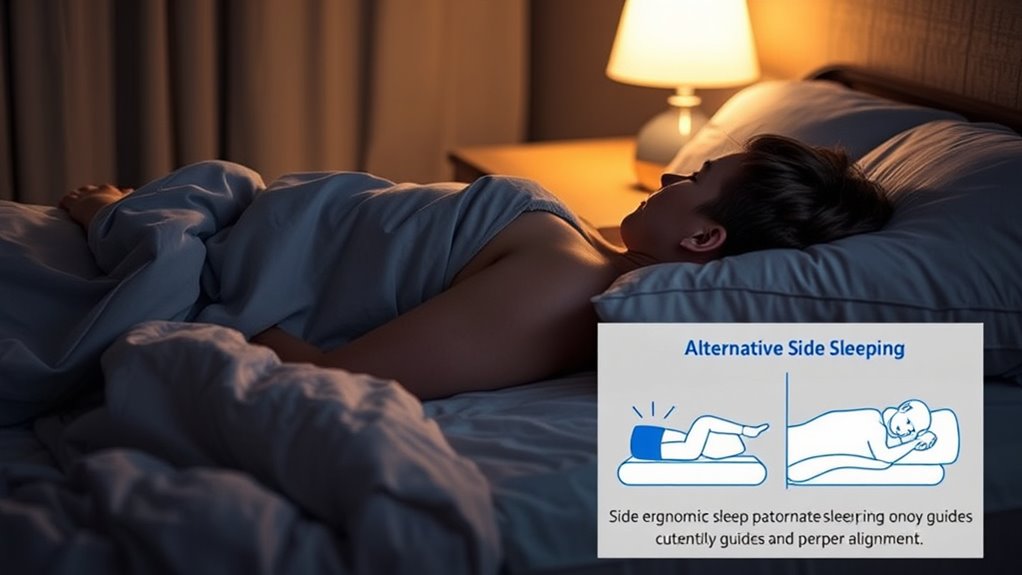
Certain sleep positions can directly worsen snoring by narrowing or blocking the airway. Sleeping on your back often causes the tongue and soft tissues to fall back, increasing mouth breathing and raising the risk of sleep apnea. This position can make snoring louder and more frequent. To avoid these issues, steer clear of positions that promote mouth breathing or compress the airway. Imagine:
- Lying flat on your back with your chin tilted up
- Sleeping with your face pressed into the pillow
- Resting in a semi-reclined position that encourages mouth opening
- Twisting onto your stomach with your head turned sharply
- Using multiple pillows that elevate your head unevenly
Choosing the wrong positions can trap air and worsen snoring, especially if sleep apnea is a concern. Understanding airway anatomy can help you select sleep positions that minimize obstruction and improve breathing quality. Being aware of sleep posture and how it affects airway openness is essential for effective snoring management. Additionally, certain body alignment techniques during sleep can promote better airway openness and reduce snoring episodes. Proper sleep positioning can also alleviate pressure on the airway and support healthier breathing patterns. Moreover, maintaining proper spinal alignment during sleep can further enhance airway patency and reduce snoring severity.
Using Pillows and Supports for Better Sleep Posture

Using pillows and supports effectively can substantially improve your sleep posture and reduce snoring. Proper pillow placements help keep your head and neck aligned, preventing airway obstruction. For side sleepers, place a pillow under your neck and between your knees to support spinal alignment. Supportive devices, like wedge pillows or specially designed cervical supports, can elevate your upper body slightly, encouraging open airways. Avoid stacking multiple pillows that cause your head to bend forward, as this can worsen snoring. Instead, opt for firm, supportive pillows that maintain proper alignment throughout the night. By choosing the right supportive devices and adjusting pillow placements, you promote better posture, reduce airway blockage, and help quiet snoring naturally. Understanding heat distribution in your bedding can also help find the most comfortable and supportive setup for restful sleep. Proper sleep surface quality can enhance overall comfort and support, which is essential for maintaining optimal sleep posture and minimizing snoring. Additionally, selecting bedding materials that promote good airflow can further improve sleep quality and breathing.
Creating a Sleep Environment Conducive to Side Sleeping

Creating a sleep environment that encourages side sleeping starts with optimizing your surroundings for comfort and support. Good sleep hygiene involves creating a space that promotes relaxation and minimizes disruptions. To reduce noise, consider using earplugs or white noise machines that drown out background sounds. Keep your room cool, dark, and well-ventilated to facilitate restful sleep. Select a supportive mattress and pillows that keep you on your side comfortably. Declutter your space to lessen distractions and create a calming atmosphere. Use blackout curtains to block external light, enhancing sleep quality. Additionally, understanding air quality factors can help you choose the best ventilation options to maintain a fresh and comfortable environment. Ensuring proper air circulation can also prevent stuffiness and promote easier breathing during sleep. Proper air purifier maintenance can further improve indoor air quality, making it easier to breathe comfortably throughout the night. These adjustments help you stay in the side position longer, reducing snoring and improving overall sleep health.
Frequently Asked Questions
Can Certain Sleep Positions Cause Neck or Back Pain?
Yes, certain sleep positions can cause neck strain or back discomfort. Sleeping on your stomach may twist your neck, leading to neck strain, while poor spinal alignment can cause back discomfort. To avoid this, try sleeping on your side or back with proper support, which helps keep your neck and back in a neutral position. Adjusting your pillow and mattress can also reduce discomfort and promote better sleep.
Are There Specific Exercises to Promote Side Sleeping?
Yes, there are specific exercise techniques to promote side sleeping. You can try gentle stretches and strengthening exercises for your neck and shoulders, which improve your sleeping posture. Practice side-lying positions during the day to build habit, and use pillows to support your head and back. These exercises help you maintain a comfortable sleeping posture, making it easier to stay on your side throughout the night and reduce snoring.
How Long Does It Take to See Improvements From Positional Changes?
Patience and persistence play prime roles in perceiving progress. Typically, you’ll notice noticeable napping-related improvements within a few weeks, often around 2 to 4 weeks. The effectiveness timeline varies, depending on consistency and individual factors. Keep practicing your positional changes daily, and you’ll likely see a significant shift in snoring sounds over time. Remember, steady steps lead to successful snoring solutions.
Do Sleep Position Strategies Work for All Types of Snoring?
Sleep position strategies can be effective, but their effectiveness varies depending on snoring types. For example, positional effectiveness is higher for simple or positional snoring, often caused by sleep posture. However, if your snoring results from other factors like nasal issues or sleep apnea, these strategies may not work as well. It is crucial to identify your specific snoring type to determine if positional changes will help.
Can Sleep Position Influence Sleep Quality Besides Snoring?
While your sleep posture directly impacts snoring, it also influences your overall sleep quality. Poor sleep environment and bad sleep posture can cause frequent awakenings, leaving you tired and less alert. By maintaining a comfortable sleep environment and adopting a healthy sleep posture, you can enhance deep, restorative sleep. This not only reduces snoring but also leaves you feeling refreshed and energized, making your nights more restful and your days more productive.
Conclusion
By gently guiding yourself into comfortable sleep positions, you can create a peaceful night’s rest that’s kinder to your breathing. Embracing side sleeping and using supportive tools helps keep your airway open, making your nights more serene. With a few simple adjustments, you’ll find yourself drifting into restful slumber more easily. Sweet dreams await when you nurture your sleep space with care, turning bedtime into a soothing retreat from the day’s hustle.