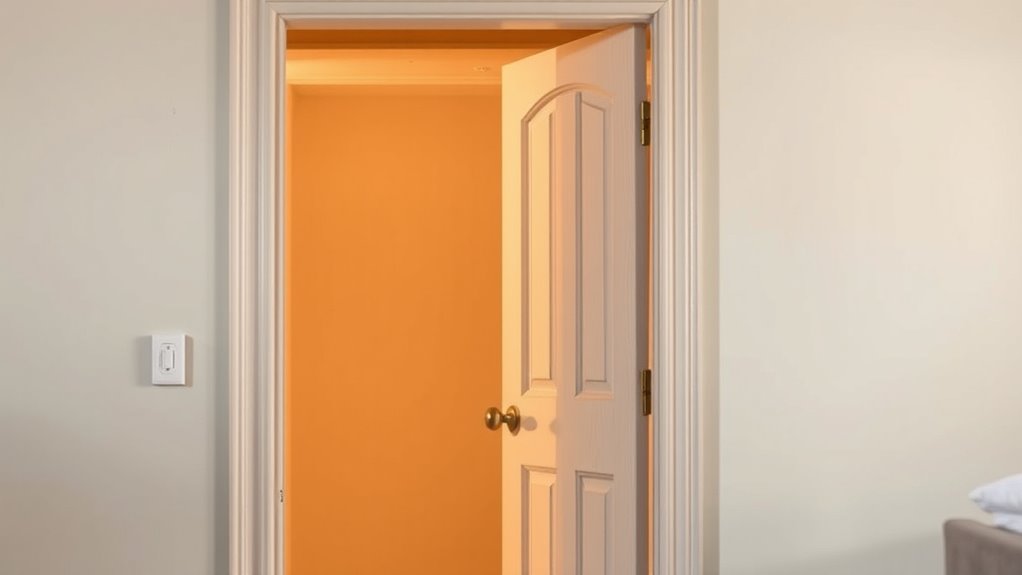

Keeping your bedroom door closed helps cut down on noise transfer and boosts privacy because it blocks sound waves from passing through gaps and walls. A solid-core door and tight seals make this even more effective, while an open door allows sound to escape and enter freely. Controlling how the door moves, sealing gaps, and choosing proper materials all play a role. To understand how to create a quieter space, there’s more to contemplate about soundproofing strategies.
Key Takeaways
- Keeping the door closed reduces sound transmission, enhancing privacy and minimizing noise between rooms.
- Solid-core doors absorb sound better than hollow-core doors, offering improved noise blocking when closed.
- Gaps around the door allow sound leakage; sealing these gaps boosts soundproofing whether the door is open or closed.
- Opening the door generally increases noise transfer, especially if the door is hollow or poorly fitted.
- Using soft-close hinges and padding can minimize noise during door movement, regardless of whether it’s open or closed.
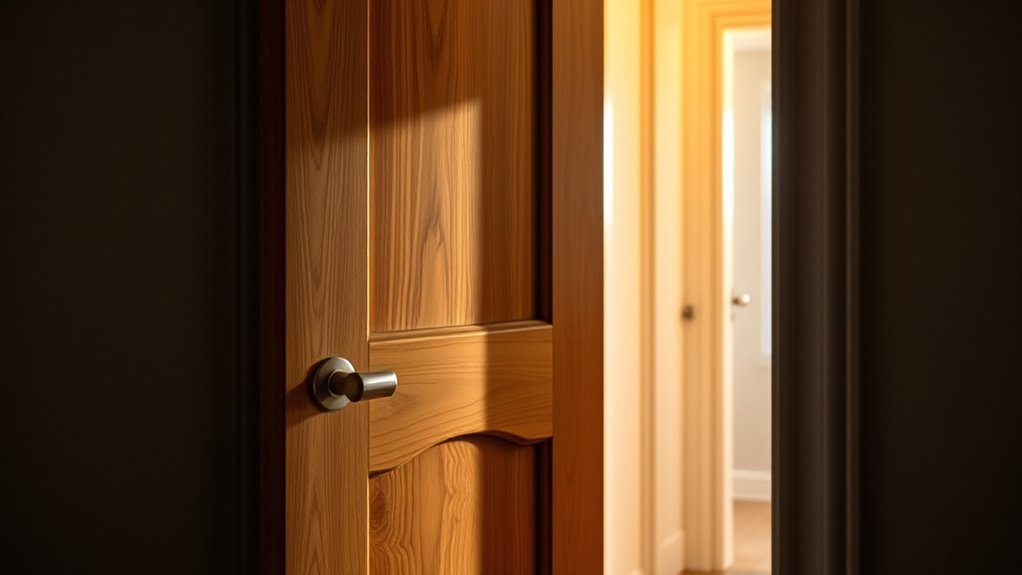
Ever wonder why your bedroom door makes certain sounds when you open or close it? It’s a common question, and understanding the sound science behind it can help you make smarter choices about your space. When you’re concerned about privacy and noise control, the way your door behaves acoustically becomes a key factor. Soundproofing techniques, for example, are designed specifically to minimize noise transmission, allowing you to enjoy a quieter, more private environment. Whether you want to block out outside noise or prevent your own sounds from disturbing others, knowing how the door impacts sound can guide you to better solutions.
Your door’s material and construction play a huge role in how sound travels through it. Hollow-core doors, for instance, tend to produce louder sounds when opened or closed because they allow sound waves to pass through the empty space inside. Solid-core doors, on the other hand, are much better at absorbing and blocking sound, making them a popular choice for bedrooms where privacy is a priority. If you’re aiming for enhanced soundproofing, upgrading to a solid core door can make a significant difference. Additionally, the way the door fits within its frame influences noise transfer. Gaps around the edges allow sound to leak through, so sealing these gaps with weatherstripping or door sweeps can drastically improve privacy considerations.
The way you open or close the door also impacts the noise level. Slow, controlled movements tend to generate less sound than abrupt slamming or fast swings. If noise is a concern, consider installing soft-close hinges or adding padding to the door’s edges. These simple adjustments help reduce the impact noise and create a quieter environment. Soundproofing isn’t just about the door itself; the surrounding frame and even the floor can influence how sound travels. Adding mass-loaded vinyl or acoustic panels around the door can help absorb residual sound, further enhancing privacy. Understanding the acoustic properties of the materials involved can help you choose the most effective soundproofing solutions.
In the end, whether you keep your door open or closed depends on your privacy needs and the amount of noise you’re willing to manage. If you want peace and quiet, sealing gaps, upgrading to a solid-core door, and implementing soundproofing techniques are your best bets. But if openness and easy access matter more, then understanding the sound implications can help you choose the best approach for your lifestyle. Knowing the science behind sound transfer through doors empowers you to make informed decisions, creating a more private, comfortable space where noise is less of a concern.
Frequently Asked Questions
Does Keeping the Door Open Improve Sleep Quality?
Keeping your door open can improve sleep quality by reducing noise and allowing better airflow. When the door is open, door lock mechanisms and door frame insulation matter less, as sound travels more freely. You might find it easier to sleep if your room feels less enclosed, but consider how open doors affect privacy and security. Ultimately, find the balance that helps you rest best.
How Does Door Material Affect Sound Transmission?
The door material markedly impacts sound transmission because higher density materials, like solid wood or metal, transmit less sound than thinner or porous ones. Materials with good sound absorption qualities, such as solid wood, help block noise effectively. You should choose a door with dense, solid material to minimize sound transfer, especially if you want a quieter environment. Thicker, dense doors absorb more sound and reduce noise leakage better than lighter, hollow doors.
Can a Closed Door Reduce Noise From Outside?
Yes, a closed door can reduce noise from outside by improving sound insulation. Make certain you use door seals to block gaps where sound can leak through, enhancing overall noise reduction. A well-sealed, solid-core door provides better soundproofing, helping you stay focused or relaxed. Remember, the combination of a closed door and effective seals considerably cuts down external noise, creating a quieter, more comfortable space.
Is There an Ideal Door Position for Privacy?
For the best privacy, keep your door closed and locked, ensuring it fits snugly within the door frame. This minimizes gaps that sound can pass through, enhancing privacy. A properly installed door lock adds security, while a tight door frame prevents noise leaks. Avoid leaving the door slightly ajar, as it compromises both privacy and soundproofing, making a closed, locked door the ideal position.
How Do Door Hinges Influence Soundproofing?
Think of door hinges as the gatekeepers of privacy, and they can either let sound slip through or keep it out. Proper hinge lubrication guarantees smooth movement, reducing squeaks and gaps that compromise soundproofing. Additionally, checking the door gap is essential; a snug fit minimizes sound leakage. When hinges are well-maintained, you create a more soundproof barrier, making your space feel like a soundproof sanctuary rather than an open-air concert hall.
Conclusion
Ultimately, the choice to keep your bedroom door open or closed can impact your peace of mind and sleep quality. Think of it like locking the stable after the horse has bolted—better to set a habit that works for you rather than waiting for problems to arise. Trust the sound science behind these decisions, and you’ll find your nights more restful. Sometimes, it’s the little things that make all the difference in keeping your world running smoothly.