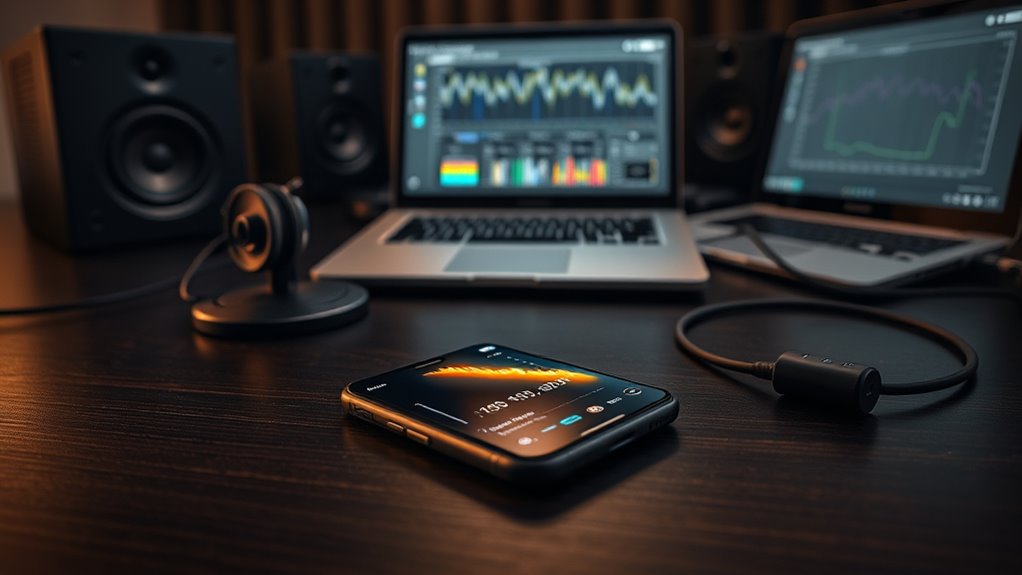

To test your room’s noise floor with your phone, first find a quiet time and space, then download a reliable sound level meter app. Calibrate the app using calibration tones or standards for accuracy. Place your phone on a stable surface at ear level and let it sit undisturbed. Record the ambient sound, focusing on the quietest segments, and analyze the results. Keep reading to discover tips on interpreting and improving your environment’s background noise.
Key Takeaways
- Use a reliable sound level meter app, calibrate it with known standards, and ensure the microphone is unobstructed at ear level.
- Place your phone on a stable surface in the quietest part of the room, away from electronics and external noise sources.
- Turn off electronics, fans, and close windows to minimize external noise during testing.
- Record ambient sound levels for at least a few seconds, focusing on the quietest moments for accurate noise floor estimation.
- Analyze the recorded data with sound analysis apps to determine the baseline ambient noise level of your room.

Frigidaire Mini Personal Fridge Cooler, Countertop, Holds Up to 10L/15 Cans, Brushed Black Stainless Rugged Design, Portable for Skincare, Makeup, Car, Office, Bedroom, Dorm Room, or Cabin
- Large 10L Capacity: Holds up to 15 cans or snacks
- Skincare and Beauty Storage: Ideal for skincare products and tools
- Portable and Lightweight: Weighs only 6lbs with carrying handle
As an affiliate, we earn on qualifying purchases.
Understand What Noise Floor Means
Understanding what noise floor means is essential before testing your room’s sound environment. The noise floor represents the baseline level of ambient sound within your acoustic environment, including all background noises like electronics, air movement, or external sources. It’s a key aspect of sound measurement because it indicates the quietest sound your room can naturally produce or detect. Knowing your noise floor helps you identify how much background noise is present and whether it interferes with your audio recordings or listening experience. A low noise floor signifies a quieter environment, ideal for critical listening or recording. Measuring ambient sound allows you to accurately assess your room’s acoustic conditions, especially when considering factors like background noise levels that can impact sound quality. Additionally, understanding your noise floor can guide you in selecting appropriate soundproofing techniques to improve your room’s acoustics. Recognizing the sources of ambient noise can further help you identify specific areas for improvement. By understanding this concept, you can better interpret measurement results and take steps to improve your room’s acoustic environment if needed.

Antarctic Star Compact Refrigerator, Portable Mini Fridge, Skin Care 4L Capacity/6 Cans, for Bedroom, Car, Office & Dorm, Small Cooler for Cosmetics, Beverage and Food, Black
- Compact Size: Ideal for small spaces and portability
- 4L Capacity: Stores 6 cans or small items
- Removable Shelf: Flexible storage for various items
As an affiliate, we earn on qualifying purchases.
Gather the Necessary Equipment
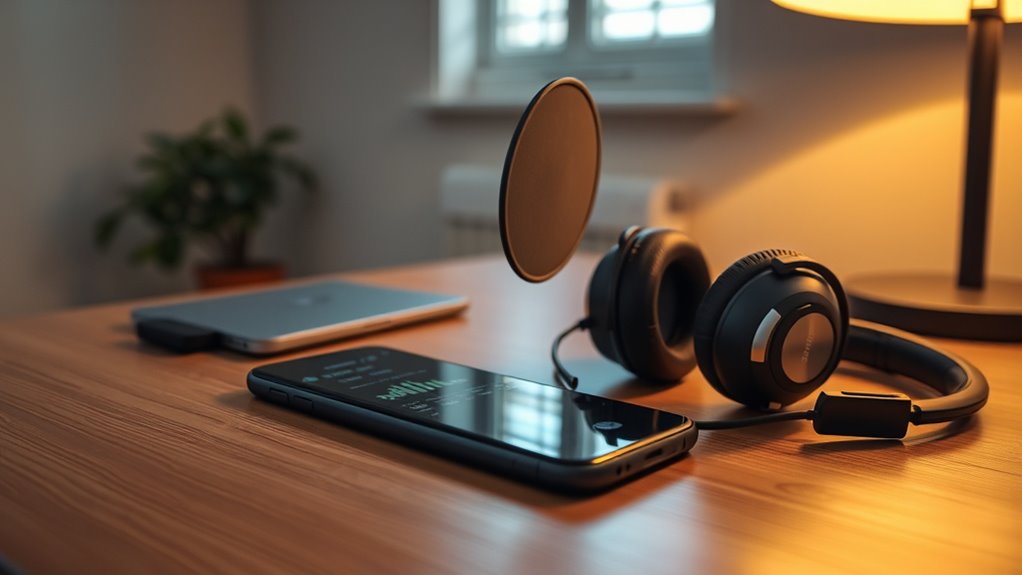
To accurately measure your room’s noise floor, you’ll need to gather some basic equipment. First, your smartphone with a reliable measurement app, like a sound level meter. Second, consider installing soundproof curtains or acoustic panels to reduce external noise interference during testing. Third, a stable stand or surface to keep your phone steady for consistent readings. The soundproof curtains help block outside noise, while acoustic panels improve the room’s acoustic environment, giving you a clearer measurement of the true noise floor. Using noise reduction techniques can further enhance the accuracy of your measurements. Ensuring you have these items ready will provide accurate results and make the testing process smoother. Keep your phone charged and the app updated to avoid interruptions during measurement.
Find a Quiet Time and Space

Once you’ve gathered your equipment, the next step is to choose the right time and place for testing. Find a period when your room is naturally quiet, like early mornings or late at night, to guarantee the most accurate noise floor measurement. Before starting, review your equipment checklist to confirm everything is ready. Select a space that minimizes external noise sources, using noise reduction techniques such as closing windows, turning off fans, and silencing electronics. Avoid areas with foot traffic or nearby appliances that generate consistent sounds. A quiet environment helps you get a clear baseline of your room’s ambient noise. Taking these steps ensures your test results are reliable and representative of your room’s true noise floor. A quiet environment also reduces the influence of transient sounds, giving you a more accurate measurement of your room’s ambient noise level. Additionally, understanding your noise floor can help inform decisions about equipment placement or soundproofing to improve your space. Ensuring your environment is free from external noise sources enhances the accuracy of your noise measurements. Moreover, selecting the optimal time for testing can help capture a more consistent and representative ambient noise level, especially when considering factors like room acoustics and background sounds.

DUMOS Mini Fridge for Bedroom, 4L Compact Personal Fridge Cooler For Skincare, Drinks, And Snacks, Fits 6 Cans, Mini Refrigerator with 110V Ac/12V Dc, Ideal For Car, Dorm, White
- Multifunctional Storage: Stores beverages, skincare, and snacks
- Compact & Portable: Fits 6 cans, measures 7.56x10.04x10.55 inches
- Versatile Power Options: Includes AC and DC cords for various uses
As an affiliate, we earn on qualifying purchases.
Download a Sound Level Meter App

To get accurate noise measurements, you need a good sound level meter app on your phone. Choose a reliable app that has positive reviews and clear features. Once you’ve downloaded it, make sure to calibrate your device for precise readings. Automated testing features in some apps can help improve your measurement accuracy. Additionally, ensure your phone’s microphone is unobstructed and placed at ear level for the most accurate readings during your tests.
Choose a Reliable App
Choosing a reliable sound level meter app is essential for accurately measuring your room’s noise floor. A good app guarantees precise audio measurement, helping you get trustworthy results. When selecting your app, consider these key points: 1. Compatibility with your device’s operating system and hardware for peak performance. 2. User-friendly interface that lets you quickly start and stop measurements without confusion. 3. Positive reviews and ratings from other users, indicating consistent accuracy and reliability. Ensuring the app uses sound synthesis techniques can further improve the precision of your measurements. Additionally, look for apps that incorporate measurement accuracy features to ensure your readings are reliable. Incorporating smart home technology features can also enhance your measurement experience by enabling integration with other devices and automation. Being aware of the noise floor in your environment helps you distinguish between background noise and actual sound issues. Moreover, selecting an app with calibration options can help fine-tune your measurements for even greater accuracy.
Calibrate Your Device
Before relying on your sound level meter app, it’s important to calibrate your device to guarantee accurate measurements. Calibration ensures your device sensitivity aligns with standard sound levels, preventing skewed results. Check if your app offers calibration features or instructions—some apps are more compatible with certain smartphones, so app compatibility matters. To calibrate, find a quiet, known sound source or use a calibration tone if available. Follow the app’s guidance to adjust settings, ensuring your readings reflect real-world noise levels accurately. Proper calibration minimizes errors caused by your device’s microphone sensitivity variations. Once calibrated, your app will provide more reliable data, helping you accurately assess your room’s noise floor. Regular calibration maintains measurement precision over time. Understanding sound calibration is essential for ensuring your measurements are both accurate and meaningful.
Calibrate Your App for Accuracy

To get accurate readings, you need to calibrate your sound level meter app properly. Select the correct calibration settings based on your phone and app instructions. Then, verify its accuracy by measuring a known sound level to guarantee your readings are reliable. Proper calibration ensures your measurements align with modern kitchen technology standards for precision. Regular calibration helps maintain measurement accuracy over time and prevents drift in your readings. Incorporating calibration routines similar to whole-house water filtration system maintenance can further enhance consistency and performance. Additionally, understanding creative studio standards can help tailor your calibration process for professional-grade results, especially when considering tax implications related to equipment calibration and accuracy.
Select Proper Calibration Settings
Proper calibration is essential to guarantee your phone’s noise floor readings are accurate. To do this, you need to select the right calibration settings. First, adjust the microphone sensitivity within your app to match standard calibration standards, ensuring consistent results. Second, set the input level so it neither peaks nor drops, maintaining fidelity to the actual noise environment. Third, verify that your app follows recognized calibration standards for sound measurement, like ANSI or IEC guidelines, which help normalize your readings. By carefully choosing these settings, you’ll minimize measurement errors and enhance your noise floor testing accuracy. Always double-check your calibration options before taking any readings to ensure your data reflects true ambient noise levels in your room. calibration standards provide essential guidelines to ensure your measurements are accurate and reliable.
Verify With Known Sound Level
Once you’ve adjusted your calibration settings, it’s important to verify your app’s accuracy by comparing its readings to a known sound level. Use a sound level meter or a calibrated source, like a tone generator, to guarantee your phone’s measurements are reliable. This step helps confirm that your app accurately reflects the room’s noise floor, which is essential when evaluating soundproofing strategies or acoustic treatment. If your readings are off, recalibrate your app or consider external calibration tools. Accurate measurements are key to making informed decisions about improving your room’s acoustics, whether through additional soundproofing or better acoustic treatment. Measurement accuracy ensures your assessments are precise, helping you optimize your space for the desired noise environment.
Measure the Ambient Noise Level

Before you start testing your room’s noise floor, it’s essential to measure the ambient noise level accurately. This gives you a clear baseline of your environment’s natural sound. To do this effectively, consider these factors:
- Make sure your room is undisturbed—turn off appliances and electronics.
- Use soundproof curtains or hang acoustic panels to minimize external noise interference.
- Place your phone in the desired testing spot, keeping it steady and at ear level.
Record and Analyze Your Results

After recording your ambient noise, it’s time to analyze the data to determine your room’s noise floor. Review the audio file on your phone or use sound analysis apps to identify the quietest moments. Look for consistent low-level background noise, which indicates your noise floor. Understanding this baseline helps you evaluate your soundproofing techniques and whether additional noise cancellation methods are needed. If your recordings show high ambient noise, consider improving soundproofing by sealing gaps or adding damping materials. Analyzing these results gives you insight into how much external noise intrudes into your space, guiding your efforts to create a quieter environment. Accurate analysis ensures you’re making informed decisions about further soundproofing or noise cancellation improvements.
Interpret the Noise Floor Readings
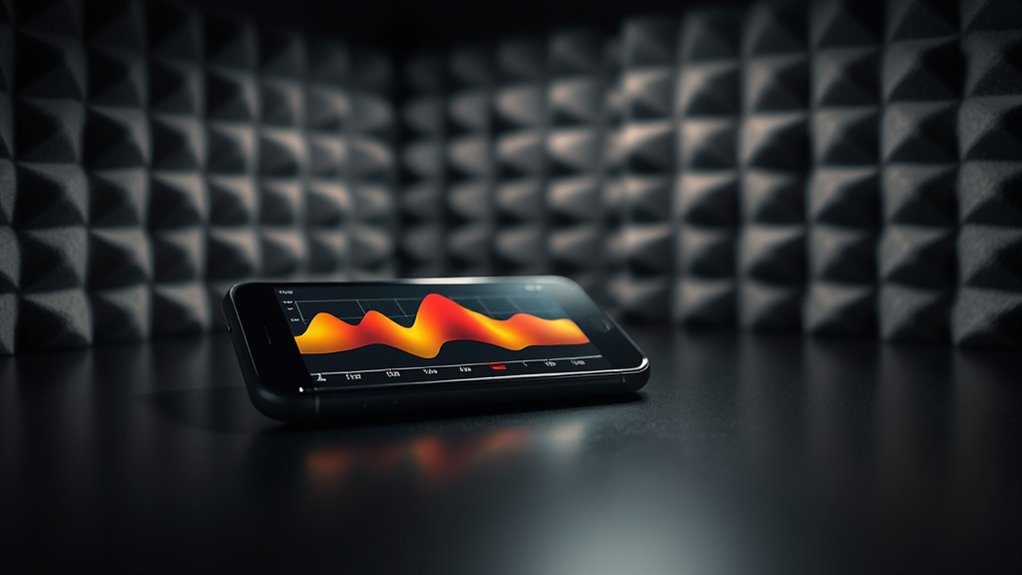
Interpreting your noise floor readings is essential to understanding your room’s sound environment. By analyzing these measurements, you can identify whether your noise levels stay within acceptable sound interpretation ranges or exceed noise level thresholds.
- Check if your readings are consistent across different locations or times—variability indicates fluctuating noise sources.
- Compare your results to standard thresholds for quiet environments, like recording studios or home theaters, to gauge if your space is suitable.
- Notice if the noise floor is too high, which could mask recordings or cause listening fatigue.
Understanding these aspects helps you determine whether your room’s noise environment is acceptable or needs attention, guiding you to better sound quality and comfort.
Take Steps to Improve Your Room’s Acoustics
Improving your room’s acoustics is a crucial step in creating a better sound environment, especially if your noise floor readings indicate excessive background noise or echo. Start by adding soundproof curtains, which absorb sound waves and reduce reflections, making your space quieter. Installing bass traps in the corners helps manage low-frequency resonances that contribute to muddiness and echo. These acoustic treatments make a noticeable difference, allowing your audio to sound clearer and more natural. Additionally, consider rearranging furniture or adding soft furnishings like rugs and cushions to further absorb sound. By taking these steps, you’ll create a more controlled environment, minimizing unwanted noise and echo, and improving your overall listening experience.
Frequently Asked Questions
Can My Phone’s Microphone Accurately Measure Noise Levels?
Your phone’s microphone can give a rough idea of noise levels, but it’s not perfectly accurate. Microphone calibration varies between devices, and environmental interference like background sounds or wind can affect readings. For precise measurements, use dedicated sound level meters. However, for casual assessments or general noise monitoring, your phone’s microphone can be a useful tool, just keep in mind its limitations and potential inaccuracies.
How Often Should I Test My Room’s Noise Floor?
Think of your room as a quiet lake; regular testing helps you spot ripples of noise before they disturb your peace. You should test your noise floor monthly, especially after installing soundproof curtains or acoustic panels. This way, you catch any increase in background noise early, ensuring your space remains serene. Consistent checks keep your sanctuary calm, and adjustments like adding more acoustic treatments become easy to manage.
What Factors Can Affect the Accuracy of Measurements?
Factors like environmental influences, such as background noise, temperature, and humidity, can affect measurement accuracy. Calibration procedures are essential to guarantee your phone’s microphone provides reliable readings. If your device isn’t properly calibrated or if environmental conditions change, your results may be skewed. To improve accuracy, perform regular calibration and try to measure in a consistent, quiet environment, minimizing external influences that could distort your noise floor readings.
Are There Specific Apps Recommended for Precise Readings?
You should consider apps like SPL Meter, Decibel X, or NoiSee for precise readings. To verify accuracy, use calibration techniques such as comparing app readings with a professional sound level meter. It’s a good idea to perform an app comparison to see which one gives the most consistent results in your environment. Keep your phone’s microphone unobstructed, and always calibrate before testing for the most reliable measurements.
How Do I Distinguish Between Background Noise and Interference?
Ever wondered how to tell apart background noise from interference? You can do this by listening carefully to ambient noise sources and noting their consistency. Use soundproofing techniques to minimize external sounds, then observe if the noise level changes. If certain sounds persist regardless of your efforts, those are likely interference sources. Differentiating these helps you optimize your space for clearer recordings and better sound quality.
Conclusion
Knowing your room’s noise floor reveals both its quiet potential and hidden challenges. It’s a reminder that silence isn’t always perfect; even stillness has limits. By testing and understanding these levels, you gain control over your space and peace of mind. Embrace the silence you desire, but remember, sometimes the loudest noise is the one you don’t hear—until you measure it. Take action today and shape your perfect environment.