
To safeguard your hearing at night, keep your device volume low and set maximum volume limits or use volume-limiting features. Use comfortable, well-fitting earbuds or sleep-specific headphones, and avoid listening at loud volumes for extended periods. Incorporate noise-canceling technology or white noise to block background sounds, reducing the need to turn up the volume. Monitoring your listening habits helps prevent damage, and staying informed ensures a peaceful, healthy sleep environment—discover more tips ahead.

Get wellness gear delivered free with Prime
- Fast, free delivery on millions of items
- Prime Video, Amazon Music and more included
- Member-only deals all year
Key Takeaways
- Keep device volume at or below 60% and set sleep timers to prevent prolonged loud exposure.
- Use comfortable, snug-fitting earbuds or sleep-specific headphones to minimize irritation and accidental volume increases.
- Choose devices with volume-limiting features and noise-canceling technology to listen at safer levels.
- Regularly clean and replace earbuds to maintain hygiene and optimal sound quality, reducing the urge to increase volume.
- Monitor for signs of ear fatigue or tinnitus, and lower volume immediately if symptoms occur.
Understanding the Risks of Listening at Night

Listening at night can pose unique risks because your ears and brain are more vulnerable to damage when you’re in a relaxed or sleep-ready state. When you listen too loudly or for extended periods, you increase your risk of noise-induced hearing loss, which can gradually diminish your hearing over time. Additionally, auditory fatigue can occur if you expose yourself to loud sounds repeatedly or for long stretches, leading to temporary hearing issues and reduced sound clarity. During sleep, your ears are more sensitive, and the natural recovery processes slow down, making it easier to unknowingly cause harm. Being aware of these risks helps you avoid listening habits that could damage your hearing, ensuring you protect your ears in the long run. Choosing the right sound levels and limiting exposure can help prevent long-term damage.
Choosing the Right Sleep-Friendly Audio Devices
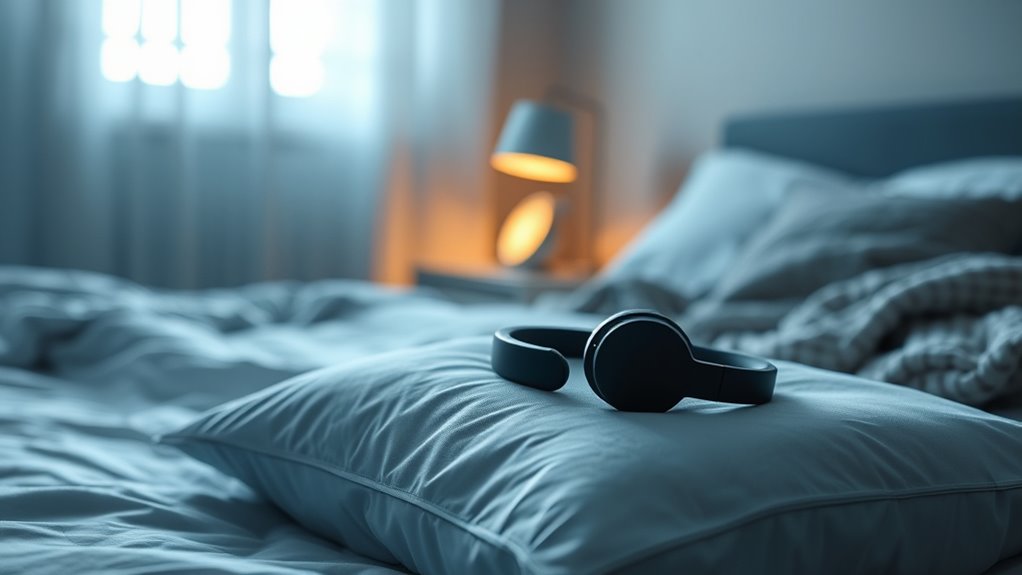
Choosing the right sleep-friendly audio devices is essential for protecting your hearing while still enjoying calming sounds at night. You want devices that deliver clear audio without needing high volumes that could harm your ears. Noise canceling headphones can block out background noise, helping you listen at lower volumes, while wireless earbuds offer portability and comfort. Look for devices with volume limiting features or built-in safeguards to prevent loud sounds. Comfort is key—choose lightweight, snug-fitting options that won’t disturb your sleep. Consider these options:
- Noise canceling headphones that reduce ambient noise
- Wireless earbuds with volume control
- Devices with safety features like volume limiters
Selecting the right device ensures you enjoy peaceful nights without risking your hearing health. Proper device selection plays a crucial role in maintaining your long-term hearing safety. Additionally, choosing devices with hearing protection features can further reduce the risk of damage during prolonged use. Incorporating sound management techniques such as setting volume alarms or using external volume limiters can provide extra peace of mind during sleep. Using advanced safety features in audio devices can help monitor and regulate sound exposure over time. Being aware of sound exposure limits and how to stay within them is key to safeguarding your hearing health over the years.
Setting Safe Volume Levels for Nighttime Listening

To keep your hearing safe at night, start by setting volume limits on your devices. Choosing comfortable ear devices can also help reduce the need to turn the volume up too high. These steps guarantee you enjoy your audio without risking damage to your hearing. Additionally, being aware of safe listening practices can further protect your auditory health during extended listening sessions. Regularly checking your ear health can help identify any early signs of hearing issues. Recognizing the importance of hearing health awareness can empower you to take proactive steps in maintaining your auditory well-being. Practicing volume moderation ensures you protect your hearing while still enjoying your favorite sounds. Moreover, maintaining proper device maintenance can prevent unnecessary volume increases caused by equipment malfunction.
Use Volume Limits
Setting volume limits is a crucial step in ensuring safe nighttime listening, as it helps prevent hearing damage and disturbed sleep. By establishing maximum volume levels on your device or using built-in limiters, you maintain control over your volume monitoring. This approach aligns with modern kitchen technology principles of automation and precision to create a healthier sleep environment, reducing noise levels that could wake you or cause long-term harm. To effectively use volume limits:
- Set your device’s maximum volume to a safe level before sleeping
- Use apps or device settings that restrict volume increases
- Regularly review and adjust limits as needed to stay within safe listening ranges
- Be aware of long-term hearing health considerations to prevent cumulative damage from prolonged exposure. These practices help you enjoy audio comfortably while protecting your hearing and ensuring restful sleep. Keep your volume limits consistent for optimal safety and peace of mind.
Choose Comfortable Ear Devices
Selecting comfortable ear devices is essential for safe nighttime listening because uncomfortable or ill-fitting earbuds can cause irritation and tempt you to increase volume levels to compensate. Prioritize ear device comfort to guarantee you can wear them comfortably throughout the night without discomfort or pressure. Your sleep environment also plays a role; choose ear devices designed for sleep, such as soft, snug-fitting earbuds or sleep-specific headphones. These options help create a secure fit and reduce the urge to turn up the volume to drown out background noise. When your ear device comfort is addressed, you’re more likely to listen at safe volume levels, protecting your hearing while enjoying your nighttime audio. Properly fitting ear devices contribute considerably to a safe and restful sleep environment. Additionally, selecting appropriate ear oils can help soothe the ears, reducing irritation and the tendency to increase volume. Ensuring your devices are ergonomically designed can further enhance comfort and promote consistent, safe listening habits throughout the night. Using adjustable volume controls can also assist in maintaining safe listening levels without sacrificing sound quality. Incorporating noise-canceling technology can further help you enjoy your audio at lower volumes by reducing background noise. Choosing ear devices with proper fit and comfort features can significantly improve your overall sleep experience and listening safety.
Tips for Comfortable and Safe Earbud Usage During Sleep

Choosing comfortable earbuds makes sure you can sleep without discomfort or interruptions. Limiting how long you wear them helps prevent ear fatigue and potential damage. Prioritizing these tips keeps your sleep safe and more enjoyable. Incorporating visual and auditory cues can also assist in adjusting to earbuds and enhancing your overall experience. Additionally, being aware of safe volume levels can help protect your hearing health during prolonged use.
Choose Comfortable Earbuds
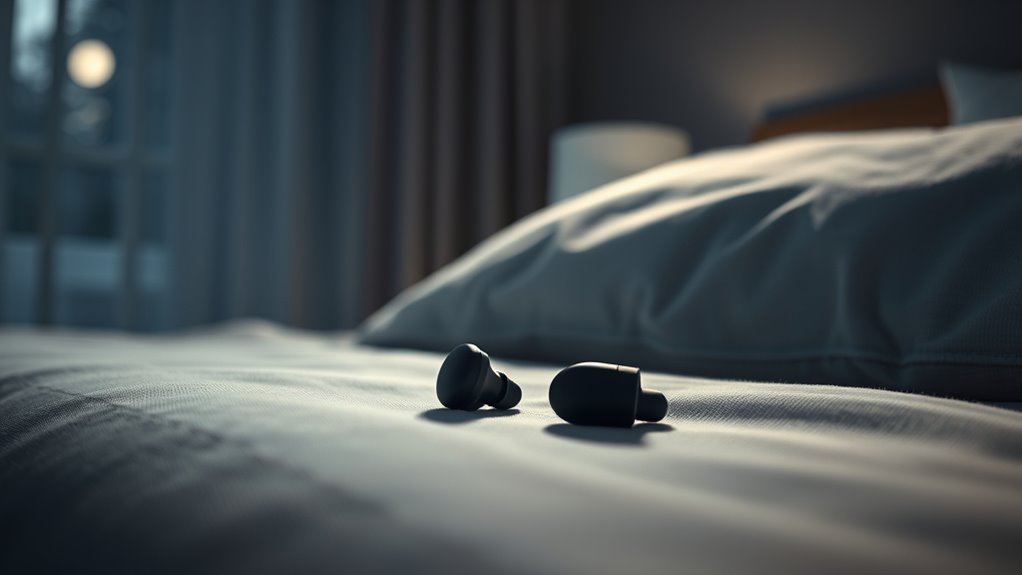
To guarantee a comfortable and safe sleep experience with earbuds, it’s important to pick models that fit well and feel unobtrusive. Comfortable earbuds enhance sound insulation without putting pressure on your ear canal or causing discomfort. Look for options with soft tips or flexible designs that conform to your ear shape. Avoid earbuds that feel tight or bulky, as they can disturb your sleep and harm your ear canal health. Well-fitting earbuds improve sound quality and reduce the need to increase volume, protecting your hearing. Consider these tips:
- Choose lightweight, ergonomic designs for a snug fit
- Opt for silicone or foam tips for better sound insulation
- Avoid over-ear models that may shift and cause discomfort
Selecting comfortable earbuds ensures safer, more restful sleep while safeguarding your hearing. Additionally, choosing sulfate-free shampoos can help maintain the health of your scalp and hair, especially if you sleep with your hair tied up or styled in a way that causes tension. Incorporating proper earbud hygiene can also prevent ear infections and keep your hearing safe over time. Regularly cleaning your earbuds and replacing tips when worn can further prevent ear infections and promote overall ear health. Using vetted wave and wind products or accessories can also contribute to a safer and more comfortable sleep environment.
Limit Volume Duration
After finding earbuds that fit comfortably and feel unobtrusive, it’s important to monitor how long you keep the volume at a safe level. Using volume control wisely helps prevent hearing damage and maintains good sleep hygiene. Limit the duration you listen at higher volumes, even if your earbuds feel comfortable. Set reminders to take breaks or turn down the volume after a set period, ideally no more than 60 minutes at a time. Consistent low-volume listening minimizes strain on your ears and supports restful sleep. Avoid keeping earbuds in all night or listening at loud volumes for extended periods. By managing how long you listen and maintaining proper volume control, you protect your hearing and improve sleep quality simultaneously.
Alternatives to Earphones for a Peaceful Night’s Rest
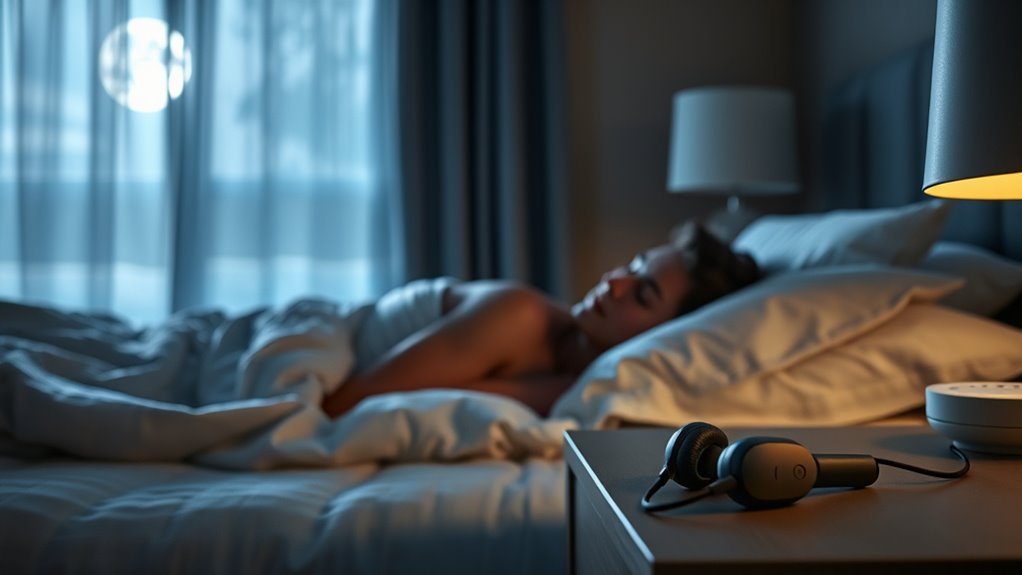
If you’re seeking a peaceful night’s rest without relying on earphones, there are several effective alternatives to contemplate. Improving your sleep environment can help by creating a space that naturally reduces noise and promotes relaxation. Consider using items that enhance noise reduction, making your sleep more comfortable and undisturbed.
Some options include:
- White noise machines or fans to drown out disruptive sounds
- Comfortable, thick curtains or soundproof window inserts
- Relaxing background sounds or calming music played at low volume
These alternatives help maintain a quiet, peaceful atmosphere without risking hearing damage. By focusing on noise reduction and optimizing your sleep environment, you can enjoy restful sleep without the need for earphones.
Recognizing Signs of Hearing Damage From Nighttime Listening

Listening to sounds at night can be relaxing, but using earphones or listening at high volumes over long periods can cause hearing damage. You might notice ear fatigue, where your ears feel tired or overstimulated after extended listening. Another sign is a ringing perception, often called tinnitus, that persists even after you stop listening. If your ears feel muffled or if you experience a temporary decrease in hearing clarity, these are warning signs. Don’t ignore these symptoms—they indicate your ears are under stress. Recognizing ear fatigue and ringing perception early helps you take action before more serious damage occurs. Lowering volume and limiting listening time are simple steps to protect your hearing health during nighttime listening.
Best Practices for Maintaining Hearing Health While Sleeping
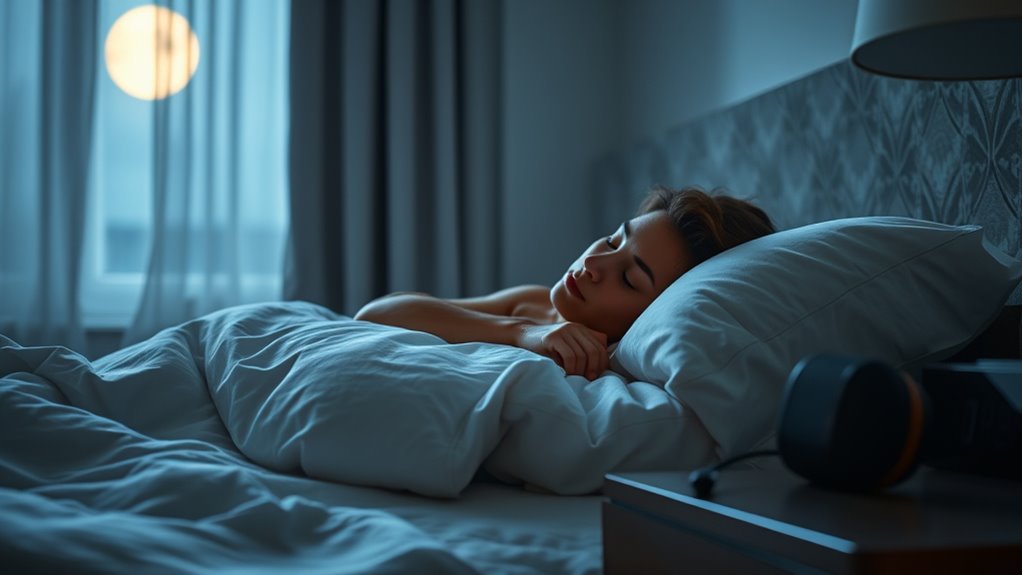
Getting adequate sleep is essential for overall health, and protecting your hearing during this time is equally important. To maintain hearing health while sleeping, consider your listening habits carefully. For musical relaxation, keep the volume low and choose calming tunes to avoid ear strain. If you prefer audiobooks, use sleep timers to prevent prolonged exposure at high volumes. Additionally, opt for comfortable, well-fitting earplugs to block out noise without damaging your ears. Remember to set volume limits on your devices and avoid listening directly from loud sources before bed. Creating a quiet, relaxing environment helps protect your hearing and ensures restful sleep. Small changes, like mindful listening and proper volume control, can make a significant difference in safeguarding your hearing health overnight.
Frequently Asked Questions
How Long Is It Safe to Listen at Night Each Night?
You should limit your listening duration at night to guarantee safe listening. Experts recommend sticking to about 60 minutes or less at moderate volume levels to protect your hearing. Avoid prolonged exposure beyond this time, as it increases the risk of hearing damage. Use volume limits on your devices, take regular breaks, and listen at lower volumes to maintain safe hearing health while you sleep or unwind.
Can Sleep Aids Like White Noise Harm My Hearing?
Sleep aids like white noise generally don’t harm your hearing if used at safe volume levels, which is typically below 70 decibels. White noise safety involves keeping the volume moderate to prevent hearing damage. However, sleep aid risks increase if you listen at high volumes or for extended periods. Always monitor the volume, avoid prolonged exposure, and use quality devices to protect your hearing while enjoying a restful sleep.
Are There Specific Headphones Designed for Overnight Use?
Yes, there are sleep-friendly headphones and overnight listening devices designed specifically for overnight use. These headphones typically feature low-profile designs, soft materials, and gentle sound levels to protect your hearing while providing comfort throughout the night. Look for products labeled as sleep-friendly, as they are crafted to minimize ear pressure and noise exposure, ensuring you enjoy your sleep environment safely without risking hearing damage.
What Are the Long-Term Effects of Nighttime Audio Exposure?
Think of your ears as delicate gardens; continuous loud noise at night can cause them to wither. Long-term exposure increases the risk of hearing deterioration and tinnitus, turning peaceful nights into noisy battles. Over time, your hearing might fade like a sunset, and ringing sounds could become a persistent companion. Protect your ears by keeping volume low, ensuring your auditory garden stays vibrant and healthy for years to come.
How Do I Know if My Hearing Is Already Damaged From Nighttime Listening?
You might notice signs of hearing damage, like difficulty hearing high-pitched sounds or understanding conversations, especially in noisy places. To be sure, schedule regular hearing tests with an audiologist who can assess your ear health. If you experience ringing, pain, or muffled sounds, these could indicate damage. Early detection helps protect your hearing, so don’t wait—get checked regularly and practice safe listening habits.
Conclusion
Protecting your hearing while you sleep isn’t just about comfort—it’s about preserving your future. Some believe that listening at night can cause irreversible damage, and recent studies suggest hearing loss may start subtly, long before you notice. By keeping volume low and choosing safe devices, you safeguard your senses. Remember, a peaceful night shouldn’t come at the cost of your hearing. Prioritize your health now to enjoy clear sounds for years to come.
Cold & flu season Picks
humidifiers
As an affiliate, we earn on qualifying purchases.