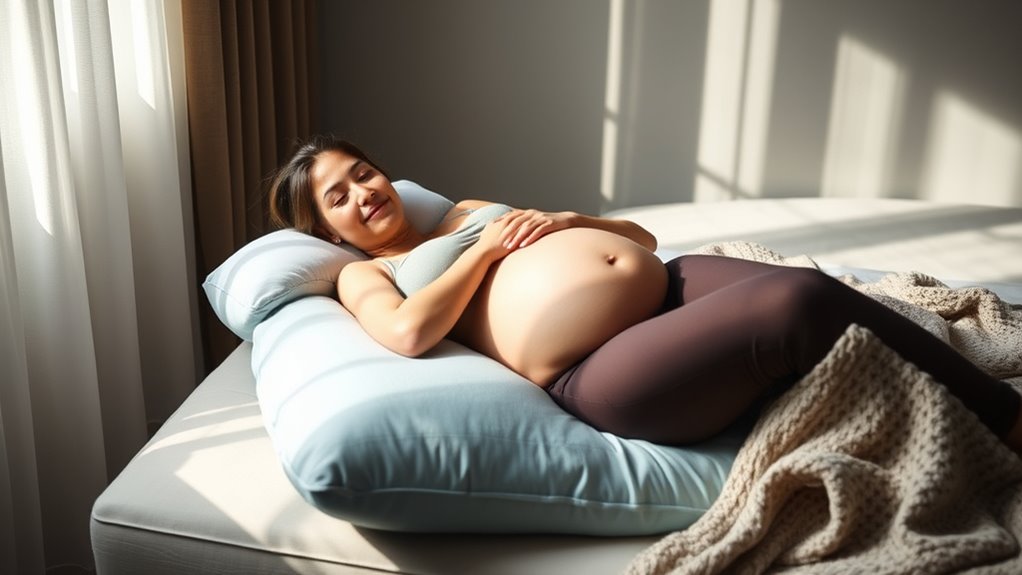

For comfortable pregnancy sleep, try lying on your side, especially the left, to promote better blood flow. Use pillows behind your back and between your knees for added support, and consider elevating your upper body with a wedge pillow to ease reflux and breathing. A firm mattress and a quiet, cool environment also help. Want to discover more tips to make your sleep even better? Keep exploring to find the best strategies for you.
Key Takeaways
- Sleep on your side, especially the left, with pillows behind your back and between your knees for optimal comfort.
- Use support pillows to elevate your upper body and relieve acid reflux or breathing issues.
- Choose a firm mattress and create a quiet, dark environment to enhance sleep quality.
- Avoid sleeping on your back; instead, support your body with pillows to prevent discomfort and circulation problems.
- Regularly adjust your sleep position and environment as pregnancy progresses for maximum comfort.
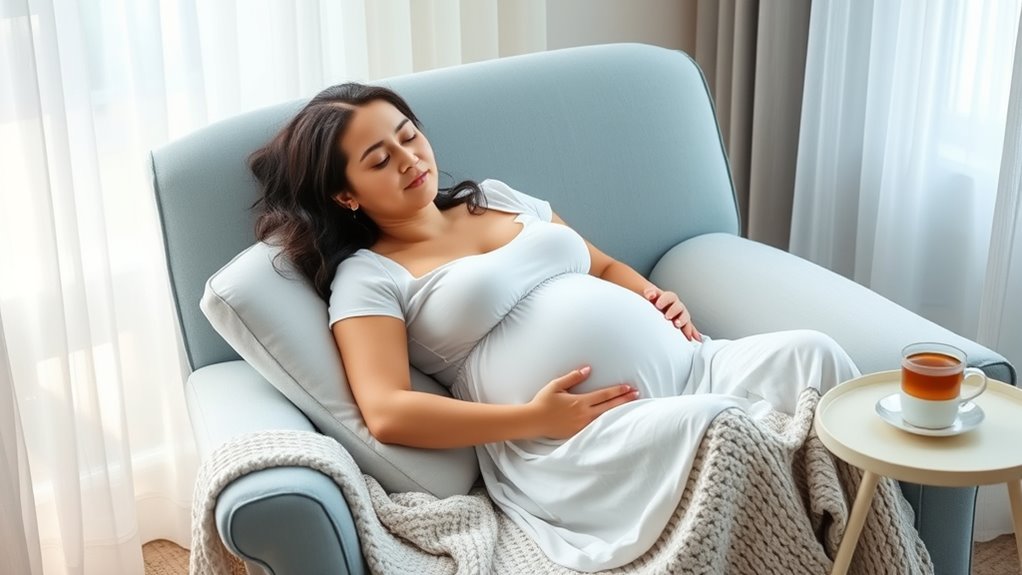
During pregnancy, finding a comfortable sleep position becomes essential for both your well-being and your baby’s development. Your body is going through significant changes, and ensuring a good night’s rest can improve your mood, energy, and overall health. To achieve this, paying attention to your prenatal comfort and creating a supportive sleep environment is key. Your sleep environment includes your mattress, pillows, and room conditions—all of which should promote relaxation and minimize discomfort. A firm but supportive mattress can help maintain proper spinal alignment, reducing aches and pains. Adding extra pillows around your body can provide additional support, especially under your belly, behind your back, or between your knees. These props help you find a position that feels natural and reduces pressure on your hips and lower back.
When considering your sleep environment, aim for a cool, dark, and quiet room, as comfort is influenced by temperature and noise levels. Use blackout curtains or a sleep mask to block out light, and consider white noise or a fan if sound disturbances disturb your sleep. Proper ventilation helps regulate temperature and keeps you comfortable throughout the night. Avoiding caffeine and heavy meals before bed can also improve your sleep quality, ensuring you’re more relaxed when you lie down. Creating a comfortable sleep environment also involves selecting a supportive mattress, which can significantly impact your prenatal comfort.
Your body naturally responds to these adjustments, making it easier to settle into a sleep position that supports both your prenatal comfort and your baby’s safety. Many pregnant women find that sleeping on their side, particularly the left side, offers the best benefits. This position promotes ideal blood flow to the placenta and reduces pressure on important organs. To make side sleeping more comfortable, place a pillow behind your back for support and another between your knees to keep your hips aligned. Elevating your upper body slightly with a wedge pillow can also help if you experience acid reflux or breathing difficulties.
Sleeping on your side, especially the left, improves blood flow and reduces pressure for your comfort and your baby’s safety.
As your pregnancy progresses, your body may require more adjustments. Don’t hesitate to experiment with different pillow arrangements or sleep positions to find what works best for you. Avoid sleeping on your back for extended periods, as this can cause discomfort and reduce circulation to your fetus. Instead, focus on maintaining a side-lying position that supports your comfort while promoting your baby’s health. Remember, your sleep environment should foster relaxation, and your body will guide you toward the most comfortable and supportive position. Prioritizing your prenatal comfort and creating an ideal sleep environment will help you get the restful sleep you need during this transformative time.

AmyHomie Cooling Blanket for Hot Sleepers,Lightweight Summer Queen Size
- Double-Sided Cold Effect: Japanese Arc-Chill fabric for dual-sided cooling
- Keeps You Cool and Comfortable: Breathable, soft, gentle on sensitive skin
- Versatile Usage: Suitable for bed, travel, outdoors, and pets
As an affiliate, we earn on qualifying purchases.
Frequently Asked Questions
Can Sleeping on My Back Harm My Baby During Pregnancy?
Sleeping on your back during pregnancy can harm your baby, especially after the first trimester. It may compress major blood vessels, reducing blood flow and causing discomfort for you. To guarantee pregnancy comfort, try sleep posture adjustments like sleeping on your side with a pillow between your legs. This position promotes better circulation and safety for both you and your baby. Always consult your healthcare provider for personalized advice.
Are There Sleep Positions to Avoid in Early Pregnancy?
In early pregnancy, you should avoid sleep positions that put pressure on your abdomen or back, like sleeping on your stomach or back. Instead, opt for safe sleep positions such as sleeping on your side, preferably your left side, which improves blood flow. Follow sleep posture advice that encourages comfort and safety, ensuring your body stays relaxed and well-supported. Always listen to your body and adjust as needed for restful sleep.
How Can I Tell if I’m Sleeping Comfortably?
You’ll know you’re sleeping comfortably when your sleep comfort feels just right—no aches, no tossing, and waking refreshed. Trust your body’s signals, like feeling relaxed and not strained. Experiment with prop selection, like pillows to support your belly or back, to enhance your sleep. If you wake up feeling revitalized and pain-free, you’re on the right track—sometimes, it’s just a matter of finding what works best for you.
Is It Safe to Sleep on My Stomach in the First Trimester?
Sleeping on your stomach during early pregnancy is generally safe, especially in the first trimester. You might find that stomach sleeping feels comfortable as your belly hasn’t grown much yet. However, as your pregnancy progresses, it’s best to switch to side sleeping, preferably on your left side. Always listen to your body, and talk to your healthcare provider if you have concerns about your sleep positions.
What Are Signs of Poor Sleep Quality During Pregnancy?
Your nights might feel like a storm, with signs of poor sleep quality swirling around you. You may notice dream disturbances that disrupt your rest and a restless leg that refuses to settle. These signals tell you that your sleep is under siege, making it hard to find peaceful, restorative sleep. Pay attention to these clues; they’re your body’s way of asking for extra care and comfort during this special time.

Cooling Blanket Queen Size, Cooling Blankets for Hot Sleepers, Absorbs Heat to Keep Body Cool for Summer Nights Sweats, Cold Blanket for Bed Couch Sofa, Ice Blanket 90x90 Inches, Dark gray
- Heat-Wicking for Temperature Regulation: Keeps skin cool and dry all night
- Double-Sided Versatile Comfort: Suitable for year-round use and seasons
- Premium Breathable Material: Silky, smooth, and promotes air circulation
As an affiliate, we earn on qualifying purchases.
Conclusion
As you navigate pregnancy, remember that finding the right sleep position is like tending a delicate garden—you need patience, gentle adjustments, and a bit of trial and error. Trust your body’s whispers and don’t be afraid to try different props; they’re your guiding stars through restless nights. With a little care and creativity, you’ll create a cozy haven where restful sleep blossoms, nurturing both you and your little one like a sunrise warming the world.

Ultra Pain Relief Cooling Pillow for Neck Support, Adjustable Cervical Pillow Cozy Sleeping, Odorless Ergonomic Contour Memory Foam Pillows, Orthopedic Bed Pillow for Side Back Stomach Sleeper
- Hollow Concave Design: Cradles head at 15-degree tilt
- Ergonomic Contour Zones: Supports neck, shoulders, and arms
- Memory Foam Core: Breathable, non-toxic, odorless foam
As an affiliate, we earn on qualifying purchases.

REST® Evercool® Cooling Comforter Blanket for Hot Sleepers, Full/Queen
- Award-Winning Cooling Performance: Lab-rated 3x cooler than silk
- All-Season Breathability: Supports temperature regulation year-round
- Lightweight & Fluffy: Blended with Sorona and Tencel filling
As an affiliate, we earn on qualifying purchases.