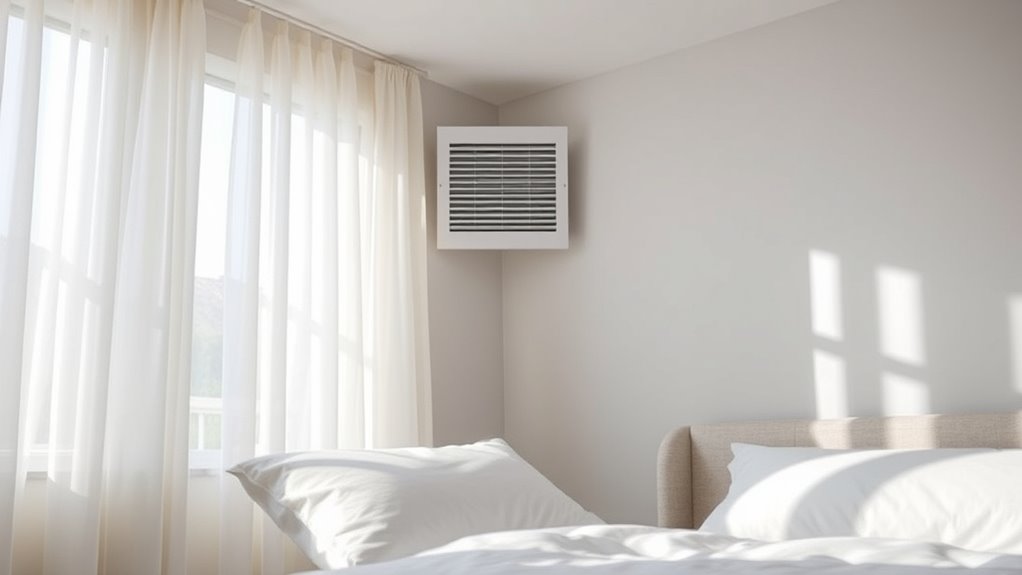

Proper vent placement is key to avoiding drafts and maintaining a cozy sleeping environment. If vents are located directly across from your bed or near your sleeping area, you may feel cold blasts that disrupt your comfort. To prevent this, vents should be positioned near ceilings or high on walls, with adjustable covers to control airflow. Ensuring balanced airflow helps keep your room warm and draft-free. Keep exploring, and you’ll discover more tips to improve your bedroom comfort.
Key Takeaways
- Proper vent placement near ceilings or high on walls promotes even airflow and prevents drafts at sleeping level.
- Avoid positioning vents directly across from the bed to prevent cold blasts and discomfort.
- Use adjustable vent covers to control airflow volume and direction, reducing draft issues.
- Seal gaps and install draft stoppers around vents to minimize unwanted cold air entering the sleeping area.
- Recognize airflow patterns to ensure vents promote gentle circulation without creating temperature fluctuations.

Proper bedroom vent placement is essential for maintaining a comfortable and healthy sleeping environment. When vents are positioned correctly, they promote ideal airflow patterns, ensuring your room stays cozy without drafts or stuffiness. Poor placement, on the other hand, can lead to uneven temperature distribution and unwanted drafts that disrupt your sleep. To achieve the best results, you need to pay attention to how airflow moves through your room and how vent cover designs influence that movement.
Airflow patterns are vital because they determine how warm or cool air circulates around your space. If vents are placed improperly, you might notice drafts near your bed or cold spots in the room. For example, placing a vent directly across from your bed can cause uncomfortable drafts, especially if the airflow is strong or directed poorly. Instead, aim for a positioning that encourages gentle, even circulation—typically near ceilings or high on walls—so the air distributes smoothly without creating drafts at your sleeping area. Recognizing these patterns helps you avoid cold blasts that wake you up and hot spots that make the room uncomfortably warm and stuffy.
Understanding airflow patterns is essential because they determine how warm or cool air circulates around your space. Vent cover designs play a significant role in controlling airflow and minimizing drafts. Some covers are designed with adjustable louvers or dampers, allowing you to fine-tune the direction and volume of airflow. This gives you more control over how the air moves, helping you prevent drafts from directly hitting your bed. Opting for vent covers with smooth, well-sealed edges can also prevent air leaks that cause drafts. Additionally, covers made from insulating materials or with a textured surface can help reduce airflow velocity, creating a more consistent temperature and eliminating the sudden rush of cold or warm air. Proper vent cover placement combined with thoughtful design ensures you’re not only optimizing airflow but also reducing the chances of drafts disrupting your sleep.
If you’re experiencing drafts despite correct vent placement, consider adjusting the vent cover design or adding draft stoppers. Small modifications, like sealing gaps around the vent or installing vent covers with adjustable features, can make a significant difference. Remember, the goal is to create a balanced airflow that cools or heats your room efficiently without creating uncomfortable drafts or temperature fluctuations. When you pay attention to airflow patterns and choose vent cover designs that suit your space, you’ll find your bedroom becomes a more peaceful, restful environment. Proper placement and thoughtful design are key components in avoiding drafts and maintaining the ideal sleeping temperature every night.
Frequently Asked Questions
How Do I Identify if My Vent Placement Causes Drafts?
You can tell if your vent placement causes drafts by observing airflow patterns near the vents. If you notice cold air or feel a breeze, it’s likely your vents aren’t sealed properly or are positioned poorly. Check for gaps around the vent and seal them with appropriate materials. Adjusting vent direction or adding draft stoppers can also improve airflow and reduce drafts, making your room more comfortable.
Can Repositioning a Vent Improve Air Circulation?
Repositioning a vent can seriously boost airflow optimization and make your room feel less like a wind tunnel. By strategic vent placement, you guarantee warm or cool air reaches where it’s needed most, rather than sneaking behind furniture or straight at the door. Moving your vents isn’t just about comfort; it’s about mastering the art of airflow. So, give it a try—you might just stop feeling like you’re sleeping in a drafty castle!
What Are Signs of Poor Ventilation in the Bedroom?
If you notice stuffy air, persistent odors, or mold growth, your bedroom likely has poor ventilation. You might also feel excessive humidity or dryness, which impacts air quality and comfort. Poor ventilation can cause allergens to build up and make it harder to breathe comfortably. To improve air quality and humidity control, consider adding vents, using exhaust fans, or opening windows regularly to refresh the air and reduce these issues.
Are There Safety Concerns With Placing Vents Near Beds?
Placing vents near beds can raise vent safety and airflow concerns, especially if the airflow causes discomfort or drafts while you’re sleeping. Make sure vents are positioned to avoid direct airflow onto your body, which can disturb sleep or cause health issues. Proper vent placement and regular maintenance help prevent issues like mold or drafts, making your bedroom safer and more comfortable. Always check that vents are functioning correctly and safely.
How Often Should I Inspect or Adjust My Bedroom Vents?
You should inspect and adjust your bedroom vents every few months to guarantee ideal airflow. During these inspections, clean the vents to prevent dust buildup and improve air quality. It’s also a good idea to replace your air filter regularly, typically every 1-3 months, to maintain efficient ventilation. By keeping vents clean and filters fresh, you’ll enhance comfort and prevent drafts, ensuring your bedroom stays cozy and well-ventilated.
Conclusion
So, make sure you’re paying attention to your bedroom vent placement—it’s not just a small detail, it’s the key to a good night’s sleep. Poor placement can turn your nights into a never-ending battle with discomfort, making you feel like you’re fighting a losing war against the elements. Take charge now, adjust those vents, and reclaim your restful sleep. Don’t let bad vent placement turn your sanctuary into a battlefield—your sleep depends on it!