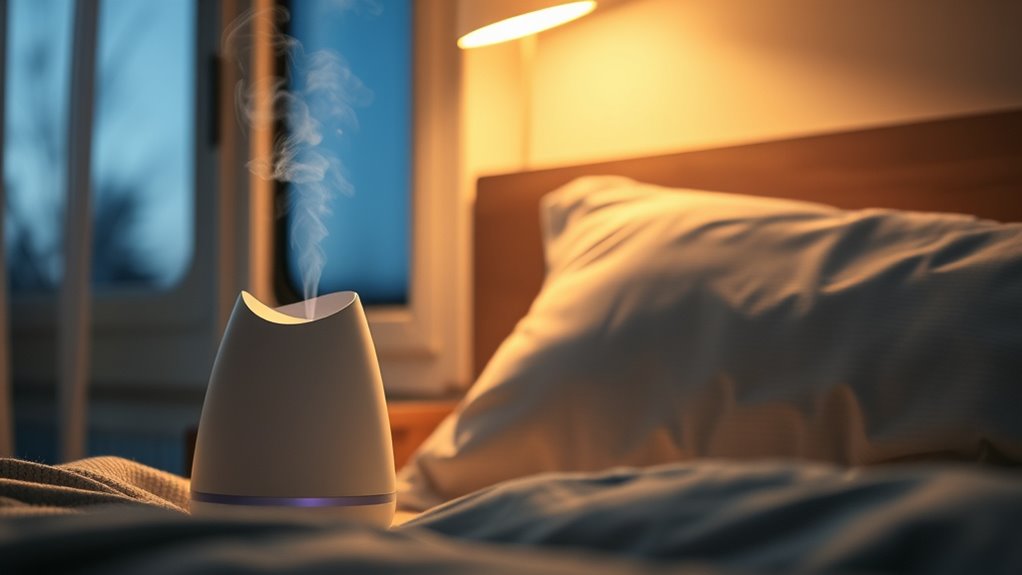

To ease dry noses at night, consider tweaking your humidifier by regularly cleaning it to prevent mold and bacteria growth. Use distilled water instead of tap, and keep humidity levels between 30-50%. You can also try nasal saline sprays or rinses before bed to add moisture directly to your nose. Consistently maintaining these tips helps keep your nasal passages moist and comfortable. For more easy-to-implement ideas, keep exploring the options available.
Key Takeaways
- Regularly clean and replace humidifier filters to prevent mold and bacteria growth.
- Use distilled water in your humidifier to reduce mineral deposits and ensure clean moisture.
- Maintain indoor humidity levels between 30-50% with a hygrometer for optimal nasal moisture.
- Combine humidifier use with saline nasal sprays or rinses before bed to keep nasal tissues moist.
- Adjust humidifier settings if nasal dryness persists, ensuring consistent, appropriate moisture delivery.
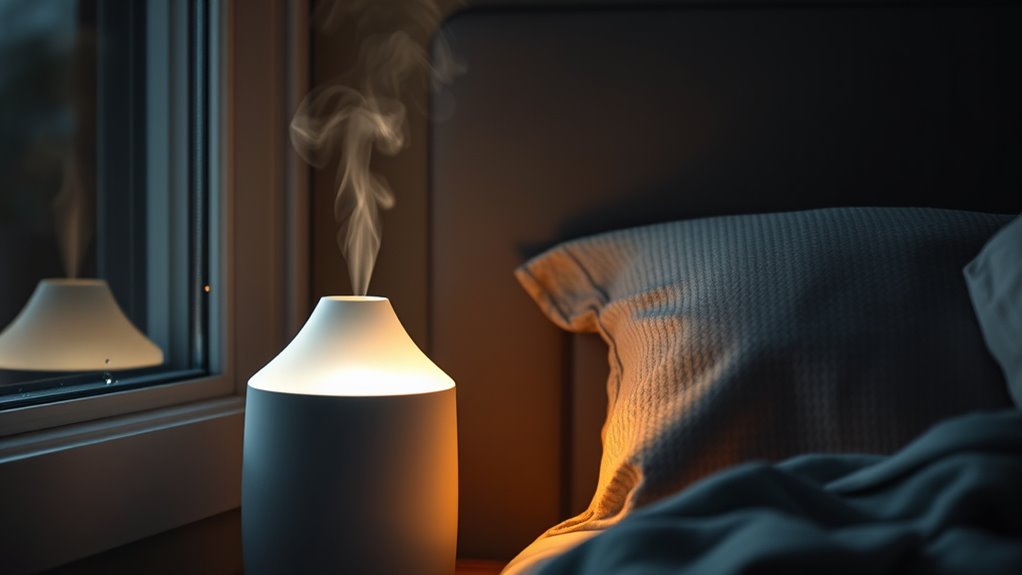
Have you ever woken up with a dry, uncomfortable nose? If so, you’re probably frustrated by how difficult it can be to find relief, especially when it disrupts your sleep. One common culprit is indoor air that’s too dry, particularly in winter or in heated environments. To combat this, many turn to humidifiers, but simply turning one on isn’t enough. Proper humidifier maintenance is essential to guarantee it works effectively and doesn’t introduce bacteria or mold into your air. Regularly cleaning your device, replacing filters as recommended, and using distilled water can make a huge difference. When your humidifier is well-maintained, it releases moist, clean air that helps keep your nasal passages moist overnight.
In addition to maintaining your humidifier, incorporating nasal hydration techniques into your nightly routine can also make a big difference. For example, using saline nasal sprays before bed helps soothe and moisturize dry nasal tissues. These sprays are simple, drug-free, and can be used multiple times a day to keep nasal passages moist. Another effective method is nasal rinses or irrigation with a neti pot, which flush out irritants and excess mucus, promoting better airflow and reducing dryness. Staying well-hydrated throughout the day also plays a vital role; drinking plenty of water ensures your body and nasal tissues are hydrated from within, making it easier to keep your nose moist through the night. Additionally, maintaining optimal indoor humidity levels can prevent the air from becoming too dry, creating a more comfortable environment for your nasal passages.
Combining proper humidifier maintenance with nasal hydration techniques creates a powerful duo against dry noses. When your humidifier runs smoothly, it adds just the right amount of moisture to your room, preventing the air from becoming too dry. Meanwhile, nasal hydration techniques directly target the tissues inside your nose, preventing irritation and discomfort. If you notice your nose remains dry despite these efforts, consider adjusting your humidifier’s settings or increasing the frequency of nasal sprays. It’s also wise to check the humidity level in your room using a hygrometer; ideally, indoor humidity should stay around 30-50%. Too much moisture can cause other issues, like mold, so moderation is key.
Ultimately, addressing a dry nose at night involves a combination of good equipment upkeep and personal care. Proper humidifier maintenance assures a clean, consistent source of moisture, while nasal hydration techniques provide direct relief to your nasal tissues. Implementing these strategies can restore comfort and help you enjoy more restful, nose-healthy sleep.
Frequently Asked Questions
Can Humidifiers Worsen Allergies or Asthma Symptoms?
Humidifiers can worsen allergies or asthma symptoms if not used properly. Poor humidifier safety, like mold or bacteria buildup, can trigger allergy flare-ups. To guarantee allergy relief, clean your humidifier regularly and use distilled water. Proper maintenance prevents mold growth and airborne irritants. When used correctly, humidifiers can help ease dry noses and respiratory discomfort, but neglecting cleaning routines might make symptoms worse. Always follow safety guidelines for healthier, allergy-friendly air.
What’s the Ideal Humidity Level for Nasal Health?
You should aim for a humidity level between 30% and 50% for nasal health. Too dry air worsens congestion, while overly humid air can promote mold and dust mites, impacting air quality. Proper humidity regulation creates a balanced environment, preventing nasal dryness and irritation. Keep an eye on your home’s humidity to ensure it stays within this range, helping you breathe easier and maintain healthier nasal passages.
How Often Should I Clean My Humidifier?
You should clean your humidifier at least once a week to guarantee proper humidifier maintenance. If you have allergies or respiratory issues, more frequent cleaning might be necessary to prevent mold and bacteria buildup. Always empty the tank daily, rinse it thoroughly, and use gentle disinfectants. Regular cleaning helps reduce allergens, keeps the air fresh, and ensures your humidifier works efficiently, keeping your nasal passages comfortable and healthy.
Are There Specific Humidifier Types Better for Dry Noses?
You might worry about humidifier safety, but certain types are better for dry noses. Ultrasonic humidifiers produce fine mist, helping keep your nasal passages moist without safety concerns. Evaporative models also work well, adding moisture securely. Using a nasal moisturizer alongside these humidifiers can relieve dryness further. Choose a device with cleanability features, and always clean your humidifier regularly to prevent bacteria buildup and ensure safe, effective relief.
Can Dehydration Cause Nighttime Dry Nose?
Dehydration can definitely cause a dry nose at night, as it leads to dehydration symptoms like dry mouth and skin. When your body lacks proper hydration, mucus membranes become less moist, worsening nasal dryness. To combat this, follow hydration tips such as drinking plenty of water throughout the day and avoiding caffeine or alcohol before bed. Staying well-hydrated helps keep your nasal passages moist and reduces nighttime dryness.
Conclusion
Think of your nose as a delicate garden that needs just the right amount of moisture to thrive. Using a humidifier is like watering it gently through the night, preventing dryness from withering your comfort. With these tweaks, you’ll wake up feeling refreshed, not parched, as your nasal passages stay lush and hydrated. Embrace these simple changes, and watch your nights transform from a desert into a thriving oasis of relief.