To guarantee your humidifier helps your sleep, place it on a flat, elevated surface away from walls, furniture, and drafts, ideally in a central spot for even moisture. Keep it at mid-level height and at least three feet from your bed to avoid excess dampness. Avoid corners and walls where moisture can trap and cause mold. Regularly monitor humidity levels and adjust as needed. If you follow these tips, you’ll create a comfortable sleep environment—and there’s more to discover.
Get ready for Prime Big Deal Days — try Prime free
Exclusive member deals on October 6–7, plus fast free delivery. Cancel anytime.
As an affiliate, we earn on qualifying purchases.
Key Takeaways
- Place the humidifier on an elevated, flat surface away from walls and furniture to prevent moisture buildup.
- Position it at mid-level height, away from direct contact with your bed, to ensure even humidity distribution.
- Keep the humidifier at least three feet from your bed to avoid excess moisture and condensation on bedding.
- Use a humidity sensor to maintain levels between 30-50%, adjusting the device accordingly.
- Avoid placing the humidifier near vents or windows to prevent drafts that can disrupt humidity balance.
Choose the Optimal Location in Your Room
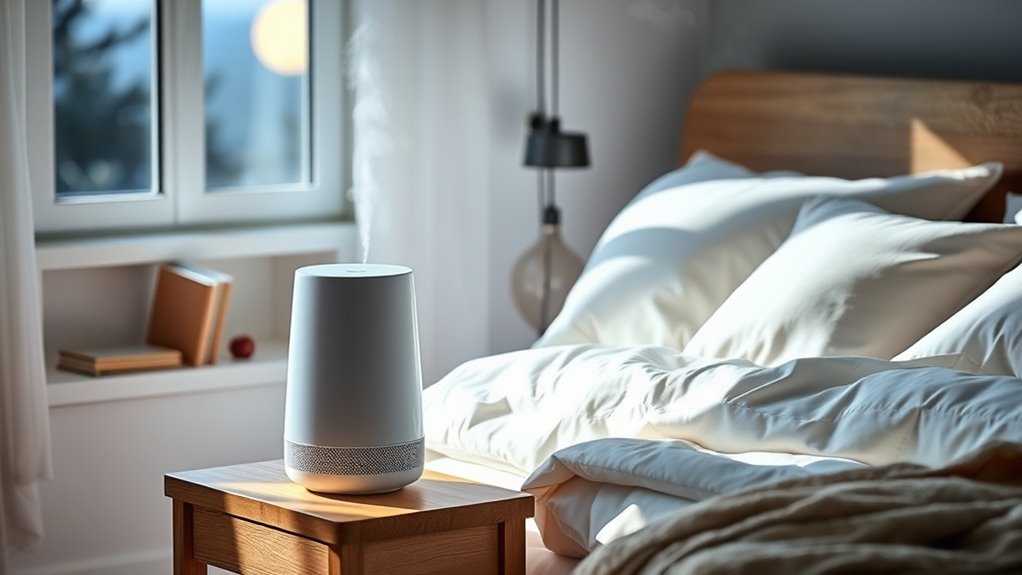
Choosing the right spot for your humidifier is essential to guarantee it effectively adds moisture to the air. Place it on a flat, elevated surface away from walls and furniture to prevent water damage and secure proper humidifier maintenance. Avoid placing it near windows or vents where drafts can interfere with humidity levels. Good room ventilation helps distribute moisture evenly, so position your humidifier in a central location for ideal results. Keep it away from direct sunlight, which can cause mold or bacteria growth. Also, verify the area is not too cramped, allowing air to circulate freely. Ensuring proper air circulation within your space can enhance overall comfort and mood. Regularly cleaning and maintaining your humidifier ensures it functions efficiently without promoting mold or bacteria buildup, keeping your space comfortable and safe. Proper placement supports home safety by promoting energy-efficient humidification solutions.
Keep the Humidifier at the Right Height

To guarantee your humidifier effectively humidifies your space, it’s important to keep it at the right height. Placing it too high can disrupt airflow patterns, causing uneven moisture distribution. Conversely, setting it too low might lead to water accumulation or damp spots. Ideally, position the humidifier around mid-level, considering your ceiling height, so mist disperses evenly throughout the room. This helps prevent drafts and ensures the moisture reaches sleeping areas without creating excess dampness. Adjusting the height optimizes airflow, allowing humidified air to circulate naturally. Keep in mind, the goal is to promote a consistent humidity level without creating overly damp zones, so choose a spot where the device can operate efficiently within your room’s airflow patterns. Proper placement also helps maintain safe electrical practices and prevents potential hazards.
Maintain Proper Distance From Your Bed

Placing your humidifier too close to your bed can lead to excessive moisture buildup, which may cause dampness, mold, or respiratory discomfort while you sleep. To prevent this, make sure proper bedside placement, ideally at least three feet away from your bed. This distance helps distribute humidity evenly without saturating the air near your sleeping area. Using a humidity sensor can help you monitor the room’s moisture levels, so you can adjust the humidifier accordingly. Keep it at an appropriate distance to avoid direct airflow onto your bedding or skin, which can cause discomfort. Proper placement reduces the risk of over-humidification and creates a healthier sleeping environment. Remember, maintaining a safe distance promotes better sleep quality and protects your room from excess moisture damage. Implementing air quality improvement measures like proper humidifier placement ensures a comfortable and safe sleeping atmosphere. Additionally, regularly cleaning your humidifier helps prevent the growth of bacteria and mold, further enhancing your indoor air quality. Proper placement also involves considering the humidifier’s capacity to match the size of your room, ensuring efficient and safe operation. Being mindful of room ventilation can also help in maintaining optimal humidity levels and preventing issues related to excess moisture. Proper positioning of your humidifier can also help in energy efficiency, reducing unnecessary power consumption by avoiding overuse.
Avoid Placing the Humidifier Near Walls or Corners

Positioning your humidifier correctly also involves avoiding spots near walls or corners. Placing it too close can cause wall dampness, which encourages mold growth and damages surfaces. Corners tend to trap moisture, making these areas more prone to mold risk. When the humidifier is near walls or in tight corners, the moisture doesn’t disperse evenly, leading to localized dampness. This uneven distribution can also contribute to excess moisture buildup, which increases the likelihood of mold and mildew developing on walls and nearby surfaces. To prevent this, place the humidifier in an open area with good airflow, ensuring moisture spreads evenly throughout the room. Proper placement helps maintain healthy humidity levels while avoiding potential issues caused by excess moisture. Regular monitoring of humidity levels and incorporating air circulation techniques can also help optimize comfort and health during sleep. Additionally, understanding ear wax odor and other scent-related signs can help you detect excess moisture or mold presence early on. Being aware of mold prevention strategies can further protect your living space from damage.
Regularly Monitor and Adjust Humidity Levels

Monitoring and regulating humidity levels regularly guarantees your space stays comfortable and safe. Use humidity sensors to keep an eye on moisture levels in the room, ensuring they stay within the ideal range of 30-50%. Check these sensors daily, especially during seasonal changes when moisture levels fluctuate more. If the readings indicate excess humidity, reduce the humidifier’s output or turn it off temporarily. Conversely, if moisture levels are too low, increase humidity gradually. Adjustments help prevent issues like mold growth or dry skin, ensuring better sleep quality. Incorporating vetted humidifiers can also help ensure effective and safe humidity control, supported by reliable humidity level monitoring. Regularly adjusting humidity helps maintain a balanced environment and prevents dampness or dryness that could disrupt sleep. Being aware of proper humidity levels is crucial for maintaining a healthy, restful sleeping space. Staying attentive to moisture levels is key to a healthy, restful sleeping space. Additionally, understanding how to properly position a humidifier can optimize its effectiveness and prevent unintended dampness.
Frequently Asked Questions
Can I Use a Humidifier With Essential Oils Safely?
You can use a humidifier with essential oils safely if you choose oils compatible with your device. Always check essential oil safety guidelines and verify your humidifier is designed for diffusing oils. Not all humidifiers are compatible, so avoid adding oils directly into the water tank unless specified. Properly cleaning your humidifier prevents mold and bacteria growth, making your relaxing experience both safe and enjoyable.
What Is the Ideal Humidity Level for Sleeping Comfort?
Think of your sleep as a garden needing just the right rain. Keep your room’s humidity between 40-60% to achieve ideal moisture, ensuring your air quality supports restful sleep. Too dry, and your skin and sinuses suffer; too damp, and mold may grow. Adjust your humidifier to maintain this balance, creating a comfortable atmosphere where your body can relax and rejuvenate without feeling damp or stuffy.
How Often Should I Clean My Humidifier?
You should clean your humidifier at least once a week to prevent mold and bacteria buildup. Follow maintenance tips like emptying the tank daily, rinsing it thoroughly, and using mild soap or vinegar. If you notice any musty odors or mineral deposits, increase cleaning frequency. Regular cleaning guarantees your humidifier works efficiently, improves air quality, and keeps your sleep environment healthy. Don’t skip maintenance to avoid potential health issues.
Is It Okay to Leave My Humidifier on All Night?
Yes, you can leave your humidifier on all night if you focus on proper humidifier placement and moisture control. Place it on a flat, elevated surface away from your bed, ensuring it’s not pointing directly at you, to avoid excess dampness. Regularly check humidity levels with a hygrometer, keeping them between 30-50%. This way, you maintain a comfortable environment without making your room too damp or humidified.
Can a Humidifier Help With Allergies or Respiratory Issues?
Think of your humidifier as a gentle breeze that can clear the fog of allergies. It can help with allergies or respiratory issues by adding moisture, easing congestion, and soothing irritated nasal passages. To maximize benefits, understand air purifier differences and follow ideal placement tips—keep it away from walls and furniture, ideally near your bed but not directly against it. Proper placement ensures your humidifier becomes a revitalizing gust of fresh air, not a source of dampness.
Conclusion
By positioning your humidifier thoughtfully, you’re not just improving air quality—you’re supporting better sleep. Think of it like tending a garden: too much water can drown roots, but just the right amount helps them thrive. The same applies here; balance is key. When you place your humidifier correctly, you create a cozy, healthy environment that promotes restful sleep. Remember, a little attentiveness goes a long way in turning your room into a sanctuary of comfort.
Fall Picks
fall essentials
As an affiliate, we earn on qualifying purchases.