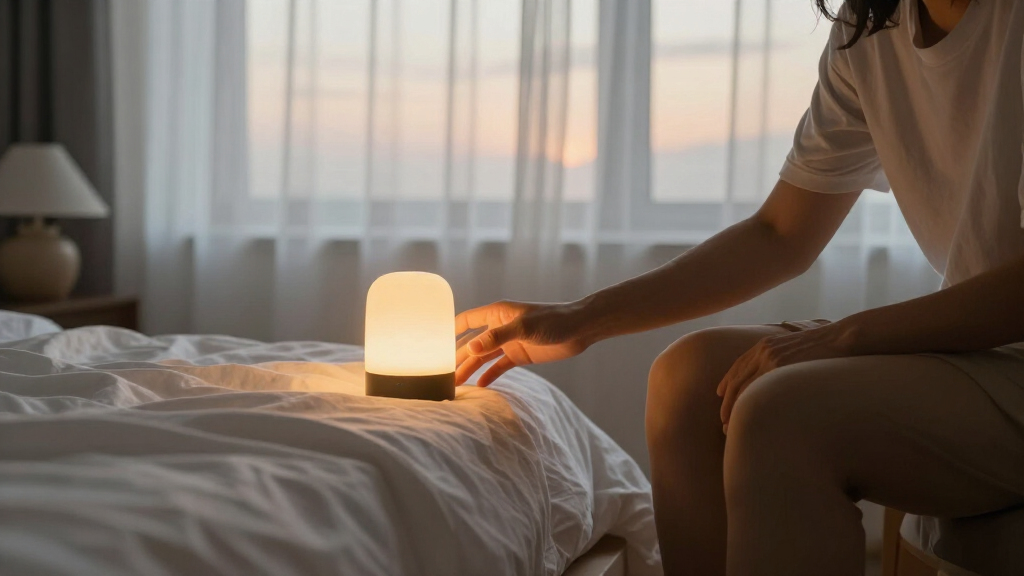

Smart sunrise alarm lamps pair a gradual light-up with alarm and sleep features, but the options differ in how much control they offer and how much setup they require. I’d name the Hatch Restore 3 the best overall for readers who want lighting and a broader sleep routine in one system. The Philips SmartSleep HF3520/60 stands out for a more focused wake-up light, while the REACHER Wood Grain is a straightforward alternative with a sound machine and nightlight. The main tradeoff is between connected features and simplicity: app-driven models can offer more personalization, while simpler clocks may be easier to operate at bedtime. Read on for the full breakdown, including picks for different budgets, routines, and bedside needs.
Key Takeaways
- The Hatch Restore 3 is the strongest all-around fit when you want sunrise lighting alongside a more developed sleep routine, while the Philips HF3520/60 keeps the focus on waking.
- Philips’ two SmartSleep models serve different priorities: the HF3520/60 is the simpler wake-up-light choice, and the HF3650/60 is the more feature-rich pick for shoppers seeking a premium Philips option.
- Several clocks combine wake lighting with sound features, but models such as the JALL and Dekala also add radio, Bluetooth, or wireless charging, which may add convenience at the cost of a busier device.
- App control is not automatically an advantage. It suits people who want to adjust routines from a phone, while remote- or button-based models may be easier for sleepers who want fewer connected steps.
- Product naming can obscure meaningful differences: the Hatch Restore 3 appears in two finishes, and the lineup also includes a separate Hatch contactless sleep tracker, so buyers should distinguish a sleep clock from a tracking-focused device.
| Hatch Restore 3 Smart Sleep Assistant (Greige) |  | Best for Customizable Bedtime Routines | Color: Greige | Lighting: Sunrise alarm and circadian lighting | Audio library: 80+ sleep sounds | VIEW LATEST PRICE | See Our Full Breakdown |
| REACHER Wood Grain Sunrise Alarm Clock and Sound Machine with Nightlight |  | Best Value for Straightforward Controls | Model: R7W | Color and material: Wood Grain; wood | Sunrise simulation: 1%–100% brightness over 5–60 minutes | VIEW LATEST PRICE | See Our Full Breakdown |
| Sunrise Wake-Up Light Therapy Lamp with App and Remote Control |  | Best for High-Intensity Light and Flexible Control | Light intensity: Up to 12,000 lux | Brightness: 1–40 levels | Controls: Smartphone app and handheld remote | VIEW LATEST PRICE | See Our Full Breakdown |
| Hatch Sleep Clock Contactless Sleep Tracker, Cocoa |  | Best for Contactless Sleep Insights | Color: Cocoa | Mounting type: Tabletop | Control method: App | VIEW LATEST PRICE | See Our Full Breakdown |
| Philips SmartSleep Wake-Up Light HF3520/60 |  | Best for a Familiar Clock-and-Lamp Setup | Model: HF3520/60 | Light routines: Sunrise and sunset simulation | Wake-up sounds: 5 natural sounds | VIEW LATEST PRICE | See Our Full Breakdown |
| Hatch Restore 3 Sleep Clock with Audio and Circadian Lighting, Putty |  | Best for a Screen-Free Bedtime Routine | Color: Putty | Sleep sounds: 80+ | Display: Dimmable clock | VIEW LATEST PRICE | See Our Full Breakdown |
| Vivilumens Sunrise Alarm Clock with Sound Machine |  | Best for Heavy Sleepers on a Simple Setup | Dimensions: 8.9 × 8.9 in | Weight: 1.4 lb | Power: Corded electric | VIEW LATEST PRICE | See Our Full Breakdown |
| JALL Full-Screen Sunrise Alarm Clock with White Noise, Dual Alarms, FM Radio, and Bluetooth Speaker |  | Best Feature-Rich Sunrise Alarm | Sunrise simulation: Gradual brightness over 10–60 minutes | Alarms: Dual alarms; everyday, weekday, or weekend schedules | Snooze: 5–20 minutes | VIEW LATEST PRICE | See Our Full Breakdown |
| Dekala Arches Smart Sunrise Alarm Clock with Wireless Charging and White Noise Machine |  | Best for App-Controlled Bedside Convenience | Model: SAC01 | Dimensions: 6.5 × 6.5 in | Weight: 1.8 lb | VIEW LATEST PRICE | See Our Full Breakdown |
| Bright Light Therapy Lamp with Sunrise Alarm and App Control | 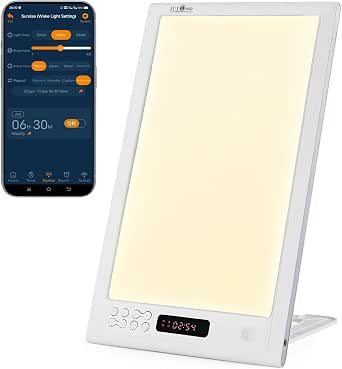 | Best for Bright Therapy-Style and Desk Use | Illumination: 0–12,000 lux | UV-free: Yes | Color temperatures: 3000K, 4500K, and 6000K | VIEW LATEST PRICE | See Our Full Breakdown |
| Philips SmartSleep Sleep and Wake-Up Light HF3650/60 |  | Best for Guided Bedtime Routines | Model: HF3650/60 | Light source: LED | Wattage: 18 watts | VIEW LATEST PRICE | See Our Full Breakdown |
| Smart Sunrise Alarm Clock with App Control, Wake-Up Light, Sound Machine, FM Radio, and Wireless Speaker |  | Best for App-Controlled Scheduling | Power source: Corded electric | Alarm settings: Up to 4 via app; 2 on device | Sunrise simulation: 10–60 minutes before alarm | VIEW LATEST PRICE | See Our Full Breakdown |
| Sunrise Alarm Clock with Sound Machine and Gentle Wake Up Light |  | Best for Sleep-Sound Variety | Wake-up duration: 10–60 minutes | Sound options: 30 total: 10 white-noise and 20 nature sounds | Brightness levels: 13 | VIEW LATEST PRICE | See Our Full Breakdown |
| LEDIONOPTO Sunrise Alarm Clock with Sleep Sound Machine |  | Best for Simple App-Free Operation | Display: Digital | Brightness: 0–100% | Alarm: Four-stage alarm with gradual sunrise | VIEW LATEST PRICE | See Our Full Breakdown |
More Details on Our Top Picks
Hatch Restore 3 Smart Sleep Assistant (Greige)
The Hatch Restore 3 is the strongest fit here for people who want a connected routine around their sunrise alarm, rather than a lamp that only brightens in the morning. Its circadian lighting, dimmable clock, and customizable audio pairings can help make bedtime and wake-up feel like parts of one routine. Compared with the REACHER Wood Grain Sunrise Alarm Clock, it puts more emphasis on guided sleep content and a screen-free bedroom than on a straightforward collection of built-in sounds and colors. The tradeoff is ongoing access: the included Hatch+ trial lasts 30 days, while full premium content requires a subscription afterward. I’d pick it for routine-building, but skip it if you want all listed sound content without a subscription or app-centered setup.
Pros:- Pairs sunrise lighting with circadian lighting and sleep audio for a bedtime-to-morning routine.
- Customizable light and audio pairings allow a more personal wake-up setup.
- Dimmable display supports a darker, less screen-focused bedroom.
- Includes a 30-day Hatch+ trial to explore premium content.
Cons:- Full premium content requires a paid Hatch+ subscription after the trial.
- Its connected content approach may be more involved than a basic sound-and-light alarm such as the REACHER R7W.
Best for: Sleep-routine builders who want adjustable sunrise lighting paired with bedtime audio and a dimmable clock.
Not ideal for: Buyers who want long-term access to the full content library without a subscription, or who prefer a simple standalone alarm.
- Color:Greige
- Lighting:Sunrise alarm and circadian lighting
- Audio library:80+ sleep sounds
- Display:Dimmable clock
- Audio and light:Customizable pairings
- Subscription:Hatch+; 30-day free trial included
Our verdict“Choose the Restore 3 if you want a customizable sleep routine built around sunrise lighting and audio and are comfortable with subscription-based premium content.”
REACHER Wood Grain Sunrise Alarm Clock and Sound Machine with Nightlight
The REACHER R7W keeps the sunrise-alarm idea approachable: set a gradual brightening window, choose from 26 sleep sounds, and adjust the nightlight without relying on a premium content library. Its sunrise ramps from 1% to full brightness over 5–60 minutes, giving early risers room to choose a gentler or shorter wake-up. Compared with the Hatch Restore 3, it offers less emphasis on connected, personalized bedtime content, but its listed features are built into a more direct clock-and-sound-machine format. Eight nightlight colors and a wide display dimming range add practical flexibility; the battery backup preserves settings during an outage, though the unit still needs corded power to operate. I’d favor it for uncomplicated daily use, not for app-led sleep coaching or cordless placement.
Pros:- Sunrise brightness adjusts from 1% to 100% over 5–60 minutes.
- Includes 26 sleep sounds and a 5–180 minute timer.
- Eight nightlight colors and a fully dimmable clock display offer flexible bedside lighting.
- Built-in battery preserves settings during a power outage.
Cons:- Corded electric power is required for operation.
- Does not list app control, sleep tracking, or the guided content features found on Hatch models.
Best for: Buyers who want a wood-look bedside alarm with adjustable sunrise timing, built-in sounds, and no listed premium content subscription.
Not ideal for: People who need a cordless lamp or want connected sleep tracking and guided content like the Hatch Sleep Clock.
- Model:R7W
- Color and material:Wood Grain; wood
- Sunrise simulation:1%–100% brightness over 5–60 minutes
- Sleep sounds:26
- Nightlight:8 colors
- Clock display:0%–100% dimmable
- Timer:5–180 minutes
- Power and backup:Corded electric; built-in battery preserves settings during power outages
- Dimensions:6.7 × 2.7 × 6 inches
Our verdict“Choose the REACHER R7W for a direct, feature-rich sunrise alarm with built-in sounds and adjustable lighting, provided a corded setup suits your nightstand.”
Sunrise Wake-Up Light Therapy Lamp with App and Remote Control
This lamp’s defining advantage is up to 12,000 lux of UV-free, full-spectrum light, paired with sunrise and sunset timing. That makes it a better match for shoppers who want a brighter light-therapy-style lamp as well as a gradual wake-up, rather than the mainly routine-focused approach of the Hatch Restore 3. With app and handheld remote controls, it gives users two ways to adjust settings; the three color temperatures and 1–40 brightness levels add room to tailor the light. The compromises are its reliance on a smartphone app for full-function programming and a less clearly documented bedside sound-and-display feature set than the Philips SmartSleep HF3520/60, which lists FM radio, tap snooze, and a reading lamp. Choose this for light intensity and control options, not simplicity.
Pros:- Provides up to 12,000 lux of UV-free, full-spectrum light.
- Sunrise and sunset simulation support gradual changes at both ends of the day.
- App and handheld remote offer two control methods.
- Three color temperatures and 1–40 brightness levels allow detailed light adjustment.
Cons:- Full-function programming requires a smartphone app.
- Its supplied details list fewer conventional clock extras than the Philips HF3520/60.
- The included sound alarm is limited to 10 nature sounds.
Best for: People seeking a UV-free, high-intensity lamp with sunrise and sunset routines plus both app and remote control.
Not ideal for: Buyers who want a simple clock with clearly specified bedside extras such as FM radio, reading light, or tap snooze.
- Light intensity:Up to 12,000 lux
- Brightness:1–40 levels
- Controls:Smartphone app and handheld remote
- Color temperatures:Warm, cool, and natural
- Light routines:Sunrise and sunset simulation
- Sound alarm:10 nature sounds
- Color rendering:RA >95
- UV:UV-free
Our verdict“Pick this lamp if high-intensity UV-free light and flexible app-or-remote control matter more than a traditional alarm clock’s bedside extras.”
Hatch Sleep Clock Contactless Sleep Tracker, Cocoa
The Hatch Sleep Clock stands apart by adding contactless tracking to a bedside light, sound machine, and sunrise alarm. Sensors monitor movement and breathing from the nightstand, so buyers can get sleep insights without wearing a tracker. That makes it a more data-oriented pick than the Hatch Restore 3, which centers on audio, lighting, and routine-building rather than the sleep-tracking feature listed here. Its mix of personalized recommendations, bedtime reminders, and wake-up light suits people who want feedback alongside their alarm. The tradeoff is that it depends on app control, and the supplied 97% accuracy claim is not independently substantiated in the product information. I’d choose it for contactless tracking, while buyers who only need gradual light and sounds can keep things simpler with the REACHER R7W.
Pros:- Tracks movement and breathing from a nightstand without a wearable.
- Combines sleep tracking with a smart light, noise machine, and sunrise alarm.
- Provides personalized sleep insights and recommendations.
- Bedtime reminders add routine support beyond the wake-up alarm.
Cons:- App control is required.
- The product description’s 97% accuracy claim is not independently substantiated in the supplied information.
- Its tracking features add complexity that may be unnecessary for buyers seeking only a sunrise lamp.
Best for: Sleep-conscious buyers who want nightstand-based tracking and personalized insights alongside a sunrise alarm and sound machine.
Not ideal for: People who avoid app-controlled devices, do not want sleep data, or prefer a standalone alarm with fewer connected features.
- Color:Cocoa
- Mounting type:Tabletop
- Control method:App
- Connectivity:Wi-Fi and Bluetooth
- Power input:120 V AC
- Features:Alarm, noise machine, smart light, and sleep tracking
- Sleep sensing:Contactless movement and breathing monitoring
- Waterproof:No
Our verdict“Choose this Hatch clock if contactless sleep insights are as important to you as a sunrise alarm; skip it if you want a simple light-and-sound setup.”
Philips SmartSleep Wake-Up Light HF3520/60
The Philips SmartSleep HF3520/60 is the most conventional bedside choice in this group: sunrise and sunset simulation sit alongside five natural wake-up sounds, FM radio, tap snooze, and a reading lamp. That mix makes it easier to use as an everyday clock and light than the Sunrise Wake-Up Light Therapy Lamp, whose appeal centers more on high-intensity light and app-based adjustment. The Philips adds 20 reading-lamp brightness settings and an automatically dimming display, so it can serve more than the morning alarm without requiring a sleep-content subscription like the Hatch Restore 3’s premium library. Its tradeoffs are a corded setup and a comparatively heavier, plastic-bodied design; the listed USB connectivity does not establish app control. I’d choose it for familiar bedside functions, not smart tracking or app-led routines.
Pros:- Sunrise and sunset simulation support gradual wake-up and bedtime lighting.
- Five natural wake-up sounds and FM radio provide more than one alarm audio option.
- Reading lamp has 20 brightness settings.
- Tap snooze and automatic display dimming suit everyday bedside use.
Cons:- Requires corded electric power.
- The supplied features do not list app control or sleep tracking, unlike the connected Hatch models.
- At 1113 g, it is heavier than the compact REACHER R7W listed here.
Best for: Buyers who want sunrise and sunset lighting in a traditional bedside clock with radio, snooze, and a dedicated reading lamp.
Not ideal for: Shoppers who want app control, contactless sleep tracking, or a lighter unit with a cordless power option.
- Model:HF3520/60
- Light routines:Sunrise and sunset simulation
- Wake-up sounds:5 natural sounds
- Additional audio:FM radio
- Reading lamp:20 brightness settings
- Display and snooze:Automatically dimming display; tap snooze
- Power and connectivity:Corded electric; USB connectivity
- Mounting and use:Tabletop; indoor
- Weight and material:1113 g; plastic
Our verdict“Choose the Philips HF3520/60 if you want a familiar bedside clock with sunrise lighting, radio, snooze, and a flexible reading lamp rather than connected sleep features.”
Hatch Restore 3 Sleep Clock with Audio and Circadian Lighting, Putty
The Hatch Restore 3 is the strongest fit here for buyers who want a sunrise alarm as part of a broader bedtime routine, not just a brighter way to wake. Its 80+ sleep sounds, customizable lighting, and dimmable clock display give you tools for winding down without keeping a phone screen in reach. Compared with the Vivilumens, which emphasizes dual alarms and straightforward sound-machine functions, Hatch is more focused on building a cohesive sleep environment. That comes with a clear tradeoff: Hatch+ content requires a subscription after the 30-day trial, so some content access may depend on an ongoing plan. The listed details also offer less information about connectivity and alarm scheduling than the JALL. I’d choose it for routine-building and bedroom calm, rather than for maximum device versatility.
Pros:- Combines customizable lighting and sleep audio to support both bedtime and waking routines.
- More than 80 sleep sounds give buyers a broad choice of audio for winding down.
- Dimmable clock display helps keep the bedside environment less bright at night.
- Sunrise alarm offers a gentler alternative to waking only to a sudden sound.
Cons:- Hatch+ premium content requires a subscription after the included trial.
- The supplied product details do not specify connectivity or advanced alarm scheduling options.
Best for: People who want a screen-free bedroom setup with sleep audio, adjustable lighting, and a gradual morning wake-up in one focused device.
Not ideal for: Buyers who want extensive content without a subscription or need detailed information about connectivity and alarm scheduling before choosing.
- Color:Putty
- Sleep sounds:80+
- Display:Dimmable clock
- Alarm:Sunrise alarm
- Lighting:Customizable lighting
- Subscription trial:30 days of Hatch+ for new subscribers
Our verdict“Choose the Hatch Restore 3 if you value a screen-free, audio-led sleep routine more than subscription-free content or a feature-packed speaker.”
Vivilumens Sunrise Alarm Clock with Sound Machine
The Vivilumens Sunrise Alarm Clock keeps its pitch practical: a 10-minute gradual sunrise, dual alarms, snooze, and a sound machine with 10 options. Dual alarms make it a better match than the Hatch Restore 3 for couples or households with different wake times, while its defined sound and timer controls avoid the Hatch’s subscription-based content tradeoff. The flip side is a shorter sunrise window than the JALL, which can brighten gradually over 10 to 60 minutes; buyers seeking a slower, more customizable dawn may prefer that model. Vivilumens also calls out heavy sleepers, but the supplied details don’t describe light intensity or sunrise customization beyond the 10-minute simulation. Setup deserves care: the product notes a capacitive-touch issue if cables touch the desk surface.
Pros:- 10-minute sunrise simulation adds light before the alarm rather than relying only on sound.
- Dual alarms support different wake-up schedules.
- Ten soothing sounds and 30-, 60-, and 90-minute timers provide simple bedtime audio options.
- Built-in USB charging port adds bedside convenience.
Cons:- The 10-minute sunrise is less adjustable than the JALL’s 10–60-minute brightness schedule.
- The capacitive touch sensor may malfunction if cables touch the desk surface.
- Optimal setup requires reading the instructions and arranging cables carefully.
Best for: Heavy sleepers and couples who want dual alarms, a short gradual-light wake-up, and simple timed soothing sounds.
Not ideal for: People who want a long, adjustable sunrise period, extensive lighting effects, or a setup that needs little attention to cable placement.
- Dimensions:8.9 × 8.9 in
- Weight:1.4 lb
- Power:Corded electric
- Connectivity:USB
- Sunrise simulation:10 minutes
- Sound options:10 soothing sounds
- Timer options:30, 60, or 90 minutes
- Brightness levels:3 adjustable levels
Our verdict“Pick Vivilumens if dual alarms and straightforward sound timers matter more than a longer, customizable sunrise.”
JALL Full-Screen Sunrise Alarm Clock with White Noise, Dual Alarms, FM Radio, and Bluetooth Speaker
The JALL makes the most sense for buyers who want a bedside hub alongside their 10–60-minute sunrise. Its adjustable brightening window gives more control over the pace of waking than the Vivilumens’ fixed 10-minute simulation, and the JALL adds dual schedules, white noise, FM radio, Bluetooth audio, and 17 lighting effects. That range is useful if one device needs to serve as an alarm, sound machine, and speaker, but it also means more settings to manage than the focused Hatch Restore 3. The screen blackout mode is a welcome fit for dark bedrooms, though Bluetooth time syncing requires a phone. I’d favor JALL for flexibility and varied bedside use, not for a minimal, screen-free sleep setup or buyers who need confirmed battery-backup details.
Pros:- Adjustable 10–60-minute sunrise lets buyers choose a quicker or more gradual brightening period.
- Dual alarms support everyday, weekday, or weekend schedules, with adjustable snooze.
- Includes 25 sleep sounds, FM radio, and a 5W Bluetooth speaker for varied bedside audio.
- Screen blackout mode can reduce unwanted nighttime display light.
Cons:- Bluetooth time syncing requires a phone.
- Battery backup details are not provided.
- The wide mix of lighting and audio features may feel excessive to buyers who want a simple alarm.
Best for: People who want adjustable sunrise timing, separate weekday and weekend alarms, and several audio options in one bedside device.
Not ideal for: Minimalists who want a simple sleep routine, or anyone who needs documented battery backup or phone-free Bluetooth time syncing.
- Sunrise simulation:Gradual brightness over 10–60 minutes
- Alarms:Dual alarms; everyday, weekday, or weekend schedules
- Snooze:5–20 minutes
- Sleep sounds:25 natural sounds and white noises
- Sleep timer:10–480 minutes
- FM radio:76–108 MHz with auto-scan
- Lighting effects:17: 8 solid colors and 9 dynamic RGB effects
- Speaker:5W Bluetooth speaker
- Display:L0 screen blackout mode
Our verdict“Choose JALL if adjustable sunrise timing and varied bedside audio matter more than a pared-back interface.”
Dekala Arches Smart Sunrise Alarm Clock with Wireless Charging and White Noise Machine
The Dekala Arches stands apart by combining sunrise lighting with a wireless charger, weather display, Bluetooth speaker, and white-noise machine. For someone who wants fewer separate devices on the nightstand, that 6-in-1 design is a stronger draw than the JALL’s focus on FM radio and broad lighting effects. App, voice, and button controls give it more ways to adjust a routine than the Hatch Restore 3’s screen-free approach, but some customization depends on a smartphone app. It also needs a 2.4G WiFi network, a limitation for homes using only other WiFi bands. The product details identify gradual sunrise simulation and many color options, but don’t specify the wake-up duration or brightness levels. I’d pick it for a connected, multifunction bedside station, not for someone seeking a simple standalone lamp.
Pros:- Combines a sunrise alarm, white-noise machine, ambient light, Bluetooth speaker, wireless charger, and weather display.
- App, voice, and physical-button controls provide several ways to manage routines.
- 16 million color options allow extensive ambient-light customization.
- Compact 6.5-inch width fits a nightstand with limited space.
Cons:- WiFi connectivity is limited to 2.4G networks.
- Full customization requires a smartphone app.
- The supplied product details do not specify the sunrise duration or brightness levels.
Best for: Smart-home users who want sunrise lighting, wireless phone charging, weather information, and audio functions in one bedside device.
Not ideal for: Buyers without a 2.4G WiFi network, or those who want full customization without a smartphone app.
- Model:SAC01
- Dimensions:6.5 × 6.5 in
- Weight:1.8 lb
- Power:Corded electric
- Connectivity:2.4G WiFi and Bluetooth
- Controls:App, voice, and buttons
- Lighting:16 million color options
- Functions:Sunrise alarm, white noise, ambient light, Bluetooth speaker, wireless charger, and weather display
- Warranty:365 days
Our verdict“Choose Dekala Arches if a connected, multi-function nightstand station matters more than simple setup or fully app-free control.”
Bright Light Therapy Lamp with Sunrise Alarm and App Control
This lamp is the clearest choice for buyers who want a bright, multipurpose light as well as a sunrise alarm. Its adjustable output reaches 12,000 lux, and the UV-free LEDs, three color temperatures, and high color rendering rating make it more suited to daytime or desk lighting than the Hatch Restore 3, whose emphasis is sleep audio and a screen-free bedroom. Programmable sunrise and sunset modes, app control, and 10 built-in sounds still cover basic wake and wind-down routines. The tradeoff is a more utilitarian lamp format: the supplied details don’t list dual alarms, a clock display, or the richer bedtime sound library found on Hatch. App compatibility may also vary, and this model needs corded power. I’d choose it for light intensity and daytime versatility, not for a dedicated bedside sleep system.
Pros:- Adjustable illumination up to 12,000 lux supports bright-light use beyond the morning alarm.
- Programmable sunrise and sunset modes cover both wake-up and evening routines.
- UV-free LEDs and three color temperatures add flexibility for different lighting needs.
- App and touch controls pair with 10 built-in natural and alarm sounds.
Cons:- App compatibility may be limited with some devices.
- Corded electric power restricts placement to locations near an outlet.
- The supplied details do not list a clock display, dual alarms, or a broad sleep-sound library.
Best for: People who want an adjustable bright-light lamp for a desk or daytime routine, with sunrise and sunset programs for waking and winding down.
Not ideal for: Buyers seeking a dedicated bedside clock with a dimmable display, multiple alarms, extensive sleep audio, or cordless operation.
- Illumination:0–12,000 lux
- UV-free:Yes
- Color temperatures:3000K, 4500K, and 6000K
- Color rendering index:CRI >95
- LEDs:132; lifespan over 50,000 hours
- Power:18 watts; corded electric
- Dimensions:0.7 × 6.3 × 10.8 in (D × W × H)
- Sounds:10 built-in natural and alarm sounds
- Control and connectivity:App and touch; Bluetooth
Our verdict“Pick this lamp if bright daytime illumination and programmable sunrise and sunset lighting matter more than a full-featured bedside clock.”
Philips SmartSleep Sleep and Wake-Up Light HF3650/60
The HF3650/60 suits buyers who want a full wind-down and wake-up routine in one bedside device, rather than a sunrise lamp alone. Its customizable sunrise and sunset pair with RelaxBreathe guided breathing, giving bedtime a more structured cue than the sound-focused Sunrise Alarm Clock with Sound Machine and Gentle Wake Up Light. An FM radio, phone charging dock, backup power, and smart snooze also reduce the need for separate bedside accessories. The tradeoff is that its appeal rests more on routine features than on a broad library of sleep sounds; the other sound-machine options offer more stated audio variety. Its tabletop build is not water resistant, and the listed battery power comes without battery details, so check the power arrangement before relying on backup power.
Pros:- Customizable sunrise and sunset light and sound profiles support both waking and winding down.
- RelaxBreathe provides a guided breathing cue for bedtime.
- FM radio and a phone charging dock consolidate bedside functions.
- Backup power, an auto-dimming display, and smart snooze add useful alarm features.
Cons:- The product information does not explain the battery type or backup duration.
- Not water resistant, limiting suitable placement near moisture.
- Its listed features emphasize routine tools rather than a large selection of sleep sounds.
Best for: People who want guided breathing, customizable light routines, and practical bedside extras in one device.
Not ideal for: Buyers who prioritize many built-in sleep sounds or need clearly specified battery backup details.
- Model:HF3650/60
- Light source:LED
- Wattage:18 watts
- Power source:Battery powered (battery details not specified)
- Controls:Touch
- Light routines:Simulated sunrise and sunset
- Additional features:RelaxBreathe, FM radio, phone charging dock, backup power, auto-dimming display, smart snooze
- Materials:Plastic base; polycarbonate shade
Our verdict“Choose the Philips HF3650/60 if guided breathing and an all-in-one bedside routine matter more to you than an extensive sound library.”
Smart Sunrise Alarm Clock with App Control, Wake-Up Light, Sound Machine, FM Radio, and Wireless Speaker
This model stands out for buyers who want to manage several wake-up schedules from a phone: its app supports up to four alarms, while the device itself allows two. That flexibility gives it an advantage over the simpler LEDIONOPTO Sunrise Alarm Clock with Sleep Sound Machine, whose appeal is straightforward, app-free control. Sunrise timing is adjustable from 10 to 60 minutes, and sunset countdowns can run from five minutes to three hours, so the lamp can serve both ends of a daily routine. Eleven light colors, seven natural sounds, FM radio, and wireless music playback add range, but the corded design means it needs a nearby outlet. Buyers who dislike app-based setup should also weigh whether the extra scheduling options are worth managing through a phone.
Pros:- App supports up to four alarms, useful for varied schedules.
- Adjustable 10–60 minute sunrise and 5–180 minute sunset countdown support morning and evening routines.
- Eleven light colors and seven natural sounds offer several ways to tailor the bedside atmosphere.
- FM radio and wireless music playback add audio options beyond alarm sounds.
Cons:- Only two alarms can be set directly on the device.
- Requires a power adapter and a suitable outlet.
- App control may be unnecessary overhead for buyers who prefer physical controls.
Best for: Households or shift workers who need several alarm schedules and are comfortable controlling some settings through an app.
Not ideal for: People who want every alarm setting directly on the clock or need a battery-powered bedside light.
- Power source:Corded electric
- Alarm settings:Up to 4 via app; 2 on device
- Sunrise simulation:10–60 minutes before alarm
- Sunset countdown:5–180 minutes
- Light colors:11
- Natural sounds:7
- Volume levels:20
- Dimensions and weight:2.5 in W × 6.5 in H; 12 oz
- Connectivity and audio:App control, FM radio (76–108 MHz), wireless music playback
Our verdict“Pick this clock if app-based scheduling for multiple alarms matters more than having all settings available on the device.”
Sunrise Alarm Clock with Sound Machine and Gentle Wake Up Light
With 30 sound options—10 white-noise choices and 20 nature sounds—this is the strongest fit here for sleepers who want audio to do as much work as the gradual light. Its sunrise runs from 10 to 60 minutes, while 13 brightness levels and 32 volume levels give light sleepers more control over how gently the room changes. Compared with the Philips SmartSleep HF3650/60, it puts less emphasis on extras such as a charging dock and guided breathing, and more on sound selection and adjustable playback. That focus makes it useful as a dedicated sleep aid, but the number of controls may feel like too much for someone seeking a basic alarm. The product information also notes that it needs bedside space for its light projection.
Pros:- Thirty sounds cover white-noise and nature options.
- A 10–60 minute sunrise allows a gradual wake-up period.
- Thirteen brightness and 32 volume levels support fine adjustments.
- Sleep timer, memory function, snooze, and dimmable display add routine flexibility.
Cons:- The many controls and settings may overwhelm buyers seeking a basic alarm.
- Needs sufficient bedside space for its light projection.
- Unlike the Philips SmartSleep HF3650/60, the listed features do not include a phone charging dock or guided breathing.
Best for: Light sleepers who want a broad range of white-noise and nature sounds alongside a gradual sunrise.
Not ideal for: Minimalists who want a simple alarm, or anyone with limited bedside space for the lamp’s light projection.
- Wake-up duration:10–60 minutes
- Sound options:30 total: 10 white-noise and 20 nature sounds
- Brightness levels:13
- Volume levels:32
- Sleep timer:30–480 minutes
- Display dimmer:5 levels
- Alarm features:Snooze and memory function
- Playback and controls:Continuous play; backlit buttons
Our verdict“Choose this model if a large, adjustable sound selection matters more to you than extra bedside conveniences or the simplest possible controls.”
LEDIONOPTO Sunrise Alarm Clock with Sleep Sound Machine
The LEDIONOPTO is the most direct choice for buyers who want a sunrise alarm without app setup. Its four-stage alarm pairs gradual light with 10 continuous sleep sounds, while eight ambient light modes and breathing-light options give it more bedside range than a bare-bones clock. Compared with the app-controlled Smart Sunrise Alarm Clock with Wake-Up Light, it gives up multi-alarm app scheduling and wireless music playback in favor of simpler controls that work without a smartphone or subscription. The breathing options, including 4-7-8 and box breathing, are a useful addition for people who like a visual relaxation cue. Its limitations are practical: it needs corded power, the warranty is only three months, and the included battery is described as nonstandard.
Pros:- Four-stage alarm combines gradual sunrise with a staged wake-up.
- Ten continuous sleep sounds do not have a timed shut-off.
- Eight ambient light modes and adjustable brightness support use beyond wake-up.
- Breathing-light options work without an app or subscription.
Cons:- Requires corded electric power.
- The listed three-month warranty is short.
- Includes a nonstandard battery, which may be less convenient to replace.
Best for: Buyers who want a straightforward, app-free bedside alarm with sleep sounds, ambient lighting, and breathing-light options.
Not ideal for: People who need app scheduling, wireless operation, or longer stated warranty coverage.
- Display:Digital
- Brightness:0–100%
- Alarm:Four-stage alarm with gradual sunrise
- Sleep sounds:10 continuous sounds
- Ambient light:8 modes
- Breathing options:4-7-8, box breathing, or customizable from 1–12 BPM
- Power and included battery:Corded electric; 1 nonstandard battery
- Dimensions and material:6.7 in W × 3.5 in H; ABS
- Warranty:3 months
Our verdict“Choose the LEDIONOPTO if simple app-free controls and continuous sleep sounds matter more than flexible app scheduling or a longer warranty.”

How We Picked
I compared these 14 lamps as wake-up tools first, then looked at how well their other features support a real bedtime and morning routine. The main criteria were control over the sunrise alarm, the usefulness of sound and lighting options, the clarity of the controls, and whether added features such as app access, radio, Bluetooth, or wireless charging seem relevant to the device’s main purpose. I also considered how much extra setup or reliance on a phone each approach may involve.
The order favors balanced, clearly differentiated choices over sheer feature count. Hatch Restore 3 leads for a broader sleep-and-wake role; Philips models rank well for shoppers who want a dedicated light-focused approach; and simpler sound-machine clocks make more sense for buyers who value an uncomplicated bedside device. Products with overlapping names or feature sets are judged by their distinct role, not treated as interchangeable. Since the supplied product information does not establish details such as exact light intensity, app subscription terms, or long-term durability, I avoid ranking on claims that cannot be verified here.
Factors to Consider When Choosing Smart Sunrise Alarm Lamps
A good choice depends less on how many features the box lists and more on how you will use the lamp every night and morning. I’d decide first whether the lamp is mainly an alarm, part of a sleep routine, or a bedside hub, then weigh control style, room setup, and the features you will actually use.
Decide Whether You Want a Wake-Up Light or a Sleep Routine
Some lamps are built mainly to brighten before an alarm, while others pair morning light with bedtime audio, night lighting, or broader routine controls. That distinction matters: a wake-up light can be a better fit if you already have a separate sleep setup, while a multifunction model may replace several bedside devices. Avoid paying for a sleep-tracking or audio ecosystem if your only goal is a gentler alarm. Also check whether the product’s sleep features work independently or are tied to an app or account. Choose the simplest device that covers the routines you actually plan to keep.
Match the Controls to Your Bedtime Habits
Think about how you want to adjust the lamp when you are tired: physical buttons, a remote, or a phone app. App controls can make routine changes more flexible, but they may add steps and make a phone part of the bedtime process. A remote can be convenient from bed, though it is another small item to keep nearby. Check whether essential alarm functions remain accessible on the device itself if your phone is elsewhere or unavailable. A common mistake is choosing based on customization alone without checking what everyday operation feels like.
Check Alarm Needs for More Than One Sleeper
If two people share a room, look for clear support for separate alarm schedules rather than assuming a lamp can manage both routines. Dual alarms can reduce conflict when wake times differ, but they do not solve every issue if both people are sensitive to the same light. Consider where the lamp sits and whether its sunrise will reach the intended sleeper without disturbing the other. For solo sleepers, a second alarm may add little value. Make a quick list of weekday and weekend wake times before choosing, since it helps distinguish a genuinely useful alarm feature from a headline specification.
Treat Sound Features as a Separate Buying Decision
White noise, nature sounds, FM radio, and Bluetooth audio are not interchangeable. White noise may support a consistent sleep environment, while radio or Bluetooth is more useful for people who already listen to spoken audio or music. If sound is central to your routine, check whether the controls let you set it without also changing the alarm or light. A built-in speaker can save bedside space, but it may not replace a dedicated audio device for every listener. Prioritize the sound type you will use regularly rather than counting the number of audio modes.
Plan for Placement, Power, and Bedside Space
A lamp has to sit where its light can reach you, where its display will not bother you, and where its controls remain practical. Measure the available nightstand space before choosing a model that also includes charging or speaker features. Wireless charging can reduce cable clutter, but it only helps if your phone supports the feature and the charging position suits your setup. Check the power arrangement and cable routing for your room rather than assuming every bedside clock will work neatly in the same spot. If you are a light sleeper, also think about display brightness and whether it can be kept low or turned off overnight.
Pay More Only for Features That Change Your Routine
A higher-feature lamp earns its place when its extra controls, sleep content, or connected tools will be part of your regular use. Before choosing a premium model, check whether key functions depend on an ongoing service, an app, or a stable connection, and confirm those details with the seller. A simpler clock can be better value if you mainly need gradual light and a dependable alarm. At the other end, buying the least expensive feature set may leave out a control method or sound option you rely on every day. Compare the complete routine you want to build, not just the number of listed functions.
Frequently Asked Questions
Do I need an app to use a smart sunrise alarm lamp?
No; some products emphasize app control, while others offer physical controls or a remote. An app can make it easier to change schedules or personalize routines, but it also adds phone dependence. Before buying, check whether you can set and silence alarms directly on the device. If you want your phone out of the bedroom, favor a model whose essential functions remain available without it. Also verify whether any features you care about require an account or ongoing service.
Which type is better for a couple with different wake times?
Start by looking for a clearly specified dual-alarm function, such as the one named in the JALL model’s feature set. Separate schedules can help when each person has a different wake time, but one lamp’s light may still wake both sleepers. Placement and individual sensitivity matter as much as the alarm count. If one person needs darkness while the other wakes, consider whether a shared light is suitable at all. Check how alarms are selected and edited so the second schedule is not easy to overwrite by mistake.
Should I choose a Philips SmartSleep lamp or a Hatch Restore 3?
I’d lean toward Philips if the main goal is a dedicated wake-up light and you prefer to keep the bedside routine focused. Hatch Restore 3 makes more sense if you want sunrise lighting as part of a broader sleep-and-wake setup. The HF3520/60 and HF3650/60 also occupy different positions within the Philips range, so compare their specific controls and functions rather than choosing by brand alone. Think about whether you will use bedtime audio or app-based routines before paying for a broader system. The best fit is the one that matches your regular habits, not the one with the longest feature list.
Are sunrise alarm lamps useful if I already use white noise?
They can be, since gradual light and sleep sound address different parts of a routine. A lamp with a sound machine may reduce the need for a separate bedside device, but it is not automatically a better sound source than the one you already own. Check whether you can control light and sound independently, including setting different schedules or turning one off. If you are happy with your current sound setup, a simpler wake-up light may avoid duplicate features. Choose a combined model when the convenience of one device outweighs the value of keeping your existing equipment.
Is the Hatch Sleep Clock Contactless Sleep Tracker the same kind of product as the Restore 3?
No; the product names point to different priorities. The Restore 3 is presented as a sleep assistant or sleep clock with audio and circadian lighting, while the Hatch Sleep Clock listing specifically calls out contactless sleep tracking. If your priority is a gradual morning light, verify the tracker’s alarm and lighting capabilities before choosing it. If you want sleep data, check what the tracking feature measures and whether it requires an app or service. Do not assume two devices from the same brand provide the same wake-up experience.
Conclusion
For the best overall balance, choose Hatch Restore 3 if you want a sunrise lamp tied to a broader sleep routine. For a focused wake-up light, choose Philips SmartSleep HF3520/60; shoppers seeking a more feature-rich Philips model can compare it with the HF3650/60 as a premium-oriented alternative. For beginners, REACHER Wood Grain is a sensible starting point if a sunrise alarm, sound machine, and nightlight cover the basics you want. For bedside extras, look at JALL or Dekala if dual alarms, radio, Bluetooth, or wireless charging matter more than keeping the device simple. If sleep tracking is your priority, review the separate Hatch Contactless Sleep Tracker carefully rather than assuming it is equivalent to the Restore 3. My final choice would depend on whether you want a simple alarm, a connected sleep routine, or a multi-use bedside hub.