
At-home wellness tech devices now cover everything from stress relief to heart rhythm monitoring, and this roundup compares eight of the most practical options across four categories: vagus nerve stimulation wearables, EEG meditation headbands, personal EKG monitors, and smart scales. The Pulsetto FIT (V2) earns the top spot for combining relaxation and sleep support in a wearable that fits into a daily routine, while the MUSE 2 stands out for guided neurofeedback meditation and the KardiaMobile 1-Lead offers clinically credible heart monitoring at a fraction of cardiology visit costs. The main tradeoff in this category is between devices that measure (scales, EKGs, EEG headbands) and devices that actively intervene (vagus stimulators) — the right pick depends on whether you want data or relief. Subscription requirements, electrode-based accuracy, and comfort during sleep separate the winners from the rest. Keep reading for the full breakdown of who each device suits and which ones deserve your money.
Prime for Young Adults — start your free trial
Fast free delivery, streaming and member deals for eligible 18–24 year olds.
Try it freeAs an affiliate, we earn on qualifying purchases.
Key Takeaways
- The Pulsetto FIT (V2) ranked best overall because it adds sleep-focused programs to the original Pulsetto Lite’s relaxation features — the Lite only makes sense if the lower price matters more than sleep support.
- Among EEG headbands, MUSE 2 beat the Flowtime and the generic neurofeedback headband on app maturity and guided feedback, but all three demand consistent meditation practice to deliver any value.
- The Arboleaf‘s 8-electrode dual-frequency BIA design makes it dramatically more reliable than the 4-electrode Etekcity for body fat and muscle metrics — but the Etekcity wins on price for weight-only trackers.
- KardiaMobile is the only device here with genuine clinical utility, recording physician-reviewable single-lead EKGs, though it measures heart rhythm rather than improving wellness directly.
- Across all eight devices, the biggest hidden cost is subscriptions: several wearables and headbands lock their best features behind recurring fees that can exceed the hardware price within two years.
| Pulsetto Lite (V1) Wellness Wearable – Relaxation & Daily Wellness Support Device |  | Best Value Vagus Nerve Stimulator | Package Dimensions: 6.54 x 5.91 x 2.72 inches | Weight: 12.7 ounces | Battery: 1 Lithium Ion (included) | VIEW LATEST PRICE | See Our Full Breakdown |
| KardiaMobile 1-Lead EKG Monitor |  | Best Medical-Grade Pick | Weight: Less than 1 ounce | Battery: Replaceable CR2016, up to 2 years | Reading Time: 30 seconds | VIEW LATEST PRICE | See Our Full Breakdown |
| Pulsetto FIT (V2) Wellness Wearable – Relaxation, Sleep & Daily Wellness Support Device |  | Best for Sleep-Focused Relaxation | Session Duration: 4–10 minutes | Compatibility: iOS 12.0+ and Android 6.0+ | Core Programs: 5 included | VIEW LATEST PRICE | See Our Full Breakdown |
| EEG Neurofeedback Headband for Meditation & Brainwave Monitoring |  | Best Budget Neurofeedback | Sensor Type: EEG sensors | Sensor Material: Hydrogel | Connectivity: Bluetooth | VIEW LATEST PRICE | See Our Full Breakdown |
| MUSE 2 Brain Sensing Headband – EEG Meditation Tracker and Neurofeedback Device |  | Best Premium Meditation Coach | Sensor Type: EEG | Connectivity: Bluetooth | Included Features: Core EEG feedback, session tracking | VIEW LATEST PRICE | See Our Full Breakdown |
| Etekcity Smart Scale for Body Weight, Body Fat, and BMI |  | Best Value Smart Scale | Measurement Accuracy: 0.05 lb | Modes: Standard, Baby, Light Items | Connectivity: Wi-Fi, app sync | VIEW LATEST PRICE | See Our Full Breakdown |
| Flowtime Biosensing Meditation Headband – Brain Tracker for Neurofeedback at Home |  | Best for Guided Neurofeedback Beginners | Weight: 29g | Sensors: EEG brainwave, heart rate, HRV, stress | Battery Life: 8 hours meditation, 50 days standby | VIEW LATEST PRICE | See Our Full Breakdown |
| Arboleaf Smart Scale for Body Weight, Dual-Frequency 8-Electrode BIA | 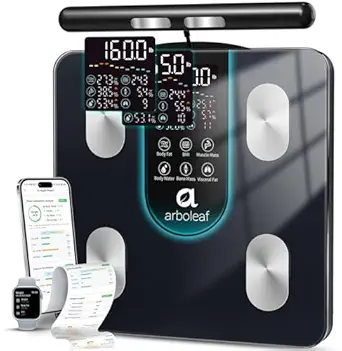 | Best for Advanced Body Composition | Technology: Dual-Frequency BIA | Electrodes: 8 (handle + foot) | App Metrics: 50+, including segmental views, BMR, body type | VIEW LATEST PRICE | See Our Full Breakdown |
| at-home wellness tech device | Connectivity | Compatibility |
|---|---|---|
| Pulsetto Lite | — | — |
| KardiaMobile 1-Lead EKG Monito | Works with most smartphones via app | — |
| Pulsetto FIT | — | iOS 12.0+ and Android 6.0+ |
| EEG Neurofeedback Headband for | Bluetooth | — |
| MUSE 2 Brain Sensing Headband | Bluetooth | — |
| Etekcity Smart Scale for Body | Wi-Fi, app sync | Apple Health, Samsung Health, Google Fit, FitBit, MyFitnessPal |
| Flowtime Biosensing Meditation | Bluetooth to smartphone app | iOS 14+, Android 6.0+ |
| Arboleaf Smart Scale for Body | — | Syncs with popular health apps |
More Details on Our Top Picks
Pulsetto Lite (V1) Wellness Wearable – Relaxation & Daily Wellness Support Device
The Pulsetto Lite makes the most sense for buyers who want a low-commitment entry into passive relaxation tech. Sessions run short enough to slot into a morning routine, and the companion app handles program selection and tracking without a steep learning curve. Compared with the Pulsetto FIT (V2), the Lite skips the refined ergonomics and expanded program set, so it lands at a friendlier price point — the tradeoff is a chunkier design and a moderate 3.9-star rating that hints at inconsistent results across users. Against neurofeedback options like the MUSE 2, this demands zero effort: you wear it and let it work rather than actively training your brain. Buyers wanting medical-grade insight, however, should look at the KardiaMobile instead.
Pros:- Short sessions fit easily into a daily routine
- App-based customization lets you tailor programs
- Portable enough for travel or office use
- Rechargeable battery included out of the box
Cons:- Moderate 3.9/5 customer rating suggests mixed results
- Full functionality is locked behind smartphone and app requirements
Best for: Stress-prone professionals who want a quick, app-guided relaxation session without learning meditation techniques
Not ideal for: Data-driven users who expect clinical validation and polished software — the Lite is the budget tier and it shows
- Package Dimensions:6.54 x 5.91 x 2.72 inches
- Weight:12.7 ounces
- Battery:1 Lithium Ion (included)
- App Required:Yes, Pulsetto App
- Programs:App-based personalized programs
- Portability:Home and on-the-go use
- Model Number:PLST | 2A5T3-BXN-PU-22V001
Our verdict“A reasonable first step into wearable relaxation tech if you accept that its effectiveness varies from person to person.”
KardiaMobile 1-Lead EKG Monitor
This is the only device in this roundup with FDA clearance, and that changes the entire value proposition. Where the Pulsetto wearables and the EEG headbands focus on wellness and subjective calm, the KardiaMobile produces a medical-grade EKG in 30 seconds that can flag AFib, tachycardia, or bradycardia — readings you can actually share with a cardiologist. The operation is refreshingly analog: place your fingers on the pads, no cords or Bluetooth pairing to fight with, and the replaceable coin cell lasts up to two years. The tradeoffs are real, though. It does not detect heart attacks, it won’t work alongside pacemakers or ICDs, and the more detailed analysis tools sit behind a subscription. For peace of mind rather than relaxation, nothing else here competes.
Pros:- FDA-cleared with cardiologist endorsement
- 30-second readings detect AFib, tachycardia, and bradycardia
- Under 1 ounce with a 2-year replaceable battery
- Works with most smartphones without cords
Cons:- Not compatible with pacemakers or ICDs
- Cannot detect heart attacks
- Advanced features require a paid subscription
Best for: Adults managing AFib or palpitations who want clinic-quality rhythm readings between doctor visits
Not ideal for: Anyone seeking general relaxation or stress relief — this is a diagnostic tool, not a wellness device
- Weight:Less than 1 ounce
- Battery:Replaceable CR2016, up to 2 years
- Reading Time:30 seconds
- Connectivity:Works with most smartphones via app
- Detection Capabilities:Normal, AFib, Tachycardia, Bradycardia
- Regulatory Status:FDA-cleared
Our verdict“If heart-rhythm monitoring rather than meditation is the goal, this clinically validated device justifies its spot over every wellness wearable here.”
Pulsetto FIT (V2) Wellness Wearable – Relaxation, Sleep & Daily Wellness Support Device
The Pulsetto FIT (V2) is the more mature sibling of the Pulsetto Lite, and the differences matter in daily use. The redesigned, lighter build sits comfortably enough for 4–10 minute sessions that wind you down before bed, and the five core programs give the app more range than the Lite’s setup. Compared with the MUSE 2, the FIT asks nothing of you mentally — there’s no meditation skill to build, just passive pulses paired with optional calming audio. That passivity cuts both ways: if you want visible proof of progress like EEG session scores, this won’t provide it. Broad iOS 12+ and Android 6+ compatibility means older phones are covered, but premium programs hide behind in-app purchases, so the true cost can climb past the sticker.
Pros:- Lightweight, ergonomic design comfortable for nightly use
- Five core programs with personalized app control
- Broad device compatibility including older phones
- Short 4–10 minute sessions fit any schedule
Cons:- Premium programs require additional in-app purchases
- No objective feedback on whether sessions are working
Best for: People whose stress shows up at bedtime and want a passive, screen-adjacent wind-down ritual
Not ideal for: Quantified-self types who want measurable biometric feedback — this delivers sensations, not data
- Session Duration:4–10 minutes
- Compatibility:iOS 12.0+ and Android 6.0+
- Core Programs:5 included
- Premium Features:Optional in-app purchases
- Developed In:Europe
- Design:Lightweight ergonomic wearable
Our verdict“The better Pulsetto choice if sleep is your primary battleground and you prefer passive sessions over guided brain training.”
EEG Neurofeedback Headband for Meditation & Brainwave Monitoring
This generic EEG headband undercuts the MUSE 2 and Flowtime on price while delivering the core promise: real-time brainwave monitoring that turns meditation from guesswork into feedback loops. The hydrogel sensors are the standout detail — they hold signal stability better than dry electrodes, which matters when the whole product depends on clean readings. Compared with the passive Pulsetto FIT, this is active training: the app reacts to your mental state and guides you toward focus or relaxation, which suits people who want to build a skill rather than just feel calmer. The compromises are predictable for the price. Accuracy for casual users is limited, everything routes through a Bluetooth-connected smartphone app, and the software ecosystem lacks the polish and research backing of MUSE’s platform.
Pros:- Real-time EEG feedback at a budget-friendly price
- Hydrogel sensors provide stable signal transmission
- Covers meditation, focus, relaxation, and sleep prep
- Lightweight and portable for use anywhere
Cons:- Potentially limited accuracy for casual users
- Fully dependent on Bluetooth and the companion app
Best for: Curious beginners who want to experiment with neurofeedback without paying premium-headband prices
Not ideal for: Serious meditators or researchers who need validated accuracy — the MUSE 2 is the more trustworthy instrument
- Sensor Type:EEG sensors
- Sensor Material:Hydrogel
- Connectivity:Bluetooth
- Compatible With:Smartphone app
- Use Cases:Meditation, focus, relaxation, sleep preparation
- Portability:Lightweight, everyday use
Our verdict“A reasonable low-risk way to try brain-sensing meditation, provided you accept looser accuracy than the category leaders.”
MUSE 2 Brain Sensing Headband – EEG Meditation Tracker and Neurofeedback Device
The MUSE 2 is the most mature meditation platform in this lineup, and it earns its premium role through research backing and a feedback system trusted by neuroscience institutions. Unlike the generic EEG Neurofeedback Headband, MUSE translates your brain activity into real-time audio cues — weather sounds that shift as your mind wanders — which makes the neurofeedback intuitive rather than abstract. Compared with the Pulsetto FIT, you’re an active participant building internal cue awareness over weeks, not a passive recipient of pulses. The catch is the paywall: core EEG feedback and session tracking ship free, but the AI Coach, 500+ meditation library, and deeper insights all require a subscription. Some users also find the band uncomfortable over long sits. Still, for building a durable meditation habit, this is the strongest tool here.
Pros:- Real-time neurofeedback makes meditation progress tangible
- Research-backed and used by neuroscience institutions
- Core EEG feedback and tracking included without subscription
- Wireless Bluetooth setup keeps sessions uncluttered
Cons:- Best features — AI coaching and meditation library — sit behind a subscription
- Band can feel uncomfortable during extended sessions
Best for: Committed meditators who want measurable progress and structured coaching over months of practice
Not ideal for: Casual users who just want to relax without practicing — the passive Pulsetto devices require far less effort
- Sensor Type:EEG
- Connectivity:Bluetooth
- Included Features:Core EEG feedback, session tracking
- Premium Subscription:AI Coach, 500+ meditations, deeper insights
- Feedback Type:Real-time neurofeedback audio
- Validation:Trusted by neuroscience institutions
Our verdict“The deepest meditation-training experience in this roundup, worth the premium only if you’ll actually use the subscription-tier coaching.”
Etekcity Smart Scale for Body Weight, Body Fat, and BMI
Best value pick is the right label here because this scale delivers the core smart-scale experience — weight, body fat, BMI, and app syncing — at a price well below the Arboleaf’s 8-electrode system. The 0.05 lb precision matches what far pricier scales offer, and unlimited user profiles make it practical for a full household without subscription nonsense or profile juggling. Compared with the Arboleaf, though, its four-footpad design reads the lower body only, so segmental muscle data and visceral fat estimates are off the table. That tradeoff matters: buyers chasing deep body-composition detail should step up to the Arboleaf, while anyone who mainly wants reliable weight trend tracking that flows into Apple Health, FitBit, or MyFitnessPal gets everything they need here. Setup friction is real — full functionality requires the app and its permissions, so expect five minutes of pairing before the first useful reading.
Pros:- High-precision sensors accurate to 0.05 lb
- Unlimited user profiles plus dedicated baby and pet modes
- Syncs with nearly every major fitness app including Apple Health and FitBit
- Wi-Fi sync means readings upload without opening your phone
Cons:- Requires app setup and additional permissions before it does anything smart
- No battery life specifications published, making long-term ownership costs unclear
Best for: Budget-conscious households that want accurate weight and basic body metrics syncing to the fitness apps they already use
Not ideal for: Athletes tracking segmental muscle mass or visceral fat — this scale’s foot-only electrodes can’t measure limbs separately like the Arboleaf can
- Measurement Accuracy:0.05 lb
- Modes:Standard, Baby, Light Items
- Connectivity:Wi-Fi, app sync
- Compatibility:Apple Health, Samsung Health, Google Fit, FitBit, MyFitnessPal
- User Capacity:Unlimited users
- Metrics:Weight, body fat, BMI
Our verdict“The smartest spend for multi-user households that want dependable weight and BMI trends without paying for electrode handles they won’t use.”
Flowtime Biosensing Meditation Headband – Brain Tracker for Neurofeedback at Home
Sitting between the MUSE 2 and the generic EEG headband in this lineup, Flowtime carves out a distinct niche: it doesn’t just read brainwaves, it pairs them with guided, scientifically validated lessons and post-session reports that explain what your heart rate, HRV, and stress markers actually did. That makes it the friendliest entry point for people who want neurofeedback coaching, not just raw data. At 29 grams, it’s noticeably lighter than most headband competitors, and the 8-hour battery with 50 days of standby means it survives being tossed in a bag for weeks. The tradeoffs are honest ones: no water resistance rules out post-workout or humid-climate use, and every insight lives behind a Bluetooth-connected smartphone app running iOS 14 or Android 6.0 — no phone, no feedback. Compared with MUSE 2, Flowtime leans more instructional and less raw-metrics, which is exactly why beginners gravitate to it.
Pros:- Combines EEG brainwave tracking with heart rate, HRV, and stress monitoring in one device
- Includes scientifically validated meditation lessons, not just raw sensor data
- Featherweight 29g design travels easily
- 8-hour active battery with 50-day standby
Cons:- Not water resistant at all, limiting where and when it can be worn
- Fully dependent on a Bluetooth-paired iOS or Android phone for feedback and reports
Best for: Meditation newcomers who want real-time brain and body feedback plus structured lessons rather than a bare EEG readout
Not ideal for: Users without a compatible smartphone or anyone wanting wearable data during sweaty workouts — it’s neither water resistant nor standalone
- Weight:29g
- Sensors:EEG brainwave, heart rate, HRV, stress
- Battery Life:8 hours meditation, 50 days standby
- Compatibility:iOS 14+, Android 6.0+
- Connectivity:Bluetooth to smartphone app
- Water Resistance:Not water resistant
- Reports:Real-time feedback, post-session performance reports
Our verdict“The right pick if you want a meditation headband that teaches you what your biometrics mean instead of just displaying them.”
Arboleaf Smart Scale for Body Weight, Dual-Frequency 8-Electrode BIA
This is the scale for buyers who outgrew the basics. Where the Etekcity scale measures from the feet down, Arboleaf’s handle-and-foot electrode combo runs dual-frequency BIA through the whole body, unlocking 50-plus metrics including segmental muscle views, visceral fat, bone mass, and BMR. For anyone strength training, cutting weight, or rehabbing an injury, seeing per-limb muscle data turns daily weigh-ins into an actual training log. Automatic user recognition handles up to eight stored profiles, and app syncing builds long-term trend charts rather than isolated numbers. Two caveats keep expectations in check: BIA is an estimation technology, so treat the numbers as directional trends — not clinical measurements, a limitation the company states plainly — and the electrical currents make it off-limits for pregnant users and anyone with a pacemaker. You’re also paying a real premium over the Etekcity for data depth you may never open.
Pros:- 8 electrodes with handles give true full-body and per-limb readings
- 50+ app metrics including segmental muscle, visceral fat, and BMR
- Automatic recognition for up to 8 stored profiles
- Dual-frequency BIA is more consistent than single-frequency scales
Cons:- BIA readings are trend estimates, not medical-grade measurements
- Unsafe for pregnant women and pacemaker users due to electrical currents
- Substantially more expensive than simpler scales like the Etekcity for data many buyers won’t use
Best for: Lifters, athletes, and data-driven users who want segmental muscle, visceral fat, and long-term trend analysis, not just weight
Not ideal for: Casual users who only track weight, plus pregnant women and pacemaker wearers who can’t safely use BIA currents
- Technology:Dual-Frequency BIA
- Electrodes:8 (handle + foot)
- App Metrics:50+, including segmental views, BMR, body type
- User Profiles:Unlimited users, 8 stored profiles with auto-recognition
- Display:7-in-1
- Compatibility:Syncs with popular health apps
- Metrics:Weight, BMI, body fat, muscle mass, water, bone mass, visceral fat
Our verdict“Worth the premium only if segmental body-composition tracking will genuinely change how you train — otherwise the Etekcity covers the essentials.”
How We Picked
I evaluated these eight devices against criteria that matter most to buyers of at-home wellness tech: whether the device produces a real, perceptible benefit (better sleep, calmer nervous system, actionable health data), how comfortable it is to use daily or nightly, app quality and ecosystem maturity, and total cost of ownership including subscriptions. Devices that hide their core features behind recurring fees ranked lower than those with genuinely functional free tiers, and I weighed build quality and scientific credibility — especially for BIA scales and EKG monitors where measurement accuracy varies enormously by electrode count and sensor design.
The ranking also reflects versatility and audience fit. The Pulsetto FIT placed first because it serves the two most common wellness goals — stress and sleep — in one wearable, while single-purpose devices like the KardiaMobile and Etekcity scale earned strong but category-specific positions. EEG headbands were ordered by how well their neurofeedback translates into beginner-friendly meditation guidance, since a headband that only shows raw brainwave data helps far fewer people than one that coaches you through a session.
| at-home wellness tech device | Connectivity | Compatibility |
|---|---|---|
| Pulsetto Lite | — | — |
| KardiaMobile 1-Lead EKG Monito | Works with most smartphones via app | — |
| Pulsetto FIT | — | iOS 12.0+ and Android 6.0+ |
| EEG Neurofeedback Headband for | Bluetooth | — |
| MUSE 2 Brain Sensing Headband | Bluetooth | — |
| Etekcity Smart Scale for Body | Wi-Fi, app sync | Apple Health, Samsung Health, Google Fit, FitBit, MyFitnessPal |
| Flowtime Biosensing Meditation | Bluetooth to smartphone app | iOS 14+, Android 6.0+ |
| Arboleaf Smart Scale for Body | — | Syncs with popular health apps |
Factors to Consider When Choosing At-home Wellness Tech Devices
Before choosing an at-home wellness device, it helps to understand the patterns that separate a purchase you’ll use for years from one that ends up in a drawer. These are the factors I weighed most heavily when ranking the eight devices above.Intervention vs. Measurement: Know Which You Need
The most common mistake in this category is buying a measurement device expecting an intervention, or vice versa. A smart scale or EKG monitor tells you what your body is doing but changes nothing on its own — the wellness benefit comes from how you respond to the data. Vagus nerve stimulators like the Pulsetto line work in the opposite direction: they act on your nervous system directly and produce relatively little data to review. EEG headbands sit in the middle, measuring brainwaves while using that data to guide you in real time. Buyers who want accountability and trend-tracking should lean toward scales and monitors; buyers who want passive relief should lean toward wearables. Choosing the wrong type is why so many wellness gadgets get abandoned within months.
The Subscription Trap
Hardware price is only part of the cost equation, and it’s rarely the largest part over a two-year horizon. Several devices in this category lock their most useful features — sleep programs, guided sessions, historical trends, advanced body composition breakdowns — behind monthly or annual plans that can total more than the device itself. Before buying, check what the free tier actually includes and whether the device remains useful without a subscription. A headband that shows only raw brainwave data without coaching, or a scale that restricts full body composition metrics, can feel crippled. My advice: calculate the two-year total cost, not the sticker price, and compare that figure across devices.
Sensor and Electrode Quality for Body Data
With smart scales especially, electrode design determines almost everything about accuracy. Four-electrode scales send current through your legs only, which means upper-body composition is estimated rather than measured — fine for weight trends, misleading for body fat percentages. Eight-electrode dual-frequency models add handholds so the current crosses your whole body, producing readings that track far more closely with professional DEXA-style measurements. Hydration, meal timing, and time of day also swing BIA readings by several points regardless of sensor quality, so whatever scale you buy, weigh yourself under consistent conditions. The same logic applies to EKG monitors: a single-lead device detects rhythm abnormalities well but cannot capture every heart issue a 12-lead clinical exam can.
Comfort and Daily-Routine Fit
A wellness device only works if you actually use it, and comfort failures kill more purchases than feature gaps. Neck-worn stimulators need to sit comfortably during work or relaxation; headbands need to stay put through sleep if overnight brain monitoring matters to you. Consider when you’d realistically use the device — a meditation headband requires a seated practice you may or may not have, while a scale takes ten seconds each morning. Devices requiring dedicated quiet time rank lower for people with unpredictable schedules. If you travel often, check charging method and whether the device functions offline, since app-dependent gadgets can become useless without connectivity.
Scientific Credibility and Regulatory Clearance
Not all wellness claims are equal, and understanding the regulatory landscape protects you from overhyped marketing. The KardiaMobile holds FDA clearance for rhythm detection, which places it in a different evidence class than consumer relaxation wearables. EEG headbands measure real electrical brain activity, but claims about ‘training your brain’ should be read more cautiously — the research on consumer neurofeedback is promising but young. Vagus nerve stimulation has solid clinical grounding in implanted medical devices, while the evidence for transcutaneous consumer versions is emerging. None of this means the gentler claims are false; it means you should match your expectations to the evidence level, especially if you’re managing a health condition rather than pursuing general wellness.
When to Pay More — and When Not To
Premium pricing makes sense when it buys measurably better sensors, more electrodes, or a mature app ecosystem — the gap between a basic 4-electrode scale and a dual-frequency 8-electrode model is real and worth paying for if body composition is your focus. It makes less sense when the upgrade is cosmetic or when the cheaper version already delivers the core benefit; the Pulsetto Lite versus FIT decision comes down to whether sleep programs matter to you, not build quality. Beginners should resist buying the most expensive device in a category they haven’t committed to yet — an abandoned $400 headband hurts more than an abandoned $80 one. A sensible pattern is to start affordable in a new wellness category, confirm you’ll sustain the habit, then upgrade.
Frequently Asked Questions
Is the Pulsetto FIT worth the extra money over the Pulsetto Lite?
It depends almost entirely on whether sleep is one of your goals. The FIT adds sleep-focused stimulation programs and more granular intensity control, which matters if you struggle to fall asleep or wind down at night. If you only want daytime stress relief — a quick calm-down session during a hectic workday — the Lite delivers the same core vagus nerve stimulation experience at a noticeably lower price. The FIT also tends to hold its value better if you later decide sleep tracking and longer sessions matter to you, since upgrading later means buying a whole new device. Buyers who already sleep well should save the difference; anyone with occasional sleeplessness gets real value from the step-up.
Can a consumer EKG like the KardiaMobile replace doctor visits?
No, and it shouldn’t be treated that way — but it can be a powerful complement to medical care. The KardiaMobile records a genuine single-lead EKG that many physicians will review and factor into decisions, which makes it valuable for catching intermittent palpitations that never appear during an office visit. Its limitation is structural: a single-lead view cannot detect every condition a clinical 12-lead EKG catches, so a clean reading doesn’t guarantee a healthy heart. Where it shines is creating a record of what your rhythm was doing at the moment you felt symptoms. If you have diagnosed arrhythmia or unexplained palpitations, this is one of the few consumer devices with real clinical standing — just use it alongside, not instead of, your doctor.
Do I really need an 8-electrode smart scale, or is a basic one enough?
If you mainly want to track your weight over time, a basic 4-electrode scale like the Etekcity does that job accurately and inexpensively — weight measurement itself barely differs between models. The 8-electrode Arboleaf earns its premium when body composition matters: by running current through both hands and feet, it measures your upper and lower body separately instead of estimating half of you. That difference is significant if you’re strength training, recovering from injury, or tracking fat loss specifically, since 4-electrode scales can misread body fat by several percentage points as your build changes. The honest middle-ground answer: casual users lose little with the cheaper option, but anyone making training decisions from body fat data should pay for the better sensors.
Which EEG headband is best for someone new to meditation?
The MUSE 2 is the strongest starting point because it converts raw brainwave data into real-time audio feedback — weather sounds that calm as your mind settles — which teaches you what focus actually feels like rather than leaving you to interpret graphs. The Flowtime offers richer post-session brainwave analytics, which experienced meditators appreciate but beginners tend to find overwhelming. Generic neurofeedback headbands without a mature guided app usually assume you already have a practice. One honest caveat applies to all of them: none will help if you don’t meditate regularly, since the device is a feedback tool, not a meditation itself. If you’re unsure about your commitment, try establishing a basic unguided habit for a few weeks before spending on hardware.
Are subscription fees avoidable with these devices?
Mostly no, and that’s why I factored recurring costs into the rankings so heavily. Several devices in this space — particularly the meditation headbands and the more feature-rich wearables — reserve their guided programs, historical trends, and advanced analytics for paid tiers, leaving free users with fairly bare-bones functionality. The KardiaMobile is a partial exception, since it captures readings without a plan even though premium heart-health reports sit behind a subscription. Before buying any device here, look at exactly which features sit behind the paywall and ask whether those features are the reason you’re buying. If the answer is yes, add one to two years of subscription cost to your price comparison — that’s the number that actually differentiates these devices.
Conclusion
For best overall, the Pulsetto FIT (V2) makes the most sense: it addresses the two goals most buyers of at-home wellness tech actually have — stress and sleep — in a single wearable with a workable daily routine. The best value pick is the Etekcity Smart Scale for anyone whose wellness journey starts with simple, affordable weight tracking, while the Pulsetto Lite is the value play within the relaxation category if sleep features don’t matter to you. For beginners, the MUSE 2 is the friendliest entry point because its audio feedback teaches meditation without requiring you to interpret brainwave data. The best premium device is the Arboleaf 8-electrode scale, where the higher price buys genuinely superior body composition measurement rather than cosmetic upgrades. For specific needs: choose the KardiaMobile if heart rhythm concerns drive your purchase, the Flowtime if you’re an experienced meditator who wants deep brainwave analytics, and the generic neurofeedback headband only if budget constraints rule out the more polished alternatives. Whatever you choose, weigh the two-year subscription cost alongside the sticker price and pick the device that matches a habit you’ll actually sustain.
Fall yard work Picks
leaf blowers
As an affiliate, we earn on qualifying purchases.