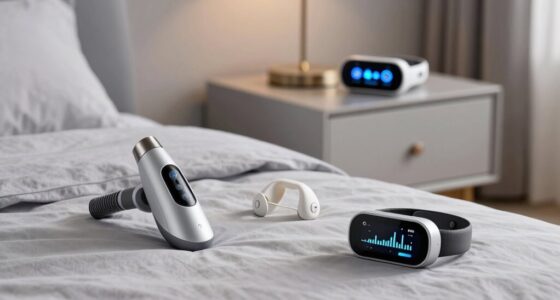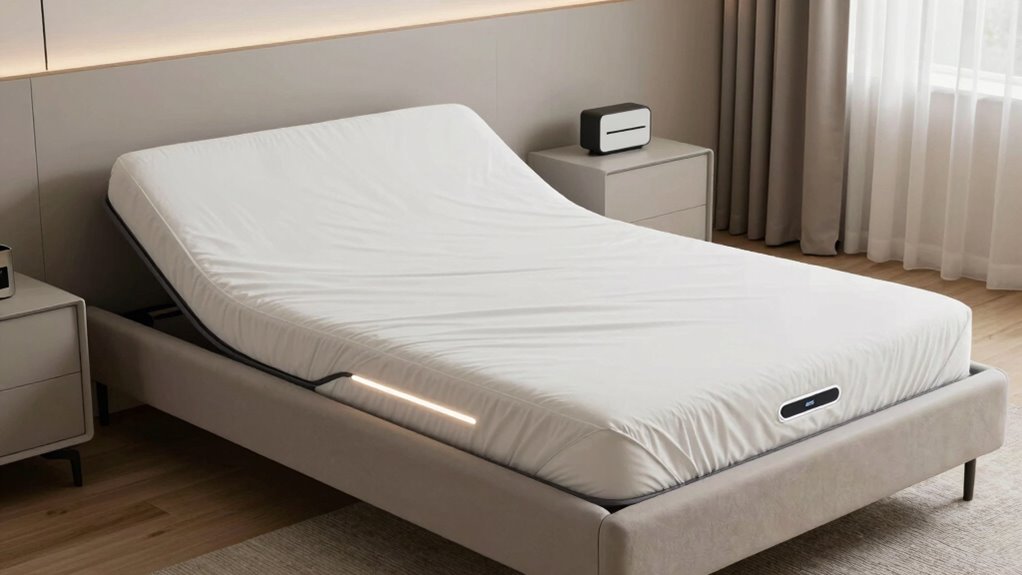
Choosing a smart sleep pad means deciding what kind of information you need and how you want to collect it. I’d start with the Withings Sleep for sleep-cycle, heart-rate, and snoring insights from a sensor placed under the mattress. The Sleep Detection Pad takes a different route: it is described as a thin, portable, non-contact monitor with real-time sleep-status and vital-sign collection.
These products are not interchangeable. Withings provides a clearer account of its sleep features, app connection, and mattress fit, while the Sleep Detection Pad emphasizes portability and use beyond the bedroom but gives fewer details about its data platform and measurements. My ranking favors the option with more defined sleep-tracking functions for most home buyers, then gives the second spot to shoppers who specifically value non-contact sensing and a rollable form. Neither should be treated as a substitute for medical advice or a diagnostic device based only on the information provided.
Key Takeaways
Withings Sleep is my overall pick for shoppers who want named sleep stages, heart-rate monitoring, snore detection, and a stated Health Mate app connection.
The Sleep Detection Pad is the portability pick: its thin, rollable design and non-contact sensing are the main reasons to choose it over an under-mattress sensor.
Mattress fit matters for Withings; the listed range is 4 to 15 inches thick, and the sensor must sit beneath the mattress.
Data clarity separates the two: Withings lists specific sleep metrics and integrations, while the Sleep Detection Pad does not provide detailed platform, dimension, or weight information.
Choose by your main need: structured overnight sleep tracking favors Withings; use across beds or locations favors the portable pad, subject to verifying its setup and data support.
| Withings Sleep – Under-Mattress Sleep Tracking Sensor with Cycle Analysis |  | Best Overall for Defined Sleep Tracking | Sleep monitoring: Deep, light, and REM sleep cycles | Snore detection: Yes | Heart-rate monitoring: Yes | VIEW ON AMAZON | See Our Full Breakdown |
| Sleep Detection Pad – Vital Sign Health Monitoring with Real-Time Sleep Status |  | Best for Portability and Non-Contact Monitoring | Response time: Real-time, as described | Measurement type: Non-contact vital-sign collection | Form factor: Thin, lightweight, and rollable | VIEW ON AMAZON | See Our Full Breakdown |
| smart sleep pad | Sleep monitoring | Snore detection | Heart-rate monitoring | Placement |
|---|---|---|---|---|
| Withings Sleep | Deep, light, and REM sleep cycles | Yes | Yes | Under the mattress |
| Sleep Detection Pad | — | — | — | — |
More Details on Our Top Picks
Withings Sleep – Under-Mattress Sleep Tracking Sensor with Cycle Analysis
Withings Sleep earns the top spot because its stated features answer the main question many sleep-pad shoppers have: what aspects of my night can this device track? It monitors deep, light, and REM sleep cycles, and also lists heart-rate monitoring and snore detection. That is a more specific account of overnight tracking than the Sleep Detection Pad provides, whose description refers to vital signs and sleep status without naming the particular signals or sleep stages.
The setup is designed to stay out of sight: the sensor sits under the mattress, then syncs with the Health Mate app over Wi-Fi. For someone who wants a set-and-leave-it arrangement rather than a wearable or a pad on top of the bed, that placement may be appealing. Its listed compatibility with IFTTT also gives it a clearer smart-home angle than the other pick, which does not describe integrations with health or home platforms.
That convenience depends on a suitable bed. Withings specifies a mattress thickness of 4 to 15 inches, so a mattress outside that range is a direct fit concern, and the sensor’s placement may not suit every bed setup. There is no display or direct feedback device either; the app is where the listed tracking information is accessed. Compared with the rollable Sleep Detection Pad, Withings is less flexible to move between locations, but it gives buyers a better-defined set of sleep features and a more explicit app pathway. I’d choose it for a stable home bed and skip it if portability or an on-device readout is the priority.
Pros:- Tracks deep, light, and REM sleep stages.
- Lists both heart-rate monitoring and snore detection.
- Syncs with the Health Mate app over Wi-Fi.
- IFTTT compatibility supports smart-home connections.
Cons:- Must be placed under the mattress, which may not suit every bed arrangement.
- The stated mattress thickness range is limited to 4 to 15 inches.
- No display or direct feedback device is listed.
Best for: Home users who want named sleep stages, heart-rate monitoring, and snore detection in an under-mattress setup with app syncing.
Not ideal for: Shoppers with mattresses outside the 4-to-15-inch range, people who want a portable pad, or anyone expecting a display or direct bedside feedback.
- Sleep monitoring:Deep, light, and REM sleep cycles
- Snore detection:Yes
- Heart-rate monitoring:Yes
- Placement:Under the mattress
- Mattress compatibility:Mattresses 4 to 15 inches thick
- Connectivity:Wi-Fi
- App and integrations:Health Mate app and IFTTT
Our verdict“I recommend Withings Sleep for buyers who want clearly specified overnight tracking and can accommodate its under-mattress placement.”
Sleep Detection Pad – Vital Sign Health Monitoring with Real-Time Sleep Status
The Sleep Detection Pad has a different strength from Withings Sleep: its description emphasizes non-contact sensing, real-time status, and a form that can be rolled for storage or transport. That makes it the more flexible-sounding choice for people who may want to move a monitor between settings, or who do not want a sensor permanently installed under one mattress. The product is also described for use in homes, hospitals, and offices, a wider range of locations than the bedroom-focused Withings setup.
Its claims need more detail before I’d treat it as a direct replacement for a defined sleep tracker. The listing does not name particular vital signs, provide sleep-stage analysis, or explain how records are stored and shared. By contrast, Withings specifies deep, light, and REM cycles, snore detection, heart-rate monitoring, and an app connection. If detailed nightly trends and a known app path are your priority, Withings is the more straightforward option to evaluate.
The rollable design and stated real-time monitoring may still be useful for buyers with a clear reason to favor portability or non-contact collection. But the available description does not state the pad’s dimensions or weight, and it gives limited information about compatibility with existing health platforms. I would verify what signals it measures, how it connects, and whether its intended use matches your needs before choosing it for ongoing health tracking. This is my portability pick, not my pick for the most fully documented sleep-analysis feature set.
Pros:- Described as collecting vital signs without contact.
- Provides real-time sleep-status monitoring according to its listing.
- Thin, lightweight, and rollable for storage or transport.
- Listed for use in homes, hospitals, and offices.
Cons:- The specific vital signs and sleep metrics are not detailed.
- Information about health-platform and app integration is limited.
- Dimensions and exact weight are not provided.
Best for: Buyers who prioritize non-contact monitoring and a thin, rollable pad that can be stored or moved between use locations.
Not ideal for: Shoppers who need named sleep stages, detailed app or health-platform integration, or clear dimensions and supported vital-sign specifications before purchase.
- Response time:Real-time, as described
- Measurement type:Non-contact vital-sign collection
- Form factor:Thin, lightweight, and rollable
- Use locations:Hospitals, bedrooms, and offices
- Sleep status:Real-time detection, according to the description
- Specific vital signs:Not specified in the available description
- Platform compatibility:Details not provided
- Dimensions and weight:Not specified
Our verdict“I’d choose this pad when non-contact portability matters more than a fully specified sleep-stage and app feature set.”

How We Picked
I ranked these two products by how clearly they address the needs implied by smart sleep pads: tracking sleep, understanding what the device measures, fitting it into a normal bedroom, and making sense of the resulting information. I gave the lead position to the model with the most clearly specified sleep-focused functions, rather than treating extra-sounding claims as proof of better performance.
For Withings Sleep, I weighed its listed sleep-stage tracking, snore detection, heart-rate monitoring, mattress thickness range, and Health Mate and IFTTT compatibility. Those details make it easier to judge whether it fits a home setup and what kind of information it is intended to provide. Its under-mattress placement and lack of a display count against it for buyers who want a visible device or direct feedback at the bedside.
For the Sleep Detection Pad, I considered its stated non-contact vital-sign collection, real-time sleep-status monitoring, and rollable form. Those qualities point to a different use case: portability and monitoring that is not confined to one fixed mattress position. I also treated missing details as a meaningful drawback. The description does not specify the supported health metrics, dimensions, weight, or compatibility with health platforms, making it harder to compare its data with Withings or plan how it will work day to day.
This is a feature-based comparison, not a claim that either product has been independently tested. I do not infer medical accuracy, diagnostic capability, or compatibility beyond the supplied product information. For health concerns, I would use a sleep pad as an information tool and discuss symptoms or results with a qualified clinician.
Factors to Consider When Choosing Smart Sleep Pads
I’d choose a smart sleep pad by starting with the information I actually want and the bed setup I can support. These two options differ more in their stated use and level of detail than in a simple feature checklist: one is a fixed under-mattress tracker with named sleep metrics, while the other is a portable non-contact pad with fewer technical specifics.
Decide whether detail or flexibility matters more
Withings Sleep gives a more defined tracking menu: deep, light, and REM cycles, heart-rate monitoring, and snore detection are all listed. That makes it easier to match the product to a buyer who wants several kinds of overnight information. The Sleep Detection Pad instead foregrounds real-time sleep status and vital-sign collection without contact. Because the exact signals are not named, I would not assume it reports the same metrics as Withings. Pick it for its stated portability and sensing approach, not on an assumption of identical sleep analysis.
Check bed placement and mattress fit
Withings sits under the mattress, and the stated mattress range is 4 to 15 inches thick. Check that measurement and your bed arrangement before choosing it; an out-of-range mattress is a practical mismatch. The Sleep Detection Pad is described as thin and rollable, but the available information does not explain exactly how it should be positioned for each use. Its portability is a point in its favor, while the absent placement and sizing details are reasons to confirm the setup before buying.
Think through how you will access your data
A sensor is only useful if its information fits your routine. Withings lists Wi-Fi syncing to the Health Mate app and IFTTT compatibility, which gives it a clearer route to app-based review and some smart-home connections. The Sleep Detection Pad’s description does not spell out its app, records, or links to other platforms. If keeping a longitudinal record or connecting health data matters to you, that gap should carry weight in the decision. Ask what information is saved, where it appears, and whether it can be exported or shared.
Treat health claims with care
Sleep stages, snoring, heart rate, and vital-sign monitoring can be useful tracking categories, but a product description alone does not establish clinical accuracy or diagnostic ability. I would use either pad as a source of personal tracking information, not as a diagnosis or replacement for professional evaluation. If you are monitoring a breathing concern or another health issue, confirm the device’s intended use and discuss the question with a clinician rather than relying on a consumer sleep pad alone.
Account for what is not specified
Missing information is part of the comparison. Withings lists its mattress range and app connections, but it does not offer a display or direct feedback device in the supplied details. The Sleep Detection Pad is described as thin, lightweight, and rollable, yet does not provide exact dimensions, weight, or a detailed list of measured signals. I’d put more value on a device whose limitations and data path are clear when my main goal is consistent tracking; I’d accept more uncertainty only if the non-contact, portable form is the main reason for choosing the second pad.
Frequently Asked Questions
Which smart sleep pad is better for tracking sleep stages?
Withings Sleep is the clearer choice for sleep-stage tracking because its listed metrics include deep, light, and REM cycles. The Sleep Detection Pad is described as detecting sleep status in real time, but its listing does not specify sleep-stage analysis. If named stages are central to your decision, I would choose Withings while keeping in mind that product descriptions do not establish clinical accuracy.
Can either product monitor snoring or heart rate?
Withings specifically lists snore detection and heart-rate monitoring. The Sleep Detection Pad description refers to non-contact vital-sign collection but does not identify which vital signs it measures or state that it detects snoring. I would not assume those functions are included without confirming them with the product information.
Does Withings Sleep fit every mattress?
No. Its listed mattress thickness range is 4 to 15 inches, and the sensor needs to sit beneath the mattress. Check both the mattress measurement and whether under-mattress placement works with your bed before choosing it. The Sleep Detection Pad is described as rollable, but its exact dimensions and placement instructions are not provided here.
Is the Sleep Detection Pad a medical diagnostic device?
The supplied description says it supports breathing tests and collects vital signs, but it does not provide enough detail to establish a specific diagnostic purpose, certification, or clinical accuracy. I would not treat those statements alone as proof that it can diagnose a condition. Confirm the intended use with the seller or manufacturer and consult a qualified clinician for health concerns.
Which pad is easier to connect to an existing app or smart home?
Withings has the more clearly described connection options: Wi-Fi, the Health Mate app, and IFTTT. The Sleep Detection Pad’s listing provides limited information about app or health-platform compatibility. If connected records or smart-home links matter, Withings is easier to evaluate from the available specifications; if you prefer the portable pad, check its data and connection options before purchase.
Conclusion
For most home shoppers, I recommend Withings Sleep because it states which sleep stages and additional signals it tracks, gives a mattress thickness range, and names its app and smart-home connections. It is the better fit for someone who wants a fixed under-mattress tracker and accepts reviewing results through an app rather than a display.
Choose the Sleep Detection Pad if portability and non-contact monitoring lead your checklist. Its rollable form and stated use across bedrooms, offices, and hospitals set it apart, but I’d first confirm which vital signs it measures and how its information is accessed. If exact metrics, clear platform support, or a well-defined home sleep-analysis setup matter most, Withings is the more transparent match. If a health concern is driving the purchase, use neither product as a stand-in for professional guidance.