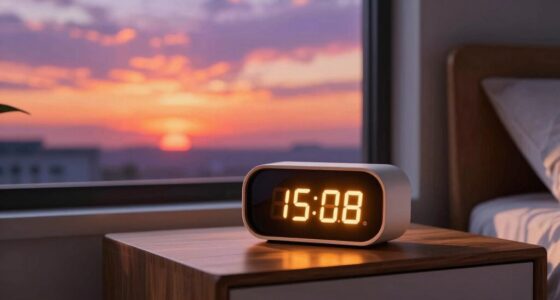
For most people seeking a gentler start, I’d choose the Philips SmartSleep HF3520/60 as the best overall pick for its sunrise and sunset simulation, natural sounds, and reading lamp. The Dreamegg Sunrise Alarm Clock is a strong alternative if sound-machine functions matter, while the Dekala offers more alarm and light options for heavier sleepers. The main tradeoff is simplicity versus flexibility: more sounds, color modes, and connectivity can add choice but also make setup less straightforward. Light intensity, alarm backup, and bedside fit matter as much as the number of features. Read on for how all 15 options compare and which one best matches your wake-up routine.

Get wellness gear delivered free with Prime
- Fast, free delivery on millions of items
- Prime Video, Amazon Music and more included
- Member-only deals all year
Key Takeaways
- Philips SmartSleep HF3520/60 stands apart as the most established all-around feature set here, combining colored sunrise and sunset simulation, natural sounds, FM radio, and a reading lamp.
- The Dekala is the most clearly geared toward heavy sleepers in this lineup, with dual alarms, sunrise and sunset simulation, natural sounds, FM radio, and a multicolor night light.
- Several models pair gradual light with white noise or a sound machine, including Dreamegg, Odokee, and Reacher; the difference is less about the basic idea and more about which controls and bedroom style suit the buyer.
- Full-screen JALL models add Bluetooth and FM radio, but buyers who only need a gradually brightening light may prefer a simpler clock with fewer settings to manage.
- The range includes kid-oriented, wood-grain, and compact-looking designs, but the listed feature details are uneven; check alarm controls, brightness adjustment, and sound options before choosing by appearance alone.


More Details on Our Top Picks
ANTDALIS Sunrise Alarm Clock with Dimmable Wake-Up Light, Touch Control, 20 Colors, Snooze – White
The ANTDALIS makes the sunrise itself the main event: its light brightens gradually over 30 minutes, with 20 brightness levels to tailor the wake-up. That fixed fade is simpler than the Odokee’s adjustable 5–60-minute sunrise, but it offers less control over how early the light begins. Touch controls, seven alarm sounds, and adjustable volume add useful bedside flexibility, while the 20 color options let it double as a night or reading light. Compared with the Reacher, which adds 26 sleep sounds, ANTDALIS puts more emphasis on configurable light than bedtime audio. The tradeoff is a corded-only setup and no water resistance, so it needs a stable, dry spot near an outlet.
Pros:- 30-minute gradual sunrise supports a gentler wake-up than a sudden alarm
- 20 brightness levels and 20 colors allow detailed light adjustment
- Seven alarm sounds and 10 volume levels offer options beyond light alone
- Can serve as a bedside night light or reading light
Cons:- Corded power limits placement and means it cannot operate as a battery-powered clock
- The sunrise duration is fixed at 30 minutes, unlike the adjustable Odokee
- Not water-resistant, so it must stay clear of splashes and liquids
Best for: Heavy sleepers who want a long, gradual light-based wake-up and a customizable bedside lamp without needing Bluetooth or a phone app
Not ideal for: People who need a battery-powered clock, want a sunrise duration they can adjust, or plan to place the lamp near water
- Sunrise duration:30 minutes
- Power source:Corded electric
- Brightness levels:20
- Color options:20
- Alarm sounds:7
- Volume levels:10
- Control method:Touch
- Mounting type:Desktop/tabletop
Our verdict“Choose ANTDALIS if a 30-minute sunrise and highly adjustable bedside light matter more than flexible timing or a built-in sound library.”
Reacher Wood Grain Sunrise Alarm Clock and Sound Machine Nightlight
The Reacher Wood Grain is the sound-focused pick here: its 26 sleep tracks, white noise, dimmable display, and nightlight make it useful before bedtime as well as at wake-up. That gives it a broader relaxation role than ANTDALIS, whose stronger distinction is its 20 light colors and touch-adjustable brightness. Reacher’s wood-grain look and compact footprint may also suit a bedside table where a plastic, more lamp-like design would feel out of place. The supplied details describe adjustable sunrise brightness and color options, but do not specify the fade duration or number of alarm sounds, so buyers seeking precise wake-light scheduling have less information than they get with the Odokee. It is corded, too, so its placement depends on an outlet.
Pros:- 26 sleep sounds provide more bedtime audio variety than ANTDALIS
- White noise and a dimmable display support a quieter, darker sleep setup
- Wood-grain finish offers a less appliance-like bedside appearance
- Compact 6.7 x 2.7 x 6-inch dimensions suit smaller bedside tables
Cons:- Requires corded power, limiting placement away from an outlet
- Sunrise duration and alarm-sound count are not specified in the supplied details
- Does not list Bluetooth streaming, unlike the Odokee
Best for: Adults or families who want one bedside device for a gradual wake-up, white noise, and a calming pre-sleep routine
Not ideal for: Buyers who need a specified sunrise fade duration, battery operation, or Bluetooth audio streaming
- Power source:Corded electric
- Sleep tracks:26
- White noise:Yes
- Material:Wood
- Color:Wood grain
- Dimensions:6.7 x 2.7 x 6 inches
- Weight:11.2 ounces
- Display:Dimmable
Our verdict“Pick Reacher if bedtime sound variety and a wood-grain design matter more than detailed control over sunrise timing.”
Odokee Sunrise Alarm Clock with White Noise Machine – Natural Wake-Up Light
The Odokee offers the most explicit control over the length of the dawn effect in this group: its sunrise can run from 5 to 60 minutes. That range suits people who want a short lead-in or a slower, more gradual wake-up, while ANTDALIS fixes its fade at 30 minutes. The Odokee also combines 25 sounds with a 5W Bluetooth speaker, so listeners can stream music or podcasts rather than relying only on built-in tracks. Three wake-up modes let buyers use light and sound together or either one alone. Its 0–100% display dimming and 12 night-light colors add flexibility, but the modest speaker output may not satisfy anyone seeking room-filling audio. It also lacks app control, so adjustments happen on the device.
Pros:- Adjustable 5–60-minute sunrise offers more timing control than ANTDALIS
- Three wake-up modes allow light-only, alarm-only, or combined waking
- 25 built-in sounds plus Bluetooth streaming cover several bedtime audio preferences
- Fully dimmable display can be set from 0–100%
Cons:- 5W speaker may lack the volume and fullness some listeners want
- No mobile app for remote adjustments or scheduling
- Only 12 night-light colors, fewer than ANTDALIS’s 20
Best for: People who want to tailor sunrise duration closely and use Bluetooth for quiet bedside music or podcasts
Not ideal for: Buyers who want app-based scheduling or a powerful speaker for filling a large room with sound
- Sunrise duration:5–60 minutes
- Number of sounds:25
- Alarm sound options:7
- Bluetooth speaker:5W
- Clock brightness:0–100% dimming
- Night-light colors:12
- Wake-up modes:3: light and sound, alarm only, or light only
- Sleep timer:Adjustable
Our verdict“Choose Odokee if adjustable sunrise length and Bluetooth audio are worth more to you than app control or a stronger speaker.”
Dreamegg Sunrise Alarm Clock, Natural Wake-up Light, White Noise Machine
The hand-sized Dreamegg is the most travel-friendly choice in this set, pairing a compact build with on-device setup rather than app-dependent controls. Its 29 sound options span nature sounds, meditations, lullabies, and colored noise, a wider stated selection than the Reacher’s 26 tracks. That makes it a flexible sleep companion as well as a sunrise alarm, though the supplied details do not state a sunrise duration or specific alarm-sound count. The cotton-linen fabric gives it a softer bedside presence than ANTDALIS’s polished finish, while nine night-light colors provide less color choice than either ANTDALIS or Odokee. The tradeoff is limited connectivity: there is no app or smart-home support, and routines must be set directly on the device.
Pros:- Hand-sized design is easier to pack than a larger bedside lamp
- 29 sound options include nature, meditation, lullaby, white, brown, and pink noise
- Direct on-device setup avoids dependence on an app or phone
- Cotton-linen fabric offers a softer finish than the ANTDALIS polished design
Cons:- No app integration or smart-home compatibility
- Sunrise duration is not specified in the supplied product details
- Nine night-light colors offer fewer choices than ANTDALIS or Odokee
Best for: Travelers and phone-free households who want a compact sunrise clock with varied sleep sounds and direct controls
Not ideal for: Smart-home users or buyers who need app control, a stated sunrise duration, or a large selection of night-light colors
- Sound options:29
- Sound types:Nature sounds, meditations, lullabies, white noise, brown noise, pink noise, and fan sounds
- Night-light colors:9
- Brightness:Adjustable
- Setup:Direct on-device controls
- Material:Cotton-linen fabric
- Size:Hand-sized
- App integration:None
Our verdict“Choose Dreamegg if portability, phone-free controls, and a varied sound library matter more than app features or detailed sunrise specifications.”
Dekala Sunrise Alarm Clock for Heavy Sleepers – Wake Up Light with Sunrise/Sunset Simulation, Dual Alarms, Natural Sounds, Snooze, FM Radio, 7‑Color Night Light
The Dekala stands apart with dual alarms, making it the clearest fit for couples or anyone who needs separate wake-up times. Its sunrise and sunset simulations cover both ends of the sleep routine, while a repeatable nine-minute snooze and FM radio add familiar alarm-clock functions absent from the Dreamegg’s listed feature set. The seven-color night light has 20 brightness levels, though that is less color variety than ANTDALIS’s 20-color lamp. Dekala is also the only option here listed with a rechargeable battery, which may allow more flexible placement; however, battery runtime is not specified, and higher brightness may shorten it. Buyers who need dependable overnight power should check the intended setup carefully rather than assume long battery life.
Pros:- Dual alarms accommodate two users or separate weekday and weekend wake times
- Sunrise and sunset simulation support both waking and winding down
- Repeatable nine-minute snooze can be used up to five times
- FM radio and eight sleep sounds provide alternatives to a basic alarm tone
Cons:- Rechargeable battery runtime is not specified, creating uncertainty for all-night use
- Seven night-light colors offer fewer options than ANTDALIS’s 20
- Eight sleep sounds are fewer than the 25 on Odokee or 29 on Dreamegg
Best for: Couples or households with two different wake times who want separate alarms, sunset dimming, and radio in one clock
Not ideal for: People who need clearly stated battery runtime, extensive built-in sound choices, or the largest range of night-light colors
- Power source:Rechargeable battery
- Dimensions:6.5 x 6.5 inches
- Weight:0.48 kg
- Alarms:Dual alarms
- Snooze:9 minutes, repeatable up to five times
- FM radio:76–108 MHz
- Sleep sounds:8
- Night light:7 colors with 20 brightness levels
- Frame material:Plastic
Our verdict“Choose Dekala if two alarm schedules and sunrise-plus-sunset lighting are your priorities, but look elsewhere if battery runtime certainty matters most.”
Sunrise Alarm Clock Sound Machine, Gentle Wake Up Light for Kids Bedrooms
The ARUQO pairs a gradual sunrise with 30 sleep sounds, giving families one compact bedside device for settling down and waking up. Its 20 brightness levels and eight RGB colors let parents keep a dim night-light setting without making the morning light the only option. Compared with the USB-C model in this roundup, it offers more brightness steps and a 9-minute snooze, but its power setup is less convenient: it needs USB power and two AAA batteries, which are not included. The loudest alarm reaches 110 dB, a useful range for sleepers who miss quieter alerts, though that volume may be too forceful for sensitive children. I’d choose it for a child’s room where sound variety and adjustable light matter more than wall-mounting or a battery-free setup.
Pros:- Gradual sunrise light supports a gentler alternative to an abrupt alarm.
- Thirty soothing sounds provide plenty of bedtime listening choices.
- Twenty brightness levels and eight RGB colors allow flexible night-light settings.
- Compact tabletop footprint suits a child’s bedside.
Cons:- Requires two AAA batteries that are not included, in addition to USB power.
- No wall-mount option, limiting placement choices.
- The alarm can reach 110 dB, which may be too loud for sound-sensitive children.
Best for: Parents setting up a child’s bedside routine who want a sunrise light, soothing sounds, and adjustable night-light colors in one tabletop unit.
Not ideal for: Families who want a wall-mounted clock or a simpler power arrangement, since it is tabletop-only and requires separate AAA batteries alongside USB power.
- Display:Digital
- Alarm tones:7 tones, 16 volume levels, up to 110 dB
- Night-light colors:8 RGB colors
- Brightness:20 adjustable levels; fully dimmable
- Sleep timer:15, 30, 60, 90, or 120 minutes
- Power:USB powered; requires 2 AAA batteries, not included
- Dimensions:7.08 in W × 4.72 in H
- Materials:Fabric and plastic
Our verdict“Choose the ARUQO for a child’s room when adjustable lighting and a broad sound library matter more than a streamlined power setup.”
Wake Up Light Sunrise Alarm Clock with Sunset Simulation, Sleep Aid, Dual Alarms, FM Radio, 13 Color Modes, White Noise Sounds, Adjustable Brightness and Volume
With dual alarms and weekday/weekend settings, this clock is the clearest fit here for two people whose mornings do not match. Its sunrise and sunset simulations cover both ends of the routine, while 23 sleep sounds and FM radio give it more listening flexibility than the simpler ARUQO kids’ clock. That breadth comes with a steeper setup: buyers who only want a gradual light and one alarm may find the 13 light modes and 28 alarm tones more menu choices than they need. The five-repeat snooze can also stretch a wake-up routine. Unlike the USB-C tabletop model, this one uses corded power and has no battery backup, so it is best placed where an outlet is close and power interruptions are uncommon.
Pros:- Dual alarms support different wake times and weekday/weekend schedules.
- Sunrise and sunset simulations cover both morning and bedtime routines.
- Twenty-three sleep sounds and FM radio offer varied listening choices.
- Twenty brightness levels and 32 volume levels allow fine adjustments.
Cons:- Feature-heavy controls may take longer to set up than simpler clocks.
- Corded power with no battery backup leaves it vulnerable to power interruptions.
- Five snooze repeats may encourage repeated delays after the alarm.
Best for: Couples or families who need separate weekday and weekend alarms, plus sunset lighting and multiple sound options.
Not ideal for: Buyers who want a straightforward single-alarm clock, battery backup, or a device that continues working through power interruptions.
- Light modes:13, including color cycle
- Brightness:20 levels
- Sleep sounds:23, including nature sounds and white noise
- Alarm options:28 built-in tones, including FM radio
- Volume:32 levels
- Alarms:Dual alarms with weekday/weekend settings
- Snooze:Up to 9 minutes; up to 5 repeats
- Power:Corded electric; no battery backup
- Weight:1.3 lb
Our verdict“Pick this model for a shared bedroom with different schedules, but skip it if you want a basic, battery-backed sunrise alarm.”
Sunrise Alarm Clock with Sound Machine and Sunlight Lamp
This compact clock makes its case through straightforward physical controls and a 10–60-minute sunrise window, rather than a long list of connectivity features. Its 30 sounds and eight light colors cover the core needs of a bedside wake-up routine, while the linen-textured body looks softer than the more feature-packed FM/Bluetooth JALL. The tradeoff is less fine-grained customization: it has 10 brightness levels, compared with the ARUQO’s 20, and the listing describes its included battery as maintaining time during outages rather than powering the clock. That makes continuous AC power part of daily use. A 15–180-minute sleep timer gives it more range than the ARUQO’s shorter maximum, which may suit longer wind-down routines. I’d favor it for buyers who want tactile operation and a restrained feature set.
Pros:- Tactile controls avoid the need for app setup.
- Thirty sound tracks support a range of bedtime preferences.
- Sleep timer spans 15 to 180 minutes.
- Compact 11.52-ounce design fits smaller bedside tables.
Cons:- Requires continuous AC power; the included battery only maintains time during outages.
- Ten brightness levels offer less adjustment than the ARUQO’s 20 levels.
- No app or wireless connectivity is specified.
Best for: Adults or parents who prefer physical controls, a compact bedside footprint, and a longer sleep timer without app-based setup.
Not ideal for: People who need a clock that runs fully on battery during outages or want more precise brightness adjustment than 10 levels provide.
- Sunrise duration:10–60 minutes
- Ambient light colors:8
- Brightness:10 levels
- Sound machine:30 tracks
- Alarm sounds:7
- Sleep timer:15–180 minutes
- Power:USB-C with adapter included; included battery maintains time during outages
- Dimensions and weight:4.1 in W × 6.1 in H; 11.52 oz
- Mounting:Tabletop or desktop
Our verdict“Choose this clock if you want a compact, tactile sunrise alarm with a long sleep timer and can keep it connected to AC power.”
JALL Full-Screen Wake Up Light Sunrise Alarm Clock with Bluetooth and FM Radio
The JALL stands apart from the smaller tabletop lights with a full-screen sunrise panel, giving its gradual brightening more visual presence across the clock face. Its 10–60-minute lead-in lets sleepers choose how slowly the light builds, and the combination of Bluetooth, FM radio, and 25 natural sounds makes it more versatile for listening than the simpler USB-C sound-machine model. That flexibility may be excessive if the main goal is just a calm light alarm, and the full-screen panel could feel too bright to light-sensitive sleepers. Its 5W speaker and adjustable snooze add utility, but sound quality over Bluetooth depends on the connected device and connection. Compared with the dual-alarm FM model in this roundup, the listed JALL features do not specify dual alarms, so it is a weaker fit for shared schedules.
Pros:- Full-screen panel creates a more prominent sunrise effect than compact clock faces.
- Sunrise duration adjusts from 10 to 60 minutes.
- Bluetooth and FM radio add listening options beyond built-in sounds.
- Twenty-five natural sounds and a 5W speaker support bedtime audio.
Cons:- Full-screen light may be too bright for light-sensitive sleepers.
- Bluetooth audio quality depends on the connected device and connection.
- The listed specifications do not identify dual alarms.
Best for: Adults who want a large, prominent sunrise display and value Bluetooth or FM radio as part of their bedroom routine.
Not ideal for: Light-sensitive sleepers who prefer a small, subdued glow, or couples who need clearly specified independent alarms.
- Sunrise simulation:Full-screen panel; adjustable 10–60 minutes before alarm
- Light colors:17 total: 8 solid and 9 dynamic RGB
- Natural sounds:25
- Connectivity:Bluetooth
- FM radio:76–108 MHz
- Speaker:5W
- Sleep timer:10–480 minutes
- Snooze:5–20 minutes
Our verdict“Choose the JALL if you want a large, adjustable dawn display with Bluetooth and radio, not if you need a subdued light or shared alarms.”
Sunrise Alarm Clock with Sound Machine – Natural Wake-Up Gradual Light
For households with different wake times, this model’s dual independent alarms are its strongest differentiator. It combines a 20–30-minute sunrise with sunset fade and 30 nature sounds, keeping the focus on a gentle light-and-sound routine rather than the JALL’s Bluetooth and FM features. Physical knobs and quick setup should suit buyers who want direct controls, though this means there is no app-based adjustment. The supplied details also leave the power source unspecified, a bigger practical gap than the JALL’s more fully listed feature set; I would verify power requirements before choosing a permanent bedside spot. Its 1–20 dimming and volume ranges are clearly stated, but the listing does not give the exact alarm tones or brightness output. The 18-month warranty is a helpful inclusion, not a substitute for those missing details.
Pros:- Dual independent alarms support different wake times.
- Sunrise and sunset lighting cover morning and evening routines.
- Thirty nature sounds provide a broad selection for bedtime.
- Physical knobs allow direct adjustment without app control.
Cons:- Power source is not specified in the provided product details.
- Specific alarm tones and brightness output are not listed.
- No app control for remote adjustments or connected routines.
Best for: Partners or parents who need two independent alarm schedules and prefer physical controls over app-based adjustments.
Not ideal for: Buyers who need a confirmed power setup or detailed information about alarm tones and lighting output before purchase.
- Sunrise simulation:20–30 minutes
- Sound options:30 nature sounds
- Dimming:Levels 1–20
- Volume:Levels 1–20
- Alarms:Dual independent alarms
- Additional light feature:Sunset fade
- Controls:Physical knobs
- Warranty:18 months
- Power:Not specified
Our verdict“Choose this model for independent alarms and simple physical controls, but confirm its power requirements before buying.”
Vivilumens Sunrise Alarm Clock with Sound Machine for Heavy Sleepers Adults
The Vivilumens makes its case with a 10-minute sunrise and dual alarms, giving couples or anyone with a shifting schedule separate wake times. Its 10 soothing sounds and timed playback also support winding down without needing a separate sound machine. Compared with the Sunrise Alarm Clock with Sound Machine, Gentle Wake Up Light for Bedroom, Vivilumens offers fewer described adjustments for sunrise length and sound variety, but its simpler set of three brightness levels may be easier to manage once set up. The built-in USB port is handy for keeping a phone charged bedside. The tradeoff is a relatively short, fixed sunrise window, which may not suit people who prefer a slower light ramp. Setup instructions can also be confusing, so first-time users may need patience before the routine feels simple.
Pros:- 10-minute sunrise offers a gentler alternative to an abrupt alarm.
- Dual alarms suit partners or different weekday and weekend schedules.
- Ten soothing sounds with 30-, 60-, and 90-minute timers support bedtime routines.
- Built-in USB charging port keeps a bedside device powered.
Cons:- Sunrise duration is specified as 10 minutes, with no longer ramp option listed.
- Setup instructions may be confusing for first-time users.
- Three brightness levels offer less fine control than the 13-level Bedroom model.
Best for: Heavy sleepers or couples who want dual alarms, timed sleep sounds, and a gradual but relatively short sunrise.
Not ideal for: People who want to customize the sunrise duration extensively or prefer an especially simple first-time setup.
- Sunrise simulation:10 minutes
- Alarms:Dual alarms with snooze
- Sound options:10 soothing sounds
- Sound timer:30, 60, or 90 minutes
- Brightness:3 levels
- Power:Corded electric; USB charging port
- Dimensions:8.9 × 8.9 inches
- Weight and materials:1.4 pounds; aluminum frame and ABS
Our verdict“Choose Vivilumens if you want a dual-alarm sunrise clock with sleep sounds and charging, and can work through a less clear setup.”
Philips SmartSleep Wake-Up Light, Colored Sunrise and Sunset Simulation, 5 Natural Sounds, FM Radio & Reading Lamp, Tap Snooze, HF3520/60
The Philips SmartSleep HF3520/60 stands apart by addressing both ends of the day: its sunrise and sunset simulations pair a gradual wake-up with a wind-down routine. Five natural sounds, FM radio, and a dimmable reading lamp make it a more complete bedside light than the Vivilumens, which focuses more narrowly on alarms, sounds, and charging. That broader role suits people who want fewer separate devices and value a familiar radio option. Philips also cites clinical research behind the design, though the supplied details do not specify what results an individual should expect. Its corded power keeps it anchored to an outlet, and the listed setup can feel involved. The five-sound selection is also more limited than the sound libraries on the JALL and Bedroom models.
Pros:- Sunrise and sunset simulations address wake-up and bedtime routines.
- Reading lamp with adjustable brightness adds useful bedside lighting.
- FM radio and five natural sounds provide multiple alarm and listening options.
- Tap snooze offers a quick way to pause the alarm.
Cons:- Corded operation limits placement away from an outlet.
- Setup may feel complex to users seeking straightforward controls.
- Five natural sounds are fewer than the options listed for the JALL and Bedroom models.
Best for: Sleep-routine-minded adults who want sunset lighting, a reading lamp, and FM radio alongside a sunrise alarm.
Not ideal for: Shoppers who need a portable clock or want a large library of white-noise and nature sounds.
- Light simulations:Sunrise and sunset
- Sound options:5 natural sounds and FM radio
- Lighting:Adjustable-brightness reading lamp
- Snooze:Tap snooze
- Features:Alarm, dimmable light, motion sensor
- Power:Corded electric
- Mounting:Tabletop
- Weight and material:1,113 g; plastic
Our verdict“Pick the Philips if you want a more complete light-based sleep routine and will use its reading lamp or radio.”
JALL Full Screen Sunrise Alarm Clock with FM Radio, White Noise Sounds, Bluetooth, Dual Alarms
The JALL Full Screen is the most connected choice in this group: Bluetooth streaming, FM radio, and 25 white-noise sounds give it more ways to shape a bedroom routine than the Philips SmartSleep, whose listed sound choice centers on five natural sounds and radio. Its dual alarms and customizable color and brightness also make it adaptable to different sleepers or schedules. A 7-inch screen gives the clock a larger visual presence than the compact Khaki model, but the supplied details do not specify sunrise duration or sunset simulation, so buyers focused on tuning the light ramp may prefer the Bedroom Sunrise Alarm Clock with its 10–60-minute range. The JALL relies on corded power and its feature-rich interface may take time to learn. It suits people who will use its audio options, not those seeking a minimal wake-up light.
Pros:- Bluetooth streaming adds flexibility beyond built-in alarm sounds.
- Twenty-five white-noise sounds offer a broad selection for sleep.
- Dual alarms can accommodate different wake times.
- Color and brightness customization lets users tailor bedroom lighting.
Cons:- Requires corded power, limiting use away from an outlet.
- The interface may take time to learn across its multiple features.
- Sunrise duration and sunset simulation are not specified in the supplied product details.
Best for: Listeners who want Bluetooth audio, FM radio, white noise, and separate alarms in one tabletop clock.
Not ideal for: Buyers who want a clearly specified, highly adjustable sunrise duration or a compact, minimal bedside device.
- Display:7-inch LED screen
- Dimensions:7.3 × 7.3 inches
- Weight:15.2 ounces
- Audio:25 white-noise sounds, Bluetooth, and FM radio
- Alarms:Dual alarms
- Lighting:Customizable color and brightness
- Power:USB and corded electric
- Material and mounting:ABS plastic; tabletop
Our verdict“Choose the JALL if audio flexibility matters as much as a sunrise wake-up, but look elsewhere for a clearly adjustable light ramp.”
Sunrise Alarm Clock with Sound Machine, Gentle Wake Up Light for Bedroom
For readers who want control over how slowly the light builds, this Bedroom Sunrise Alarm Clock gives the clearest adjustment range in the group: a 10–60-minute sunrise, 13 brightness levels, and 32 volume levels. That makes it more adaptable than the Vivilumens, whose sunrise is listed as 10 minutes and brightness has three levels. It also combines 10 white-noise sounds with 20 nature sounds, so it can serve as a bedside sound machine and night light rather than only a wake-up clock. The tradeoff is a feature-rich control set that may take time to learn. Its sound choices are numerous but fixed, with no Bluetooth or radio listed like the JALL. The supplied specifications also do not identify a backup battery, so a power interruption may disrupt use.
Pros:- Sunrise duration adjusts from 10 to 60 minutes.
- Thirteen brightness levels and 32 volume levels allow detailed tuning.
- Thirty sound choices span white noise and nature sounds.
- Sleep timer and memory function support repeatable bedtime settings.
Cons:- Numerous settings may feel complicated to new users.
- Sound options are fixed; Bluetooth and FM radio are not listed.
- No battery backup is specified in the supplied product details.
Best for: Light-sensitive sleepers who want to fine-tune sunrise length, brightness, sound volume, and bedtime audio.
Not ideal for: People who prefer simple controls, want Bluetooth or FM radio, or need an alarm that continues through a power outage.
- Sunrise duration:10–60 minutes
- Brightness:13 levels
- Volume:32 levels
- Sounds:10 white-noise sounds and 20 nature sounds
- Sleep timer:30–480 minutes
- Display dimmer:5 levels
- Controls:Backlit buttons, memory function, and snooze
Our verdict“Choose this model if precise sunrise and sound adjustments matter more than a simple interface or wireless audio.”
Sunrise Alarm Clock with White Noise Machine, Dual Alarms, 17 Dimmable Lights, Bluetooth Speaker, Auto-Off Timer, Khaki
The Khaki model packs dual alarms, a Bluetooth speaker, 30 sounds, and 17 dimmable light modes into a 6.5-inch-wide body, making it the most compact option here by the listed dimensions. Compared with the larger JALL, it takes up less bedside space and offers more listed sound choices, though the JALL adds FM radio and specifies 25 white-noise sounds. This clock also includes an auto-off timer and an “OK to Wake” feature, which may suit households building a calmer morning routine. Its major limitation is functional: the white-noise and sunrise features cannot run at the same time, which narrows its usefulness for people who want sound through the night and light at wake-up. The alarm also lacks day-specific scheduling, and backup power retains settings but will not sound the alarm.
Pros:- Compact 6.5-inch width suits crowded bedside tables.
- Dual alarms support different wake times.
- Thirty sounds and Bluetooth offer varied bedside audio.
- Seventeen adjustable light modes and an OK-to-wake feature add routine flexibility.
Cons:- White-noise and sunrise functions cannot operate simultaneously.
- Alarms cannot be scheduled for specific days only.
- Backup battery retains settings but does not sound the alarm during an outage.
Best for: Space-conscious households wanting dual alarms, Bluetooth audio, adjustable night lighting, and an OK-to-wake feature.
Not ideal for: People who need white noise and sunrise lighting to operate together, weekday-specific alarms, or an alarm during power outages.
- Dimensions:6.5 × 6.23 inches
- Alarms:Dual alarms
- Lighting:17 dimmable light modes
- Sound:30 sounds
- Connectivity:Bluetooth speaker
- Additional features:Auto-off timer, night light, and OK to Wake
- Power and backup:Corded electric; backup retains settings but does not sound alarm
- Material and mounting:ABS; tabletop
Our verdict“Pick the Khaki clock for a compact, feature-rich bedside setup, but skip it if you need overnight sound and sunrise light together.”

How We Picked
I compared these clocks around the outcome that matters most for this roundup: a wake-up that can begin with gradual light rather than relying only on a sudden alarm. I gave more weight to clearly described sunrise controls, adjustable brightness, useful alarm options, and a sound profile that can support a calm bedroom routine. I also looked at practical extras such as sunset simulation, snooze, FM radio, Bluetooth, and reading or night-light functions, while treating extra modes as useful only when they serve a real need.
The ranking favors products with a clear balance of gentle-light features, everyday usability, and versatility. The Philips leads for its broad, well-defined wake and wind-down functions; the Dekala ranks highly for buyers who need more alarm flexibility; and the Dreamegg and other sound-machine options suit those who want audio alongside light. Products with less specific feature information or a narrower role rank below the more fully described picks. I also considered tradeoffs: more settings can complicate setup, and a listed feature does not by itself confirm how bright, intuitive, or effective a clock will feel in a particular bedroom.
Factors to Consider When Choosing Sunrise Alarm Clocks For Gentle Wake Up
A sunrise clock is only helpful if its light, alarm behavior, and controls fit your actual sleep routine. I’d decide how you want to wake first, then compare add-ons such as sound, radio, and sunset modes. These broader checks can prevent a feature-heavy clock from becoming a complicated bedside device you rarely use.
Choose a sunrise duration and brightness you can live with
Not every buyer responds to light in the same way, and product listings do not always make timing or brightness ranges easy to compare. Look for clear controls that let you set when the light begins and how bright it becomes. A light that is too strong for a small or dark bedroom may feel intrusive rather than gentle, while a dim setting may not suit someone who sleeps through subtle cues. Avoid choosing by the number of color modes alone; control over intensity and timing has more direct bearing on your wake-up routine. If possible, check the product details for the actual adjustment range before committing.
Treat the sound alarm as a backup, not an afterthought
Gradual light may soften waking, but it is not a reliable substitute for an audible alarm for every sleeper. Think about how deeply you sleep, whether you share a room, and whether you need a second alarm time. Dual alarms can help partners or people with different schedules, while adjustable volume and a dependable snooze control matter for everyday use. A sound library is useful only if its options are pleasant enough to use repeatedly. For a heavy sleeper, prioritize a clearly described alarm setup over decorative lighting modes.
Decide whether you want a sound machine built in
A built-in sound machine can reduce bedside clutter and make it easier to pair a consistent sleep sound with the wake-up light. It can also mean more menus and controls than a light-only clock. Before paying attention to a long list of sounds, ask whether you already use a separate speaker or sound machine and whether you want it running overnight. Check for an auto-off timer if you prefer audio only while falling asleep. Buyers who do not use sleep sounds may get a simpler routine from a clock without that extra layer.
Separate useful connectivity from features you will ignore
Bluetooth and FM radio can make a clock more versatile, but they are not necessary for a gradual-light alarm. Bluetooth may suit someone who wants to play their own audio, while FM radio can appeal to a listener who prefers broadcast stations. Each added function brings another control or setup step, so a feature-rich model is not automatically easier to live with. Check whether the alarm and light can be set independently from those audio functions. If your main goal is a calmer wake-up, prioritize straightforward alarm controls over a long connectivity list.
Match the clock to the bedroom and the people using it
Size, display brightness, and bedside placement can shape the experience as much as the feature list. A clock intended for a child’s room may offer a different mix of sounds and controls than a model designed for heavy sleepers, and adult-focused extras may not help a younger user. Consider whether the display can be dimmed enough for sleep and whether the light can face the bed from the spot where the clock will sit. Design labels such as wood grain or khaki describe appearance, not how well the controls fit your room. When buying for a shared bedroom, consider whether the light and alarm settings can work for both sleepers.
Pay more for a clear need, not a bigger feature list
A more capable clock makes sense when its added functions solve a specific problem, such as separate alarm times, sound-machine use, or a reading lamp. If you only want a gradual light and one reliable alarm, a simpler model may be easier to set and maintain. Compare the controls and the clarity of the product information rather than counting modes or advertised extras. For any clock, check the instructions for alarm backup and power behavior, since a gradual light is of little help if your wake-up depends on a setting you cannot reliably configure. Spend for the functions you expect to use in a normal week, not for possibilities that sound appealing in a listing.
Frequently Asked Questions
Can a sunrise alarm clock replace my regular alarm?
I would not rely on the light alone if missing a wake-up would cause a problem. Sunrise clocks in this lineup also include audible alarms, but their sound options and controls differ, and a light may not wake every sleeper. Choose a model with an alarm sound and volume you can set to suit your needs. If you sleep heavily, keep a separate backup alarm while you learn how well gradual light works for you. Confirm the clock’s power and alarm behavior in its instructions before making it your only wake-up device.
Which features matter most for a heavy sleeper?
Start with a dependable audible alarm, useful volume adjustment, and a snooze control you can reach easily; treat the sunrise light as an added cue. Dual alarms can help if you need a backup time or share the clock with someone on a different schedule. The Dekala is the lineup’s most explicit heavy-sleeper option, but its many functions are not a guarantee that its alarm will suit every person. Check the sound and alarm details before buying, and keep a second alarm until you know the clock works with your sleep habits. Extra color modes matter less than an alarm you can configure confidently.
Should I choose a clock with white noise or natural sounds?
Choose built-in audio if you already use sound to fall asleep or want to avoid keeping a separate machine on the nightstand. White noise and nature-style alarm sounds serve different preferences, so the number of options matters less than whether you like the available sounds and can control their volume. Models such as Dreamegg, Odokee, and Reacher combine gradual light with sound-machine functions, while the Philips adds natural sounds alongside other features. If you sleep in a quiet room and do not use audio now, paying for a large sound library may add complexity without improving your routine. Look for an auto-off setting if you want sound at bedtime but not all night.
Is a sunset simulation worth choosing if I mainly need a morning alarm?
Sunset simulation can be useful if you want the same device to support a quieter bedtime routine as well as a gentler morning. It is less valuable if you already have a wind-down habit that works or only want a light alarm. Several options here list sunset functions, including the Philips and Dekala, but an extra mode does not matter unless you will use it consistently. Check whether the sunset duration and brightness can be adjusted to your room and routine. If those controls are unclear, prioritize a wake-up setup that is easy to operate.
How should I choose between a simple model and a feature-rich clock?
Write down the two or three functions you will use most often, such as gradual light, a backup sound alarm, and a second alarm time. A simpler model may be easier to set if those needs are all you have, while a feature-rich option can make sense if you also want Bluetooth, radio, sleep sounds, or a reading lamp. In this roundup, the Philips has a broad set of clearly listed functions, while the JALL full-screen models emphasize Bluetooth and FM radio. More features can mean more setup, so check whether the main alarm controls remain easy to find. Choose by the routine you expect to keep, not by the longest list of modes.
Conclusion
For a balanced choice, I’d pick the Philips SmartSleep HF3520/60 as best overall, thanks to its defined sunrise and sunset simulation, natural sounds, FM radio, and reading lamp. The best for heavy sleepers is the Dekala, with dual alarms and a broad set of wake-up options; the best for sound-machine users is the Dreamegg, which pairs natural wake-up light with white noise functions. For a best-value direction, compare the simpler sound-and-light models such as Reacher or Odokee against the features you will actually use rather than assuming more modes mean better value. For beginners, I’d favor a clock with clear light, alarm, and snooze controls over one centered on connectivity or many color settings. Choose the Philips for an all-around bedside routine, a sound-focused model if audio is part of your sleep habits, or a more specialized option only when its particular controls match your needs.