
TL;DR
Get ready for Prime Big Deal Days — try Prime free
Exclusive member deals on October 6–7, plus fast free delivery. Cancel anytime.
Start your free trialAs an affiliate, we earn on qualifying purchases.
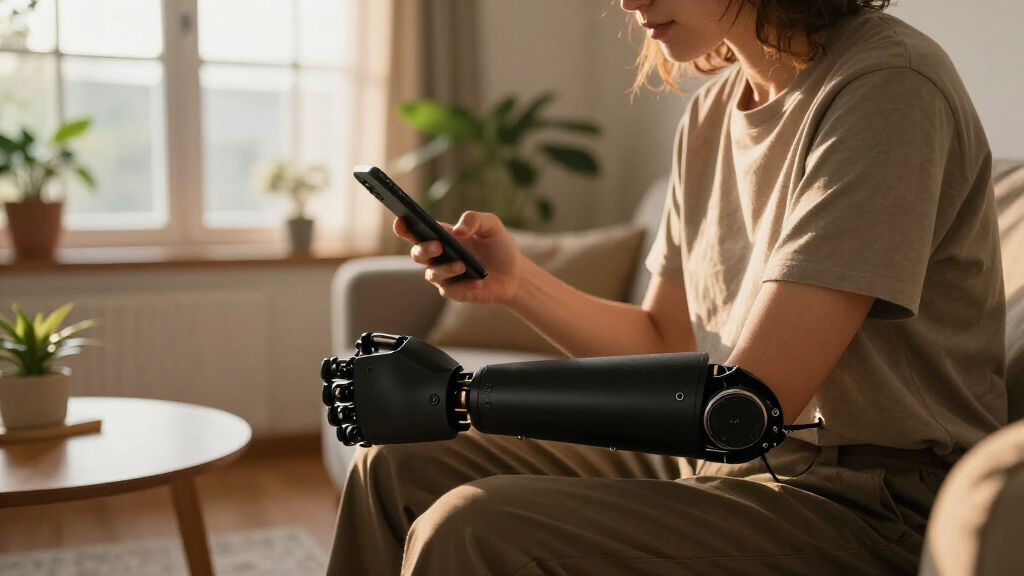
Canadian start-up smartARM is using artificial intelligence to develop more natural and responsive bionic prosthetics. The company claims their technology improves user control and comfort, representing a potential leap forward in prosthetic design.
Canadian start-up smartARM has introduced a new line of bionic prosthetics that incorporate advanced artificial intelligence to improve responsiveness and user control. The company states that their technology aims to make prosthetic limbs more intuitive, offering a significant step forward in assistive device innovation. This development could impact thousands of individuals relying on prosthetics worldwide, making daily tasks easier and more natural.
smartARM’s new prosthetic system integrates AI algorithms that analyze muscle signals and environmental data in real time to adapt limb movements more precisely. The company reports that their prototype has demonstrated improved dexterity and smoother motion control in initial testing phases. According to smartARM, the AI system learns from each user’s unique muscle patterns, allowing for personalized adjustments that traditional prosthetics cannot provide.
The startup was founded in Toronto in 2022 and has focused on bridging the gap between technology and healthcare. Their approach combines machine learning, sensor technology, and ergonomic design to create devices that respond more naturally to user intentions. The company has not yet disclosed detailed technical specifications but emphasizes that their AI platform continuously evolves through user interaction.
Industry experts note that this development aligns with broader trends toward smarter, more adaptive assistive devices. While the technology is still in early stages, initial feedback from beta testers has been positive, highlighting increased comfort and control. The company plans to conduct larger clinical trials later this year to validate their system’s efficacy and safety.
Potential Impact on Prosthetic Technology and Users
The integration of AI into prosthetic limbs by smartARM could significantly enhance the quality of life for users by providing more natural movement and better control. This advancement addresses longstanding challenges in prosthetic design, such as delayed response times and limited dexterity. If successful at scale, the technology may set new industry standards, encouraging further innovation in assistive devices. Additionally, improved user experience might increase adoption rates among those who currently find existing prosthetics cumbersome or inadequate.
Beyond individual benefits, this development could influence healthcare practices and prosthetic manufacturing worldwide. It highlights the potential for AI to transform assistive technology, making devices more adaptive and personalized. However, regulatory approval, long-term durability, and cost considerations remain to be addressed before widespread adoption.
AI-powered bionic prosthetic limbs
As an affiliate, we earn on qualifying purchases.
As an affiliate, we earn on qualifying purchases.
Emerging Trends in AI-Enhanced Assistive Devices
The use of artificial intelligence in medical devices has been steadily increasing, with applications ranging from diagnostics to rehabilitation. In prosthetics, recent years have seen a push toward smarter, more responsive systems that can mimic natural limb movements more closely. Major tech companies and startups alike are investing in AI-driven solutions, driven by advancements in sensor technology and machine learning algorithms.
While many of these innovations are still in experimental or early deployment stages, interest in AI-powered prosthetics has surged, reflected in increased media coverage and research funding. The trigger for this spike in attention appears to be a combination of technological breakthroughs and growing demand from users seeking more functional, comfortable prosthetic options. However, details about specific products and their clinical validation remain limited, and many developments are still in pilot phases.
It is important to note that the current focus is on improving responsiveness and personalization, rather than replacing existing prosthetic models entirely. The industry continues to grapple with challenges related to cost, durability, and regulatory approval, which will influence how quickly these innovations reach the broader market.
responsive myoelectric prosthetic hand
As an affiliate, we earn on qualifying purchases.
As an affiliate, we earn on qualifying purchases.
Unconfirmed Details and Development Status
While smartARM reports promising early results, the company has not yet published detailed technical data or peer-reviewed clinical trial outcomes. It remains unclear how the AI system performs across diverse user populations or long-term durability. Regulatory approval processes and manufacturing scalability are also still in progress, and it is not yet confirmed when the technology will be commercially available on a broad scale.
Furthermore, independent verification of the claims made by smartARM has not been completed, and industry experts caution that further testing is necessary to validate safety and efficacy.
personalized artificial limb control device
As an affiliate, we earn on qualifying purchases.
As an affiliate, we earn on qualifying purchases.
Upcoming Trials and Market Entry Expectations
smartARM plans to initiate larger-scale clinical trials later this year to evaluate the safety, effectiveness, and user satisfaction of their AI-powered prosthetics. The company aims to collaborate with healthcare providers and regulatory bodies to facilitate approval processes. If trials are successful, commercial deployment could follow within 12 to 24 months, though exact timelines depend on regulatory review outcomes and manufacturing readiness.
In the meantime, the company is engaging with potential partners and investors to scale production and distribution channels. Industry observers will be watching closely to see if the technology can meet the rigorous standards required for medical devices and if it can truly deliver on its promise of more intuitive, natural limb control.
intuitive bionic arm with muscle sensors
As an affiliate, we earn on qualifying purchases.
As an affiliate, we earn on qualifying purchases.
Key Questions
How does smartARM’s AI improve prosthetic control?
The AI analyzes muscle signals and environmental data in real time to adapt limb movements, aiming for more natural and responsive control tailored to each user.
When will smartARM’s prosthetics be available commercially?
The company plans to conduct larger clinical trials later this year, with potential market entry within 12 to 24 months pending regulatory approval and manufacturing scaling.
Are there any risks associated with AI-powered prosthetics?
As with any new medical device technology, risks include device failure, regulatory hurdles, and long-term durability concerns. These will need to be addressed through rigorous testing and approval processes.
What distinguishes smartARM from existing prosthetic devices?
smartARM’s integration of AI allows for continuous learning and adaptation to individual muscle patterns, potentially offering more natural movement and improved user comfort compared to traditional prosthetics.
Will this technology be affordable for users?
Pricing details are not yet available; however, scaling production and technological advancements could help reduce costs over time. Affordability remains a key consideration for widespread adoption.
Source: rss
Fall Picks
fall essentials
As an affiliate, we earn on qualifying purchases.