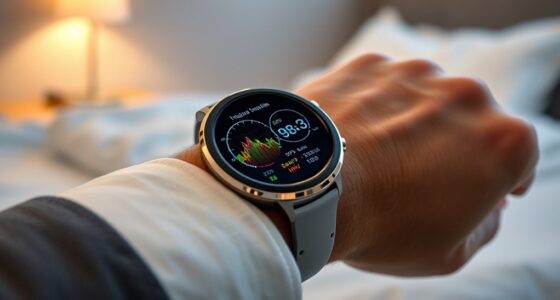

If your wearable overestimates your sleep, start by ensuring it’s fitted snugly and positioned correctly. Update its firmware and calibration settings, and keep your sleep schedule consistent. Avoid environmental noise and movement during sleep, and consider tracking your sleep with a diary or seeking professional advice if issues persist. Staying proactive helps improve accuracy and understanding of your sleep, and you’ll find more effective tips as you explore further.
Key Takeaways
- Ensure the device is snugly fitted and positioned correctly on your wrist or finger for accurate readings.
- Update the firmware regularly and calibrate the device according to manufacturer instructions.
- Check sensor contact and clean the device to improve data accuracy and reduce false movement detection.
- Review and adjust the sleep detection sensitivity settings if available.
- Cross-verify sleep data with a sleep diary or consult a sleep specialist if discrepancies persist.
Understanding How Wearables Track Sleep
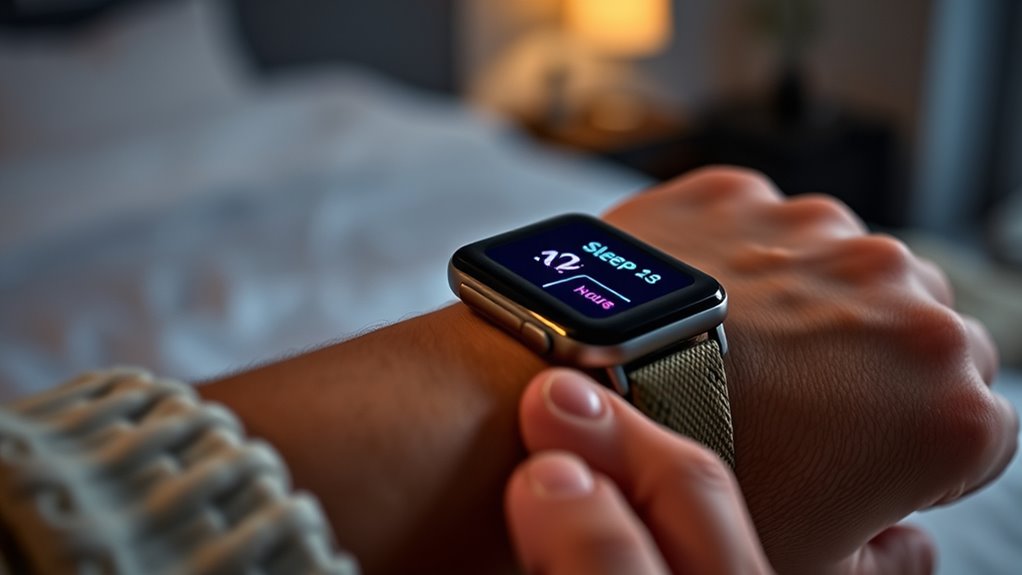
Wearables track sleep by monitoring your movements and physiological signals throughout the night. They rely on sleep tracking algorithms that analyze data collected by wearable sensor placement, such as on your wrist or finger. These sensors detect movement, heart rate, and sometimes skin temperature to distinguish between sleep stages and wakefulness. Proper sensor placement is essential for accurate readings; if the device isn’t positioned correctly, data accuracy can suffer. Additionally, high refresh rates can improve the responsiveness of sensors, leading to more reliable data collection. The algorithms process this information to estimate when you fall asleep, how long you stay asleep, and your sleep quality. By continuously refining these algorithms, wearables aim to provide more precise insights into your sleep patterns. Understanding this process helps you better interpret the data and recognize potential overestimations or inaccuracies. Furthermore, sensor calibration plays a crucial role in maintaining data accuracy over time, ensuring that the device adapts to individual differences and usage conditions. Regularly updating the device’s firmware can also help improve the accuracy of sleep tracking by incorporating advanced signal processing techniques. Additionally, incorporating machine learning can enhance the personalization of sleep data analysis, making the estimates more tailored to your unique sleep patterns.
Recognizing Signs of Overestimated Sleep Data

If your sleep data shows inconsistent patterns or sudden jumps in sleep duration, it might be overestimated. Watch for reports of excessive deep sleep that don’t match how you feel rested, as wearables can sometimes overcount this stage. Additionally, if your device underreports wakefulness during the night, it could be inflating your total sleep time falsely. Be aware that Free Floating can also contribute to inaccuracies in sleep tracking, especially if the device’s sensors are affected by movement or environmental factors. Factors like measurement errors from environmental interference or device placement can further distort sleep data accuracy. Understanding how sensor calibration impacts data reliability can help you interpret sleep reports more accurately. Proper device maintenance and calibration can also significantly improve tracking precision and give you a clearer picture of your actual sleep patterns. Regularly updating your device’s software can also help minimize software glitches that may cause data inconsistencies.
Inconsistent Sleep Patterns
Have you noticed your sleep data fluctuating unpredictably from night to night? This inconsistency might signal that your wearable isn’t accurately tracking your sleep. When your sleep patterns vary widely, it’s a sign of poor sleep consistency, which can confuse your device’s algorithms. If your bedtime routines change often or aren’t regular, your wearable may struggle to detect true sleep periods, leading to overestimation. Inconsistent sleep patterns can also cause your device to register wakefulness as sleep or miss brief awakenings altogether. Keep an eye on how steady your sleep schedule is. A regular bedtime and wake time help your wearable produce more reliable data. If your sleep patterns are erratic, consider adjusting your routines to promote steadiness and improve tracking accuracy. Sleep hygiene practices such as maintaining a consistent schedule can significantly enhance your device’s performance and the accuracy of your sleep data. Additionally, understanding how biological rhythms influence sleep can help you align your routines for better tracking. Recognizing the importance of data accuracy and how it depends on sleep consistency can motivate you to establish more consistent sleep habits. Moreover, being aware of potential device limitations can help set realistic expectations for your sleep tracking accuracy.
Excessive Deep Sleep Detection
Sometimes, your wearable might detect more deep sleep than you actually get, which can be a sign of overestimation. Overestimating sleep often skews your sleep quality perception. To spot this, look for signs like unusually long deep sleep periods that don’t match your daily fatigue or restfulness. Consider this visualization:
| Sleep Stage | Expected Duration | Your Data |
|---|---|---|
| Deep Sleep | 1-2 hours | 3-4 hours |
| Light Sleep | 4-5 hours | 2-3 hours |
| REM Sleep | 1-2 hours | 1-2 hours |
| Wakefulness | 30 mins – 1 hour | 10-15 mins |
If your device calibration is off, it might overestimate deep sleep, impacting your overall sleep quality. Proper wearable calibration can help ensure your sleep data reflects reality more accurately. Regularly reviewing your sleep metrics can also help identify inconsistencies. Additionally, understanding the sleep cycle patterns can aid in assessing whether your sleep stages are accurately recorded. Monitoring these aspects can improve your sleep data accuracy and provide a clearer picture of your restfulness.
Wakefulness Underreporting
Even when your wearable reports that you’ve had a full night’s sleep, you might still feel tired or unrested, indicating potential wakefulness underreporting. Your sleep environment and bedtime routines play a vital role in this. A noisy, bright, or uncomfortable sleep space can cause brief awakenings that your device may miss. Similarly, irregular or stimulating bedtime routines can lead to fragmented sleep, making you feel unrested despite high sleep duration data. Pay attention to signs such as frequent yawning, difficulty concentrating, or feeling unrefreshed upon waking. These clues suggest your wearable might be underestimating wakefulness periods. Improving your sleep environment—darkening the room, reducing noise—and establishing consistent, calming routines can help your device better reflect your actual sleep quality. Recognizing sleep fragmentation as a common cause of sleep misestimation allows you to address underlying issues and improve both your sleep quality and the accuracy of your wearable data. Additionally, understanding how sleep tracking technology works can help you interpret your data more effectively and identify potential discrepancies. Being aware of supportive sleep habits can further optimize your sleep quality and the reliability of your sleep data. Paying attention to sleep stage detection can also help you understand whether your device accurately captures different sleep phases and durations.
Factors That Can Skew Sleep Monitoring Results
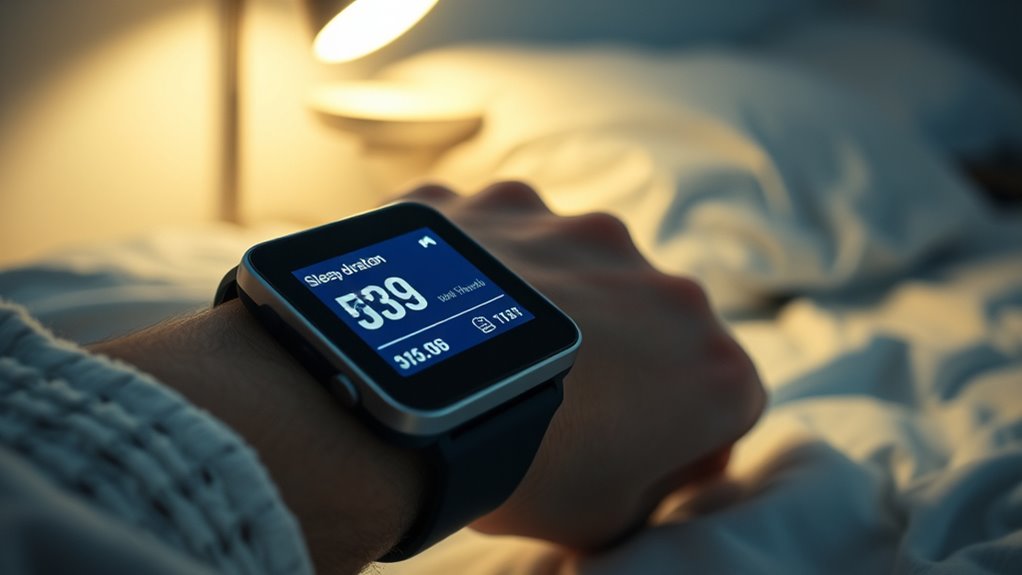
Various factors can lead to inaccuracies in sleep monitoring results, causing devices to overestimate or underestimate your actual sleep. One key factor is sensor placement; if your device isn’t worn properly, it may miss important signals. For example, loose or misplaced sensors can record false movements or fail to detect sleep stages accurately. Additionally, device firmware plays a role—outdated or buggy firmware can impair data processing. Other influences include environmental noise, movement during sleep, and skin contact quality. To improve accuracy, ensure your device is snugly fitted, keep firmware updated, and minimize disturbances. Being mindful of these factors helps your wearable provide more reliable sleep data, reducing the risk of overestimating how much restful sleep you actually get.
Calibrating and Adjusting Your Device for Better Accuracy
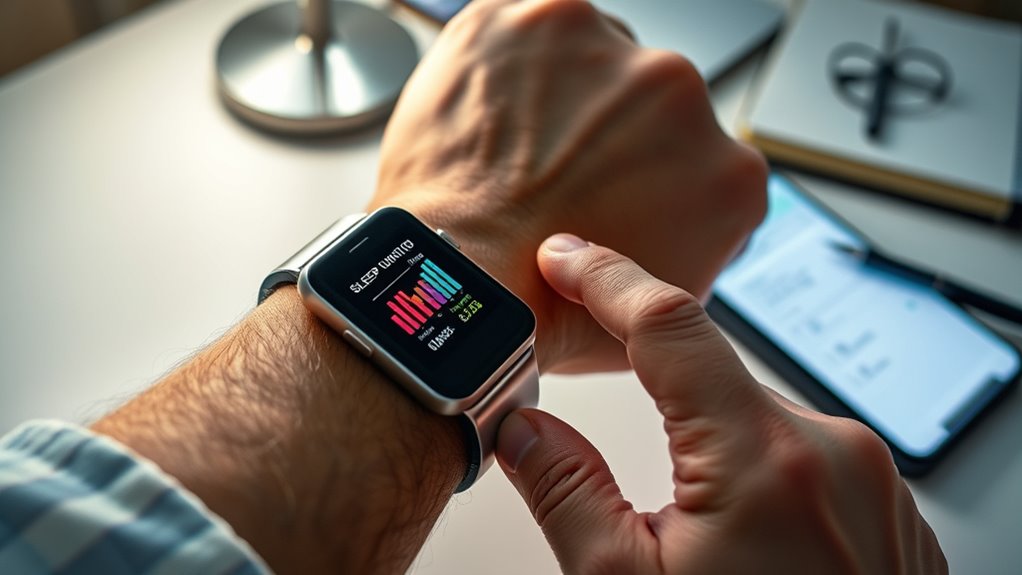
To improve the accuracy of your sleep data, start by calibrating and adjusting your device regularly. Make certain your device firmware is up to date, as manufacturers often release updates that improve tracking precision. Proper user training is essential; familiarize yourself with how your device detects sleep and wake patterns. Adjust settings such as sleep detection sensitivity or bedtimes if your device allows it. A well-calibrated device responds better to your actual sleep habits, reducing overestimation. Consistently syncing your device and following manufacturer instructions also helps maintain accuracy. Remember, regular calibration and updates optimize your device’s performance, giving you more reliable sleep insights. Additionally, understanding vetted information about your device can help you interpret your sleep data more effectively. Staying informed about technological accuracy can further enhance your ability to evaluate your sleep patterns reliably.
Using Additional Methods to Verify Your Sleep Quality

While wearable devices can provide valuable sleep data, relying solely on them may lead to inaccuracies. To verify your sleep quality, consider additional methods that give a clearer picture. Keep an eye on your sleep hygiene by maintaining consistent bedtime routines, which promote better sleep and help identify discrepancies in device readings. You can also track your sleep manually by noting how rested you feel during the day or using sleep diaries. Additionally, consulting with a sleep specialist for overnight studies like polysomnography can offer definitive insights. These methods help you cross-check wearable data, ensuring you don’t overlook underlying issues or overestimate your sleep quality. Combining these approaches provides a more accurate assessment of your sleep health.
Tips for Improving Your Actual Sleep Habits

Improving your sleep habits starts with establishing a consistent bedtime and wake time each day, even on weekends. Creating a sleep-friendly environment can make a big difference—keep your room cool, dark, and quiet. Avoid screens before bed, as blue light can interfere with melatonin production. Develop calming bedtime routines, like reading or gentle stretches, to signal your body it’s time to wind down. Limit caffeine and heavy meals close to bedtime to prevent disruptions. Consistency reinforces your body’s internal clock, helping you fall asleep faster and enjoy more restorative sleep. Pay attention to your sleep environment and routines, and adjust them to suit your needs. Small changes can markedly improve your overall sleep quality and help counteract overestimations from your wearable device.
When to Seek Professional Help for Sleep Concerns
If you notice persistent sleep disruptions or unusual patterns that don’t improve, it’s time to contemplate professional help. When sleep issues start affecting your daily life or your overall well-being, seeking guidance can make a difference. Don’t hesitate to reach out if your sleep concerns continue despite making changes.
Persistent Sleep Disruptions
Persistent sleep disruptions warrant professional attention when they continue despite making lifestyle changes or attempting self-help strategies. If you notice ongoing issues, evaluate your sleep environment—ensure your room is dark, quiet, and comfortable. Check your device calibration; inaccurate readings can mask real problems. If your wearable suggests you’re sleeping well but you feel exhausted, it’s time to consult a specialist. Consider these signs:
- Frequent nighttime awakenings or difficulty returning to sleep
- Feeling unrefreshed despite “adequate” sleep duration
- Sleep difficulties interfering with daily functioning
Persistent disruptions may signal underlying conditions like sleep apnea or insomnia. Addressing these concerns professionally can improve your sleep quality and overall health. Don’t ignore persistent issues—seek expert advice for tailored solutions.
Unusual Sleep Patterns
Have you noticed your sleep patterns suddenly changing in unusual ways? Maybe your wearable reports inconsistent sleep phases or fluctuates wildly from night to night. These irregularities could be a sign that your device isn’t properly calibrated or that your sleep data isn’t accurately reflecting your actual rest. Unusual sleep patterns—such as frequent awakenings, extended periods of wakefulness, or a mismatch between your perceived and recorded sleep—may indicate underlying issues worth addressing. If you observe persistent anomalies, it’s time to seek professional help. A sleep specialist can evaluate your sleep phase data, perform extensive tests, and determine if an underlying condition is disrupting your rest. Don’t ignore these signs; proper diagnosis can improve your sleep quality and overall health.
Impact on Daily Life
When your sleep disruptions begin to interfere with your daily responsibilities or mood, it’s a clear sign you should seek professional help. An overestimated sleep report from your wearable device can lead to confusion about your actual sleep quality, affecting your sleep environment and overall well-being. Misinterpretations caused by device calibration issues may mask underlying problems, making it harder to address them effectively. If you notice persistent fatigue, mood swings, or difficulty concentrating, it’s time to consult a specialist. Consider these steps:
- Evaluate your sleep environment for comfort and consistency
- Reassess your device calibration to ensure accurate data
- Pay attention to how your sleep patterns impact daily performance
Seeking professional guidance helps clarify your sleep health and improves your overall quality of life.
Frequently Asked Questions
Can Wearing Multiple Devices Improve Sleep Accuracy?
Wearing multiple devices can improve your sleep accuracy because it offers more thorough data. Different devices may have varied calibration methods, helping to cross-verify sleep stage analysis and reduce errors. By comparing results, you can identify inconsistencies and get a clearer picture of your sleep patterns. Just guarantee each device is properly calibrated and synced to maximize accuracy and get the best insights into your sleep quality.
Do Different Brands of Wearables Vary in Sleep Measurement Accuracy?
Different brands of wearables do vary in sleep measurement accuracy because of differences in brand reliability and technology. You might find that some brands are more consistent due to better sensors and data algorithms. To get the most accurate results, make sure you follow user compliance, like wearing the device correctly and consistently. This helps your chosen brand deliver reliable sleep data, making it easier to track and improve your sleep habits.
How Often Should I Recalibrate My Sleep-Tracking Device?
Don’t wait for the wheels to fall off before recalibrating your sleep tracker. You should do it every few months to maintain calibration frequency and guarantee sleep data consistency. Regular recalibration helps your device stay accurate, especially if your routines or sleep environment change. By staying proactive, you’ll get more reliable insights, making it easier to improve your sleep habits and overall well-being over time.
Does My Sleep Environment Affect Wearable Accuracy?
Yes, your sleep environment and device placement can influence your wearable’s accuracy. A noisy, bright, or uncomfortable sleep environment may cause restlessness, affecting your device’s readings. Make sure to place your device snugly and correctly on your wrist, avoiding loose or too-tight fitments. Creating a calm, dark, and cool sleep environment helps improve overall sleep quality and ensures your wearable captures more precise data.
Are There Specific Health Conditions That Impact Wearable Sleep Data?
Yes, certain health conditions like sleep disorders and mental health issues can impact your wearable’s sleep data accuracy. If you have a sleep disorder such as insomnia or sleep apnea, your device might misinterpret restlessness as less or more sleep. Mental health conditions like anxiety or depression can also influence your sleep patterns, leading to overestimations or underestimations. Always consult a healthcare professional for accurate diagnosis and consider wearable limitations.
Conclusion
Remember, wearables can sometimes overestimate your sleep—up to 20% in some cases. While they’re helpful, relying solely on them isn’t enough. By understanding their limits and using additional methods, you can get a clearer picture of your sleep quality. Prioritizing good sleep habits is the best way to improve your rest. Keep in mind, consistent sleep is linked to better health, with studies showing a 20% reduction in health risks for those who sleep well regularly.