Sunrise alarm clocks wake you by gradually brightening over 20–40 minutes, mimicking dawn so your body shifts out of deep sleep before the sound kicks in. After comparing 15 models, the Philips SmartSleep Wake-Up Light earns my top spot for its medically-informed light tuning and dependable sunrise simulation that feels genuinely natural rather than like a dimming lamp. Two standouts deserve early mention: the Hatch Restore 3 for anyone who wants a full bedside sleep system with app control and circadian lighting, and the Te-Rich Sunrise Alarm Clock for delivering the core wake-up experience at a budget-friendly price. The main tradeoff in this category is between simple, affordable analog-style clocks and app-connected systems that do more but demand more setup. Light intensity, alarm customization, and sound quality vary more than you might expect at first glance. Keep reading for the full breakdown of all 15 models.

Get wellness gear delivered free — and shop member deals
- Fast, free delivery on millions of items
- Access to Prime Big Deal Days deals on October 6–7
- Prime Video, Amazon Music and more included
Key Takeaways
- Light quality separated the top tier more than any feature: Philips and Dekala produce a warmer, more natural color gradient, while budget models like the generic Sunrise Alarm Clock with Wake-Up Light can feel like a sudden brightening rather than a gradual dawn.
- Combined sunrise-plus-sound-machine models (Dreamegg, Odokee, ecozy, REACHER) dominate this lineup because they replace a separate white noise device — but sound quality varies widely between them.
- The two Hatch models target opposite ends of the budget spectrum: the Restore 3 is the most feature-rich bedside system here, while the Sleep Clock trades sunrise brightness for sleep tracking.
- Bluetooth speaker features (JALL, JBER) sound appealing but rarely match even a modest dedicated speaker — buy these for the light, not the audio.
- Dual alarms and a true sunset-fade sleep function were the two most overlooked features separating practical daily-use clocks from novelty gifts.
| ecozy Sunrise Alarm Clock and White Noise Machine |  | Best Sound-and-Speaker Combo | Sunrise simulation: Adjustable 5–60 minutes before alarm | Sleep sounds: 26 | Night light colors: 17 | VIEW LATEST PRICE | See Our Full Breakdown |
| Sunrise Alarm Clock with Wake-Up Light |  | Best No-Frills Starter Pick | Sunrise simulation: 30 minutes fixed | Wake-up sounds: 5 (beep, birdsong, stream, rain, ocean wave) | Sleep timer: 10, 30, or 60 minutes | VIEW LATEST PRICE | See Our Full Breakdown |
| Dreamegg Sunrise Alarm Clock and Sound Machine with 29 Sounds |  | Best All-in-One Bedside Hub | Sounds: 29 | Ambient light colors: 10 | Light brightness levels: 20 | VIEW LATEST PRICE | See Our Full Breakdown |
| REACHER Wood Grain Sunrise Alarm Clock with Sound Machine and Nightlight |  | Best for Power Outage Peace of Mind | Sunrise simulation: 1% to 100% over 5–60 minutes | Sleep sounds: 26 | Sound and nightlight timer: 5–180 minutes | VIEW LATEST PRICE | See Our Full Breakdown |
| Philips SmartSleep Wake-Up Light with Sunrise and Sunset Simulation |  | Best Premium Pick | Model: HF3520/60 | Shape: Round | Wake-up sounds: 5 natural sounds | VIEW LATEST PRICE | See Our Full Breakdown |
| Sunrise Alarm Clock with Sound Machine |  | Best for Light Sleepers | Sunrise simulation: 10-60 minutes | Brightness levels: 13 | Volume levels: 32 | VIEW LATEST PRICE | See Our Full Breakdown |
| Hatch Sleep Clock Bedside Sleep Tracker and Sound Machine, Putty |  | Best Smart Pick | Color: Putty | Sleep tracking: Contactless motion and breathing sensors | Audio library: 2,500+ sounds and audio options | VIEW LATEST PRICE | See Our Full Breakdown |
| Odokee Sunrise Alarm Clock and White Noise Machine |  | Best Value Pick | Sunrise simulation: Customizable 5-60 minutes | Soothing sounds: 25 | Speaker: 5W stereo with Bluetooth | VIEW LATEST PRICE | See Our Full Breakdown |
| JBER Sunrise Alarm Clock with White Noise Machine and Bluetooth Speaker |  | Best for Couples | Alarms: 2 independent alarms | Sleep sounds: 25 | Alarm volume levels: 32 | VIEW LATEST PRICE | See Our Full Breakdown |
| Hatch Restore 3 Sleep Machine with Circadian Lighting, Putty |  | Best for Bedtime Routines | Color: Putty | Sleep sounds: 80+ | Lighting: Customizable, dimmable circadian lighting with sunrise alarm | VIEW LATEST PRICE | See Our Full Breakdown |
| Dekala Sunrise Alarm Clock with Pulse Wake and Sound Machine |  | Best for Heavy Sleepers | Display: 2.8-inch IPS color display | Alarms: 4 independent alarms | Wake modes: Standard, Snooze, Heavy (Pulse Wake) | VIEW LATEST PRICE | See Our Full Breakdown |
| Ecozy Sunrise Alarm Clock and White Noise Sound Machine |  | Best for Bedroom Audio | Sound options: 26 soothing sounds | Light colors: 17 | Connectivity: Bluetooth | VIEW LATEST PRICE | See Our Full Breakdown |
| AFEXOA Sunrise Alarm Clock with Wake-Up Light and White Noise Machine |  | Best Sound Library | Wake-up light: Gradually brightens from 1% to 100% | Soothing sounds: 30 non-looping sounds | Brightness levels: 20 | VIEW LATEST PRICE | See Our Full Breakdown |
| Te-Rich Sunrise Alarm Clock and White Noise Machine |  | Best Bedside All-in-One | Sunrise simulation: 10–60 minutes | Sleep sounds: 30 | Wake-up sounds: 7 | VIEW LATEST PRICE | See Our Full Breakdown |
| JALL Full-Screen Sunrise Alarm Clock with White Noise, Dual Alarms, FM Radio, Color Lights, and Bluetooth Speaker |  | Best Feature-Rich Entertainment Pick | Sunrise duration: 10–60 minutes | Sounds: 25 natural sounds and white noises | Alarms: Dual alarms (daily, weekday, weekend) | VIEW LATEST PRICE | See Our Full Breakdown |
More Details on Our Top Picks
ecozy Sunrise Alarm Clock and White Noise Machine
Among the multi-function bedside clocks in this roundup, this ecozy model stands out for folding a genuine 5W Bluetooth speaker into the package, which the more basic Sunrise Alarm Clock with Wake-Up Light simply can’t match for music or podcast listeners. The adjustable 5–60 minute sunrise window is more flexible than fixed 30-minute options elsewhere in this guide, letting light sleepers stretch the wake-up gradually. With 26 sleep sounds, 17 night light colors, and 20 display brightness levels, it covers nearly every bedside scenario short of a dedicated sound machine like the Dreamegg. The tradeoff is restraint on the hardware side: no app control at all, and it must stay plugged in, so anyone hoping for smart-home integration or a battery backup like the REACHER‘s should look elsewhere. Physical buttons and a rotary dial keep daily operation simple, though.
Pros:- Bluetooth speaker handles music, podcasts, and audiobooks without a second device
- Adjustable 5–60 minute sunrise window suits both heavy and light sleepers
- 26 sleep sounds and 17 night light colors cover most bedtime preferences
- Physical controls and rotary dial work without any app setup
Cons:- Must remain plugged in at all times — no battery backup for outages
- No app support limits scheduling and customization for tech-minded buyers
Best for: Bedside streamers who want one device for sunrise wake-ups, white noise, and Bluetooth music without app complexity
Not ideal for: Smart-home tinkerers — there’s no app connectivity, and it loses settings if unplugged since it requires constant power
- Sunrise simulation:Adjustable 5–60 minutes before alarm
- Sleep sounds:26
- Night light colors:17
- Display brightness levels:20
- Speaker:Built-in 5W stereo Bluetooth speaker
- Controls:Physical buttons and rotary dial
- Power:Wired; included power adapter required
- Weight:13.92 ounces
Our verdict“This pick makes the most sense for listeners who want their sunrise clock to double as a real speaker, provided they don’t need app control or backup power.”
Sunrise Alarm Clock with Wake-Up Light
Compared with feature-dense rivals like the ecozy or the REACHER, this model takes the opposite approach: a fixed 30-minute sunrise, five wake-up sounds, and straightforward light-only or sound-only modes. That simplicity is the point. Anyone new to sunrise alarms can figure out everything in minutes without wading through 26 sounds or 20 brightness levels. The sunset sleep timer, which dims over 10, 30, or 60 minutes, mirrors what the Philips SmartSleep offers at a far simpler level. The tradeoffs are real, though — only three warm-white brightness levels and six RGB colors feel restrictive if you like fine-tuning your bedroom glow, and there’s no Bluetooth speaker, backup battery, or app expansion. If your goal is simply testing whether light-based waking works for you, this is the low-commitment entry point; if you already know you want depth, skip it.
Pros:- Extremely simple operation with light-only and sound-only modes
- Sunset sleep timer with 10, 30, or 60 minute gradual dimming
- Nature-focused wake-up sounds including birdsong, rain, and ocean
- Low learning curve for sunrise-alarm beginners
Cons:- Fixed 30-minute sunrise can’t be shortened or extended for personal preference
- Only three warm-white brightness levels and six colors limit customization
Best for: First-time sunrise alarm buyers who want to test light-based waking with minimal setup and controls
Not ideal for: Tweakers and side-table consolidators — the limited brightness steps, small sound selection, and lack of a speaker or backup battery will feel restrictive fast
- Sunrise simulation:30 minutes fixed
- Wake-up sounds:5 (beep, birdsong, stream, rain, ocean wave)
- Sleep timer:10, 30, or 60 minutes
- Modes:Sound only or light only
- Warm-white brightness levels:3
- RGB colors:6
Our verdict“Buy it to find out whether sunrise waking suits you; upgrade later if the limited adjustments start to chafe.”
Dreamegg Sunrise Alarm Clock and Sound Machine with 29 Sounds
Where the Sunrise Alarm Clock with Wake-Up Light keeps things bare-bones, the Dreamegg goes wide: 29 sounds, 10 ambient colors, 20 light brightness levels, and a timer stretching from 5 to 180 minutes. Its standout trick is one-tap recall of a saved favorite setup, which the ecozy’s button-by-button operation can’t replicate — a genuine quality-of-life win for couples with a fixed wind-down routine. The wood construction also reads warmer on a nightstand than the plastic bodies of most competitors here. The main tradeoff is that it’s still a closed system: no app, no Bluetooth speaker (unlike the ecozy), and no battery backup (unlike the REACHER). It consolidates sound machine, night light, and sunrise alarm capably, but buyers who want audio streaming or outage resilience will need one of those alternatives instead.
Pros:- 29 sound options rival dedicated white noise machines
- One-tap saved preset eliminates nightly fiddling
- Flexible 5–180 minute timer for both naps and full nights
- Wood build feels more considered than typical plastic rivals
Cons:- No Bluetooth speaker despite its otherwise broad feature set
- No backup battery, so a power cut interrupts settings
- Wood material details are thin, making durability hard to judge
Best for: Couples and routine-driven sleepers who want sound, light, and alarm in one device with one-tap presets
Not ideal for: Music streamers and outage-prone households — there’s no Bluetooth speaker or backup battery
- Sounds:29
- Ambient light colors:10
- Light brightness levels:20
- Display brightness settings:5
- Timer:5–180 minutes
- Material:Wood
- App or subscription:None required
Our verdict“This option stands out for sleepers whose bedtime ritual is fixed and who want everything preset at a single tap — as long as streaming music isn’t part of that ritual.”
REACHER Wood Grain Sunrise Alarm Clock with Sound Machine and Nightlight
The REACHER’s defining feature is one nobody else in this batch offers: a built-in battery that preserves alarm, light, and sound settings during power outages. If you’ve ever been woken by a blinking 12:00 after a storm, that matters — the Dreamegg and ecozy both lose their footing when the grid hiccups. Its sunrise ramps from 1% to 100% over a customizable 5–60 minutes, giving a smoother curve than the fixed 30-minute basic model, and the fully dimmable 0–100% display is a gift for light-sensitive sleepers who find even dim LED digits distracting. The wood grain styling also gives it more nightstand presence than plasticky rivals. The gaps: no Bluetooth speaker, no app control, and the manufacturer is vague on battery type and life — the backup preserves settings rather than promising full unplugged operation.
Pros:- Backup battery keeps alarm and light settings intact through power cuts
- 0–100% display dimming achieves true blackout for sensitive sleepers
- Adjustable 5–60 minute sunrise from 1% to 100% brightness
- 26 sleep sounds and 8-color adjustable nightlight cover the basics well
Cons:- Battery details are unspecified — capacity and expected backup duration are unclear
- No Bluetooth speaker or app connectivity despite its otherwise thorough design
Best for: Light-sensitive sleepers in areas with unreliable power who need a fully dark display and settings that survive outages
Not ideal for: Anyone wanting music streaming or app scheduling — the feature set stops at sounds and light
- Sunrise simulation:1% to 100% over 5–60 minutes
- Sleep sounds:26
- Sound and nightlight timer:5–180 minutes
- Display dimming:0–100%
- Nightlight colors:8, adjustable brightness
- Power outage backup:Built-in battery preserves settings
- Design:Wood grain tabletop
Our verdict“Choose the REACHER if outage resilience and a truly dark display rank above streaming and smart features on your priority list.”
Philips SmartSleep Wake-Up Light with Sunrise and Sunset Simulation
Philips essentially invented this category, and the SmartSleep shows why it still anchors the premium end. Its 20-brightness reading lamp and automatically dimming display outclass the three-level adjustments on the budget wake-up light, and the light itself is tuned with more polish than the ecozy or Dreamegg imitators. The FM radio adds a wake-up option none of the other four picks here include, and tap-to-snooze is a small kindness at 6 a.m. That said, premium here means refinement, not breadth: there’s no Bluetooth speaker (the ecozy wins there), no 26-sound library (the Dreamegg and REACHER both dwarf its five sounds), and no battery backup like the REACHER’s. You’re paying for light quality and industrial design, not feature count — buyers who equate value with features should steer toward the budget or mid-range picks instead.
Pros:- Sunrise and sunset simulation with polished, natural light curves
- Reading lamp with 20 brightness settings doubles as bedside lighting
- FM radio adds a wake-up source no other pick in this batch offers
- Tap snooze and automatic display dimming refine daily use
Cons:- Only five wake-up sounds versus 26–29 on competing models
- No Bluetooth speaker or app connectivity despite top-tier positioning
Best for: Buyers who prioritize refined light quality and proven design over feature quantity for their sleep and wake routine
Not ideal for: Feature-maximizers — no Bluetooth, no large sound library, and no backup battery despite the premium positioning
- Model:HF3520/60
- Shape:Round
- Wake-up sounds:5 natural sounds
- Brightness settings:20
- Simulation:Sunrise and sunset
- Radio:FM
- Snooze:Tap snooze
- Display:Automatic dimming
Our verdict“Worth it for sleepers who want the most refined light experience in this lineup; skip it if your money is better spent on sounds, streaming, and features.”
Sunrise Alarm Clock with Sound Machine
This option stands out for its 30-sound library, split between white noise and nature sounds — more audio variety than the Odokee or JBER models, which each offer 25. That range matters if you fall asleep to rain one night and fan noise the next. The 480-minute sleep timer is another differentiator: it can play sounds nearly all night, where many rivals cut out after a few hours. With 13 brightness and 32 volume levels, the fine-tuning is genuinely granular compared with simpler wake-up lights.
The tradeoff is a lack of extras. There’s no Bluetooth speaker like the Odokee, no dual alarms like the JBER, and no app or smart features. This is a single-purpose sleep-and-wake device, and it’s better for it — but buyers wanting a bedside audio hub should look elsewhere.
Pros:- 30 sounds spanning white noise and nature audio for varied sleep preferences
- Sleep timer extends up to 480 minutes for near all-night playback
- 32 volume steps allow very quiet nighttime settings
- Memory function preserves settings through power interruptions
Cons:- No Bluetooth speaker or audio streaming capability
- Only one alarm, limiting shared-bed households
Best for: Light sleepers and white noise dependents who need all-night sound masking with precise volume control
Not ideal for: Couples with different schedules — the single alarm can’t replace a dual-alarm model like the JBER
- Sunrise simulation:10-60 minutes
- Brightness levels:13
- Volume levels:32
- Sound options:30 (10 white noise, 20 nature sounds)
- Sleep timer:30-480 minutes
- Display dimmer:5 levels
- Extra features:Continuous play, memory function, snooze, backlit buttons
Our verdict“Buy this if sleep sounds matter as much as the sunrise — it’s the strongest pure sound machine in this group.”
Hatch Sleep Clock Bedside Sleep Tracker and Sound Machine, Putty
Nothing else in this roundup does what the Hatch Sleep Clock attempts: contactless sleep tracking that monitors motion and breathing from the nightstand, no wearable required. Pair that with a 2,500+ item audio library and personalized wind-down suggestions, and it functions as a sleep coach rather than just an alarm. Compared with the Hatch Restore 3, this model adds the tracking layer the Restore lacks — but it demands more from you in return.
Those demands are real. Setup requires Bluetooth, ongoing use requires a stable 2.4 GHz Wi-Fi connection, and the richest content sits behind a Hatch+ subscription after the 30-day trial. Buyers who dislike subscriptions or app ecosystems will be happier with the app-free Odokee or the JBER. This pick makes the most sense for data-driven sleep optimizers willing to pay recurring costs for insights.
Pros:- Contactless sleep tracking with no wearable needed
- Personalized insights and bedtime suggestions
- Enormous audio library of 2,500+ sounds and content
- Combines smart light, sound machine, reminders, and sunrise alarm in one device
Cons:- Requires stable 2.4 GHz Wi-Fi for ongoing use
- Full content library locked behind a paid Hatch+ subscription after the trial
Best for: Quantified-sleep enthusiasts who want tracking and coaching without wearing a device to bed
Not ideal for: Anyone averse to subscriptions, apps, or Wi-Fi dependence — a plug-and-play clock like the JBER will frustrate far less
- Color:Putty
- Sleep tracking:Contactless motion and breathing sensors
- Audio library:2,500+ sounds and audio options
- Connectivity:Bluetooth for setup; 2.4 GHz Wi-Fi required ongoing
- Functions:Alarm, noise machine, smart light, sunrise alarm
- Power:Corded electric
- Hatch+ trial:30 days included
Our verdict“The only choice here if you want your alarm clock to actually study your sleep — as long as you accept the subscription and connectivity requirements.”
Odokee Sunrise Alarm Clock and White Noise Machine
The Odokee covers the essentials — adjustable sunrise from 5 to 60 minutes, 25 sleep sounds, a Bluetooth speaker, and a 12-color night light — without demanding an app, a subscription, or a Wi-Fi network. That app-free design is a genuine advantage over both Hatch models in this lineup, which assume you’ll run software to unlock their full value. Its 0-100% dimmable display is more granular than the 5-level dimmers on most competitors, a small thing that matters a lot to darkness-sensitive sleepers.
Where it trails the JBER is scheduling: no dual alarms, and the sleep timer duration isn’t clearly specified, so all-night sound users may prefer the model with the 480-minute timer. The 5W stereo speaker is a nice inclusion for the money, though audiophiles shouldn’t expect room-filling sound. Overall this pick makes the most sense for buyers who want one affordable device that does everything adequately and nothing complicatedly.
Pros:- Bluetooth audio with a 5W stereo speaker for bedside music
- Finely dimmable display from 0-100% brightness
- 12-color night light with three wake-up modes
- Fully app-free and subscription-free operation
Cons:- Sleep timer duration is not specified by the manufacturer
- Single alarm only — no dual scheduling
Best for: Budget-conscious buyers who want sunrise, sounds, and Bluetooth in one no-app, no-subscription device
Not ideal for: Households needing two independent alarms — the JBER’s dual-alarm setup handles that better
- Sunrise simulation:Customizable 5-60 minutes
- Soothing sounds:25
- Speaker:5W stereo with Bluetooth
- Display brightness:0-100% dimmable
- Night light:12 colors
- Alarm sounds:7
- Wake-up modes:3
- App required:No
Our verdict“The best bang-for-buck choice for anyone who wants core sunrise features plus Bluetooth without smart-home baggage.”
JBER Sunrise Alarm Clock with White Noise Machine and Bluetooth Speaker
Two independent alarms with separate time, sound, and volume settings make the JBER the clear choice for partners on different schedules — something no other clock in this batch offers. A nurse starting a shift at 5 a.m. can wake to a quiet tone while a partner sleeps until 8 with a louder one, and neither compromises. Its 30 sunrise brightness settings outpace the Odokee’s customization, and 32 alarm volume steps mean one person’s gentle is genuinely soft.
Compared with the Odokee, you trade the 0-100% display dimming for a 5-level version, and the 12-color night light carries over. Two annoyances are worth flagging: the memory backup needs AAA batteries that aren’t included, and everything runs off the supplied power adapter — no USB-C flexibility. Still, for shared beds, this model makes the most sense of the group.
Pros:- Dual alarms with independent time, sound, and volume per alarm
- 30 sunrise brightness settings and 10-60 minute duration control
- Combines night light, sound machine, and Bluetooth speaker
- Battery memory backup preserves settings during outages
Cons:- Backup AAA batteries are not included
- Requires the proprietary supplied power adapter
Best for: Couples or roommates with mismatched schedules who need two fully independent alarms
Not ideal for: Minimalists who want fewer buttons and a cleaner interface — the dense feature set adds complexity
- Alarms:2 independent alarms
- Sleep sounds:25
- Alarm volume levels:32
- Sunrise brightness settings:30
- Sunrise duration:10-60 minutes
- Night light:12 colors, 10 brightness levels
- Bluetooth speaker:5 W
- Memory backup:2 AAA batteries (not included)
Our verdict“If two people share a nightstand, this is the pick — its dual alarms alone justify choosing it over single-alarm rivals.”
Hatch Restore 3 Sleep Machine with Circadian Lighting, Putty
The Hatch Restore 3 is built around a philosophy the simpler clocks ignore: a screen-free bedroom supported by circadian-aligned lighting and a structured wind-down routine. Its 80+ built-in sleep sounds dwarf the 25-sound libraries of the Odokee and JBER, and its customizable dimmable lighting is designed to cue your body toward sleep before the sunrise alarm cues you awake. Compared with the Hatch Sleep Clock, it drops sleep tracking but keeps the routine-building core — a reasonable simplification if you don’t want your sleep scored every morning.
The catch mirrors its sibling: premium Hatch+ content sits behind a subscription after the 30-day trial. The onboard 80+ sounds work without paying, but the deeper meditation and story library doesn’t. Buyers who want zero recurring costs should stick with the app-free Odokee. For anyone actively trying to fix a doomscrolling habit, though, this is the most purpose-built option here.
Pros:- 80+ built-in sleep sounds with no subscription needed for basics
- Circadian-minded lighting designed around a full bedtime routine
- Sunrise alarm supports gentler mornings
- Purpose-built for a phone-free bedroom
Cons:- Best content requires a paid Hatch+ subscription after the 30-day trial
- No Bluetooth speaker for playing your own audio, unlike the Odokee or JBER
Best for: People trying to replace nighttime phone scrolling with a structured, screen-free wind-down routine
Not ideal for: Anti-subscription buyers who’ll never pay for Hatch+ and want everything unlocked upfront
- Color:Putty
- Sleep sounds:80+
- Lighting:Customizable, dimmable circadian lighting with sunrise alarm
- Design focus:Screen-free bedroom routine
- Hatch+ trial:30 days for new subscribers
Our verdict“The strongest choice for routine-builders who want light and sound to shape their whole evening — provided they accept the subscription model.”
Dekala Sunrise Alarm Clock with Pulse Wake and Sound Machine
Most sunrise clocks bet entirely on light, which is a problem if you routinely sleep through a bright room. Dekala’s Pulse Wake mode adds a 95 dB sound pulse on top of the 400-lumen sunrise, giving this model a wake strategy the others simply don’t offer. Compared with the AFEXOA, which relies on gradual light and standard tones, this one has a dedicated escalation path for people who ignore conventional alarms. The guided breathing light and eight ambient modes also make it a legitimate bedside companion, not just an alarm. The tradeoff is practical: it needs corded power for full operation, and the 2.8-inch display is small enough that anyone checking the time from across the room will squint. Physical dial-and-button setup avoids app frustration, though, which keeps it simpler than the JALL for daily tinkering.
Pros:- Pulse Wake mode reaches 95 dB for sleepers who ignore light alone
- Four independent alarms with separate wake modes for different schedules
- Combines sound machine, breathing light, and ambient lighting in one unit
- Non-looping sleep sounds and adjustable sunset timer up to 120 minutes
Cons:- Requires corded power for operation
- 2.8-inch display is difficult to read from across the room
Best for: Heavy sleepers who sleep through light-only alarms and need escalating sound plus light
Not ideal for: People who want a glanceable bedside clock — the small display is hard to read from a distance
- Display:2.8-inch IPS color display
- Alarms:4 independent alarms
- Wake modes:Standard, Snooze, Heavy (Pulse Wake)
- Sunrise brightness:400 lumens
- Pulse Wake volume:95 dB
- Sleep sounds:10 non-looping sounds
- Ambient light modes:8 modes across 12 colors
- Sunset timer:5–120 minutes
Our verdict“This pick makes the most sense for chronic heavy sleepers who need escalating light-plus-sound wake modes rather than gentle sunrise alone.”
Ecozy Sunrise Alarm Clock and White Noise Sound Machine
Where most clocks in this lineup treat sound as an afterthought, the Ecozy leans into it: 26 soothing sounds, 17 light colors, and — the standout — Bluetooth audio through dual speakers. That means it doubles as a proper bedroom speaker for podcasts or music at bedtime, something neither the Dekala nor the AFEXOA can match in speaker quality or intent. The sunrise simulation itself is customizable but more basic than Te-Rich’s adjustable 10–60 minute window, so light-focused buyers may find it less fine-tuned. There’s also a deliberate philosophy here: no app, no wireless control, everything on the unit. If you like setting things once and leaving them alone, that simplicity is a feature. If you wanted phone-based scheduling like the JALL offers via Bluetooth time sync, you’ll miss it.
Pros:- Bluetooth audio playback through dual speakers
- 26 soothing sound options for sleep
- Adjustable brightness across 17 light colors
- Straightforward physical operation with no app dependency
Cons:- Must remain plugged in at all times
- No app control for remote adjustment
Best for: Buyers who want a sunrise clock that doubles as a real bedroom Bluetooth speaker for bedtime audio
Not ideal for: Smart-home tinkerers who expect app control or wireless scheduling — it’s not supported
- Sound options:26 soothing sounds
- Light colors:17
- Connectivity:Bluetooth
- Speakers:Dual speakers
- Power:Must remain plugged in; included power adapter
- App control:Not supported
Our verdict“This model is better suited to buyers who prioritize bedtime audio quality and simple controls over app-based smart features.”
AFEXOA Sunrise Alarm Clock with Wake-Up Light and White Noise Machine
If variety in sleep audio is what sells you, the AFEXOA brings 30 non-looping sounds — more than the Ecozy’s 26 or the JALL’s 25 — plus a granular brightness ramp from 1% to 100% across 20 levels. That gradual ramp matters more than it sounds: a slow, low-start sunrise is what makes waking feel gentle rather than like a lamp switching on. The dual alarms with weekday/weekend schedules put it ahead of simpler rivals for couples or anyone with uneven routines, and the 15-to-180-minute sleep timer range is generous. The main letdown is power resilience: unlike the Dekala, whose battery keeps things running, the backup battery here only preserves clock settings, so a nighttime outage still means a dead alarm. Unlimited 9-minute snoozes are also a double-edged gift for anyone who oversleeps.
Pros:- 30 non-looping sleep sounds, the widest library among plug-in rivals here
- Dual alarms with separate weekday and weekend schedules
- Sunrise brightens gradually from 1% to 100% across 20 brightness levels
- Flexible sleep timer from 15 to 180 minutes
Cons:- Requires a power outlet to operate the alarm functions
- Backup battery preserves clock settings only, not alarms
Best for: Couples and shift workers who need weekday/weekend alarm schedules plus a wide sound selection
Not ideal for: Areas with frequent power outages — the backup battery won’t keep the alarm itself running
- Wake-up light:Gradually brightens from 1% to 100%
- Soothing sounds:30 non-looping sounds
- Brightness levels:20
- Sleep timer:15, 30, 60, 90, 120, or 180 minutes
- Alarms:Dual alarms with weekday/weekend schedules
- Snooze:9 minutes, unlimited
- Night light modes:Solid Color, Sunlight, and Dynamic
- Power:Plug-in required; backup battery preserves clock settings only
Our verdict“Choose this one for schedule flexibility and sound variety, provided reliable power at your bedside isn’t a concern.”
Te-Rich Sunrise Alarm Clock and White Noise Machine
The Te-Rich takes the everything-in-one-box approach further than most: sunrise alarm, sunset wind-down, dimmable-to-off display, bedside lamp, 30 sleep sounds, and 7 wake-up sounds. That fully blacked-out display is its quiet advantage over the Dekala and AFEXOA — light-sensitive sleepers get total darkness with the alarm still working underneath, which is exactly what poor sleepers actually need. The adjustable 10–60 minute sunrise window also gives it more tuning range than the Ecozy’s fixed simulation. The catch is complexity: with 12 night light colors, 20 brightness levels, multiple sound banks, and timer settings, expect a real learning curve before everything feels intuitive. And for truly stubborn sleepers, its standard volume ceiling is less aggressive than Dekala’s 95 dB pulse mode, so deep sleepers should weigh that gap carefully.
Pros:- Display dims completely off for a fully dark bedroom
- Replaces lamp, sound machine, and alarm in a single bedside unit
- Adjustable 10–60 minute sunrise and sunset durations
- 30 sleep sounds and 7 wake-up sounds with adjustable volume
Cons:- Multi-feature setup requires time and patience to configure
- Wake power is gentler than dedicated heavy-sleeper modes like Dekala’s Pulse Wake
Best for: Light-sensitive sleepers who want one device replacing their lamp, white noise machine, and clock
Not ideal for: Anyone who wants a set-and-forget clock — the many features take real time to configure
- Sunrise simulation:10–60 minutes
- Sleep sounds:30
- Wake-up sounds:7
- Maximum alarm volume:110 dB
- Sleep timer:15–180 minutes
- Night light colors:12
- Brightness levels:20
- Display:Dimmable to off
Our verdict“This pick makes the most sense for sleepers who value a pitch-black room and want one device to handle lamp, noise, and alarm duties.”
JALL Full-Screen Sunrise Alarm Clock with White Noise, Dual Alarms, FM Radio, Color Lights, and Bluetooth Speaker
The JALL is the Swiss-army option of this group: sunrise simulation, FM radio, 25 natural sounds, 17 lighting effects, a 5W Bluetooth speaker, and a sleep timer stretching up to 480 minutes — nearly triple the Te-Rich’s maximum. The flexible 5–20 minute snooze is smarter than the fixed 9-minute snoozes on the AFEXOA, letting you dial in your own rhythm. Screen blackout mode covers the dark-bedroom crowd too. Compared with the Ecozy, JALL’s speaker is a step up in power, but its Bluetooth does double duty for time syncing, which means the clock leans on your phone for accurate setup — an annoyance if you rarely pair devices. And unlike the Dekala, there’s no battery backup information at all, so a power flicker could mean resetting from scratch.
Pros:- FM radio plus 25 natural sounds and a 5W Bluetooth speaker
- Snooze window adjustable from 5 to 20 minutes
- Extra-long sleep timer up to 480 minutes
- Screen blackout mode for dark sleeping environments
Cons:- No battery backup information provided, raising outage risk
- Accurate time syncing requires pairing with a phone
Best for: Buyers who want radio, Bluetooth audio, and light effects from one bedside hub rather than several gadgets
Not ideal for: Unreliable-power households or anyone avoiding phone pairing — time sync depends on Bluetooth
- Sunrise duration:10–60 minutes
- Sounds:25 natural sounds and white noises
- Alarms:Dual alarms (daily, weekday, weekend)
- Snooze:5–20 minutes
- Sleep timer:10–480 minutes
- FM radio:76–108 MHz
- Lighting effects:17 (8 solid colors, 9 dynamic RGB)
- Speaker:5W with Bluetooth and automatic time sync
Our verdict“Choose this one if you want maximum entertainment flexibility at the bedside and don’t mind a phone-dependent setup process.”
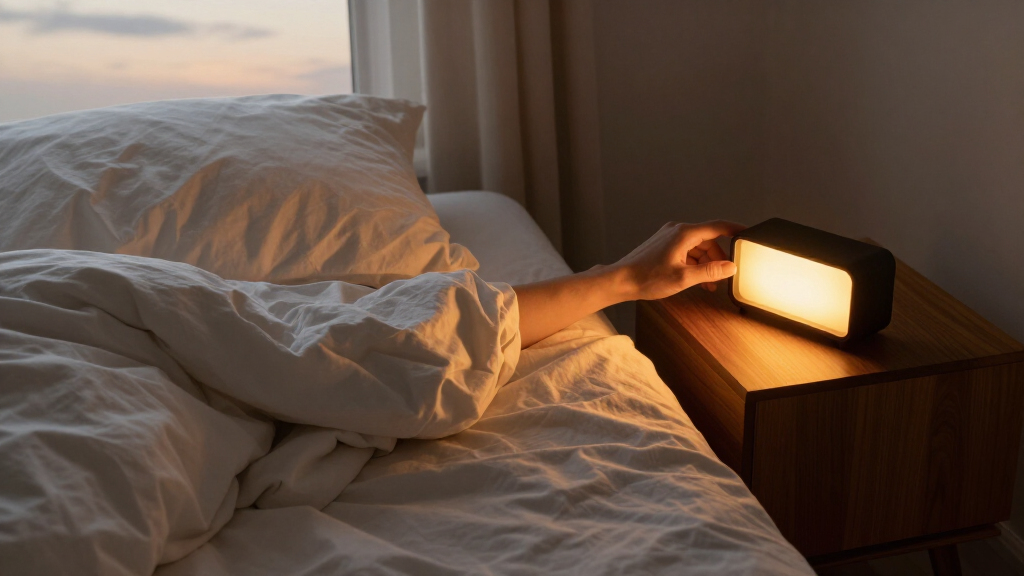
How We Picked
I evaluated each clock against four buyer-focused criteria: sunrise realism (brightness ceiling, color gradient smoothness, and duration flexibility), sound options (both alarm tones and sleep sounds), everyday usability (button layout, display dimming, how easy it is to change an alarm half-asleep), and value relative to what it replaces. That last criterion matters because many of these models double as white noise machines or bedside lamps, which changes the math considerably.
The ranking logic favors models that do the core job — waking you gently — exceptionally well before rewarding extras. That’s why the Philips SmartSleep sits at the top despite lacking app connectivity, and why feature-stuffed models with mediocre light gradients rank lower than simpler clocks with better sunrises. Models that frustrate daily use with confusing controls or overly bright displays were penalized regardless of their spec sheets.
Factors to Consider When Choosing Sunrise Alarm Clocks
Before picking a specific model, it helps to understand what actually drives satisfaction with a sunrise alarm — and where buyers most often go wrong.Light Intensity and Color Gradient
The single biggest differentiator is how bright the light gets at peak and how naturally the color shifts from deep red-orange to daylight white. Research on light therapy suggests effective wake-up lights reach 200–300 lux at the pillow, which most budget models under $40 simply cannot achieve. A cheap clock with a weak LED might create a pleasant glow but won’t actually suppress melatonin enough to shift your wake phase. Check whether the sunrise duration is adjustable too — a fixed 30-minute ramp may be too long for light sleepers and too short for heavy sleepers. The most common buyer mistake is choosing based on colorful ambient-light modes, which look fun in photos but have nothing to do with the wake-up function. Prioritize the sunrise simulation quality first and treat RGB party modes as a bonus.
Sound Machine Integration
Roughly half the clocks in this roundup double as white noise machines, and that combination makes sense — the same bedside device handles both falling asleep and waking up. But sound library depth varies enormously, from a handful of generic tones to the Dreamegg’s 29 curated sounds. If you already own a dedicated white noise machine you love, buying a combo unit adds redundancy and clutter. If you don’t, a combo model consolidates two devices and one fewer power outlet. Pay attention to whether sleep sounds auto-shut-off with a timer or run all night, since some sleepers need continuous masking noise. Also note that combo units almost always compromise on speaker size, so audiophiles should manage expectations.
App Connectivity: Help or Hassle
The Hatch models represent the app-connected approach, where you control everything from your phone and build bedtime routines. This works beautifully for people who enjoy tweaking settings and want guided wind-downs. The tradeoff is dependency — if the app changes, glitches, or you switch phones, your alarm clock becomes harder to operate. Button-driven clocks like the Philips or REACHER work identically ten years from now. My general guidance: choose app control only if you’ll actually use the extra features like sleep tracking or routine scheduling. If you just want to set an alarm and adjust brightness occasionally, physical buttons are faster and more reliable at 11 PM when you’re tired.
Display Brightness and Bedroom Compatibility
A wake-up light that keeps you awake at night defeats its own purpose. Look for models with a fully dimmable or blackout display mode, especially if you’re light-sensitive. Some clocks offer a dozen brightness levels but none dim enough for a dark bedroom, while others let you disable the display entirely. Partner compatibility matters here too — dual alarms only help if one person’s sunrise doesn’t blast the other side of the bed. Directional light spread differs as well: some models project broadly (waking both sleepers), while others focus light toward one side. Consider your room layout and whether the clock faces the right direction for light to actually reach your eyes.
Power, Backup, and Reliability
Most sunrise clocks in this price range are plug-in only, meaning a nighttime power outage silently kills your alarm. A few models include battery backup for timekeeping, though rarely for the full sunrise function. If you rely on an alarm for work, this is a real risk worth weighing — pairing any sunrise clock with a phone alarm as backup is cheap insurance. Also check the power adapter situation: some budget models ship with short cables or bulky wall warts that don’t fit bedside outlets neatly. Corded operation is unavoidable for bright light, so plan your outlet placement before buying rather than discovering the cable won’t reach.
Who Should Pay More
The jump from a $30 budget clock to a Philips or Hatch Restore 3 buys three things: better light engineering, better build quality, and better long-term reliability. Spend more if you’re a heavy sleeper who needs stronger light to actually wake, or if wake-up gentleness is part of managing seasonal low mood, where light quality matters most. Stick to budget models if you’re experimenting with the concept for the first time and aren’t sure the approach suits you. The middle tier — clocks like the Dekala or REACHER — makes sense when you want solid sunrise performance plus sound-machine convenience without app complexity. Avoid paying for features like FM radio or Bluetooth speakers unless you have a concrete use for them; they’re the most commonly regretted extras in this category.
Frequently Asked Questions
Do sunrise alarm clocks actually work for heavy sleepers?
They can, but light intensity is everything. Heavy sleepers need a clock that reaches high brightness at the end of the cycle — the Philips SmartSleep and Dekala’s pulse-wake feature are designed exactly for this, adding escalating vibration-like light pulses that jolt less abruptly than sound alone. Budget models with weak LEDs often fail heavy sleepers because the glow never gets intense enough to break through deep sleep stages. Pairing the sunrise with a gradually rising sound alarm dramatically improves the odds, which is why combo sound-machine models work well here. If you sleep through everything, position the clock within a foot or two of your pillow rather than across the room, since light efficacy drops sharply with distance.
Is the Hatch Restore 3 worth it over a basic sunrise clock?
It depends entirely on whether you’ll use the ecosystem beyond the sunrise. The Restore 3 justifies its premium through circadian lighting, guided wind-down routines, readable bedside content, and app-based scheduling that a $35 clock can’t match. If you struggle with the whole arc of your evening — not just waking up — it functions as a complete sleep routine device rather than an alarm. But if you only want gentle morning light, you’re paying several times the price of a capable budget option like the Te-Rich for features that will sit unused. The Restore 3 also requires comfort with app dependency, whereas basic clocks operate standalone forever. My rule of thumb: buy it if you’ve already tried and liked routine-building tools, skip it if you just hate your buzzer alarm.
Can a sunrise alarm clock replace a light therapy lamp?
Not quite, and the distinction matters if you’re addressing seasonal low energy. Light therapy lamps deliver 10,000 lux directed at your eyes for sustained 20–30 minute sessions, while even the best sunrise clocks top out around 300 lux optimized for gradual waking. They serve related but different purposes: sunrise clocks help regulate your wake timing, while therapy lamps deliver a therapeutic light dose. That said, waking to a strong sunrise simulation daily can meaningfully help with morning grogginess and consistent wake times, which indirectly supports mood. If seasonal affective symptoms are your primary concern, the Philips SmartSleep is the closest crossover option in this lineup, but consider it a supplement to, not a replacement for, a proper therapy lamp.
What’s the difference between the ecozy models and other combo clocks in this roundup?
The ecozy entries sit in the value tier of combined sunrise-plus-white-noise clocks, competing most directly with the Odokee and AFEXOA rather than with premium models like the REACHER or Philips. Compared with the Dreamegg, the ecozy models offer a smaller sound library but simpler controls, which some buyers actually prefer at bedtime. The main practical differences to check are sunrise duration flexibility, number of white noise options, and display dimming range — these vary model to model even within the same brand family. If you’re choosing between budget combo clocks, read specs on the sunrise brightness ceiling specifically, since that’s where cheap units cut corners most often. Sound quality across all sub-$50 combo clocks is broadly similar: serviceable masking noise, not music-grade audio.
Are Bluetooth speaker and FM radio features worth paying extra for?
Usually not, and here’s why: the speakers in clocks like the JALL and JBER are tuned for alarm tones and white noise, not music. You’ll get thin bass and noticeable distortion at moderate volume, which is fine for a podcast at low volume but disappointing for anything else. FM radio adds a genuine alarm-source option some listeners prefer, but reception quality depends heavily on your location and the clock’s tiny antenna. If audio matters to you, a better strategy is buying a simpler sunrise clock and pairing it with a dedicated smart speaker you already own. These features make sense only when they’re essentially free — bundled into a clock you’d buy anyway at the same price — rather than as deciding factors between models.
Conclusion
For best overall, the Philips SmartSleep Wake-Up Light delivers the most convincing sunrise experience in this lineup, with light quality that justifies its premium over generic models. For best value, the Te-Rich and ecozy models handle the core wake-up job and white noise at a fraction of the price — ideal if you’re testing whether sunrise waking suits you. The Hatch Restore 3 is the clear premium pick for buyers who want a complete bedside sleep system with routines and circadian lighting, while the Te-Rich or AFEXOA work best for beginners who want simplicity over features. For specific needs: heavy sleepers should look at the Dekala’s pulse-wake function, sound-focused sleepers at the Dreamegg’s 29-sound library, design-conscious buyers at the REACHER’s wood-grain aesthetic, and radio lovers at the JALL’s full-screen FM combo. Whatever you choose, prioritize sunrise realism and daily usability over spec-sheet extras — those two factors determined nearly every ranking gap in this comparison.
Evergreen bestsellers Picks
bestsellers
As an affiliate, we earn on qualifying purchases.