
To reset your clock without staring at the sun, use a light therapy box for 20-30 minutes every morning, ideally within an hour of waking, to boost alertness and set your internal clock. Incorporate dawn simulators or maximize natural light by opening curtains and positioning yourself near windows. Keep your environment bright, reflective, and consistent in your routine. If you want practical tips on optimizing your mornings, there’s more to explore below.

Get wellness gear delivered free with Prime
- Fast, free delivery on millions of items
- Prime Video, Amazon Music and more included
- Member-only deals all year
Key Takeaways
- Use light therapy boxes for 20-30 minutes each morning to mimic natural sunlight and regulate your circadian rhythm.
- Incorporate dawn simulators or bright indoor lighting with gradual brightness increases to wake up naturally.
- Maximize natural light in your home by positioning furniture near windows, removing obstructions, and using light-reflective surfaces.
- Wake early enough to get light exposure within the first hour after waking, ideally before 8 a.m., to reinforce your internal clock.
- Maintain consistent wake times daily and utilize light devices if natural light is insufficient to reset your sleep schedule effectively.
Using Light Therapy Boxes for Bright Mornings
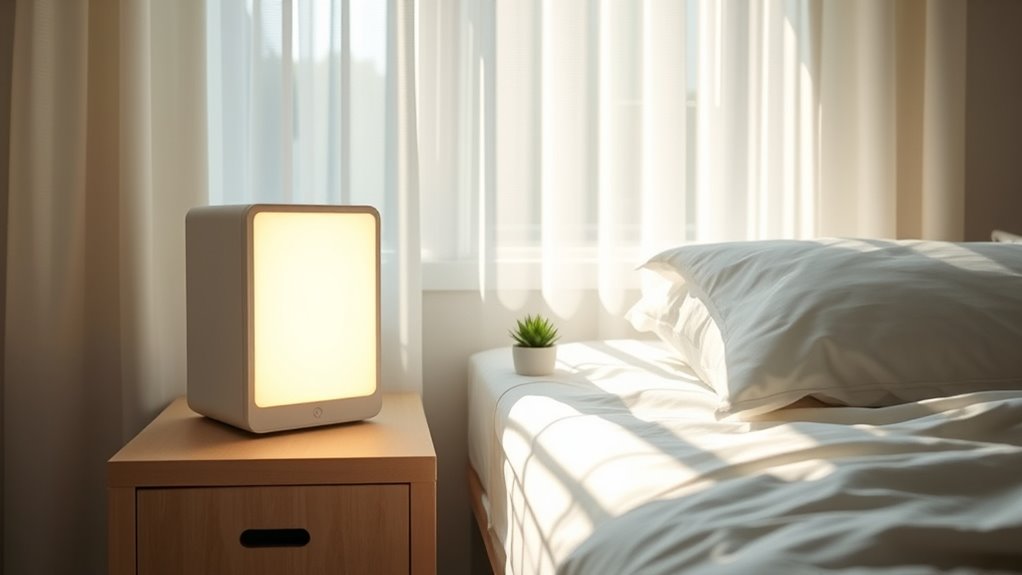
If you’re struggling to wake up feeling refreshed, light therapy boxes can be a game-changer. These devices emit bright, full-spectrum light that mimics natural sunlight, helping to regulate your circadian rhythm. By exposing yourself to light early in the morning, you signal your brain that it’s time to wake up, boosting alertness and mood. Using a light therapy box for about 20-30 minutes each morning can reset your internal clock, especially during shorter winter days or if you experience jet lag. Consistency is key—make it part of your routine to enjoy steady, energized mornings. Regular use can also help reduce symptoms of seasonal affective disorder and improve overall sleep quality. Incorporating connected lighting technology into your morning routine can enhance the experience and ensure proper timing. Proper timing and light intensity are crucial for effectiveness. Additionally, choosing the right light spectrum can maximize the benefits of light therapy. Understanding the role of natural light in circadian regulation can help you optimize your setup. With regular use, you’ll notice improvements in your sleep-wake cycle and overall morning freshness, making it easier to start your day right.
Incorporating Morning Brightening Routines in Your Home
Starting your day with a bright, energizing routine can considerably improve your morning mood and alertness. To incorporate morning brightening routines at home, focus on simple activities that boost your natural light exposure. For example, include a calming morning meditation near a window to start with natural light. Enhance your coffee rituals by sitting in a sunlit spot while enjoying your brew. Use sheer curtains to let in more daylight or open blinds immediately after waking. Consider adding reflective surfaces like mirrors to bounce light around your space. You can also set a timer for gentle, bright lighting to simulate sunrise. These small adjustments help reset your internal clock, making mornings more vibrant and preparing you for the day ahead. Additionally, choosing the right lighting fixtures can optimize light distribution and further energize your space. Incorporating natural light strategies like outdoor window placement can further enhance the benefits of morning brightening routines. For optimal effect, consider positioning your home windows to maximize daylight entry during morning hours. Leveraging light control options can also help tailor your environment to support your morning wake-up process.
Optimizing Your Bedroom Environment for Natural Light

To get the most natural light in your bedroom, start by maximizing your window exposure—keep blinds open and avoid obstructions. Use light-reflecting colors on walls and furniture to bounce sunlight throughout the space. Also, remove any heavy drapes or blockers that prevent sunlight from filling your room. Incorporating skincare ingredients like glycolic acid can improve your skin’s brightness and clarity, complementing your efforts to create a radiant environment. Additionally, understanding the importance of natural light benefits can help you design your space to enhance overall wellbeing and mood. Recognizing the positive effects of natural light on mental health can motivate you to optimize your room’s exposure to sunlight. Exploring lesser-known camping spots can also inspire you to incorporate natural elements into your living space, boosting your connection with nature and its rejuvenating effects.
Maximize Window Exposure
Maximizing window exposure begins with strategically positioning your bed and furniture to allow natural light to flow freely into your bedroom. Proper window placement ensures sunlight reaches your sleeping area, helping reset your internal clock. To enhance this, consider these tips:
- Use wide, unobstructed window areas for maximum light entry
- Keep window treatments light or sheer to maintain brightness
- Arrange furniture to avoid blocking incoming light
- Choose light-colored curtains or blinds to reflect more light
- Position your bed near windows to directly benefit from morning sunlight
- Incorporate herbal infusion tools or butter-making devices nearby to create a calming morning routine, enhancing your wake-up experience Herbal Infuser Hi.
Focusing on window placement and light color can dramatically improve daylight exposure. Natural light from well-placed windows helps regulate your circadian rhythm, boosting alertness and mood. Small adjustments make a big difference in waking up energized, especially when you consider window treatments that optimize light flow and consider ventilation considerations to ensure fresh air circulation. Additionally, selecting support breakfast options that are rich in proteins and nutrients can further help you wake up feeling refreshed and ready for the day. Incorporating natural light engineering techniques, such as skylights or light tubes, can further optimize light distribution in your space and enhance overall morning energy.
Use Light-Reflecting Colors
Using light-reflecting colors in your bedroom amplifies the natural sunlight that enters through your windows. Bright, airy shades like whites, creams, and pastels bounce light around the room, making it feel more open and inviting. Reflective surfaces, such as glossy paint, mirrors, or lacquered furniture, further enhance this effect by maximizing light diffusion. Color psychology suggests that lighter hues promote calmness and alertness, aligning perfectly with your goal to wake up refreshed. Incorporating Free Floating design principles allows for flexible arrangement and better light distribution. By choosing these colors and surfaces, you create an environment that naturally amplifies daylight without additional effort. Additionally, selecting Reflective surfaces strategically can significantly boost light reflection and distribution throughout your space. This simple yet effective strategy helps you enjoy brighter mornings and resets your internal clock more efficiently, as well as improving energy efficiency by reducing reliance on artificial lighting. Implementing light-reflecting colors also reduces the need for artificial lighting during the day, saving energy and creating a more sustainable environment.
Minimize Light Blockers
Ensuring your bedroom allows maximum natural light involves actively minimizing obstacles that block sunlight. Light pollution and clutter can markedly reduce the amount of morning light entering your space. Start by removing heavy drapes or furniture blocking windows. Use light-colored, reflective surfaces to bounce sunlight around the room. Consider installing blackout curtains that can be opened easily in the morning, rather than fully blocking light. Keep windowpanes clean to maximize clarity. Ultimately, trim outdoor foliage that shields your windows from the early sun. Incorporating light‑reflective surfaces can also help improve the quality of the natural light filtering in. Additionally, understanding sound healing science reveals that sound vibrations can influence our mood and relaxation, which can complement your morning routine. These steps help you reduce light blockers, making it easier to wake naturally and reset your internal clock. By creating an environment free of unnecessary barriers, you’ll enjoy brighter mornings and improved circadian rhythm regulation.
Timing Your Light Exposure for Maximum Effectiveness

To get the most from morning light, you need to time your exposure carefully. Knowing your ideal morning window, sticking to consistent times, and balancing duration and intensity can make a big difference. These factors help reset your internal clock and boost your energy all day long.
Optimal Morning Windows
The timing of your morning light exposure considerably impacts its effectiveness in boosting alertness and regulating your circadian rhythm. To maximize benefits, aim to get light within a certain window after waking. This window typically falls within the first hour of waking, ideally before 8 a.m., depending on your sleep routines. Proper timing helps reinforce your body’s internal clock and enhances your morning energy. Keep these tips in mind:
- Wake up early enough to catch natural light
- Avoid bright screens immediately after waking
- Time caffeine intake to align with light exposure
- Use light therapy if natural light isn’t available
- Maintain consistent wake times for ideal results
Consistent Exposure Timing
Timing your light exposure consistently each morning helps reinforce your body’s internal clock, making it easier to wake up feeling alert and energized. When you stick to a regular schedule, your sleep habits become more predictable, which supports healthy circadian rhythms. By exposing yourself to light at the same time every day, you signal to your brain that it’s time to wake up, helping you resist grogginess and improve sleep quality at night. Consistency is key; even slight variations can disrupt your internal clock and reduce the benefits of morning light. Over time, this routine trains your body to expect light at specific times, promoting a natural, synchronized sleep-wake cycle. Ultimately, regular exposure timing enhances your overall sleep habits and circadian rhythm harmony.
Duration and Intensity
Maximizing the benefits of morning light depends not only on when you get exposure but also on how long and how intensely you do so. To effectively reset your circadian rhythm and suppress melatonin, aim for bright light sessions of about 20-30 minutes. The more intense the light, the shorter your exposure can be, but it should still be sufficient to signal your body it’s daytime. Keep these tips in mind:
- Use at least 10,000 lux for ideal melatonin suppression
- Consistency in duration helps solidify your circadian rhythm
- Avoid prolonged exposure that can cause eye strain
- Adjust intensity based on your environment and needs
- Morning light should be direct but gentle on your eyes
Balancing duration and intensity ensures your internal clock resets efficiently without overstimulation.
Leveraging Dawn Simulators to Mimic Sunrise
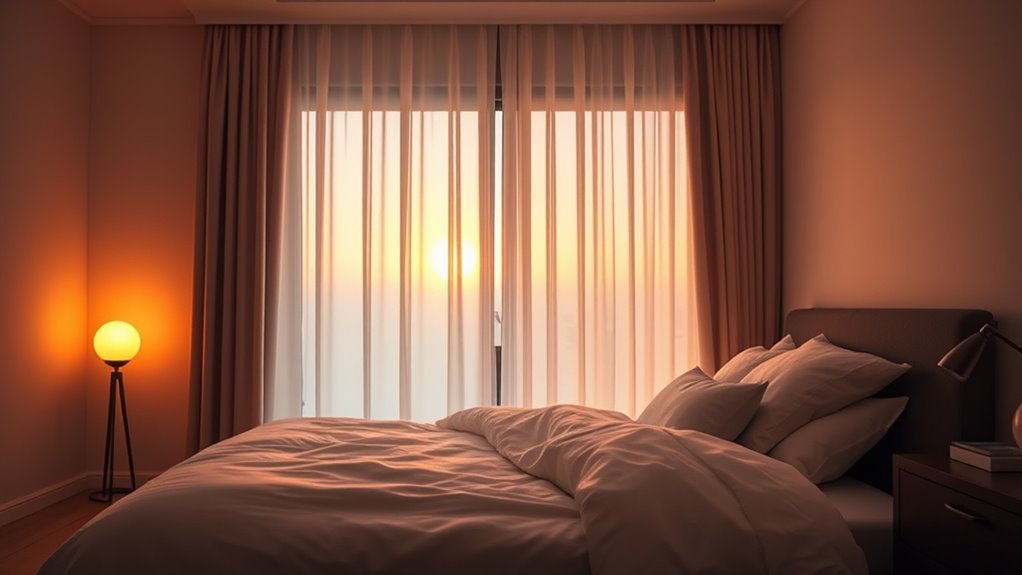
Dawn simulators are an effective way to wake up gently by mimicking the natural sunrise. They help reinforce your sleep hygiene and support your circadian rhythm, making mornings less abrupt. By gradually increasing light intensity, these devices signal your body to wake naturally, reducing grogginess. Consistent use aligns your internal clock, fostering better sleep patterns over time. To maximize benefits, consider the following:
| Feature | Benefit | Best Use |
|---|---|---|
| Adjustable Brightness | Customizes sunrise experience | Personal comfort |
| Gradual Light Increase | Mimics natural dawn | Supports circadian rhythm |
| Timer Function | Ensures timely wake-up | Maintains sleep hygiene |
Using dawn simulators helps you wake refreshed without disrupting your natural sleep cycle.
Adjusting Indoor Lighting to Support Your Wake-Up Cycle

Since your indoor lighting influences your body’s ability to wake naturally, adjusting it thoughtfully can considerably improve your morning routine, especially if you wake before sunrise or have inconsistent sleep schedules. To support your wake-up cycle, focus on optimizing color temperature and bulb placement. Use bulbs with a higher color temperature (around 5000K) to mimic daylight and promote alertness. Place bulbs strategically near your ceiling or task areas to ensure even lighting. Consider dimmable options to gradually increase brightness. Avoid harsh, cool lighting late at night, which can disrupt your circadian rhythm. Instead, switch to warmer tones in the evening. Proper bulb placement ensures light reaches your eyes directly, helping your body prepare for wakefulness naturally. Small adjustments can make a significant difference.
Combining Light Exposure With Morning Movement for Better Results

Combining light exposure with morning movement can markedly boost your alertness and set a positive tone for the day. When you move outdoors or near bright light, you enhance melatonin suppression, helping your body recognize it’s morning. This process supports circadian entrainment, aligning your internal clock with the natural day-night cycle. Incorporating activities like stretching, walking, or light exercise during daylight hours amplifies light’s effects, making it easier to wake up naturally. Moving while exposed to morning light helps reinforce your sleep-wake schedule, reducing grogginess and improving overall sleep quality. By syncing movement with light exposure, you optimize your body’s internal timing, leading to better mood, sharper focus, and a more energized start to your day.
Frequently Asked Questions
How Long Should I Use Light Therapy Boxes Each Morning?
You should use a light therapy box for about 20 to 30 minutes each morning. Make sure the light intensity is at least 10,000 lux for effective therapy. During this time, sit near the box with your eyes open, but don’t stare directly into the light. Consistency is key—use it daily to reset your internal clock, improve mood, and boost energy levels.
Can Natural Light Exposure Improve Sleep Quality?
Absolutely, natural light exposure can dramatically transform your sleep! Think of it as a superpower that boosts your light exposure benefits and perfectly syncs your circadian rhythm. When you soak up sunlight in the morning, you signal your body it’s time to wake up, leading to better sleep at night. Just a few minutes of outdoor light can make a huge difference, resetting your internal clock and improving your overall sleep quality.
Are Dawn Simulators Suitable for Shift Workers?
Dawn simulators can be effective for shift workers, but their success depends on consistent use and individual adaptation. They help improve circadian rhythm alignment, promoting better sleep and alertness during odd hours. While they support shift work adaptation, you should pair them with other strategies like maintaining a regular sleep schedule and controlling light exposure during off-hours. This combined approach maximizes dawn simulator effectiveness and eases your shift work challenges.
What Are the Best Indoor Plants to Enhance Natural Light?
Imagine transforming your space with indoor plants that boost natural light and air quality. You should choose decorative greenery like snake plants, pothos, or peace lilies, known for their resilience and air purification abilities. These plants not only brighten your environment but also improve airflow, making your home feel more vibrant and healthy. Don’t wait—bringing these plants in could be the secret to maximizing natural light indoors today.
How Can I Prevent Eye Strain When Using Bright Lights?
To prevent eye strain from bright lights, reduce blue light exposure by using screen filters or glasses, especially in the evening. Take regular breaks and do eye exercises, like blinking or focusing on distant objects, to relax your eyes. Adjust the brightness of your screens to match ambient lighting, and make certain your workspace is well-lit without glare. These habits help protect your eyes and keep you comfortable during prolonged use.
Conclusion
By harnessing the gentle power of light, you’re guiding your internal clock like a lighthouse steering a ship through calm seas. These simple hacks illuminate your mornings, helping you rise with purpose and clarity. Think of your light routines as rays of hope breaking through fog, clearing the way for energized, vibrant days. With each bright moment, you’re rewiring your rhythm, turning dawn into your personal symphony of renewal.
Halloween Picks
halloween
As an affiliate, we earn on qualifying purchases.