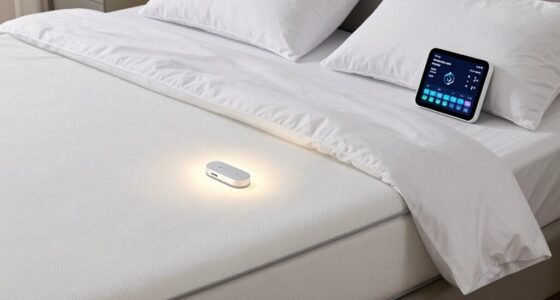
Choosing a non-contact sleep tracker that works under your mattress offers a comfortable, unobtrusive way to understand your sleep quality. For 2026, the market features a range of options—from radar-based devices to under-mattress sensors—each with distinct strengths and tradeoffs. The Contactless Smart Sleep Tracker stands out for its privacy and comprehensive insights, but it requires Wi-Fi and doesn’t support blood oxygen. Meanwhile, the Withings Sleep offers detailed sleep cycle data and snoring detection, but it’s less versatile for health tracking. To help you navigate these choices, I’ll compare five of the best options, highlighting who they suit best and their main limitations.

Get wellness gear delivered free with Prime
- Fast, free delivery on millions of items
- Prime Video, Amazon Music and more included
- Member-only deals all year
Key Takeaways
- Radar-based contactless trackers provide detailed insights without contact, but often require Wi-Fi and lack medical-grade features.
- Under-mattress sensors excel at monitoring sleep stages and snoring but may not support all health metrics like blood oxygen.
- Ease of setup and app usability vary widely; some devices are plug-and-play, others need precise placement under the mattress.
- Most options focus on sleep patterns and heart rate, with fewer offering comprehensive health monitoring like oxygen levels.
- Choosing the right device depends on your sleep habits, privacy preferences, and whether you need medical-grade data or wellness insights.
| Contactless Smart Sleep Tracker, Non-Wearable Sleep Monitor Device |  | Best Overall for Privacy and Detailed Insights | Technology: 60GHz millimeter-wave radar | Connectivity: Wi-Fi (2.4GHz only) | Supported Devices: Smartphone app | VIEW ON AMAZON | See Our Full Breakdown |
| Contactless Sleep Tracker, Non-Wearable Bedside Sleep Monitor |  | Best for Long-Term Trend Insights | Technology: 60GHz radar sensing | Monitoring Type: Non-wearable, contactless | Connectivity: Wi-Fi 2.4GHz only | VIEW ON AMAZON | See Our Full Breakdown |
| Withings Sleep – Under Mattress Sleep Tracking Pad with Sleep Cycle Analysis |  | Best for Sleep Phases and Snoring Detection | Type: Sleep tracking pad | Sensor technology: Pneumatic sensor | Features: Snoring detection, sleep cycle analysis, heart rate monitoring | VIEW ON AMAZON | See Our Full Breakdown |
| OZI Smart Sleep Tracker, Non-Wearable Contactless Under-Sheet Sleep Monitor |  | Best for Multi-Person Household Monitoring | Sensor Type: Under-sheet contactless sensor | Compatibility: iOS and Android app | Sleep Metrics: Stages, heart rate, breathing, movement, sleep score | VIEW ON AMAZON | See Our Full Breakdown |
| Non-Wearable Smart Sleep Tracker, Contactless Sleep Monitor Device |  | Best for Ambient Environment and Lifestyle Integration | Technology: Millimeter-wave radar | Connectivity: Wi-Fi 2.4GHz | Features: Sleep tracking, heart rate, breathing, stages, ambient lighting, white noise | VIEW ON AMAZON | See Our Full Breakdown |
| non contact sleep trackers under mattress | Technology | Connectivity |
|---|---|---|
| Contactless Smart Sleep Tracke | 60GHz millimeter-wave radar | Wi-Fi (2.4GHz only) |
| Contactless Sleep Tracker | 60GHz radar sensing | Wi-Fi 2.4GHz only |
| Withings Sleep | — | — |
| OZI Smart Sleep Tracker | — | — |
| Non-Wearable Smart Sleep Track | Millimeter-wave radar | Wi-Fi 2.4GHz |
More Details on Our Top Picks
Contactless Smart Sleep Tracker, Non-Wearable Sleep Monitor Device
Compared with other radar-based options, this model excels in privacy because it relies solely on radar technology without cameras. It offers comprehensive sleep data, including stages, duration, and wellness trends, through an intuitive app. Its privacy focus makes it ideal for sensitive sleepers. However, its dependence on Wi-Fi 2.4GHz and lack of blood oxygen support limit its medical applicability. It’s better suited to users seeking detailed wellness insights without contact or wearables, but less so for those needing advanced health metrics or 5GHz Wi-Fi compatibility.
Pros:- Contactless and non-wearable for maximum comfort
- Provides comprehensive sleep and wellness insights
- Easy-to-understand app reports with long-term trend analysis
Cons:- Requires Wi-Fi connection, limited to 2.4GHz networks
- Does not support blood oxygen monitoring
- No support for 5GHz Wi-Fi networks
Best for: Privacy-conscious users wanting detailed sleep insights without wearables
Not ideal for: Users needing blood oxygen monitoring or 5GHz Wi-Fi support
- Technology:60GHz millimeter-wave radar
- Connectivity:Wi-Fi (2.4GHz only)
- Supported Devices:Smartphone app
- Power:Plug-in device
- Privacy:Radar-based sensing, no camera
- Additional Features:Sleep insights, wind-down features, family sharing
Our verdict“This device offers a privacy-focused, radar-based approach perfect for detailed sleep analysis, but with limited health metrics and Wi-Fi restrictions.”
Contactless Sleep Tracker, Non-Wearable Bedside Sleep Monitor
Similar to the first pick, this radar-based bedside monitor offers contactless sleep, breathing, and movement tracking. Its strength lies in providing ongoing sleep trend data, making it suitable for users interested in tracking their wellness over months. Its simple app interface helps interpret patterns without requiring medical knowledge. However, it shares the same Wi-Fi limitations and lack of blood oxygen support, making it less ideal for users seeking comprehensive health metrics. Its bedside placement also means it’s less portable and more dependent on consistent environment conditions.
Pros:- Contactless and comfortable to use
- Provides detailed sleep trend insights over time
- User-friendly app with ongoing support
Cons:- Does not support blood oxygen monitoring
- Limited to 2.4GHz Wi-Fi
- Not suitable for medical diagnostics
Best for: Users seeking long-term sleep trend analysis and wellness monitoring
Not ideal for: Those needing blood oxygen or medical-grade data
- Technology:60GHz radar sensing
- Monitoring Type:Non-wearable, contactless
- Connectivity:Wi-Fi 2.4GHz only
- Supports:Sleep duration, breathing, movement
- Not Support:Blood oxygen
- Intended Use:General wellness
Our verdict“A solid choice for wellness-focused users interested in long-term sleep patterns without contact or wearables, but lacking advanced health metrics.”
Withings Sleep – Under Mattress Sleep Tracking Pad with Sleep Cycle Analysis
This under-mattress sensor emphasizes sleep stage detection and snoring, with additional heart rate monitoring for cardiovascular health. Its pneumatic sensor technology makes it a reliable choice for users wanting detailed sleep cycle data. However, the need for placement under the mattress can be inconvenient for some bed types, and it lacks real-time alerts or app-based customization. It’s more of a passive data collector than a real-time feedback tool, which might limit its appeal for users seeking immediate sleep optimization.
Pros:- Detailed sleep cycle and snoring detection
- Accurate heart rate monitoring
- Helps improve sleep quality through insights
Cons:- Requires placement under mattress, which may not fit all beds
- No display, relies on app for data
- Limited compatibility with some apps
Best for: Sleepers interested in sleep phases, snoring, and heart health
Not ideal for: Those who prefer real-time alerts or require health metrics like oxygen saturation
- Type:Sleep tracking pad
- Sensor technology:Pneumatic sensor
- Features:Snoring detection, sleep cycle analysis, heart rate monitoring
Our verdict“Ideal for users who want detailed sleep and cardiovascular insights but don’t mind a passive device that requires under-mattress placement.”
OZI Smart Sleep Tracker, Non-Wearable Contactless Under-Sheet Sleep Monitor
The OZI Sleep Tracker stands out for its versatility, tracking sleep stages, heart rate, breathing, and movement without wearables or cameras. Its easy setup and support for both iOS and Android make it appealing for families. The device provides real-time alerts and detailed sleep scores, making it suitable for households with children or multiple users. Its main tradeoff is the need to place the sensor under the mattress, which could be inconvenient for some. It also focuses solely on sleep metrics, without broader health data like oxygen saturation.
Pros:- Contactless, non-wearable sleep tracking
- Supports multiple users and real-time alerts
- Easy setup with no subscription needed
Cons:- Requires placement under mattress
- Limited to sleep-related metrics
- Dependent on app connectivity
Best for: Families or households wanting multi-user sleep monitoring
Not ideal for: Those needing medical-grade data or oxygen saturation metrics
- Sensor Type:Under-sheet contactless sensor
- Compatibility:iOS and Android app
- Sleep Metrics:Stages, heart rate, breathing, movement, sleep score
- Setup:Easy, no subscription required
Our verdict“A flexible, household-friendly option for multi-user sleep tracking that’s easy to set up and use, though it doesn’t offer advanced health metrics.”
Non-Wearable Smart Sleep Tracker, Contactless Sleep Monitor Device
This device combines radar technology with ambient features such as white noise and ambient lighting, creating a relaxing sleep environment. It tracks sleep quality, heart rate, breathing, and stages, providing detailed reports and long-term trends. Its added features make it more than just a sleep monitor, aiming to improve sleep habits through environmental control. However, it only supports Wi-Fi 2.4GHz, and its placement and environment need to be stable for accurate data.
Pros:- Non-wearable, contactless tracking
- Includes ambient lighting and white noise
- Provides detailed sleep and trend reports
Cons:- Supports only 2.4GHz Wi-Fi
- Not for medical use
- Requires a stable environment for best results
Best for: Users who want a relaxing bedtime environment combined with sleep tracking
Not ideal for: Those needing medical-grade or oxygen saturation data
- Technology:Millimeter-wave radar
- Connectivity:Wi-Fi 2.4GHz
- Features:Sleep tracking, heart rate, breathing, stages, ambient lighting, white noise
Our verdict“This model suits users looking to combine sleep tracking with ambient and relaxation features, but falls short for medical or oxygen monitoring needs.”

How We Picked
Our selection process focused on devices designed specifically for non-contact, under-mattress or contactless sensing that operate without wearables. We prioritized technologies like radar and pneumatic sensors for their unobtrusive nature, and evaluated ease of use, data accuracy, privacy features, and long-term trend analysis. Devices with support for multiple users and clear app reporting earned higher scores, while those lacking connectivity options or advanced metrics were rated lower. Our goal was to identify options that balance comfort, data richness, and practicality for everyday sleep monitoring.
| non contact sleep trackers under mattress | Connectivity |
|---|---|
| Contactless Smart Sleep Tracke | Wi-Fi (2.4GHz only) |
| Contactless Sleep Tracker | Wi-Fi 2.4GHz only |
| Withings Sleep | — |
| OZI Smart Sleep Tracker | — |
| Non-Wearable Smart Sleep Track | Wi-Fi 2.4GHz |
Factors to Consider When Choosing Non Contact Sleep Trackers Under Mattress
When selecting a non-contact sleep tracker under your mattress, consider what features matter most to you: detailed sleep stage analysis, health metrics like blood oxygen, ease of setup, privacy concerns, or additional features like ambient lighting. The market offers radar devices and under-mattress sensors, each with unique tradeoffs. Understanding these differences helps you choose a device that aligns with your sleep goals and household setup.
Technology Type
Radar-based contactless trackers use millimeter-wave signals to monitor sleep without contact, offering high privacy and detailed data but often requiring Wi-Fi and lacking advanced health metrics. Under-mattress sensors rely on pneumatic or other technologies to track sleep stages and snoring, providing reliable data but needing placement under the mattress, which might be inconvenient for some beds.
Connectivity and Compatibility
Most devices rely on Wi-Fi, often limited to 2.4GHz networks. Check whether your home Wi-Fi supports the device’s requirements, especially if you have a dual-band system. Compatibility with iOS or Android apps is essential for data access. Some devices support multiple users, making them suitable for families, while others are designed for individual use.
Health Metrics and Features
If you want insights beyond sleep patterns—such as blood oxygen, real-time alerts, or cardiovascular data—verify whether the device supports these features. Many radar devices focus on sleep stages, while under-mattress sensors may include snoring and heart rate but lack oxygen monitoring. Balance your needs for medical-grade data versus general wellness insights.
Ease of Use and Setup
Ease of installation varies. Some devices are plug-and-play, while others require precise placement under the mattress or on the bedside table. Consider whether you prefer a device that’s permanently set up or one you can move easily. App usability and data presentation also influence how effectively you can interpret your sleep data over time.
Frequently Asked Questions
Are non-contact sleep trackers accurate?
Many non-contact sleep trackers, especially those using radar technology, provide reasonably accurate data for sleep stages and duration, comparable to contact-based devices in typical use. However, they are generally not medical devices, so their readings should be considered wellness insights rather than definitive health diagnoses.
Can these devices monitor blood oxygen levels?
Most non-contact radar-based devices and under-mattress sensors do not support blood oxygen monitoring. If oxygen saturation is important for your health or sleep quality, you might need a dedicated pulse oximeter or a device explicitly designed for that metric.
Do I need Wi-Fi for these devices?
Yes, most radar and under-mattress sensors rely on Wi-Fi connectivity to transmit data to your smartphone app. Devices supporting only 2.4GHz Wi-Fi may face compatibility issues with some home networks, so check your Wi-Fi setup before purchase.
Are these devices suitable for medical use?
While these devices can provide valuable sleep insights, they are generally not approved for medical diagnosis. If you need clinically validated data or medical-grade monitoring, consult a healthcare provider and consider devices explicitly designed for medical use.
How do I set up an under-mattress sensor?
Setup usually involves placing the sensor under your mattress at a specific spot, often near the head or foot, depending on the device. Follow the manufacturer’s instructions carefully to ensure accurate readings. Keep the environment stable and free from vibrations, which can affect data quality.
Conclusion
For those prioritizing privacy, detailed wellness insights, and ease of use, radar-based contactless trackers like the Contactless Smart Sleep Tracker are excellent choices. Families or households seeking multi-user support and ambient features might prefer the OZI Sleep Tracker. Users looking for detailed sleep cycle and snoring analysis should consider the Withings Sleep. However, anyone needing medical-grade metrics like blood oxygen should explore dedicated devices outside this list. Ultimately, your choice depends on your sleep monitoring goals, household setup, and whether you’re comfortable with placement and connectivity requirements.