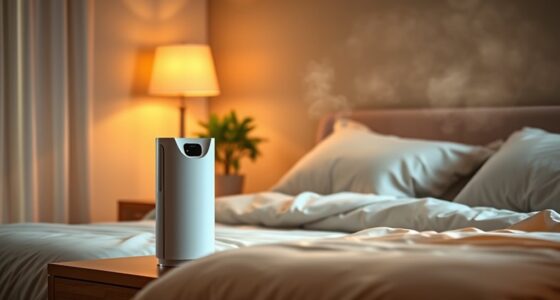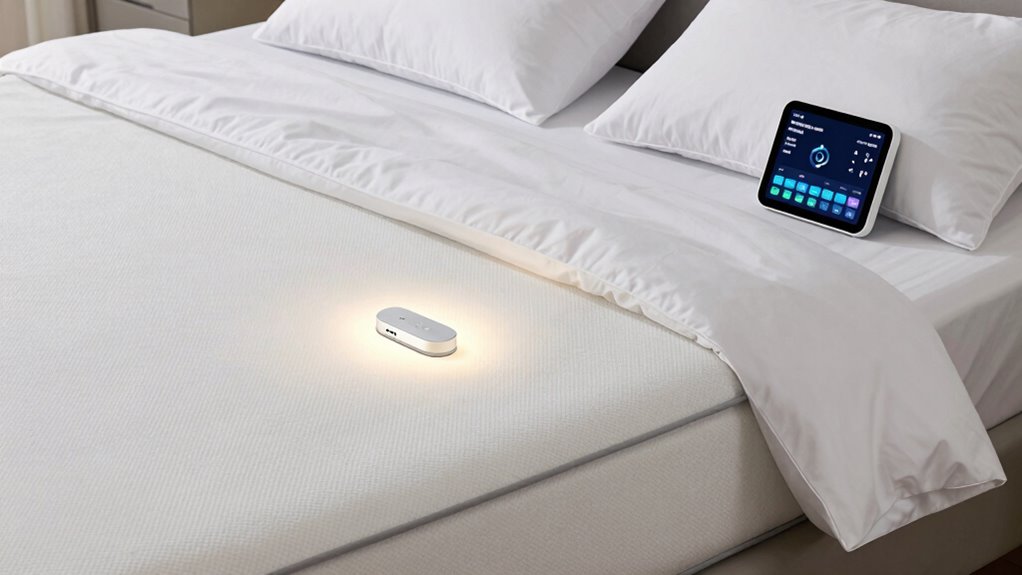

If you want detailed sleep data without strapping a watch to your wrist every night, under-mattress sleep sensors are the most comfortable way to get it — but the category has split into two very different camps, and picking the wrong one wastes money. Some of these products, like the Withings Sleep, are built for personal sleep analytics: sleep stages, heart rate, breathing, and a nightly score. Others, like the Sleep Signal by Care Daily, are really caregiving tools designed to tell you when an aging parent got out of bed or had a restless night. There are also add-on mats like the FutureCare Sleeping Mat Sensor, which is nearly useless unless you already own its parent system. In this guide I break down what each sensor actually does, who it fits, and where the tradeoffs bite, so you can match the product to your real goal — whether that’s optimizing your own rest or keeping an eye on someone else’s safety.

Get wellness gear delivered free with Prime
- Fast, free delivery on millions of items
- Prime Video, Amazon Music and more included
- Member-only deals all year
Key Takeaways
- The Withings Sleep is the most complete all-around pick because it combines sleep-stage analysis, heart rate, snoring detection, and IFTTT smart-home automation in one mat.
- The OZI Smart Sleep Tracker is the best value for detailed biometrics, with no monthly subscription and caregiver-style alerts included.
- The Sleep Signal by Care Daily is a bedside radar, not a pad, making it the best choice for bed-exit alerts and shared caregiver circles.
- The FutureCare Sleeping Mat Sensor cannot function on its own — only buy it if you already run a FutureCare HomeKit system.
- The Sleep Detection Pad is a monitoring accessory rather than a consumer tracker; expect raw vital-sign data and limited app polish.
| Withings Sleep – Under-Mattress Sleep Tracking Pad with Sleep Cycle Analysis |  | Best Overall | Type: Under-mattress sleep sensor pad | Tracks: Deep, light and REM sleep, snoring, breathing disturbances, heart rate | Connectivity: Wi-Fi sync to Health Mate app | VIEW ON AMAZON | See Our Full Breakdown |
| OZI Smart Sleep Tracker, Non-Wearable Contactless Under-Sheet Sleep Monitor |  | Best Value | Type: Under-sheet contactless sensor pad | Tracks: Sleep stages, heart rate, breathing rate, movement, sleep duration, time to fall asleep, Sleep Score | Alerts: Bed exit, unusual movement, heart and breathing changes | VIEW ON AMAZON | See Our Full Breakdown |
| Sleep Signal Powered by Care Daily – Smart Bed Sensor for Caregivers, Restlessness & Nighttime Changes |  | Best for Caregivers | Type: Bedside radar sleep sensor | Tracks: Bed presence, restlessness, nighttime activity, time out of bed | Alerts: Bed exits, unusual nighttime patterns, extended absence from bed | VIEW ON AMAZON | See Our Full Breakdown |
| FutureCare Sleeping Mat Sensor |  | Best as an Ecosystem Add-On | Type: Under-mattress presence and movement mat | Tracks: Bed presence and overnight movement | Requirement: Active FutureCare HomeKit system | VIEW ON AMAZON | See Our Full Breakdown |
| Sleep Detection Pad, Vital Sign Health Monitoring Pad, Real-time Monitoring of Sleep Status |  | Best for Professional Monitoring Setups | Type: Vital-sign monitoring sleep detection pad | Tracks: Sleep status, breathing assistance data, in-bed/out-of-bed state | Response: Real-time with no timing delay or false triggers | VIEW ON AMAZON | See Our Full Breakdown |
| under mattress sleep sensor | Type | Tracks | Wearable required | Setup |
|---|---|---|---|---|
| Withings Sleep | Under-mattress sleep sensor pad | Deep, light and REM sleep, snoring, breathing disturbances, heart rate | No | One-time placement under mattress |
| OZI Smart Sleep Tracker | Under-sheet contactless sensor pad | Sleep stages, heart rate, breathing rate, movement, sleep duration, time to fall asleep, Sleep Score | No | Place under sheet and pair app in minutes |
| Sleep Signal Powered by Care D | Bedside radar sleep sensor | Bed presence, restlessness, nighttime activity, time out of bed | — | Place near bed, plug in, pair app |
| FutureCare Sleeping Mat Sensor | Under-mattress presence and movement mat | Bed presence and overnight movement | No | — |
| Sleep Detection Pad | Vital-sign monitoring sleep detection pad | Sleep status, breathing assistance data, in-bed/out-of-bed state | — | — |
More Details on Our Top Picks
Withings Sleep – Under-Mattress Sleep Tracking Pad with Sleep Cycle Analysis
The Withings Sleep earns the top spot because it is the only product in this lineup that delivers clinically framed sleep-stage analysis alongside genuine smart-home integration. It slides under the mattress once, syncs over Wi-Fi automatically every night, and produces a full breakdown of deep, light, and REM sleep, plus snoring, heart rate, and breathing disturbances. Compared with the OZI tracker, which covers similar metrics, Withings stands out for its polished Health Mate ecosystem and its IFTTT automation — you can dim the lights when you get into bed or nudge the thermostat when you wake up, something no other pick here offers.
The tradeoffs are real, though. The mattress-thickness window of 4 to 15 inches excludes some plush pillow-top setups, and all your data lives inside the Health Mate app with no way to export a local dashboard. For buyers who want sleep science rather than caregiving alerts, this model makes the most sense; for anyone monitoring an elderly parent’s bed exits, the Sleep Signal covers that job better.
Pros:- Fully contactless tracking of sleep stages, heart rate, snoring, and breathing disturbances
- One-time setup with automatic nightly syncing over Wi-Fi
- IFTTT integration enables lights-out and thermostat automations
- Mature Health Mate app with long-term trend views
Cons:- Only compatible with mattresses between 4 and 15 inches thick
- Data viewing is locked to the Health Mate app
Best for: Sleep optimizers who want detailed nightly analytics without wearing anything to bed
Not ideal for: Caregivers primarily seeking bed-exit alerts, or owners of mattresses outside the 4–15 inch range
- Type:Under-mattress sleep sensor pad
- Tracks:Deep, light and REM sleep, snoring, breathing disturbances, heart rate
- Connectivity:Wi-Fi sync to Health Mate app
- Smart home:IFTTT integrations
- Compatible mattress thickness:4 to 15 inches
- Wearable required:No
- Setup:One-time placement under mattress
Our verdict“The most complete and polished under-mattress tracker for understanding your own sleep, with smart-home perks no rival here matches.”
OZI Smart Sleep Tracker, Non-Wearable Contactless Under-Sheet Sleep Monitor
The OZI Smart Sleep Tracker sits under your sheet rather than under your mattress, and that small placement difference defines its appeal: it works with virtually any bed, including thin mattresses and kids’ beds that would flunk the Withings thickness requirement. Despite the lower positioning in price, it covers a surprisingly deep metric set — sleep stages, heart rate, breathing rate, movement, time to fall asleep, and a nightly Sleep Score — and it throws in real-time caregiver alerts for bed exits and unusual vital-sign changes at no extra cost. Compared with the Withings Sleep, you give up IFTTT automation and the more refined app experience, but you gain flexibility for households, since OZI explicitly supports adults, children 5+, and older parents on the same hardware.
The compromise is trust in the app layer: the biometrics come from a thin pad under the sheet, which can shift during the night if bedding gets rearranged, and the interface lacks the long-term trend polish of Health Mate. Still, for subscription-free sleep tracking for the whole household, this pick makes the most sense.
Pros:- No subscription fees and no wearable to charge
- Tracks sleep stages, heart rate, breathing rate, and a nightly Sleep Score
- Real-time alerts for bed exits and unusual vital-sign patterns
- Works for adults, kids 5+, couples, and elderly family members
Cons:- Under-sheet placement means the pad can shift with bedding changes
- App lacks the refinement and long-term trends of more established platforms
Best for: Budget-conscious families who want multi-person tracking with no monthly fees
Not ideal for: Data purists who want a mature app ecosystem and smart-home automation
- Type:Under-sheet contactless sensor pad
- Tracks:Sleep stages, heart rate, breathing rate, movement, sleep duration, time to fall asleep, Sleep Score
- Alerts:Bed exit, unusual movement, heart and breathing changes
- Subscription:None required
- Wearable required:No
- Suitable users:Adults, kids 5+, couples, seniors
- Setup:Place under sheet and pair app in minutes
Our verdict“The best bang-for-buck option, pairing household-wide tracking with caregiver alerts and zero recurring costs.”
Sleep Signal Powered by Care Daily – Smart Bed Sensor for Caregivers, Restlessness & Nighttime Changes
The Sleep Signal by Care Daily takes a different technical approach from everything else here: instead of a pad under the mattress, it uses a discreet bedside radar sensor that detects bed presence, restlessness, and nighttime activity from across the room. For adult children watching over aging parents, that design is genuinely better suited than a mat, because there is nothing under the mattress to install, shift, or be felt through thin bedding — you plug it in, pair the app, and it works. Its signature feature is shared caregiver circles: family, friends, and neighbors can all receive bed-exit and extended-time-out-of-bed alerts, so one person doesn’t carry overnight monitoring alone. Compared with the OZI, which offers similar alerts, Sleep Signal leans harder into daily summaries and trendlines designed to inform check-ins rather than personal sleep scores.
The drawback is that it is not a sleep-stage tracker. You get restlessness and presence patterns, not REM percentages or heart-rate curves, so anyone hoping for Withings-style analytics will be disappointed. It is also iOS/Android app dependent, with no smart-home hooks.
Pros:- Bed-exit and unusual-pattern alerts delivered in real time
- Shared caregiver circles distribute monitoring across family and neighbors
- Radar design means no under-mattress installation and nothing to wear or charge
- No camera or microphone, preserving dignity and privacy
Cons:- Does not provide detailed sleep stages or heart-rate analytics
- Requires the companion app and offers no smart-home integrations
Best for: Adult children and caregivers monitoring an aging parent’s nighttime safety
Not ideal for: Users who want detailed sleep-stage and biometric data about their own sleep
- Type:Bedside radar sleep sensor
- Tracks:Bed presence, restlessness, nighttime activity, time out of bed
- Alerts:Bed exits, unusual nighttime patterns, extended absence from bed
- App:iOS and Android with daily summaries and trendlines
- Sharing:Invite family, friends, and neighbors to shared updates
- Privacy:No camera, microphone, or wearable
- Setup:Place near bed, plug in, pair app
Our verdict“The strongest choice when the goal is safer nights for an elderly loved one rather than sleep optimization for yourself.”
FutureCare Sleeping Mat Sensor
My placement of the FutureCare Sleeping Mat Sensor near the bottom is not a judgment of its hardware — it is a warning about its dependency. This mat is an add-on for the FutureCare HomeKit system and will not function on its own, which makes it fundamentally different from every other product in this roundup. If you already run a FutureCare setup in a parent’s home, the mat adds under-mattress presence and movement monitoring with zero interaction required: no buttons, no charging, and no daily routine, with a slim flexible design that stays invisible under the mattress. In that context, it is a clean way to extend overnight insight into another room.
But if you are starting from scratch, buying this mat means also buying the entire FutureCare ecosystem, and the standalone picks above — particularly the Sleep Signal for caregiving or the OZI for tracking — deliver comparable monitoring with far less commitment. Treat this as an expansion sensor, not a first purchase.
Pros:- Truly passive monitoring with no buttons, charging, or daily setup
- Slim, flexible mat stays hidden and does not affect comfort
- No cameras or wearables involved
- Integrates natively with an established FutureCare home monitoring setup
Cons:- Completely non-functional without an active FutureCare system
- No independent app, sleep scoring, or smart-home integration of its own
Best for: Existing FutureCare HomeKit owners expanding coverage to another bed or room
Not ideal for: Anyone without a FutureCare system, or buyers expecting a standalone sleep tracker
- Type:Under-mattress presence and movement mat
- Tracks:Bed presence and overnight movement
- Requirement:Active FutureCare HomeKit system
- Interaction required:None — runs automatically in background
- Design:Slim, flexible, discreet under-mattress mat
- Wearable required:No
Our verdict“A capable presence sensor only if the FutureCare ecosystem is already in place — skip it otherwise.”
Sleep Detection Pad, Vital Sign Health Monitoring Pad, Real-time Monitoring of Sleep Status
The Sleep Detection Pad is the most utilitarian product here, and I mean that literally: its own description points at hospitals, offices, and care facilities as much as bedrooms. What it offers is real-time vital-sign monitoring — breathing assistance testing, in-bed/out-of-bed detection with no false triggering, and non-contact vital-signs collection — packaged in a thin, rollable, easy-to-carry mat. Compared with the Withings Sleep, there is no consumer sleep-stage narrative or nightly score; this is a raw detection layer meant to feed into a remote care monitoring system, which is exactly why it suits professional or multi-room deployments where portability and instant response matter more than app polish.
For a typical home user, that focus becomes the drawback. There is no friendly consumer dashboard, no smart-home tie-in, and no household-sharing feature like the Sleep Signal’s caregiver circles. Buy it if you need a durable, rollable sensor for a care environment; buy almost anything else above it if you want to understand your own sleep.
Pros:- Real-time response with no timing delay or false triggering
- Thin, lightweight, and rollable for easy transport between rooms or sites
- Non-contact vital-sign collection including assisted breathing testing
- Reliable in-bed/out-of-bed detection for care workflows
Cons:- No consumer-friendly app, sleep scoring, or smart-home integration
- Documentation and support are geared toward professional applications
Best for: Care facilities and remote-monitoring setups that need a portable, real-time detection pad
Not ideal for: Everyday consumers wanting an app-driven sleep score and trend history
- Type:Vital-sign monitoring sleep detection pad
- Tracks:Sleep status, breathing assistance data, in-bed/out-of-bed state
- Response:Real-time with no timing delay or false triggers
- Detection method:Non-contact vital-signs collection
- Portability:Thin, lightweight, rollable
- Intended environments:Hospitals, bedrooms, offices, care settings
Our verdict“A workhorse detection pad for care environments, but overkill and under-explained for home sleep tracking.”

How We Picked
Since under-mattress sensors all look like thin mats or small boxes, I focused on the differences that actually change the ownership experience. First, I separated products by primary purpose: personal sleep analytics versus caregiving and safety monitoring. A product that excels at one is usually mediocre at the other, and that distinction drives this ranking more than any single spec.
Second, I weighed data depth and presentation. A mat that captures breathing and heart rate is only useful if the app turns it into readable sleep stages, trends, and scores rather than raw numbers. Third, I evaluated setup friction and recurring costs — whether the device works standalone, whether a subscription is required, and whether it needs to be charged or paired daily. Fourth, I factored in privacy design, favoring sensors with no cameras or microphones. Finally, I considered ecosystem fit, including smart-home integrations and the ability to share data with family members, because overnight monitoring is often a shared responsibility.
| under mattress sleep sensor | Type | Tracks | Setup |
|---|---|---|---|
| Withings Sleep | Under-mattress sleep sensor pad | Deep, light and REM sleep, snoring, breathing disturbances, heart rate | One-time placement under mattress |
| OZI Smart Sleep Tracker | Under-sheet contactless sensor pad | Sleep stages, heart rate, breathing rate, movement, sleep duration, time to fall asleep, Sleep Score | Place under sheet and pair app in minutes |
| Sleep Signal Powered by Care D | Bedside radar sleep sensor | Bed presence, restlessness, nighttime activity, time out of bed | Place near bed, plug in, pair app |
| FutureCare Sleeping Mat Sensor | Under-mattress presence and movement mat | Bed presence and overnight movement | — |
| Sleep Detection Pad | Vital-sign monitoring sleep detection pad | Sleep status, breathing assistance data, in-bed/out-of-bed state | — |
Factors to Consider When Choosing Under Mattress Sleep Sensors
Before choosing an under-mattress sleep sensor, it helps to understand what separates a great personal tracker from a great caregiving tool — because almost no product does both well.Know Your Primary Goal
The single biggest decision is whether you want sleep analytics for yourself or safety monitoring for someone else. Personal trackers like the Withings Sleep and OZI produce sleep stages, heart-rate curves, and nightly scores. Caregiving tools like the Sleep Signal prioritize bed-exit alerts, restlessness trends, and shared notifications. Buying the wrong type leaves you either drowning in data you don’t need or missing the alerts you actually wanted.
Sensor Placement and Mattress Compatibility
Placement affects both accuracy and compatibility. Under-mattress pads like the Withings Sleep are invisible and stable but require a compatible mattress thickness — in this case 4 to 15 inches. Under-sheet pads like the OZI work with nearly any bed but can shift when bedding is changed. Bedside radar units like the Sleep Signal avoid the mattress entirely, which is ideal for guest rooms or a parent’s home where you’d rather not move heavy furniture.
Subscriptions and Ecosystem Lock-In
Some trackers remain fully functional without recurring fees, as the OZI does, while others tie you to a proprietary app or, in the FutureCare mat’s case, an entire hardware ecosystem that won’t work standalone. Check whether the app, alerts, and data history are included with purchase, and whether the data can be shared with family members or exported later.
Alerts and Sharing
If overnight safety is the priority, look for real-time bed-exit alerts and the ability to invite multiple people to receive them. The Sleep Signal’s caregiver circles and the OZI’s family notifications are built for this; pure analytics trackers generally are not. Also confirm the alert system works when the primary caregiver’s phone is offline or asleep.
Privacy Design
Every product in this roundup avoids cameras and microphones, which matters enormously for dignity in care settings. Contactless pads and radar sensors collect movement and vital-sign data without recording anything identifiable, making them far easier to introduce into a reluctant parent’s bedroom than a camera-based monitor.
Frequently Asked Questions
Are under-mattress sleep sensors accurate compared to wearables?
Under-mattress sensors can produce surprisingly reliable sleep-stage and heart-rate estimates because they measure ballistocardiographic signals — the tiny body movements caused by heartbeats and breathing — continuously through the night. They tend to match wearables closely on sleep duration, restlessness, and breathing patterns, though wearables still hold a modest edge on precise heart-rate timing. The real accuracy variable is placement: a pad that shifts under the sheet or sits under a mattress that’s too thick will degrade readings, so following the manufacturer’s thickness and positioning guidance matters more than the technology itself.
Can an under-mattress sensor detect sleep apnea or breathing problems?
Products like the Withings Sleep track breathing disturbances and can flag patterns worth discussing with a doctor, but none of these consumer sensors provide a medical diagnosis of sleep apnea. Think of them as screening tools that surface trends — frequent interruptions, heavy snoring markers, irregular breathing — that justify a formal sleep study. If breathing disturbance detection is your main reason for buying, the Withings is the strongest option in this lineup; the caregiving-focused products focus on movement and presence rather than respiratory detail.
Do under-mattress sensors work for two people sharing a bed?
It depends on the design. A single pad placed on one side of the bed generally tracks only the person sleeping above it, which is actually useful for couples — each partner can run their own sensor. The OZI explicitly markets itself for couples and households, while radar-based options like the Sleep Signal monitor the bed area as a whole, so a partner’s movement can blur the presence and restlessness data. If you share a bed and want individual metrics, a pad positioned on your side of the mattress is the cleaner approach.
Will I feel the sensor through the mattress?
In almost all cases, no. Under-mattress pads like the Withings Sleep and the FutureCare mat are thin and flexible enough that a mattress of normal thickness completely masks them. Under-sheet designs like the OZI are slightly more perceptible in theory, but the pad is slim enough that most sleepers never notice it. The Sleep Signal’s bedside radar is the extreme case — nothing touches the bed at all — which is why it’s often the easiest sell to a sensitive sleeper or a resistant parent.
Do any of these sensors require a monthly subscription?
The OZI Smart Sleep Tracker explicitly requires no monthly fees, and the Withings Sleep includes its core tracking and app features with the one-time hardware purchase. Caregiving products vary more: some alert and sharing features sit on top of service platforms, so it’s worth confirming exactly which functions are included before buying. The FutureCare mat is the clearest example of ongoing dependency — it needs an active FutureCare system to function at all, which is effectively a recurring commitment rather than a standalone purchase.
Conclusion
The right pick depends almost entirely on why you want an under-mattress sensor. If you’re a sleep optimizer trying to understand and improve your own nights, the Withings Sleep is my top recommendation for its stage analysis, breathing disturbance tracking, and IFTTT automations. If you’re shopping on a budget or want to track multiple family members — kids, a partner, a parent — the OZI Smart Sleep Tracker delivers the best value with no subscription and built-in family alerts. Adult children caring for aging parents should choose the Sleep Signal by Care Daily, whose radar design, bed-exit alerts, and shared caregiver circles are purpose-built for that job. The FutureCare Sleeping Mat Sensor only earns a place in an existing FutureCare home, and the Sleep Detection Pad suits professional or multi-room care deployments rather than a bedside nightstand. Match the product to the person being monitored, and you’ll get far more value than chasing the longest spec sheet.
Fall Picks
fall essentials
As an affiliate, we earn on qualifying purchases.