
TL;DR

Get wellness gear delivered free with Prime
- Fast, free delivery on millions of items
- Prime Video, Amazon Music and more included
- Member-only deals all year
Certified personal trainer Francesco Zen told Fit&Well that pushing the knees outward and shifting weight toward the outer edges of the feet helped him engage his glutes during overhead squats. The movement is advanced; the report recommends building mobility and stability with bodyweight, dowel and Frankenstein squat progressions before adding a barbell.
Certified personal trainer Francesco Zen says a small adjustment to his squat stance helped him improve how he engages his glutes during the overhead squat: shifting weight toward the outer edges of his feet while pushing his knees outward. In a Fit&Well report, Zen described the cue as one part of a demanding full-body movement that also requires mobility, core control and practice.
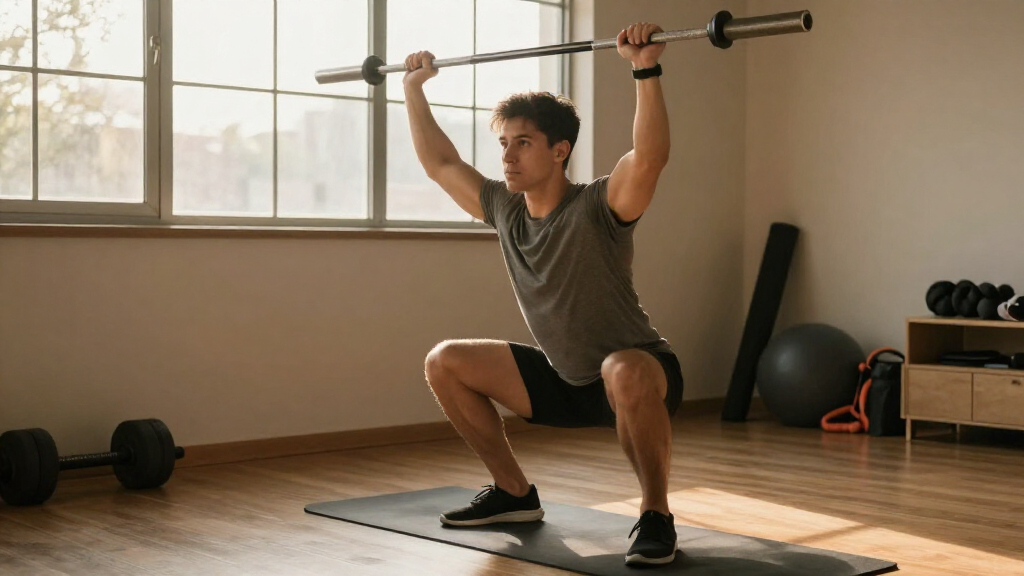
Zen, founder of ZLIFE, told Fit&Well that an overhead squat requires consistent mobility, core activation and flexibility. The exercise involves squatting while holding a pipe or bar overhead, which makes keeping the implement steady and maintaining an upright position part of the challenge. Zen said the glutes support the movement throughout its full range.
His specific technique cue is to shift pressure toward the outer part of the feet as the squat lowers and push the knees outward. Zen said changing the angle of the position can make a substantial difference to how the movement feels. This is his training experience and advice, not evidence that the cue will produce the same result for every person.
The report advises learning the pattern with an exercise stick or plastic pipe before attempting it with a barbell. Its suggested preparation includes bodyweight squats with the arms raised, wall-based squat and reach variations, and practice with a dowel. Zen also recommends the Frankenstein squat, in which the arms extend forward at shoulder height rather than overhead, as a less demanding way to practise related stability and mobility.
A Cue for Better Squat Control
The advice offers readers a simple technique point to test while practising a movement that can be difficult to coordinate. Foot pressure and knee position may help someone focus on engaging the hips and keeping the knees aligned over the feet, but the source does not report a controlled test or establish that the cue improves performance for everyone.
The broader takeaway is that the overhead squat is not simply a matter of lifting a bar above the head and sitting down. It combines shoulder and spinal positioning, lower-body mobility, balance and trunk control. For people who cannot maintain a steady overhead position, scaling the movement or working on the component skills is more appropriate than adding load. The report says preparatory squats can also help people develop squat mechanics even if they never use a loaded bar overhead.
Because a loaded implement can be difficult to control, this is practical fitness guidance rather than a promise of a particular result. People who are new to the movement can seek coaching and should stop if they experience pain or cannot keep the implement stable.
wooden dowel exercise stick for mobility and squat practice
As an affiliate, we earn on qualifying purchases.
As an affiliate, we earn on qualifying purchases.
Building Toward an Overhead Squat
Fit&Well framed Zen’s tip as part of a series asking certified personal trainers about exercises they once struggled with and what helped them learn them. The article presents the overhead squat as an advanced variation and recommends first practising with a stick or plastic pipe rather than a barbell.
Its progression starts with bodyweight movement and overhead arm positioning, then adds a dowel to practise alignment. A Frankenstein squat provides another step: the arms or implement are held forward at shoulder height, a position Zen says is easier to stabilize. In the report’s instructions, trainees keep the torso upright, let the knees track outward over the toes and push through the feet to stand.
For the overhead version, the article describes standing with feet about shoulder-width apart and toes slightly turned out, holding a pipe or barbell overhead with elbows locked, bracing the core and lowering while keeping the bar steady. Fit&Well recommends working with an exercise professional or spotter where possible. The source does not provide a training plan, assessment of individual mobility, or evidence comparing this progression with other methods.
“The glutes support the whole movement, top to bottom.”
— Francesco Zen, speaking to Fit&Well
PVC pipe for overhead squat mobility training
As an affiliate, we earn on qualifying purchases.
As an affiliate, we earn on qualifying purchases.
What the Advice Does Not Establish
The source reports Zen’s personal experience and coaching advice; it does not include research testing whether the foot-pressure and knee-position cue improves overhead squat form or reduces injury risk. It also does not establish that the same stance is suitable for every body or mobility level.
Fit&Well gives general progressions but does not set out how many repetitions to perform, how quickly to advance, or how to assess whether a person is ready for a barbell. It is also not clear from the source when the article was published. Readers with pain, prior injuries or concerns about mobility should seek individualized guidance rather than treating the article as a personal assessment.
lightweight technique bar for overhead squat practice
As an affiliate, we earn on qualifying purchases.
As an affiliate, we earn on qualifying purchases.
Practice Before Adding Load
The report does not announce a follow-up study or a new training program. Its practical recommendation is to progress through easier variations: start with bodyweight and raised arms, practise alignment with a dowel, and try the forward-arm Frankenstein squat before attempting an overhead squat with a barbell. The source advises using an exercise professional or spotter for the more advanced movement.
For readers trying Zen’s cue, the next step is to practise controlled repetitions and check whether the knees track over the feet and the implement stays steady. The source does not prescribe a timetable for progression, so adding weight should depend on individual control and coaching, not a fixed schedule.
squat wedge blocks for ankle mobility training
As an affiliate, we earn on qualifying purchases.
As an affiliate, we earn on qualifying purchases.
Key Questions
What squat cue did Francesco Zen say helped his overhead squat?
Zen told Fit&Well to shift weight toward the outer edges of the feet while pushing the knees outward as the squat lowers. He said the adjustment helped him engage his glutes.
Should beginners start overhead squats with a barbell?
The Fit&Well report recommends learning the movement first with an exercise stick or plastic pipe. It suggests bodyweight practice and a dowel before a loaded barbell, and recommends working with an exercise professional or spotter when possible.
What is a Frankenstein squat?
It is a squat variation with the arms extended forward at shoulder height, or an implement balanced across the front of the shoulders. Zen says this position is easier to stabilize than holding the arms overhead while practising related core, glute and mobility demands.
What abilities does an overhead squat require?
Zen describes it as a full-body movement requiring mobility, core activation and flexibility. The report specifically recommends preparing the ankles, hips, spine and shoulders and keeping the overhead implement steady.
Does Zen’s cue guarantee better form?
No. The source presents Zen’s experience and coaching advice, not a controlled study or a guarantee that the cue works for everyone. People who have pain, injuries or difficulty controlling the movement should seek individualized professional guidance.
Source: rss
Cold & flu season Picks
humidifiers
As an affiliate, we earn on qualifying purchases.