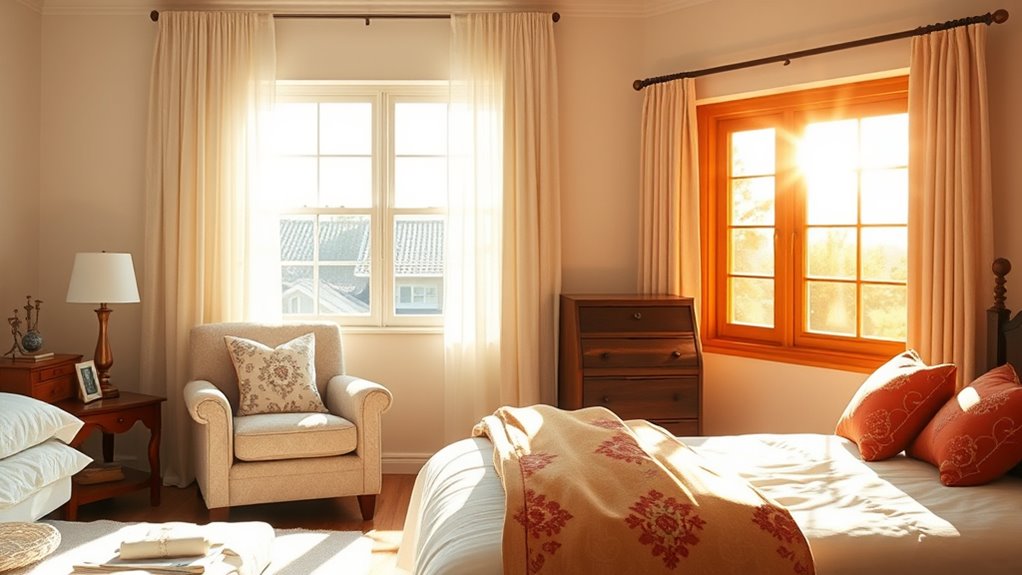

Choosing east-facing bedrooms means you’ll enjoy warm, natural morning light that can boost your mood and help you start the day energized, while also keeping the room cooler later. West-facing bedrooms get strong afternoon sun, making them warmer in the evening and summer, but they might require shading to avoid glare and excess heat. Understanding how window direction affects light and temperature can help you design a comfortable, energy-efficient space — keep going to learn more tips.
Key Takeaways
- East-facing bedrooms receive gentle morning sunlight, creating a bright, inviting atmosphere and supporting better sleep routines.
- West-facing bedrooms get strong afternoon and evening sunlight, which can cause glare and increase indoor temperatures.
- East-facing rooms stay cooler in the afternoon, ideal for warmer climates, while west-facing rooms benefit from additional warmth in colder months.
- Proper shading and window treatments are essential for west-facing bedrooms to manage heat gain and glare issues.
- The orientation of bedroom windows influences energy efficiency, comfort, and daily routines by optimizing natural light and temperature control.
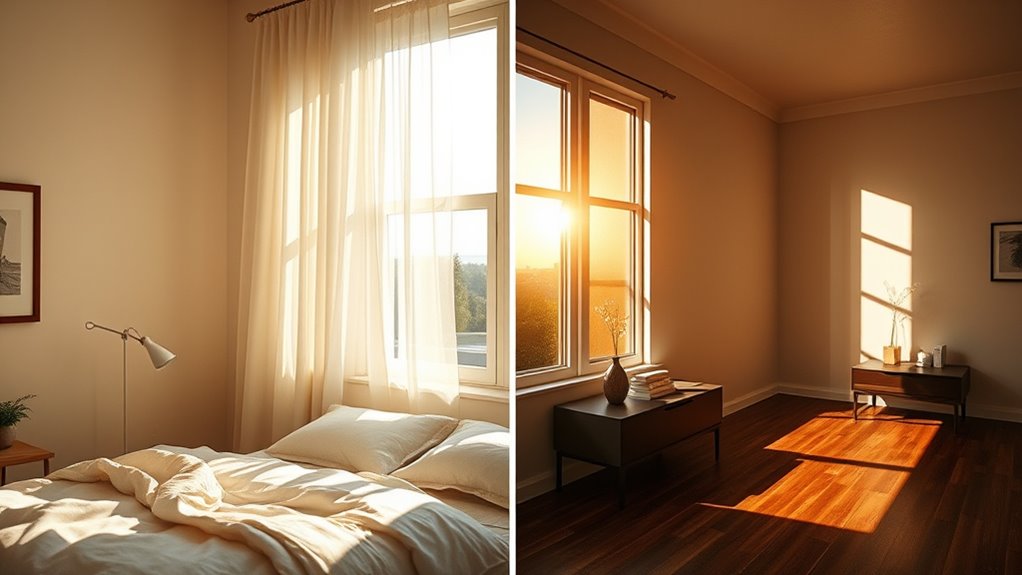
Have you ever wondered how the direction your windows face can impact your home’s comfort and energy efficiency? The orientation of your windows significantly influences the amount of natural lighting that floods your space, which in turn affects how comfortable and energy-efficient your home feels. When your bedroom faces east, you’ll wake up to gentle morning light, making your mornings brighter and more inviting. East-facing windows capture the sunrise, filling your room with warm, natural lighting early in the day. This natural illumination can reduce your dependence on artificial lighting during those hours, helping you save on energy costs. Plus, the morning sun can boost your mood and help regulate your circadian rhythm, promoting better sleep and waking routines. However, as the day progresses, east-facing rooms tend to stay cooler because they don’t receive direct sunlight in the afternoon and evening, which can be advantageous during hot summer months.
On the other hand, west-facing windows bring in strong afternoon and evening sunlight. You’ll notice your bedroom becomes warmer later in the day, especially during summer, which might lead to increased cooling costs if you don’t have effective shading. The natural lighting from the west is more intense and can cause glare, making certain activities less comfortable if your room isn’t properly shaded. Yet, this orientation can be beneficial in colder months, providing extra warmth and light when the sun is lower in the sky. It also allows for extended daylight hours, which can make your evenings more pleasant and brighten up your space longer. But keep in mind, without proper window treatments, west-facing rooms may face issues with heat gain and glare, impacting both energy efficiency and comfort. Additionally, solar orientation plays a crucial role in optimizing energy efficiency through strategic window placement and shading.
In terms of energy efficiency, your choice of window direction can make a notable difference. East-facing windows help you harness morning sunlight to warm your home naturally, reducing the need for artificial heating early in the day. West-facing windows, while providing cozy afternoon light, can lead to increased cooling demands if not managed with shades or reflective coatings. Proper window placement and treatments tailored to these orientations can optimize natural lighting and minimize energy waste. If you’re aiming to maximize energy efficiency, consider how window placement complements your climate, daily routines, and shading strategies. Understanding the impact of window direction isn’t just about aesthetics—it’s a practical step toward creating a more comfortable, energy-efficient home.
Frequently Asked Questions
How Does Window Direction Influence Energy Consumption?
Window direction substantially impacts your energy consumption by influencing solar gain and natural ventilation. East-facing windows catch the morning sun, reducing heating needs early in the day, while west-facing windows let in afternoon heat, which can increase cooling costs. Properly positioned windows improve natural ventilation, lowering reliance on air conditioning. By choosing window directions wisely, you can optimize solar gain and natural airflow, ultimately saving on your energy bills.
Which Bedroom Direction Offers Better Privacy?
You’ll find that west-facing bedrooms offer better privacy because their window placements are less likely to face busy street views or neighboring homes. Imagine waking up each morning, knowing your privacy isn’t compromised by curious eyes. The setting sun casts shadows that shield your space, giving you a private sanctuary. If privacy concerns weigh heavily on you, choosing a west-facing bedroom guarantees your personal space stays secluded and secure.
Can Window Orientation Affect Indoor Air Quality?
Yes, window orientation can affect indoor air quality by influencing ventilation patterns and air circulation. When your windows are positioned to catch prevailing breezes or promote cross-ventilation, fresh air flows in more effectively, reducing indoor pollutants and humidity. Conversely, poorly oriented windows may restrict airflow, leading to stale air buildup. To improve indoor air quality, choose window placements that maximize natural ventilation based on your home’s orientation and local wind patterns.
Are East-Facing Bedrooms Better for Morning Sunlight?
Yes, east-facing bedrooms are better for morning sunlight. You’ll enjoy the sunlight benefits, like increased vitamin D and improved mood, which can boost your morning routines. As the sun rises, your room fills with natural light, helping you wake up naturally and feel more energized. This exposure can also promote better sleep cycles and set a positive tone for your day, making east-facing windows a great choice.
Does Window Direction Impact Home Resale Value?
Think of your home like a prized painting—window direction can enhance its value. Yes, it impacts home resale value, as buyers often favor natural light and appealing window aesthetics. For example, an east-facing bedroom with morning sun invites positive energy, boosting appeal. Proper furniture placement around windows can maximize space and light, making your home more attractive, which can translate into higher resale value.
Conclusion
Knowing whether your bedroom faces east or west can truly impact your daily comfort. For example, east-facing rooms catch the morning sun, boosting your wake-up energy, while west-facing ones enjoy beautiful evening light. Did you know that rooms with morning sunlight can improve sleep quality by up to 25%? So, consider your window direction carefully—it’s more than just a view; it shapes your mood, sleep, and overall well-being. Choose wisely and enjoy the sunlight’s benefits every day!