
Even warm bulbs can keep you awake if their brightness is too high, because intense light suppresses melatonin, the hormone that signals sleep. Subtle blue light emissions from warm LEDs can also disrupt your circadian rhythm, despite their cozy appearance. Sometimes, flickering or poor settings make this worse. To truly rest well, it’s not just about warm tones—controlling brightness and understanding blue light’s impact matter most. Keep exploring to learn how to create a sleep-friendly environment.
Key Takeaways
- Warm bulbs may emit some blue light or flicker, which can suppress melatonin despite their color temperature.
- Brightness levels, regardless of warmth, can override the calming effects and hinder sleep onset.
- Even warm-colored bulbs can contain blue wavelengths that disrupt circadian rhythms if exposure occurs at night.
- Excessive brightness from any light source, warm or cool, can increase alertness and delay sleep.
- Proper sleep-friendly lighting requires both appropriate color temperature and controlled, dim brightness.
Understanding the Basics of Light and Sleep

Understanding how light affects sleep starts with recognizing that our bodies respond directly to different types of illumination. The light spectrum, which includes various wavelengths of light, influences our circadian rhythms and melatonin production. Blue and green wavelengths are especially potent in signaling wakefulness, even in small amounts. When it comes to bulb design, the way a bulb emits light—its spectrum—matters just as much as brightness. Warm bulbs, for example, tend to emit light with a different spectrum than cool bulbs, often containing less blue light. This variation in light spectrum affects how our bodies interpret the environment, impacting our ability to fall asleep and stay asleep. Additionally, light spectrum composition plays a crucial role in how effectively different light sources influence our sleep patterns. Recognizing that light spectrum can be optimized helps in choosing lighting that supports better sleep quality. Being aware of light spectrum effects allows consumers to select lighting options that minimize sleep disruption and promote healthier sleep cycles. Understanding these basics helps you make informed choices about lighting in your space, such as adjusting light spectrum exposure during evening hours to improve sleep quality. Moreover, understanding the manufacturing and design processes behind light bulbs can help you select products that emit healthier light for your environment.
The Role of Brightness in Sleep Disruption

Bright light exposure before bedtime can markedly interfere with your sleep quality, even if the light isn’t particularly blue or white. Higher brightness levels increase light intensity, signaling your brain that it’s daytime. This suppresses melatonin production, making it harder to fall asleep. Additionally, managing light brightness levels can help mitigate the impact on your circadian rhythms. Recognizing the impact of light intensity on sleep can further help you optimize your environment for restful nights. Being aware of light management strategies can also support healthier sleep habits and circadian alignment. Research shows that consistent exposure to high brightness levels can disrupt your internal clock, leading to sleep disturbances and daytime fatigue. Understanding light exposure patterns can empower you to create a sleep-friendly environment and improve overall sleep quality.
How Color Temperature Influences Melatonin Production
You might notice that blue light from screens can block melatonin, making it harder to fall asleep. Warm-colored bulbs, on the other hand, encourage melatonin production and help you relax. Understanding how color temperature affects sleep can help you choose lighting that supports your rest. Additionally, selecting smart lighting systems that adjust color temperature throughout the day can optimize your circadian rhythm and improve overall sleep quality. Awareness of how wave and wind influence natural lighting conditions can also guide your choices for a more sleep-friendly environment. Moreover, recognizing the impact of light pollution on natural darkness can further enhance your efforts to create an optimal sleep environment. Utilizing air fryer tips for evening meals can further promote better sleep by reducing heavy or greasy foods before bedtime.
Blue Light Suppresses Melatonin
Blue light, which is abundant in cool, white, or blue-toned bulbs, directly impacts your body’s ability to produce melatonin, the hormone responsible for regulating sleep. The light wavelength of blue light strongly suppresses melatonin production, making it harder to fall asleep and reducing sleep quality. Your exposure to blue light at night tricks your brain into thinking it’s daytime, disrupting your natural sleep cycle. Here’s how different light sources compare:
| Light Source | Impact on Melatonin & Sleep Quality |
|---|---|
| Blue LED bulbs | Strong suppression, poor sleep |
| Warm incandescent | Minimal impact, better sleep |
| Daylight (natural) | Less impact during daytime, most desirable sleep |
Reducing blue light exposure before bed helps your body maintain healthy melatonin levels and improves sleep quality. Additionally, using light filtering glasses can further reduce blue light exposure and support better sleep hygiene.
Warm Tones Promote Sleep
Since warmer light tones emit less blue light, they have a gentler effect on melatonin production, helping your body prepare for sleep. The soft, amber hues influence your color perception, making your environment feel cozy and calming. This reduction in blue light also means your bulbs experience reduced strain, potentially extending bulb longevity since they aren’t forced to emit high levels of blue spectrum light constantly. When you choose warm-colored bulbs, you create an atmosphere conducive to relaxation, signaling to your brain that it’s time to wind down. This subtle shift in light quality can markedly enhance your sleep readiness without sacrificing the comfort or ambiance you desire. Overall, warm tones support both your sleep cycle and the durability of your lighting setup.
Brightness vs. Color Impact
The brightness level of your light source substantially impacts melatonin production, often more so than its color temperature alone. Bright lights suppress melatonin more effectively, making it harder for your body to prepare for sleep. Even if your bulbs emit warm colors, excessive brightness can counteract their calming effects. Light flickering, especially from poorly designed fixtures, can further disrupt your circadian rhythm, causing additional sleep difficulties. Additionally, poor color accuracy—where the light doesn’t reflect true colors—can make your environment feel unnatural and overstimulating, hindering relaxation. The lighting quality of your bulbs plays a crucial role in supporting healthy sleep patterns. To promote better sleep, aim for dimmer lighting with minimal flickering and accurate color rendering, regardless of whether the bulbs are warm or cool. Proper light distribution ensures that light is evenly spread, reducing harsh spots that can cause discomfort. Recognizing the importance of light spectrum and its influence on biological processes can help you choose the most sleep-friendly lighting options. Balancing brightness and color temperature is key to maintaining healthy melatonin levels.
The Misconception About Warm Lighting and Relaxation
Many people believe that warm lighting naturally promotes relaxation and improves sleep, but this is a misconception. Lighting design alone doesn’t guarantee better rest if other factors aren’t considered. Warm bulbs may seem soothing, but their color temperature doesn’t automatically make them sleep-friendly. In fact, the idea that warm lighting is inherently relaxing ignores how brightness levels and timing influence sleep quality. Additionally, many assume warm bulbs are more energy-efficient, which isn’t always true. Modern LED options offer both warm tones and high energy efficiency, but the key lies in how you use them, not just their color. Relying solely on warm lighting for relaxation oversimplifies the complex relationship between light, sleep, and overall comfort. Understanding light’s impact on sleep involves considering both color temperature and brightness levels, as well as the timing of exposure. Furthermore, research shows that light intensity plays a significant role in circadian regulation, regardless of color warmth, emphasizing the importance of light exposure timing for healthy sleep patterns. Recognizing the effects of brightness and timing can help create a sleep-friendly environment that promotes better rest and overall well-being. Additionally, integrating smart lighting systems can optimize light exposure throughout the day, supporting natural circadian rhythms and enhancing rest quality.
The Impact of Blue Light in Warm Bulbs
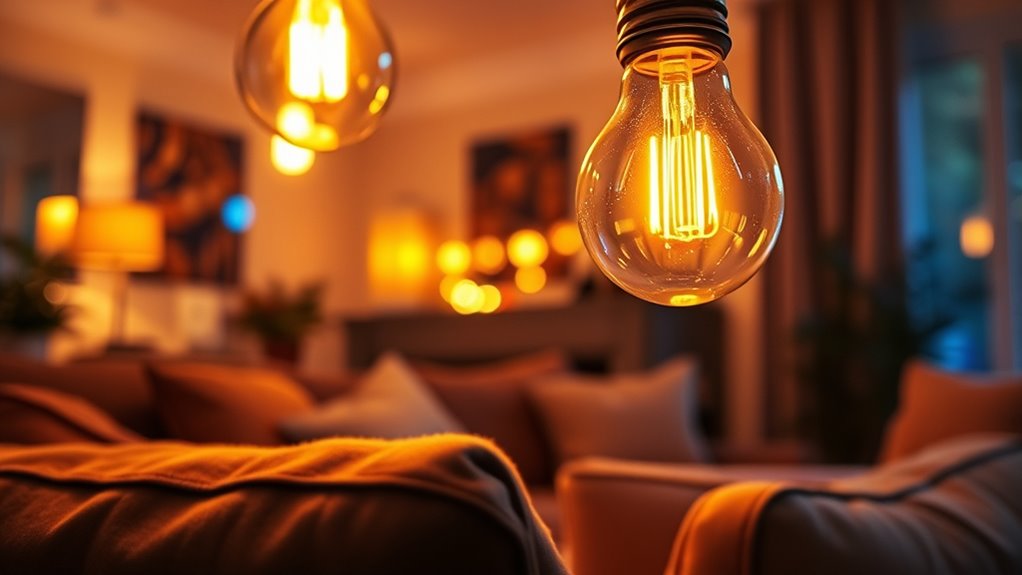
You might be surprised to learn that even warm bulbs can emit blue light, which affects your sleep. This blue light can suppress melatonin production, making it harder for you to fall asleep. Understanding these effects helps you make better choices for a restful night. Additionally, using light filters or dimming your lights in the evening can help mitigate blue light exposure from warm bulbs.
Blue Light Emission
Although warm bulbs emit a softer glow, they still release some blue light that can affect your sleep. Even small amounts of blue wavelength exposure can stimulate your brain, making it harder to wind down. Blue light from warm bulbs often originates from factors like LED flicker or light polarization, which can be subtle but impactful. These emissions may not be as intense as cool bulbs, but they still influence your melatonin production. To minimize blue light effects, consider bulbs with low blue emission or filters. Being aware of how blue light persists in warm lighting helps you create a sleep-friendly environment. Remember, even minimal blue light can disrupt your rest if you’re exposed to it before bedtime.
- LED flicker contributes to blue light exposure
- Light polarization can enhance blue light effects
- Small blue light emissions still impact melatonin production
Melatonin Suppression Effects
Even small amounts of blue light from warm bulbs can considerably suppress melatonin production, disrupting your body’s natural sleep-wake cycle. Melatonin is essential for regulating your circadian rhythms, which control sleep and alertness. When you’re exposed to light, especially blue wavelengths, your brain receives signals that it’s daytime, reducing melatonin levels. This suppression can delay sleep onset and decrease sleep quality, even if the light appears warm and cozy. Your light exposure before bedtime, regardless of color, influences your circadian rhythms. While warm bulbs emit less blue light than cool LEDs, they still emit enough to impact melatonin. Being mindful of light exposure in the evening helps preserve your body’s natural sleep signals and supports healthier sleep patterns.
Sleep Disruption Factors
While warm bulbs produce less blue light than their cool counterparts, they still emit enough to interfere with your sleep. This blue light can disrupt your body’s melatonin production, impacting your sleep hygiene. Even subtle blue wavelengths from warm lighting can trick your brain into thinking it’s daytime, making it harder to wind down. Poor lighting design in your environment might seem harmless but can subtly undermine your sleep quality. To improve sleep, consider adjusting your lighting choices and limiting exposure before bed. Being mindful of these factors helps maintain your circadian rhythm and supports restful sleep. Remember, even warm bulbs aren’t entirely free of sleep disruption factors, so choosing lighting that minimizes blue light is vital for better sleep hygiene.
- Blue light affects melatonin levels
- Warm bulbs still emit disruptive blue wavelengths
- Proper lighting design supports better sleep
Practical Tips for Creating a Sleep-Friendly Lighting Environment

Creating a sleep-friendly lighting environment starts with understanding how light affects your body’s natural rhythms. Focus on minimizing blue light exposure in the evening, as it can interfere with melatonin production and disrupt your sleep cycle. Use warm, dim lighting to promote relaxation and support your natural circadian rhythm. When considering color perception, opt for lighting that appears softer and less harsh, helping you wind down more easily. Light therapy can be beneficial in the morning, boosting alertness and resetting your internal clock, but avoid bright light before bed. Incorporate adjustable lamps or dimmers to control brightness levels and create a calming atmosphere. By managing light exposure thoughtfully, you’ll set the stage for more restful, restorative sleep.
Choosing the Right Lighting for Better Sleep
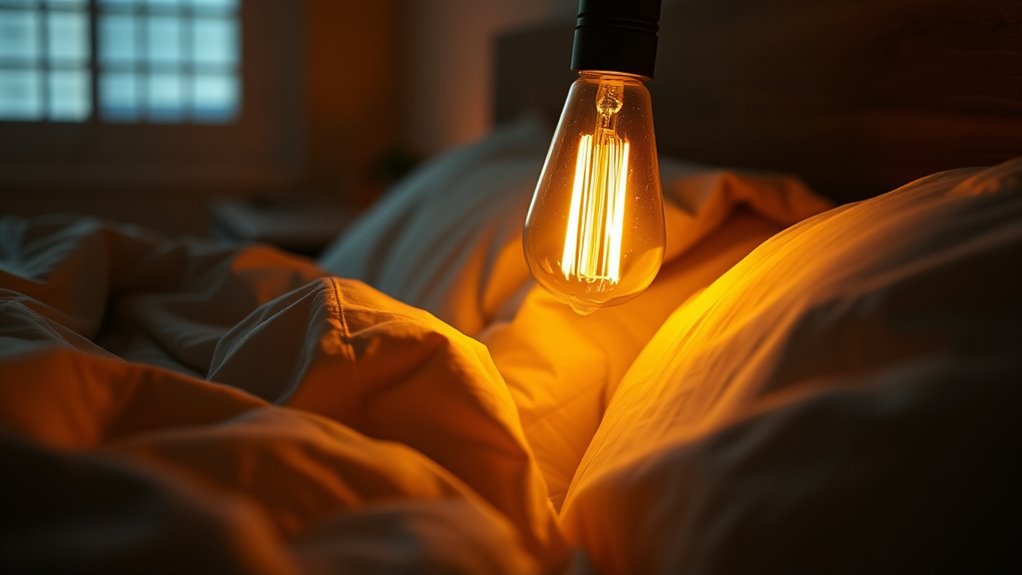
Choosing the right lighting setup can make a significant difference in how easily you fall asleep and stay asleep. Your lighting design influences your circadian rhythm, so selecting the right color and brightness is key. Consider using warm, dim lights in the evening to promote relaxation, aligned with color psychology principles that favor calming hues. Avoid bright, blue-toned lights before bed, as they can disrupt melatonin production. adjust your lighting to create a gradual shift from day to night, helping your body wind down naturally.
Choose warm, dim lighting in the evening to support natural sleep rhythms and relaxation.
- Use warm, low-intensity bulbs in the evening
- Incorporate dimmer switches for adjustable lighting
- Opt for red or amber lights to minimize sleep disruption
Frequently Asked Questions
Can Dimming Warm Bulbs Still Disrupt Sleep?
Yes, dimming warm bulbs can still disrupt your sleep. Even at lower light intensities, the placement of the bulbs matters—if they’re near your bed or in your line of sight, they can interfere with melatonin production. To minimize disruption, make certain of proper bulb placement and use dimmers wisely. Reducing light intensity helps, but avoid bright or direct light in sensitive areas before bedtime to promote better sleep.
Do All Warm-Colored Lights Have the Same Impact on Melatonin?
Not all warm-colored lights impact melatonin the same way. The effect depends on color temperature and bulb design. Lower color temperatures, like 2700K, emit a softer, amber glow that’s less disruptive. However, some warm bulbs with higher color temperatures or certain designs may still emit enough blue light to interfere with melatonin production. So, choose bulbs carefully if you want to protect your sleep.
How Long Before Bed Should I Turn off All Lights?
You should turn off all lights at least 30 to 60 minutes before bed. Limiting light exposure helps improve sleep hygiene by allowing your melatonin levels to rise naturally. Avoid screens and bright warm bulbs, as they can still disrupt your sleep cycle. Creating a dark, calming environment signals your body it’s time to rest, making it easier to fall asleep and improve overall sleep quality.
Are There Specific Warm Bulbs That Are More Sleep-Friendly?
Yes, you can find sleep-friendly warm bulbs by checking their color temperature, ideally around 2700K to 3000K, which produces a softer, warmer glow. Look for bulbs with a bulb material that minimizes blue light, such as amber or amber-tinted glass, to reduce sleep disruption. These features help create a calming environment, making it easier for you to wind down and fall asleep faster.
Does the Size of the Room Affect the Sleep Impact of Warm Lighting?
You might think a small room feels cozy with warm lighting, but in reality, room size influences how light impacts your sleep. Larger rooms disperse light more, reducing intensity and making warm bulbs less disruptive. Conversely, in smaller spaces, even gentle warm light can feel intense, tricking your brain into thinking it’s daytime. So, the room size can surprisingly amplify or diminish the sleep-friendly effects of warm lighting.
Conclusion
Remember, brightness can disturb your sleep, and color temperature can influence melatonin levels. Keep your lighting soft, warm, and dim in the evening. Limit blue light exposure, avoid overly bright lights before bed, and create a calming environment. By adjusting your lighting to be gentle, warm, and relaxing, you can improve your sleep quality. Make these simple changes, and enjoy restful, restorative nights—because good sleep starts with the right light.