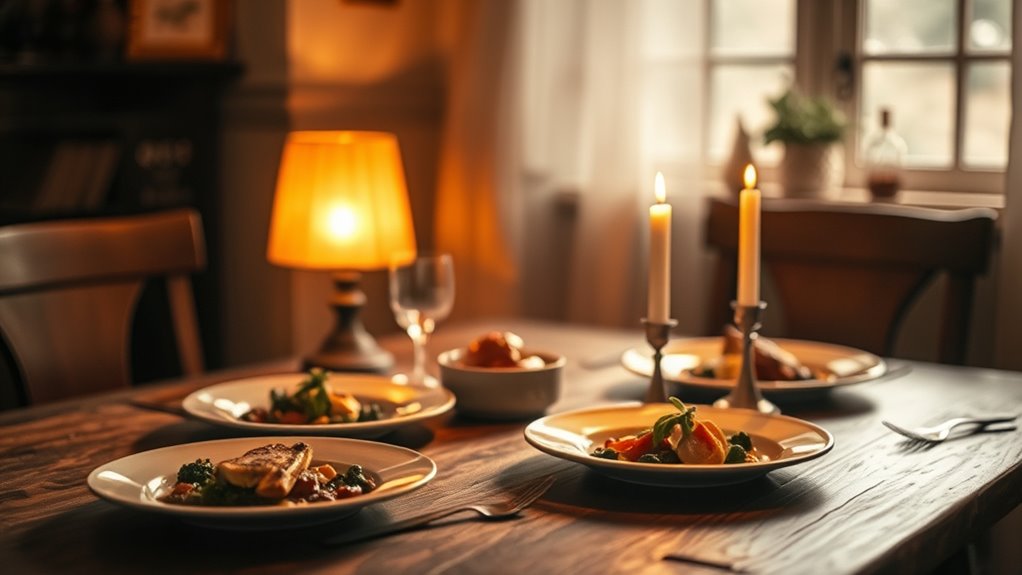

Eating under softer, dimmed lighting creates a calm and cozy atmosphere that can boost your mood and aid digestion. It helps your body wind down for better sleep by preventing melatonin suppression caused by bright lights. By relaxing your environment, you’ll enjoy more mindful meals and reduce stress. Small changes like lowering your lights during dinner can make a big difference. Keep going to discover how this simple habit can enhance your overall well-being.
Key Takeaways
- Softer lighting during dinner creates a relaxed atmosphere, promoting mindfulness and better digestion.
- Dimming lights signals the brain to wind down, supporting melatonin production and improving sleep quality.
- Using adjustable or dimmable warm lights enhances mood and reduces stress during meals.
- Avoid bright or blue-toned lights before bed to prevent sleep disruption and promote restful sleep.
- Incorporating candles or soft lamps helps establish a tranquil dining environment for overall well-being.
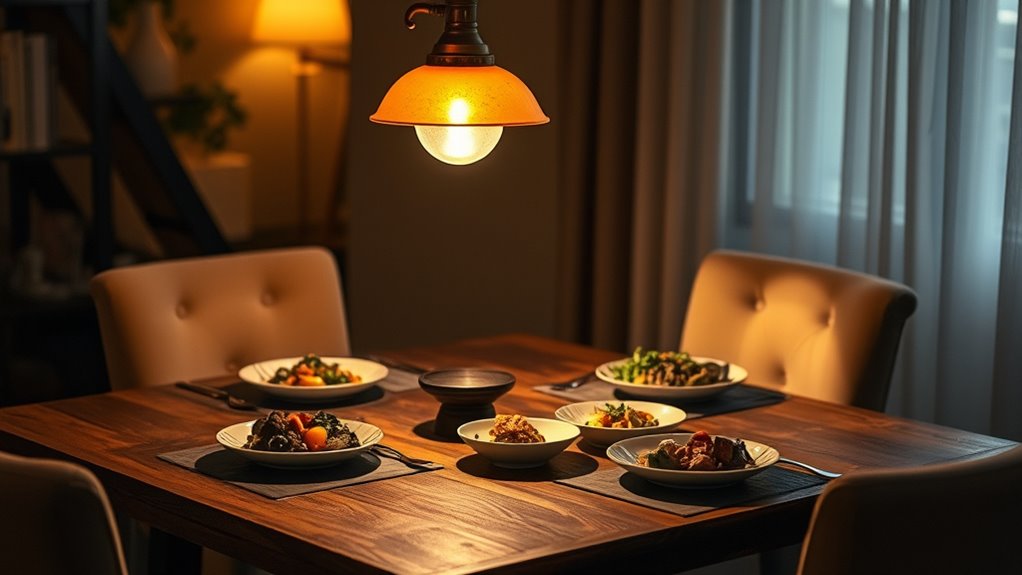
Have you ever noticed how dimming the lights during dinner can make the meal feel more intimate and relaxed? There’s something about softer lighting that instantly shifts the atmosphere, encouraging you to slow down and savor each bite. This simple change isn’t just about aesthetics; it can actually boost your mood and improve your sleep quality. When you lower the lights, you signal to your brain that it’s time to wind down, helping you *gradually* transition smoothly from the busyness of the day to a restful night. This is the essence of the ‘Dimmer Dinner’ rule—using light to influence your evening routine positively.
By eating under softer light, you create a calming environment that can elevate your mood. Bright, harsh lighting often feels stimulating—it keeps you alert and might even increase stress levels during mealtime. Conversely, gentle, warm lighting fosters a sense of comfort and encourages conversation, making your dining experience more pleasurable. When your mood improves, you’re more likely to enjoy your food and feel satisfied, which can prevent overeating and promote better digestion. Plus, this relaxed ambiance helps you focus on the present moment, turning a routine meal into a mindful ritual that benefits your mental health.
Furthermore, the lighting you choose during dinner can *considerably* influence your sleep quality. Exposure to bright or blue-toned light before bed has been linked to disrupted sleep patterns, as it suppresses melatonin—the hormone essential for initiating sleep. By dimming the lights during your evening meal, you minimize this exposure, allowing your melatonin levels to rise naturally. This not only helps you fall asleep faster but also enhances the overall quality of your sleep. Better sleep quality means you wake up feeling more refreshed, energized, and ready to face the next day.
Implementing the ‘Dimmer Dinner’ rule is simple. Invest in adjustable lighting or use lamps with warm bulbs that can be dimmed easily. Turn down the brightness as your meal begins, creating a cozy, inviting atmosphere. Avoid screens or bright overhead lights during dinner, as they can counteract the benefits of softer lighting. Instead, opt for candles or softly glowing lamps to set a tranquil tone. Doing so not only makes your meal more enjoyable but also helps your body prepare for a restful night. Over time, these small adjustments can lead to noticeable improvements in your mood, stress levels, and sleep quality, making your evenings more restorative and your days more vibrant.
Frequently Asked Questions
Can Dimmer Lighting Improve Digestion During Meals?
Yes, dimmer lighting can improve digestion by enhancing your mood and creating a more relaxing environment. When you eat under softer light, you’re more likely to feel calm, which helps your body focus on digestion rather than stress. Plus, dimmer lighting boosts visual appeal, making your meal more enjoyable and satisfying. This peaceful setting encourages mindful eating, leading to better digestion and overall well-being.
Does Softer Lighting Affect Appetite Hormones?
Imagine sinking into cozy, softer lighting as you eat; it can influence your hormonal response and appetite regulation. When you dine under gentle light, your body tends to release fewer hunger hormones, making you feel satisfied sooner. This calming environment helps reduce overeating and promotes better digestion. So, dimmer lighting doesn’t just set a mood—it actively supports your body’s natural balance, making your meals more satisfying and healthful.
What Types of Light Are Best for a Dimmer Dinner?
You should opt for warm, ambient glow lights like soft yellow or amber hues during dinner. These lights create a cozy atmosphere and promote mood enhancement, making your meal more relaxing. Avoid harsh, bright white or blue-toned lights, as they can be stimulating and suppress appetite hormones. Using dimmable lamps or candles helps you control the light intensity, ensuring a comfortable, calming environment for your meal.
Is There Scientific Research Supporting Dimmer Dinners?
Scientific research suggests that dimmer dinners can enhance your mood and improve visual perception. You might think the science isn’t conclusive, but studies show softer lighting reduces stress and promotes relaxation during meals. This creates a calming atmosphere, making your dining experience more enjoyable. By dimming the lights, you actively influence your mood and perception, turning ordinary meals into mindful, soothing rituals that benefit both your mental state and sensory awareness.
How Quickly Can Lighting Changes Influence Mealtime Mood?
Lighting changes can influence your mealtime mood within minutes, creating a calming atmosphere that promotes mood enhancement. Softer lights reduce stress and make dining more enjoyable, helping you relax and connect with others. Additionally, dimmer lighting supports sleep regulation by signaling your body it’s time to wind down. You’ll notice these effects quickly, making lighting a simple but powerful tool to improve your overall dining experience and well-being.
Conclusion
As you embrace the ‘dimmer dinner’ rule, you’ll notice how softer lights turn any meal into a quiet, intimate moment. Maybe it’s no coincidence that the flicker of candles coincides with your calmer thoughts, or that the gentle glow makes flavors linger longer. When you eat under these softer lights, you invite tranquility into your evening—perhaps even finding a little more peace in the simple act of dining. It’s a small change, but one that might just change everything.