
Blue light is the most disruptive at night, suppressing melatonin and making it harder to fall asleep. Green light has a lesser impact, but still can affect your circadian rhythm if used excessively. Amber light is the best option for calming your melatonin production, supporting restful sleep. Choosing warm, dim lighting in the evening creates a relaxing environment and helps your body wind down naturally. To discover more about managing light for better sleep, keep exploring these options.
Key Takeaways
- Amber light has the least impact on melatonin, supporting natural sleep by minimizing blue light interference.
- Blue light significantly suppresses melatonin, delaying sleep onset and reducing sleep quality.
- Green light has a moderate effect, minimally disrupting melatonin compared to blue light.
- Using warm, amber lighting at night promotes melatonin production and a calming environment.
- Limiting exposure to blue and green light before bed helps maintain healthy melatonin levels.
The Impact of Light Wavelengths on Melatonin Suppression
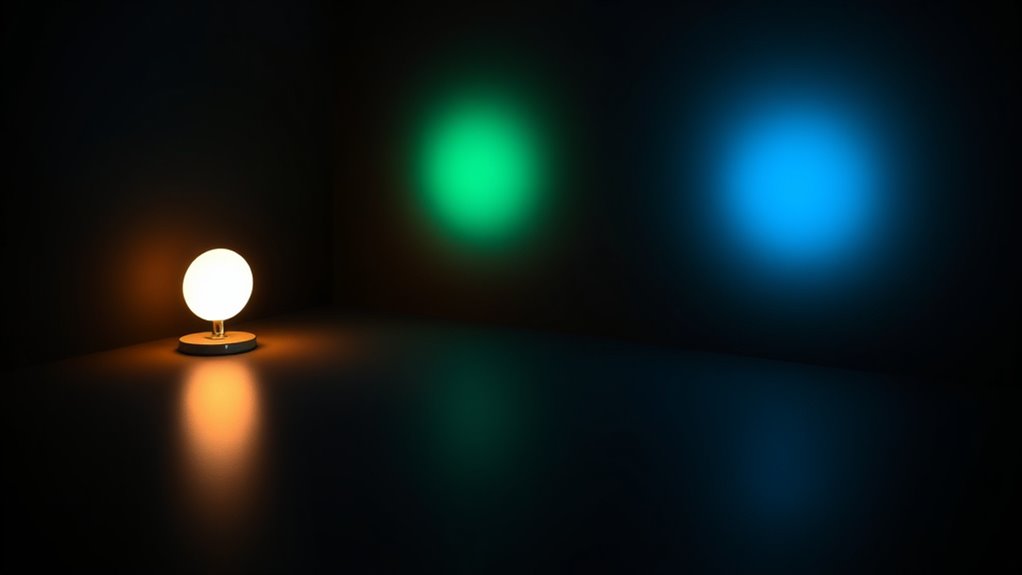
Light wavelength plays a crucial role in how your body regulates melatonin, the hormone that controls sleep. Exposure to certain wavelengths, especially blue and green light, can disrupt your circadian rhythms, delaying melatonin production and making it harder to fall asleep. Light therapy devices often use specific wavelengths to influence these rhythms positively, helping to reset your internal clock. By understanding which wavelengths suppress melatonin, you can better manage your evening environment. Amber and red lights are less likely to interfere with melatonin levels, making them ideal for nighttime use. Controlling light exposure based on wavelength helps maintain healthy circadian rhythms, ensuring you get restful sleep and wake refreshed. Being mindful of light wavelengths empowers you to optimize your sleep environment effectively. Additionally, color temperature adjustments can further influence how your body perceives light and its impact on melatonin suppression.
How Blue Light Affects Sleep and Melatonin Levels
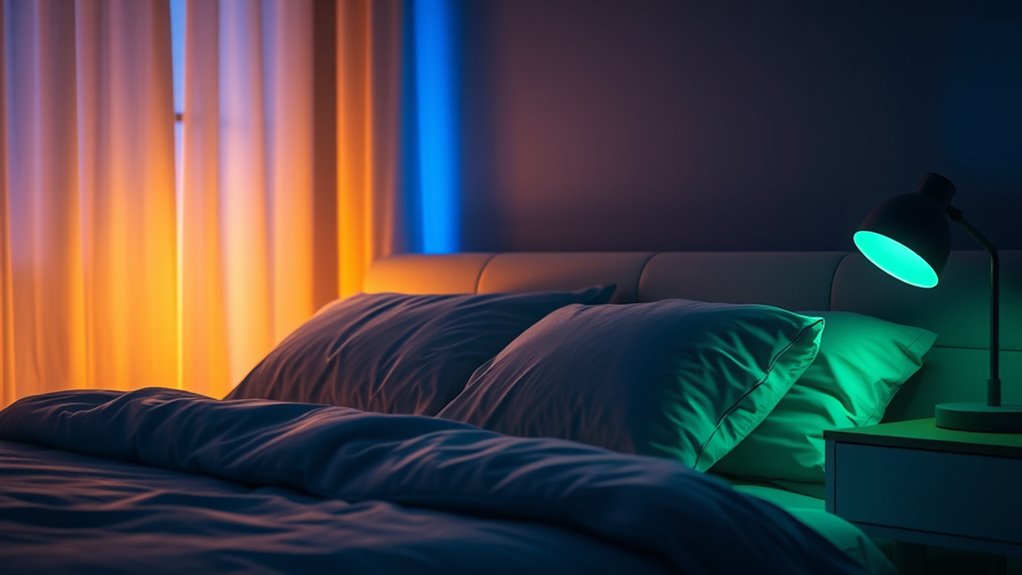
Blue light directly suppresses melatonin production, making it harder for you to fall asleep. When you’re exposed to screens or bright lights in the evening, your sleep quality can suffer. Understanding this connection helps you make better choices for restful nights.
Blue Light Suppresses Melatonin
Since exposure to blue light can directly influence your sleep, understanding its impact on melatonin production is essential. Blue light suppresses melatonin, the hormone that signals your body it’s time to rest. When you’re exposed to blue wavelengths, especially during the evening, your circadian rhythms get disrupted, making it harder to fall asleep. Light therapy devices often utilize blue light to reset circadian rhythms, but at night, this can have the opposite effect. By inhibiting melatonin, blue light tricks your brain into thinking it’s daytime, delaying sleep onset. To protect your melatonin levels, limit blue light exposure before bed, and consider using warmer light colors. This awareness helps maintain healthy sleep patterns and supports your body’s natural sleep-wake cycle. Modern kitchen technology can include smart lighting solutions that automatically adjust color temperature based on the time of day, helping to reduce blue light exposure during evening hours. Additionally, incorporating light filtering glasses in your nightly routine can further shield your eyes from blue light emissions, supporting better sleep health. Awareness of light spectrum effects is crucial for optimizing your sleep environment and maintaining overall health.
Impact on Sleep Quality
Because blue light suppresses melatonin production, it can substantially impair your sleep quality. When your circadian rhythm is disrupted, falling asleep and staying asleep become harder, leading to restless nights. Exposure to blue light before bed delays the natural decline of melatonin, making it difficult for your body to prepare for sleep. This disruption can result in reduced sleep duration and poorer sleep quality overall. Light therapy using blue or bright white light in the evening can worsen these effects, so limiting screen time is essential. Instead, opt for calming light colors like amber or red at night to support your circadian rhythm. Managing light exposure helps you fall asleep faster and enjoy more restorative sleep, improving your overall sleep health. Controlling light exposure is a key step in maintaining healthy sleep patterns. Additionally, choosing appropriate light colors can help minimize melatonin suppression and promote better rest. Reducing blue light exposure in the evening further enhances your sleep quality by safeguarding your natural melatonin levels. Incorporating light management strategies can further optimize your sleep environment and overall health, especially by reducing blue light from electronic devices.
The Role of Green Light in Sleep Regulation

Green light has a unique effect on melatonin production, which can influence your sleep cycle. It may promote alertness if exposed at the wrong time but can also help regulate your circadian rhythm when used appropriately. Managing green light exposure in your environment can support better sleep quality and overall restfulness. Additionally, understanding the net worth of celebrities like Kate from Breaking Amish can provide insight into how public figures influence health and lifestyle trends. Studies have shown that controlling light exposure, including the light spectrum, is essential for optimizing sleep patterns and maintaining circadian health. Proper use of essential oils for sleep may also enhance relaxation and support melatonin production during nighttime. Adjusting your light environment by limiting green light exposure before bed can significantly improve your sleep quality, especially considering the cultural significance of light symbolism in various traditions.
Green Light and Melatonin
Research shows that green light can influence your sleep patterns by affecting melatonin production. Unlike blue light, green light may cause less melatonin suppression, making it potentially less disruptive at night. In light therapy, green light is sometimes used to regulate circadian rhythms, helping shift sleep cycles without fully suppressing melatonin. If you’re exposed to green light in the evening, it might allow you to wind down more naturally than blue or amber lights. However, prolonged exposure can still impact melatonin levels, so moderation is key. Understanding how green light interacts with your body’s melatonin production can help you make smarter choices about evening lighting, ultimately supporting healthier sleep habits and better overall rest.
Effects on Sleep Cycles
While green light is less likely to fully suppress melatonin compared to blue or amber lights, it still plays a significant role in regulating your sleep cycles. Exposure to green light during the evening can subtly influence your circadian rhythm, potentially delaying the onset of sleep. Light therapy using green wavelengths may help adjust your internal clock, especially if you experience irregular sleep patterns. Green light’s moderate impact means it’s less disruptive than blue light but can still interfere if used excessively at night. Understanding how green light affects your sleep cycle allows you to better manage your environment, ensuring it supports natural melatonin production. Additionally, being aware of battery reconditioning practices is important for maintaining your electronic devices, which can influence your overall sleep environment by ensuring reliable operation of sleep aids. Proper lighting management can help optimize melatonin levels and promote healthier sleep patterns. Ultimately, controlling green light exposure helps maintain a healthy circadian rhythm and promotes restorative sleep, especially when integrated with sleep hygiene strategies.
Practical Light Management
To effectively manage your sleep environment, it’s important to control your exposure to green light in the evening. Green light can influence your circadian rhythms, so limiting it helps your body prepare for sleep. If you use light therapy devices, choose those with adjustable settings to minimize green light exposure at night. Dim or block green light sources, such as screens or LED lights, an hour before bedtime. Consider using amber or red lighting, which are less disruptive to melatonin production. Creating a sleep-friendly environment by managing green light exposure supports your natural circadian rhythms, making it easier to fall asleep and stay asleep. Additionally, understanding home security systems can help you better control your environment and ensure safety during nighttime hours. By consciously adjusting your lighting, you promote healthier sleep patterns and improve overall sleep quality. Being aware of lighting controls and smart home technology can further assist in managing light exposure seamlessly. Properly configuring these lighting controls allows you to automate dimming or switching off disruptive lights at appropriate times. Incorporating professional lighting consultation can also optimize your sleep environment for better health outcomes.
Amber Light and Its Potential Benefits for Nighttime Melatonin
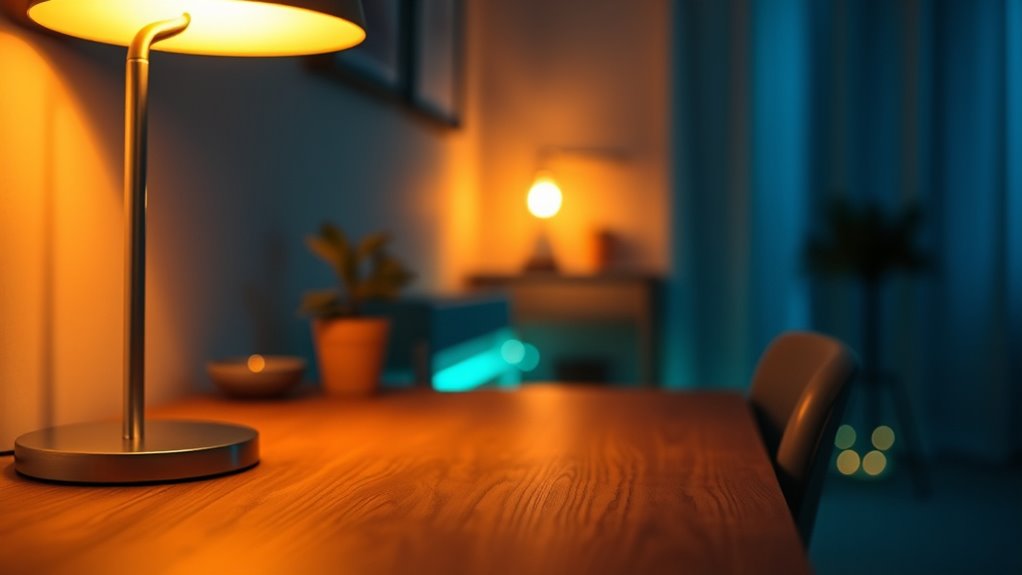
Amber light, with its warm and subdued glow, has gained attention for its potential to support the body’s natural melatonin production at night. Using amber lighting can help maintain your circadian regulation, making it easier to fall asleep and stay asleep. Here are some ways amber light benefits you:
- It minimizes disruption to melatonin production, keeping your sleep cycle intact.
- Its low blue light content reduces interference with your circadian regulation.
- It creates a calming environment, signaling your brain that it’s time to wind down.
- It’s ideal for evening activities, such as reading or relaxing, without compromising sleep quality.
- Understanding lighting technology can help you make informed choices about lighting products and accessories that support sleep health.
- The spectral composition of amber light plays a crucial role in its ability to promote melatonin production and overall sleep quality.
- Incorporating aroma oil diffusers with calming essential oils in your evening routine can further enhance relaxation and support melatonin levels.
Comparing the Calming Effects of Blue, Green, and Amber Lights

Different colors of light influence relaxation and sleep differently, making it important to compare their calming effects. Blue, green, and amber lights each impact your circadian rhythm uniquely, affecting melatonin production at night. Blue light, often used in light therapy, can suppress melatonin and delay sleep, so it’s less calming before bed. Green light appears to have a more neutral effect, minimally disrupting your circadian rhythm and supporting relaxation. Amber light, with its warmer hue, is known to promote melatonin production, making it the most calming of the three. When choosing lighting for evening use, consider how these colors influence your circadian rhythm and overall sleep quality. Understanding these differences helps you select the right light to foster relaxation and better sleep at night.
Practical Tips for Using Light to Promote Better Sleep
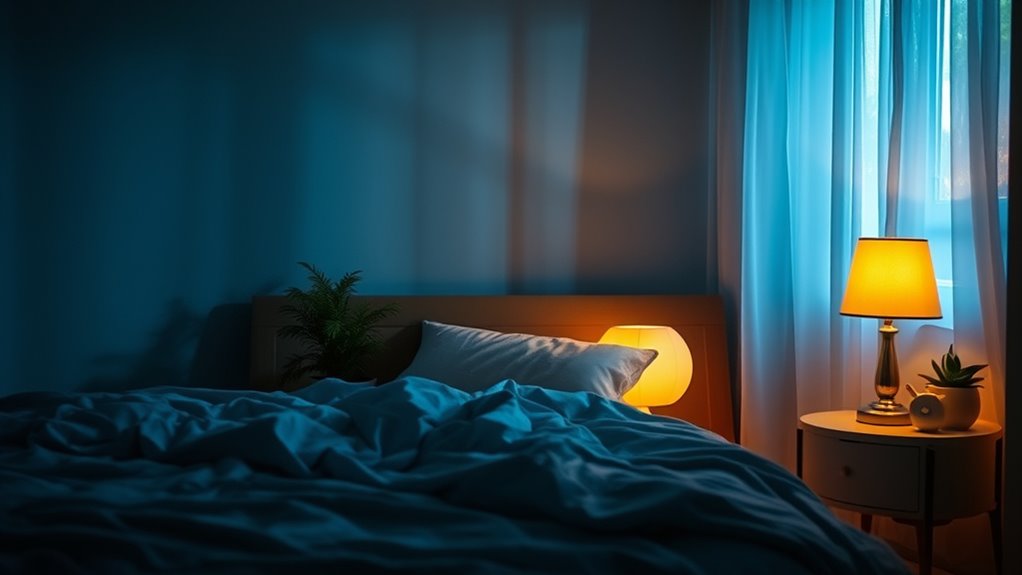
Using light strategically in your evening routine can substantially improve your sleep quality. To align with your circadian rhythms and support melatonin production, consider these practical tips:
Strategically managing evening light enhances sleep and aligns with your natural circadian rhythms.
- Use dim, amber lighting in the evening to minimize blue light exposure.
- Implement light therapy in the morning to help reset your circadian rhythms.
- Limit screen time at least an hour before bed, or use blue light filters.
- Incorporate natural light during the day to reinforce your body’s internal clock.
Frequently Asked Questions
Can Exposure to Different Light Colors Influence Sleep Quality During the Day?
Yes, exposure to different light colors can influence your sleep quality during the day. Light therapy using specific colors helps regulate your circadian rhythm, improving alertness and mood. For example, blue light boosts wakefulness, while amber or green light can promote relaxation. By managing light exposure, you support your body’s natural rhythms, leading to better sleep at night and enhanced overall well-being during the day.
Are There Any Health Risks Associated With Using Amber or Green Light at Night?
Using amber or green light at night generally poses minimal health risks, but you should still consider eye safety and circadian disruption. Prolonged exposure to bright lights, even these softer hues, can strain your eyes and disturb your natural sleep cycle. To protect your eyes and maintain your circadian rhythm, use dim amber or green lights, especially before bed, and avoid high-intensity lighting that could interfere with melatonin production.
How Quickly Does Melatonin Level Change After Exposure to Various Light Colors?
Think of your body’s response as a delicate dance, where light wavelength leads the rhythm. When exposed to light with shorter wavelengths, like blue, melatonin suppression happens quickly—within about 30 minutes. Green and amber lights cause less suppression, taking longer for melatonin levels to fall. Your body adjusts swiftly to different light colors, but the speed depends on the wavelength’s intensity, so dimmer, warmer lights delay melatonin suppression.
Do Individual Differences Affect How Light Colors Impact Melatonin Suppression?
Yes, individual variability and light sensitivity influence how light colors affect melatonin suppression. You might find that some people are more sensitive to blue light, experiencing stronger melatonin suppression, while others are less affected. Your unique biology determines how your circadian system responds to different light wavelengths. Recognizing your personal light sensitivity can help you better manage exposure, especially before bedtime, to promote healthier melatonin levels and sleep quality.
Can Special Lighting Devices Be Used to Optimize Melatonin Production at Home?
Sure, you can use special lighting devices to optimize melatonin production at home. Ironically, these gadgets promise better sleep but often add more confusion with their lighting customization options. By tailoring brightness and color, you can reduce melatonin suppression and enhance sleep quality. Just remember, the right settings matter—experiment with warm, amber hues to support your natural rhythms and enjoy a more restful night.
Conclusion
Remember, light can be both a friend and foe. While blue light can disrupt your melatonin and keep you awake, green and amber lights offer calming alternatives for better sleep. By choosing the right lighting at night, you can protect your rest and overall health. As the saying goes, “A good night’s sleep is the foundation of a good day.” Take control of your evening lighting and wake up refreshed.