
Your body’s internal clock depends on more than just light; it’s influenced by cues like melatonin, meal timing, and physical activity that help keep your circadian system in sync. These signals act as secondary prompts that reinforce your sleep-wake cycle and regulate metabolism and hormone release. When these cues are out of sync, your body struggles to stay aligned, which can impact your health and well-being. Keep exploring to discover how timing guides your internal rhythms beyond just light exposure.
Key Takeaways
- Peripheral clocks in tissues are influenced by cues like meal timing and physical activity, beyond just light exposure.
- Melatonin signaling communicates nighttime to peripheral clocks, aiding synchronization independently of light cues.
- Consistent timing of sleep, meals, and activity reinforces internal clock alignment and overall circadian health.
- Disruption of behavioral cues, such as irregular eating patterns, can cause internal desynchronization even with proper light exposure.
- Combining light, melatonin, and behavioral timing cues ensures robust circadian regulation and optimal bodily function.
While light is the most well-known cue for regulating your circadian rhythm, it’s not the only factor that influences your internal clock. Your body’s ability to maintain a roughly 24-hour cycle depends on a network of signals, including melatonin signaling and peripheral clocks, that work together to keep your physiology in sync. Melatonin, often called the sleep hormone, plays a central role in signaling nighttime to your brain. As darkness falls, your pineal gland ramps up melatonin production, helping you feel sleepy and ready for rest. But melatonin doesn’t just act in the brain; it also communicates with peripheral clocks—timers present in tissues like the liver, muscle, and even the gut. These peripheral clocks regulate functions such as metabolism, hormone release, and cellular repair, aligning them with your sleep-wake cycle. High-precision timing of these cues is essential for optimal health and function.
Understanding how these cues interact reveals that your circadian rhythm isn’t solely dependent on light exposure. For instance, if you work night shifts or travel across time zones, your peripheral clocks can become desynchronized from your central clock in the brain. This mismatch can lead to disruptions in metabolic processes, immune function, and overall well-being. Maintaining consistent timing in your daily activities, such as eating, exercise, and sleep, can help keep these peripheral clocks aligned with your central circadian rhythm. When your meal times or activity levels are irregular, it can interfere with melatonin signaling and the synchronization of peripheral clocks, contributing to fatigue and health issues.
Moreover, research shows that peripheral clocks respond to cues beyond light and melatonin. Factors like meal timing and physical activity act as secondary signals, reinforcing or challenging your body’s internal timing. For example, eating at consistent times helps entrain peripheral clocks, supporting healthy metabolic regulation. Conversely, irregular eating patterns can cause misalignment, even if your light exposure remains steady. This highlights that your internal clock relies on a combination of cues—light for central clock regulation, melatonin signaling for sleep initiation, and behavioral patterns for peripheral clock synchronization.
In essence, timing remains essential because these cues collectively influence how well your body functions throughout the day. When you pay attention to not just light but also your sleep schedule, meal timing, and activity levels, you support a more synchronized and resilient circadian system. This holistic approach helps you maintain better sleep, improved metabolic health, and overall vitality, proving that circadian regulation is about more than just exposure to daylight—it’s about timing your behaviors to support your body’s intricate internal timing mechanisms.
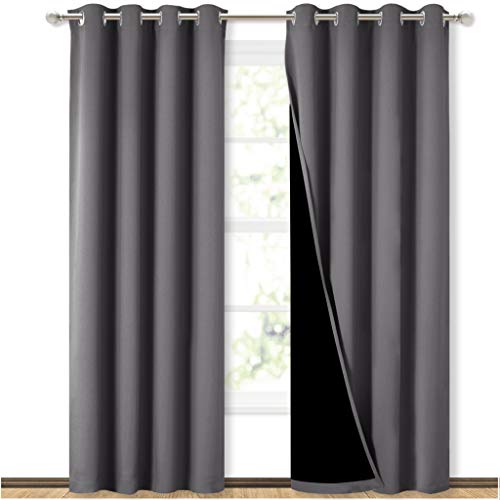
NICETOWN Grey Full Shade Curtain Panels, Pair of Energy Smart & Noise Blocking Out Blackout Drapes for Dining Room Window, Thermal Insulated Guest Room Lined Window Dressing(Gray, 52 x 84 inch)
Complete blackout curtains block light and reduce noise for better sleep - 2 layer construction with blackout lining
As an affiliate, we earn on qualifying purchases.
Frequently Asked Questions
Can Diet Influence Circadian Rhythms Without Light Cues?
Yes, your diet can influence your circadian rhythms without light cues. By managing meal timing and fasting schedules, you help synchronize your internal clock. Eating at consistent times reinforces natural rhythms, while irregular meal patterns can disrupt them. Fasting schedules, like intermittent fasting, also signal your body when to rest and digest, supporting overall circadian health even in the absence of light cues.
How Do Social Interactions Affect Internal Biological Clocks?
Social interactions are like a dance that keeps your internal clock in sync. They promote social synchronization, where shared routines help entrain your circadian rhythms through behavioral entrainment. When you connect with others at regular times, your body adjusts its biological clock, reinforcing wakefulness and sleep patterns. This social timing acts as an external cue, helping your internal biological clocks stay aligned even without relying solely on light cues.
Are There Genetic Factors That Override External Timing Cues?
Yes, genetic factors can override external timing cues. You might carry mutations in circadian genes, which disrupt normal clock functions. These genetic mutations can cause your internal clock to run on a different schedule, making it harder for external cues like light or social interactions to reset it. As a result, your sleep-wake cycle may become irregular, regardless of external signals, highlighting the powerful influence of genetics on your circadian rhythm.
How Do Shift Workers Maintain Circadian Alignment Without Natural Light?
You can maintain circadian alignment as a shift worker by using melatonin supplements to signal your body when it’s time to sleep, even without natural light. Strategic napping during breaks helps reset your internal clock and reduces fatigue. Additionally, controlling your sleep environment—darkening your room and avoiding screens—supports better sleep, making it easier to stay aligned with your schedule despite the lack of natural light cues.
Can Temperature Changes Act as Reliable Circadian Cues?
Think of temperature changes as a gentle lighthouse guiding your internal clock. Thermal entrainment occurs when your body responds to temperature fluctuations, helping regulate your circadian rhythms. Temperature regulation can serve as a reliable cue, especially in environments with limited light. By paying attention to natural or artificial temperature shifts, you can better align your sleep-wake cycle, making temperature a valuable tool for maintaining circadian health beyond light cues.
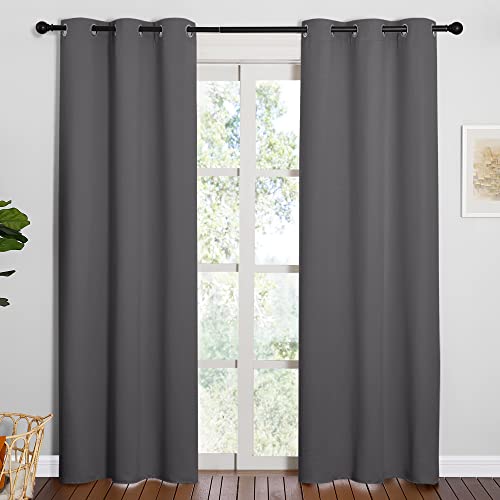
NICETOWN Noise Reducing Blackout Curtains 84" Long for Bedroom, Grey, 42" Wide, 2 Panels, Thermal Insulated Room Darkening Drapes for Home Family Decorations
READY MADE: Set includes 2 BLACKOUT PANELS of 42" wide x 84" length with 6 grommets top each....
As an affiliate, we earn on qualifying purchases.
Conclusion
As you navigate your daily rhythm, remember that many subtle signals guide your body’s timing beyond just light. Embracing these cues, even when unseen, helps you stay in harmony with your natural flow. Sometimes, the quiet influences are the most profound, gently steering you toward balance. Trust these subtle hints—they’re like gentle whispers from your inner clock, guiding you softly toward well-being. In listening closely, you discover a deeper connection to your true rhythm.

Topfinel 102 Inches Long Custom Blackout Linen Curtains, Soundproofing Pinch Pleated Noise Cancelling Curtains with Pin Hooks for Traverse Rods, Burlap Viral Drapes 2 Panels for Living Room Bedroom
100% Blackout & Privacy: With a dual-layer, heavy-duty design, these curtains block 100% of sunlight and UV rays,...
As an affiliate, we earn on qualifying purchases.

NICETOWN Lower Noise Room Divider Curtain Screen Partitions, Blackout Sound Reducing Divider Room Panel for Doorway/Glass Window/Sliding Door/Patio (1 Panel, 7ft Tall x 8.3ft Wide, Black)
CURTAIN DETAILS: The room divider curtain's fabric is super soft, thickness and heavy innovative triple-weave polyester fabric. The...
As an affiliate, we earn on qualifying purchases.