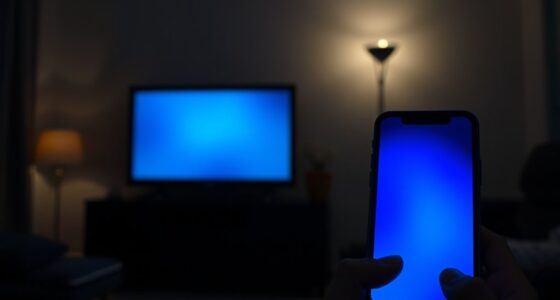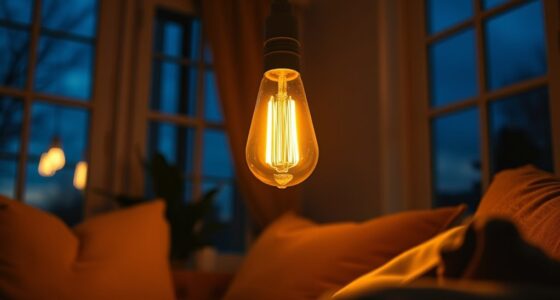

To avoid wrecking your sleep, opt for office lighting that emits less blue light, especially in the evening. Use warmer, softer lights and adjust your desk lamps to lower blue light levels. Limit screen time at least an hour before bed and consider blue light filters or glasses. Small changes in your lighting choices can help keep your circadian rhythm on track, so you wake refreshed—keep going to find more helpful tips.
Key Takeaways
- Use warmer, softer lighting options in the office, especially during late hours, to reduce blue light exposure.
- Adjust desk lamps and overhead lights to lower color temperature, favoring amber or red hues at the end of the day.
- Incorporate adjustable lighting systems to switch to warmer tones when working late or after hours.
- Limit screen time before bed and utilize blue light filters or glasses to minimize blue light impact.
- Avoid bright, blue-enriched lighting in the evening to help maintain melatonin production and support healthy sleep cycles.
If you work long hours at a desk, the lighting in your office can considerably impact your sleep quality. One major factor is blue light, which is emitted by many modern screens and LED lights. Blue light has a powerful influence on your body’s circadian rhythms, the internal clock that regulates your sleep-wake cycle. When exposed to blue light during the day, your circadian rhythms stay aligned, helping you feel alert and awake. However, exposure to blue light in the evening can trick your brain into thinking it’s daytime, suppressing melatonin production—the hormone responsible for making you sleepy. This disruption makes it harder to fall asleep and can reduce sleep quality overall.
Blue light exposure in the evening disrupts melatonin, making it harder to fall asleep.
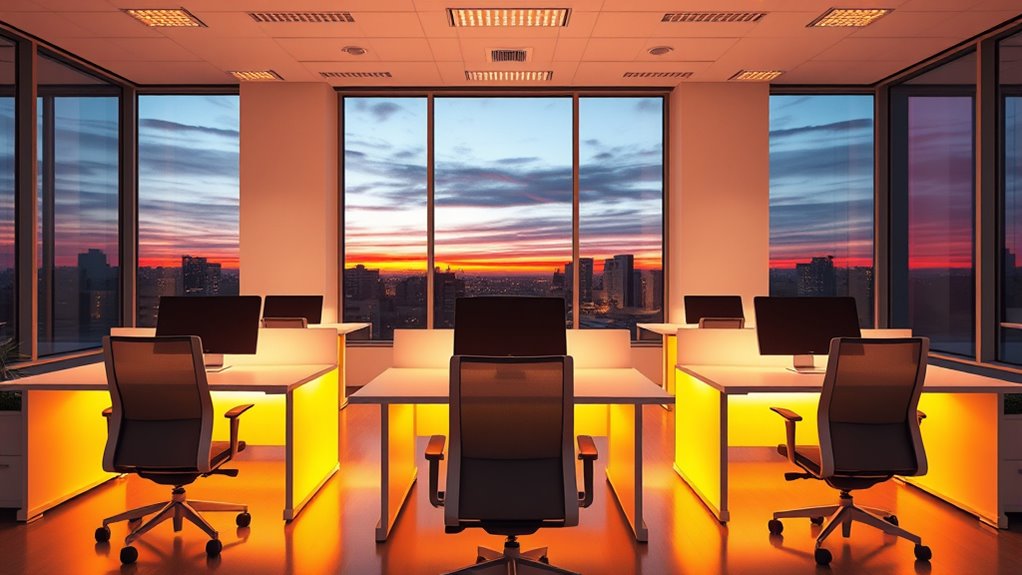
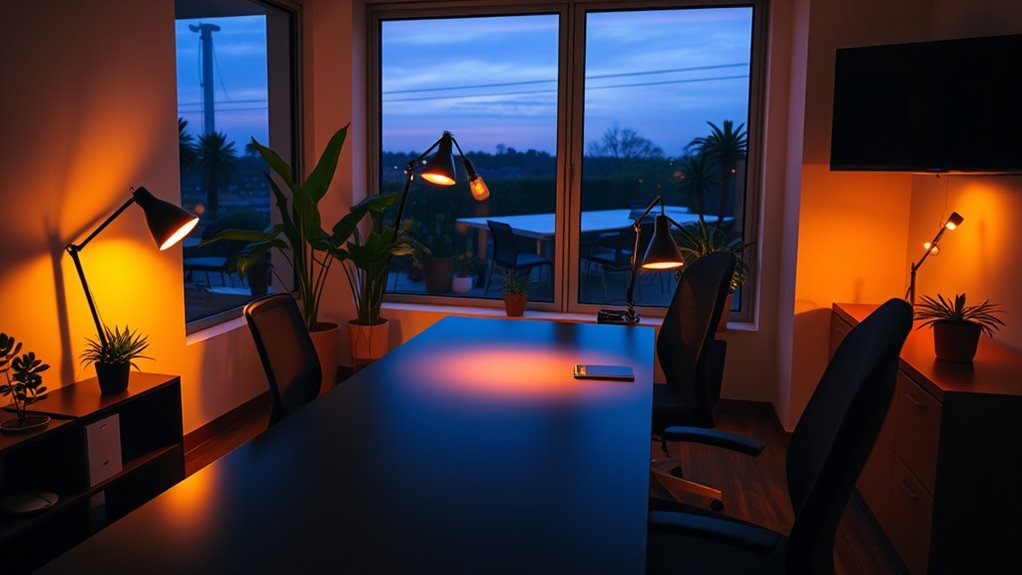
To protect your circadian rhythms, you should be mindful of the type of lighting you use in your workspace. Standard fluorescent or LED lights often emit high levels of blue light, especially during evening hours. If you’re working late, consider switching to warmer, softer lighting options that emit less blue light. These lights help signal to your brain that it’s time to wind down, making it easier to switch over into restful sleep. Additionally, many modern office lights and desk lamps now come with adjustable color temperatures. Using these, you can set your lighting to a warmer hue as the day winds down, reducing blue light exposure and aligning better with your natural sleep cycle.
Another practical step is to limit screen time before bed. If you need to wind down after work, try to turn off computers, tablets, and smartphones at least an hour before bedtime. If you must use screens, consider installing blue light filters or using glasses with blue light blocking lenses. These tools can dramatically cut down the amount of blue light reaching your eyes, helping preserve your melatonin levels and maintain healthy circadian rhythms.
Creating an office environment that minimizes blue light exposure is vital, especially if you work irregular hours or late shifts. Simple adjustments, such as using warmer lighting in the evening and reducing screen brightness, can make a big difference. Remember, your body relies on these natural cues to regulate sleep, and disrupting them with excessive blue light can leave you feeling groggy, less refreshed, and less able to handle the demands of the next day. Protecting your circadian rhythms by choosing appropriate lighting can help guarantee you get better sleep and wake up feeling more rested and energized.
Frequently Asked Questions
Can Blue Light Filters Improve Office Lighting?
Blue light filters can improve your office lighting by reducing blue light exposure, especially during late hours. When you use them, they help protect your sleep quality by minimizing blue light’s impact on melatonin production. This means you stay more alert during work but can wind down better afterward. Installing blue light filters on screens is a simple way to balance productivity and sleep health without sacrificing visibility or comfort.
What Are the Best Light Temperatures for Evening Work?
Research shows that warm light temperatures around 2700-3000K are best for evening work, helping your body produce melatonin and prepare for sleep. You prefer softer, amber tones when working later, as they reduce blue light exposure. Use dimmer, warmer lighting as part of your evening illumination strategies to maintain productivity without disrupting your sleep cycles. Adjust your office lighting to match these preferences for healthier, more balanced evenings.
Do Natural Light Sources Affect Sleep Quality?
Yes, natural light sources impact your sleep quality by influencing your circadian rhythms. Exposure to bright natural light during the day helps regulate your internal clock, promoting melatonin production at night. However, excessive exposure to blue light from sunlight or screens in the evening can cause melatonin suppression, making it harder to fall asleep. To improve sleep, try to get natural light during the day but reduce exposure close to bedtime.
How Does Screen Brightness Impact Sleep Disruption?
Bright screens can subtly disturb your sleep by affecting your circadian rhythm. When you use high brightness levels, the blue light they emit can lead to melatonin suppression, making it harder to fall asleep. You might notice your sleep quality dips, even if you don’t realize why. To protect your rest, dim your screen in the evening or use blue light filters, helping your body stay in sync with natural sleep cues.
Are There Portable Lighting Options for Better Sleep Hygiene?
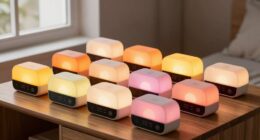
Yes, you can improve sleep hygiene with portable lamps and adjustable fixtures. Opt for portable lamps with warm, dimmable settings to create a calming environment before bed. Adjustable fixtures allow you to customize brightness levels, reducing blue light exposure. Keep these lamps nearby for evening use, so you don’t rely on harsh screens. These options help signal to your body that it’s time to wind down, supporting better sleep.
Conclusion
By choosing the right office lighting, you’re steering your ship away from the stormy waters of disrupted sleep. Think of your workspace as a delicate garden that needs just the right light to thrive without burning out. When you prioritize sleep-friendly lighting, you’re nurturing your well-being, allowing your health and productivity to blossom. Remember, a well-lit office is your lighthouse guiding you safely through the night, ensuring you wake refreshed and ready for whatever tomorrow brings.