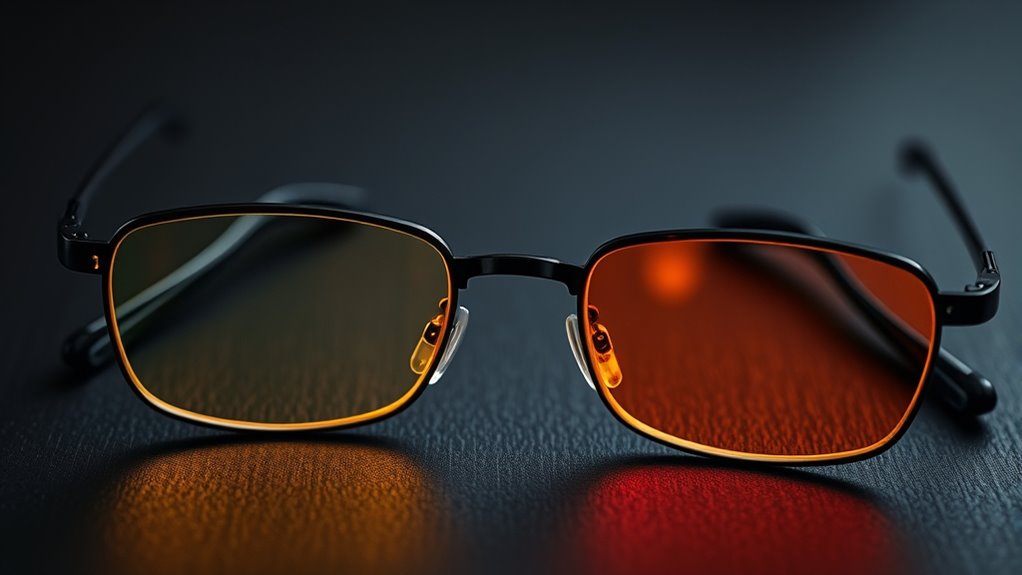

If you’re choosing between amber and orange lenses for a calmer night experience, amber lenses often feel softer and more soothing on your eyes, thanks to their light filtering that reduces blue light and haze without overly darkening your view. Orange lenses may feel more intense in reducing glare and sharpening contrast, which can be less calming for some users. To discover which tint aligns best with your comfort and needs, explore the unique qualities further.
Key Takeaways
- Amber lenses tend to offer a more natural and calming visual experience by filtering blue light without significantly altering color perception.
- Orange lenses provide stronger glare reduction and contrast enhancement, which may feel more intense or stimulating than amber tints.
- The manufacturing and coating quality of amber lenses often result in a softer, more soothing visual effect.
- Orange lenses’ additional coatings for glare control can sometimes create a more pronounced visual “sharpness,” potentially feeling less calming.
- Overall, amber lenses are generally perceived as calmer and easier on the eyes during night use due to their subtle filtering properties.

When choosing between amber and orange lenses, understanding their differences can substantially impact your visual experience. Both lens colors are popular choices for night driving, sports, and other activities requiring enhanced contrast, but their origins and manufacturing processes reveal why they perform differently. The lens color history traces back decades; amber lenses gained popularity among shooters and drivers for their ability to block blue light and improve contrast. Orange lenses, on the other hand, evolved from similar needs but with a slightly different focus—reducing glare and filtering specific wavelengths to improve clarity in low-light conditions. These historical developments influence how each lens color interacts with light today.
Manufacturing processes are key to understanding how amber and orange lenses achieve their distinct effects. Both types are typically made from polycarbonate or other impact-resistant plastics, but the tinting process varies. Amber lenses are usually created by adding dyes that filter out blue light, which enhances contrast and reduces haze, especially in foggy or hazy environments. Orange lenses involve a similar dyeing process but often include additional coatings or materials to further block blue and violet light, making them more effective at reducing glare and improving depth perception in certain conditions.
Amber lenses are dyed to filter blue light, enhancing contrast and reducing haze in foggy conditions.
The manufacturing process also affects durability and clarity. Amber lenses tend to have a more uniform tint, which results in consistent color transmission and less distortion. Orange lenses might incorporate multiple layers or specialized coatings to achieve their specific filtering qualities, sometimes leading to slight variations in clarity but offering superior glare reduction. The choice between the two often hinges on what you need from the lens—amber for general contrast enhancement and orange for glare control and sharper visibility in low-light situations.
Understanding their lens color history and manufacturing processes helps you make an informed decision. If you’re seeking a lens that enhances contrast without considerably altering color perception, amber lenses are usually the way to go. They’re versatile and have a proven track record for reducing blue light exposure. Conversely, if glare reduction and improved depth perception are your priorities, orange lenses might serve you better. They’re particularly useful in conditions where reducing visual noise and enhancing clarity can prevent eye strain and fatigue.
Both lens colors have evolved through technological advances, but their core differences remain rooted in their histories and manufacturing techniques. Recognizing these factors allows you to select the best night tint for your needs, whether it’s for driving, sports, or other activities. Additionally, advances in lens coating technology continue to improve the durability and effectiveness of both amber and orange lenses, making them more reliable over time. By understanding how each lens color is made and the history behind their development, you gain insight into their unique benefits and limitations, helping you choose the calmer, more effective option for your visual comfort.
Frequently Asked Questions
Are Amber or Orange Lenses Better for Driving at Night?
For night driving, amber lenses are generally better because they reduce glare and enhance contrast, helping you see more clearly. They also tend to have good lens durability, so they last longer with regular use. Plus, amber lenses fit current fashion trends, making them stylish as well as functional. Orange lenses can be effective too, but amber is usually the preferred choice for better visibility and durability during nighttime driving.
Do Amber and Orange Lenses Affect Color Perception Differently?
Imagine you’re driving at night with amber lenses, and suddenly, orange lenses might make you notice more color distortion, impacting your visual clarity. Amber and orange lenses do affect your color perception differently; amber tends to enhance contrast, while orange can shift your view slightly, causing mild color distortion. This difference influences how clearly you see and interpret your surroundings, especially in low-light conditions, helping you stay safer on the road.
Which Tint Reduces Glare More Effectively?
Orange lenses reduce glare more effectively than amber lenses, making them ideal for enhancing visual clarity in low-light or foggy conditions. By filtering out blue light and minimizing reflections, they help you see more clearly and comfortably at night. If glare reduction is your priority, especially during night driving or outdoor activities, orange tints offer superior protection and improved visual clarity, ensuring you experience less eye strain and better visibility.
Can These Lenses Improve Sports Performance?
Ever wonder if these lenses can boost your sports performance? They certainly can! Amber and orange tints enhance contrast and depth perception, helping you react faster and stay sharper during gameplay. Plus, they reduce eye fatigue, so your eyes stay fresh longer. Wearing the right tint during sports activities can give you a competitive edge, making every move more precise and confident. Isn’t it time you tried them?
Are Amber or Orange Lenses More Suitable for People With Light Sensitivity?
If you have light sensitivity, amber lenses are more suitable because they block blue light and reduce glare, offering a calmer visual experience. These lenses are popular in fashion trends and are often made from lightweight, durable lens materials like polycarbonate or Trivex. Their warm tint enhances contrast and comfort, making them ideal for sensitive eyes, whether you’re outdoors or using screens frequently.
Conclusion
As you settle into the quiet glow of night, amber lenses wrap your vision in a warm, calming hue like sunset whispers, easing your mind into peaceful slumber. Orange lenses, with their vibrant, energetic tint, feel like a sunrise stirring your senses awake. Whether you crave the gentle embrace of amber or the lively spark of orange, choose the tint that best soothes your soul and turns your nighttime into a serene, calming escape.