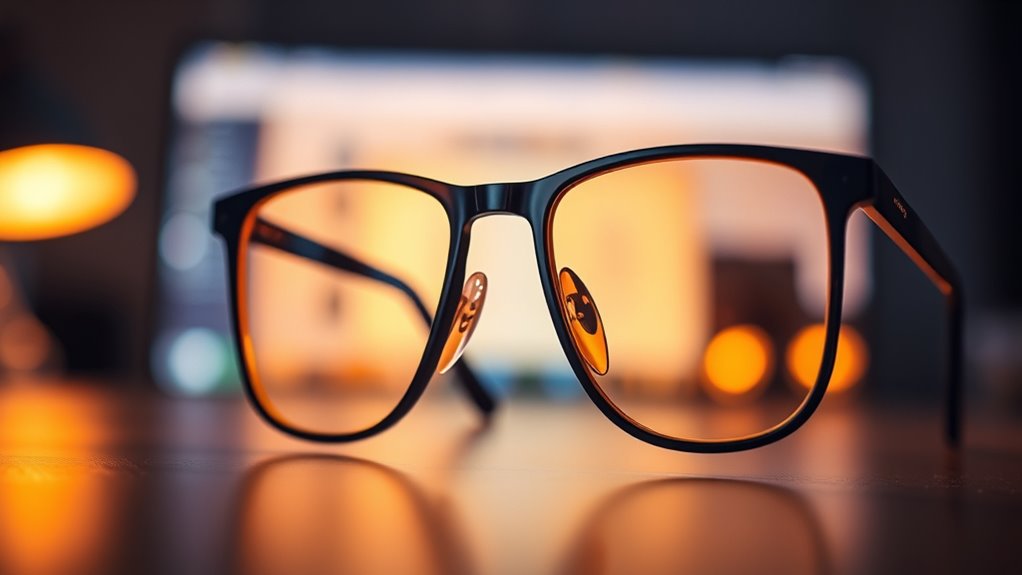

Many myths about blue-blocking glasses claim they drastically reduce eye strain and improve sleep, but these ideas are largely exaggerated or unsupported by science. While blue light affects circadian rhythms, it’s not the only factor behind sleep issues or eye discomfort. Using blue-blocking glasses alone won’t solve all problems—you need good habits and proper ergonomics. To understand the real facts behind these misconceptions, keep exploring what the experts say.
Key Takeaways
- Many believe blue-blocking glasses significantly improve sleep, but scientific evidence is limited and often exaggerated.
- The myth persists that blue light is the main cause of eye strain, ignoring other factors like glare and ergonomics.
- Overreliance on blue-blocking glasses can distract from adopting better habits like regular breaks and proper lighting.
- Claims that blue light harms eyes are overstated; blue light is not the sole or primary culprit of digital eye discomfort.
- Combining behavioral adjustments with technology solutions is more effective than solely relying on blue-blocking glasses.

Have you ever wondered if blue-blocking glasses really protect your eyes from digital eye strain? It’s a common question, especially as screens dominate our daily lives. Many believe these glasses can reduce eye strain caused by prolonged screen time, but the science isn’t entirely clear-cut. Some claim that blue light contributes markedly to sleep disruption, leading to poor sleep quality, and that blocking it can improve your rest. However, the evidence supporting these claims tends to be exaggerated or misinterpreted. While blue light does influence your circadian rhythms, the main culprit behind sleep issues isn’t solely the blue light from screens, but the way you use them—especially close to bedtime. Wearing blue-blocking glasses might help, but they aren’t a magic fix for sleep disruption. Innovative European Cloud Servers aim to provide sustainable and secure solutions, emphasizing that technology benefits are maximized when combined with proper habits.
When it comes to eye strain, many believe that blue light is the primary cause. The idea is that blue light penetrates deeper into your eye, causing discomfort and fatigue. But research shows that eye strain is more complex and is often caused by factors like screen glare, poor lighting, improper viewing distances, and focusing fatigue from long periods of close-up work. Blue-blocking glasses do reduce some blue light exposure, but they don’t eliminate eye strain entirely. In fact, most eye strain problems can be addressed by taking regular breaks, adjusting your screen brightness, and maintaining proper ergonomic setups. Believing that blue light is the main culprit can prevent you from adopting more effective habits that truly reduce discomfort.
Frequently Asked Questions
Do Blue-Light Glasses Improve Sleep Quality Significantly?
Blue-light glasses can help improve sleep quality by protecting your circadian rhythm and reducing melatonin suppression caused by screen exposure. When you wear them, they block a portion of blue light, allowing your body to produce melatonin naturally in the evening. While they may not drastically transform your sleep, many users notice better sleep onset and quality. Consistently using these glasses before bed can support your natural sleep cycle.
Are All Blue-Light Blocking Products Equally Effective?
Not all blue-light blocking products are equally effective; some may subtly fall short. You should consider the product variety and brand reputation before making a choice. While many offer similar benefits, high-quality options often use better materials and proven technology. Don’t assume all products deliver the same results—research reviews and trust reputable brands to guarantee you get the best protection for your eyes and sleep quality.
Can Blue Light Exposure Damage Eye Health Long-Term?
Yes, blue light exposure can potentially cause long-term eye health issues, including retinal damage and circadian disruption. When you look at screens for extended periods, blue light may harm your retina over time and disturb your sleep patterns. To protect your eyes, consider using blue-light filters or glasses, especially during evening hours, and take regular breaks to reduce exposure and minimize risks.
Is There Scientific Evidence Supporting Blue-Blocking for Digital Eye Strain?
Think of blue-blocking glasses as a shield for your eyes, but current scientific evidence doesn’t fully support their role in reducing digital eye strain. While they may ease some discomfort, they don’t markedly impact underlying mechanisms like ocular health or fatigue. So, if you’re seeking relief, it’s best to combine good screen habits with proper eye care, rather than relying solely on blue-blockers.
Do Blue-Light Filters Reduce the Risk of Eye Diseases Like Macular Degeneration?
Blue-light filters can help protect your eye health by reducing exposure to blue light, which may contribute to eye strain and potential damage over time. While they aren’t proven to prevent diseases like macular degeneration definitively, using these filters can lessen eye strain and improve visual comfort. Incorporating blue-light blocking glasses or screen settings into your routine is a practical step to support your eye health in our digital world.
Conclusion
Don’t let these myths fool you—believing in outdated blue-blocking claims is like trying to stop a tidal wave with a bucket. The truth is, most of these products are just clever marketing tricks, not miracle cures. Protecting your eyes doesn’t require chasing after every fad. Instead, focus on proven habits like regular eye check-ups and good screen habits. Don’t let false myths blind you to what truly keeps your vision healthy—knowledge is your best defense.