
Yes, daylight passing through your eyelids can wake you because even faint light signals your brain that it’s time to wake up. Your eyelids aren’t fully opaque, so some light reaches your retinas, especially during early mornings when the sun is low. This light can partially disrupt your sleep cycle, causing you to wake or sleep more lightly. If you want to find out how to minimize this effect, there’s more to discover.
Key Takeaways
- Light filtering through eyelids can reach the retina and signal the brain to wake up.
- Even faint daylight during dawn can disrupt sleep due to eyelid light penetration.
- Sensitivity to light varies, making some more prone to waking from daylight through eyelids.
- External light sources and early morning sunlight increase the likelihood of waking through eyelid exposure.
- Using blackout curtains or sleep masks can help prevent daylight from waking you through your eyelids.

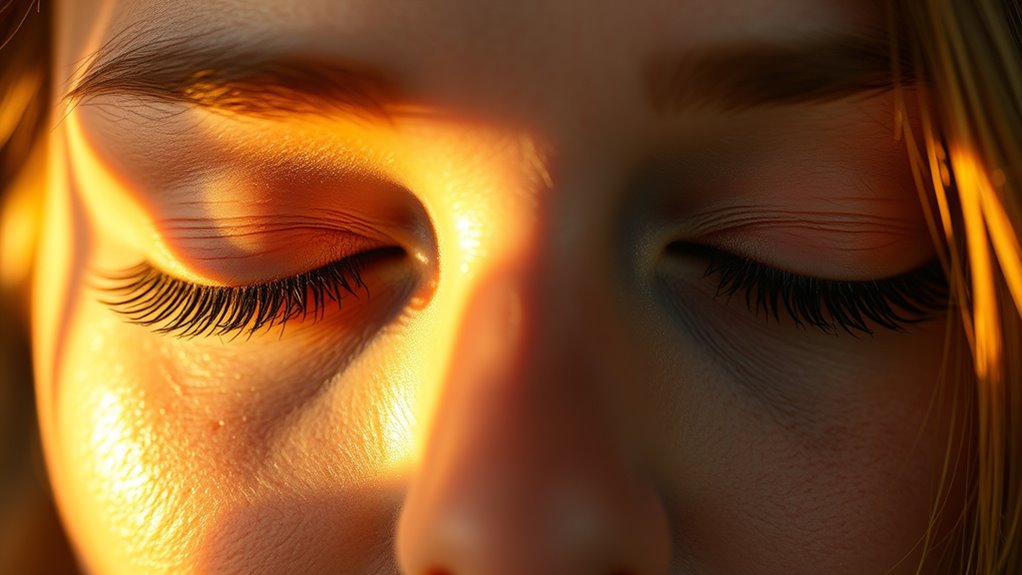
Have you ever noticed how a gentle glow of morning light can stir you from sleep, even when your eyelids are still closed? That subtle awakening isn’t just coincidence. Your eyes are incredibly sensitive to light, and even a faint amount filtering through your eyelids can influence your sleep. This phenomenon is tied to your body’s light sensitivity—a trait that helps regulate your internal clock, or circadian rhythm. When light enters your eyelids, it signals to your brain that it’s time to wake up, which can lead to a partial disruption of your sleep cycle. The more sensitive you are to light, the more likely it is that even minimal illumination will impact your sleep quality. Light sensitivity varies from person to person, affecting how easily you wake up from morning light. Your eyelids aren’t completely opaque, especially when they’re thin or during certain times of the year when the sun is lower. This means that during early mornings, a weak glow can penetrate enough to reach your retina, sending signals to your brain that it’s time to wake. If your sleep cycle is already fragile—perhaps due to irregular sleep habits or exposure to artificial light late at night—these signals can cause you to wake prematurely or experience lighter sleep. Over time, this can lead to sleep cycle disruption, making it harder for you to enjoy restful, uninterrupted sleep. You might find yourself waking up feeling less refreshed, even if you technically got enough hours.
Light sensitivity varies from person to person. Some individuals are highly responsive to even the faintest light, while others have a more robust tolerance. If you notice that morning light often pulls you from sleep or causes disturbances, it could be a sign that your body is particularly sensitive. This heightened sensitivity not only affects how easily you wake but can also interfere with your ability to stay asleep during dawn hours. Over time, this can shift your sleep cycle, causing earlier wake-up times and potentially disrupting your overall sleep pattern. To minimize these effects, you might consider using blackout curtains or sleep masks, especially if you’re sensitive to light or live in a bright environment. These tools help block out external light, preserving the integrity of your sleep cycle and reducing the chances of light-induced awakening. Recognizing how light sensitivity influences your sleep can empower you to make adjustments that promote more consistent, restorative rest. After all, understanding the subtle ways daylight can influence your sleep is key to maintaining a healthy, balanced circadian rhythm.

MUSICOZY Sleep Headphones Bluetooth 5.4 Sleep Eye Mask with HD Speakers
- Comfortable & Ergonomic Design: Soft velvet and stretch cotton for comfort
- Long Battery Life: Over 14 hours of playback on a single charge
- Type-C Charging: Convenient fast charging with Type-C port
As an affiliate, we earn on qualifying purchases.
Frequently Asked Questions
Does Eyelid Color Affect Light Sensitivity During Sleep?
Eyelid pigmentation can influence your light sensitivity during sleep because darker pigmentation tends to filter more light, reducing its impact. Your eyelids’ light filtering properties depend on their pigmentation; lighter eyelids may let more light through, potentially waking you up. If you notice light affecting your sleep, consider how eyelid color and pigmentation might play a role in your sensitivity, and explore options like sleep masks for better darkness.
Can Sleeping With Eyes Slightly Open Influence Waking?
Sleeping with your eyes slightly open can influence waking by exposing you to subliminal cues like ambient light, which may trigger subconscious responses. This partial exposure can also affect your dreams, as external stimuli subtly influence dream content and intensity. You might wake more easily if your environment provides cues that your brain interprets as signals to alertness, disrupting your sleep cycle and making you more prone to waking during the night.
Is It Common to Wake From Daylight Only Through Eyelids?
Imagine the gentle dawn slipping through your eyelid’s translucency like whispers of light, barely stirring your dream perception. It’s quite common to wake from daylight filtering through your eyelids, as even a faint glow can signal morning’s arrival. Your body’s natural clock reacts to this subtle illumination, nudging you awake. So yes, that soft shimmer of daylight can be enough to wake you, especially if you’re sensitive to light.
Do Different Sleep Stages Respond Differently to Light Exposure?
Yes, different sleep stages respond differently to light exposure. During lighter sleep stages like NREM, your body perceives light more easily, potentially causing arousal. Deep sleep stages, such as REM or slow-wave sleep, are less sensitive to light, helping you stay asleep despite light perception. Your sleep architecture naturally shifts throughout the night, influencing how your brain reacts to ambient light and affecting your overall sleep quality.
Can Eyelid Thickness Impact Light Penetration and Wakefulness?
Your eyelid thickness acts like a dimmer switch, controlling how much daylight sneaks into your eyes. Thicker eyelids block more light, making it harder for daylight to wake you, especially if you have sleep disorders. Conversely, thinner eyelids let more light pass through, potentially nudging you awake even in gentle dawn. Understanding your eye anatomy can help manage sleep issues and improve your rest.

2-Pack Sleeping Headphones Wireless Bluetooth 5.4, Headband Headphones with Ultra-Thin Speakers, Bluetooth Headband for Side Sleepers, Running, Workout, Insomniac, Travel, Meditation(Black&Grey)
- Multi-Functional Design: Headband, sleep headphones, eye mask in one
- Comfortable for Side Sleepers: Ultra-thin speakers prevent ear pressure
- Easy Bluetooth Connectivity: Stable pairing with all Bluetooth devices
As an affiliate, we earn on qualifying purchases.
Conclusion
So, next time you wake up feeling strangely alert without opening your eyes, remember that daylight sneaking through your eyelids is like a gentle lighthouse guiding you awake. It might not be as bright as direct sunlight, but it’s enough to stir your senses and pull you out of sleep. Your body’s internal clock is a finely tuned orchestra, and even the faintest light can be the conductor’s baton, signaling that it’s time to start a new day.

Veeniitosr Sleep Headphones Bluetooth 6.0 Headband for Side Sleeper (Black)
- Multi-Functional Design: Headband, eye mask, and sleep headphones
- Durable & Comfortable Material: High-stretch fabric for snug fit
- Detachable & Washable: Removable Bluetooth module and headband
As an affiliate, we earn on qualifying purchases.