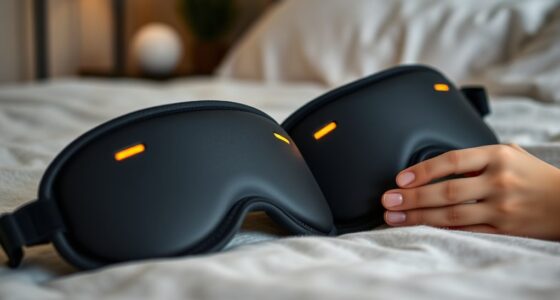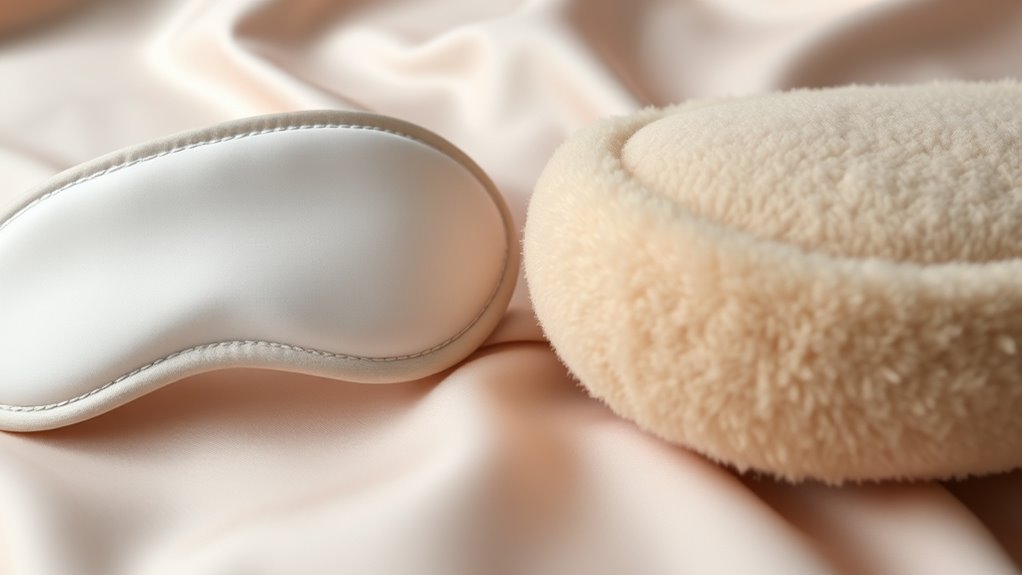

When choosing between thin and padded eye masks, you’ll find that thin masks are lighter, more durable, and easier to pack, making them great for travel. They offer a minimal feel that reduces pressure on your eyes, but you may sacrifice some light-blocking comfort. Padded masks provide extra cushioning and better light blocking but can be bulkier and less portable. To discover which option suits your comfort and travel needs best, keep exploring the details.
Key Takeaways
- Thin masks provide a minimal, less intrusive feel, enhancing comfort for those sensitive to pressure around the eyes.
- Padded masks offer extra cushioning, which can increase comfort for sleepers needing more light blocking or gentle pressure.
- Thinner masks typically exert less heat and trapping, reducing discomfort during extended wear or in warm environments.
- Padded masks may cause heat buildup and discomfort due to thicker materials and padding.
- The choice depends on balancing lightweight, unobtrusive comfort versus plush cushioning for personalized sleep experience.
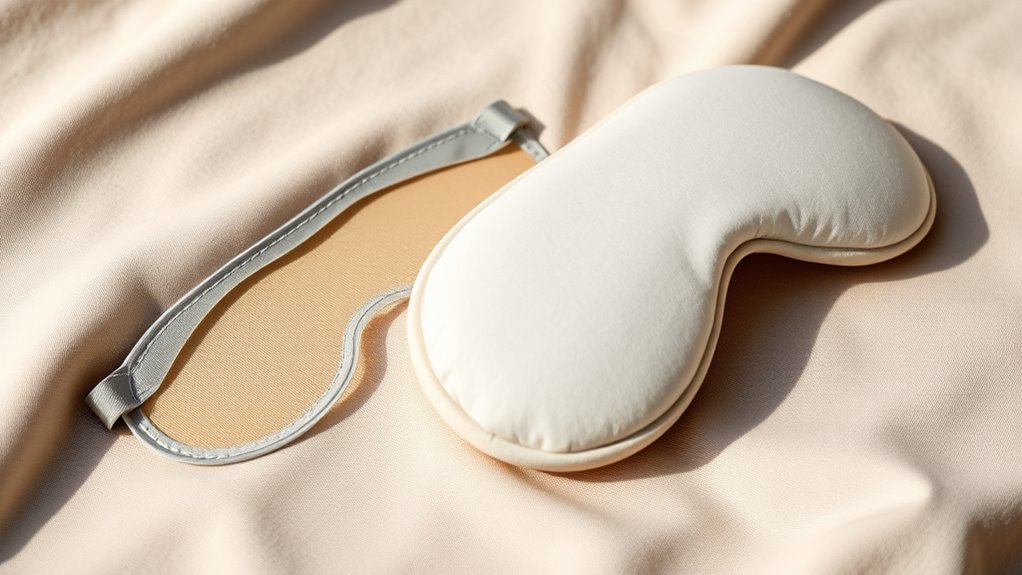
When choosing an eye mask, understanding the difference between thin and padded options can make a big impact on your comfort and sleep quality. The material durability of each type influences how long your mask lasts, especially if you travel frequently. Thin masks are often made from lightweight fabrics like silk or soft synthetic materials, which tend to be less prone to wear and tear over time. They’re simple to pack and tend to hold up well against the rigors of travel, making them a convenient choice for those on the go. Padded masks, on the other hand, generally feature thicker layers of foam or plush materials that can be more susceptible to creasing or deterioration with frequent use. If durability is a priority, you might find that thinner masks are more resilient, particularly when made from high-quality, tightly woven fabrics that resist stretching or fraying.
Travel convenience is another key consideration. Thin masks are usually more compact, lightweight, and easier to store in a travel bag or pocket. Their slim profile means they won’t take up much space and won’t add unnecessary weight to your luggage. Plus, because they’re less bulky, they tend to be more comfortable when sleeping in cramped or unfamiliar environments, like airplanes or hotel rooms. Padded masks can be bulkier and may demand a bit more space, which could be a drawback if you’re trying to pack light. However, some padded options come with adjustable straps or foldable designs, which can mitigate these issues somewhat. Still, if you prioritize ease of packing and minimizing weight, a thin mask might be the better choice for your travel needs.
Comfort is subjective, but it often hinges on personal preferences for pressure and softness. Thin masks provide a more minimal feel, which some find less intrusive, allowing for better peripheral vision and less pressure on your eyes. Padded masks, however, offer extra cushioning that can feel more luxurious and help block out light more effectively, especially if you’re sensitive to pressure or prefer a more snug fit. Keep in mind that thicker padding might trap heat, so if you tend to get hot or sweat during sleep, a thinner material could help keep you cooler and more comfortable. Ultimately, your choice should balance how much comfort you desire with how practical the mask is for your lifestyle, especially when considering durability and travel convenience.
Frequently Asked Questions
How Do Eye Masks Affect Sensitive Skin Types?
If you have sensitive skin, eye masks can cause allergic reactions or irritation, especially if they contain harsh materials. You should look for masks made from gentle, hypoallergenic fabrics like silk or cotton. Avoid masks with strong dyes or chemicals that can trigger reactions. A soft, breathable mask helps protect your skin while providing comfort, reducing the risk of irritation and ensuring a soothing experience.
Are Padded Eye Masks Suitable for Travel?
Padded eye masks are perfect travel companions, like a cozy blanket for your eyes. They provide enhanced sleep comfort by blocking out light more effectively, helping you rest during long journeys. Their plush padding offers extra cushioning, making them ideal for travel convenience. Whether on a plane or a train, padded masks keep you comfortable and undisturbed, turning travel time into restful moments rather than restless hours.
Can Thin Masks Provide Enough Light Blockage?
Thin masks can provide adequate light blockage if made from highly opaque materials with minimal light leakage. Look for masks with dense, non-transparent fabrics and snug fits to guarantee darkness. While they may not block as much light as padded options, a well-designed thin mask effectively reduces light leakage, especially in controlled environments. To maximize darkness, choose one with adjustable straps and ensure it fits snugly around your eyes.
Do Padded Masks Cause Overheating During Sleep?
Padded masks can cause overheating during sleep, especially if the material lacks breathability. You might notice discomfort from material overheating if the padding traps heat or isn’t made from breathable fabric. To avoid this, choose padded masks with breathable materials like cotton or moisture-wicking fabrics. This helps reduce breathability concerns, keeping you cooler and more comfortable throughout the night.
How Do Eye Masks Impact Eye Pressure?
Eye masks can influence eye pressure depending on the mask material and fit. If the mask is too tight or made from stiff material, it may increase pressure around your eyes, potentially causing discomfort or affecting eye health. Choose a mask with a soft, breathable material that fits snugly without squeezing too tight. Properly fitting masks help maintain healthy eye pressure while offering comfort during sleep or relaxation.
Conclusion
Choosing between thin and padded eye masks really boils down to personal comfort and your sleep habits. If you prefer a lightweight feel and minimal pressure, a thin mask might suit you better. But if you want total blackout and plush comfort, a padded mask could be your best bet. Remember, it’s all about finding what works for you—sometimes you have to try a few to find the perfect fit. After all, it’s a case of “beauty is in the eye of the beholder.”