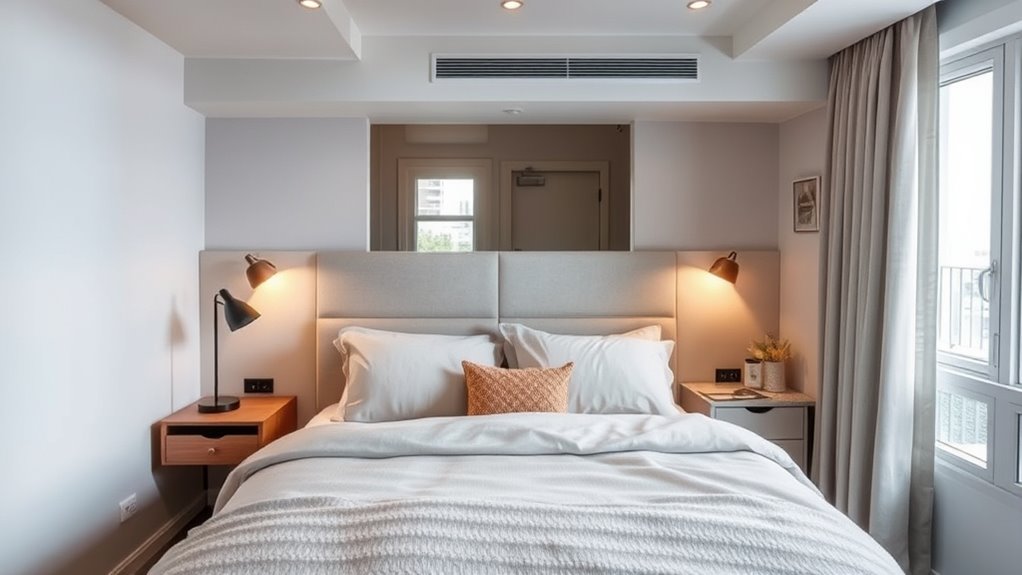

Create a dedicated sleep-only zone in your studio by using room dividers, curtains, or bookshelves to form a physical barrier. Incorporate blackout curtains, soft lighting, and soothing colors to craft a calming environment. Keep the area uncluttered and away from work or living spaces to signal it’s for rest. Adding noise reducers like thick curtains or white noise machines helps block distractions. Explore these strategies to turn your space into a peaceful retreat that promotes better sleep.
Key Takeaways
- Use room dividers, curtains, or shelves to physically separate your bed from living areas.
- Install blackout curtains and soft lighting to create a calming, sleep-friendly environment.
- Add sound absorbers or white noise machines to reduce external and household noise disruptions.
- Choose cozy bedding and soothing colors to enhance comfort and promote relaxation.
- Keep the space uncluttered and organized to reinforce boundaries and support restful sleep.
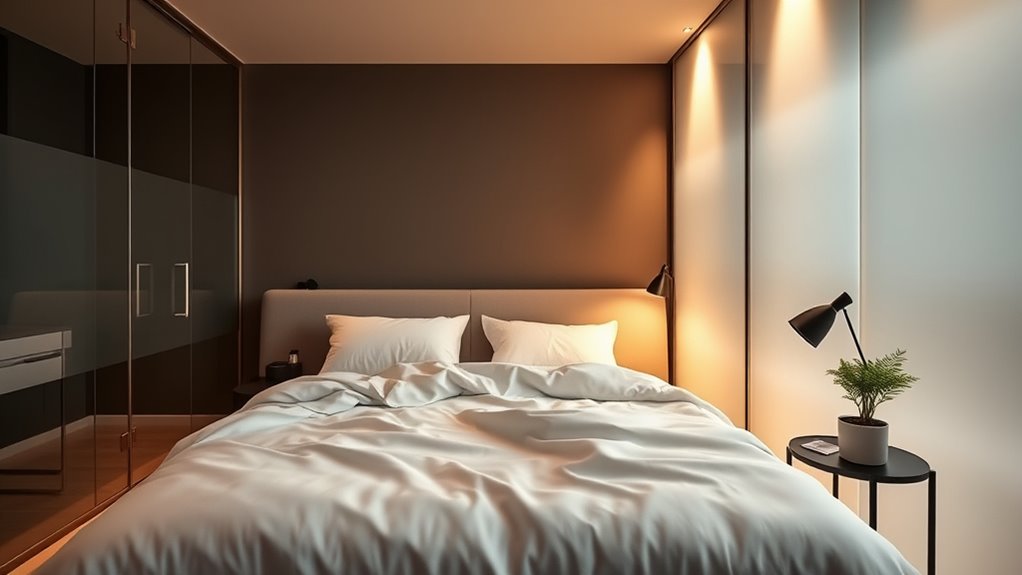
Ever wondered how to create a peaceful sleep sanctuary in a small studio apartment? The key lies in establishing a dedicated sleep-only zone that offers both bedroom privacy and noise reduction. When space is limited, it’s tempting to keep your bed in the same area as your living or work zone, but you can transform a corner into a tranquil retreat that signals to your brain it’s time to unwind and rest. To do this effectively, start by defining your sleep zone with visual cues. Use a room divider, a bookshelf, or even a curtain to create a physical barrier that separates your bed from the rest of the apartment. This not only enhances bedroom privacy but also helps your mind associate that space specifically with sleep, making it easier to relax and disconnect from daily stresses.
Next, focus on noise reduction. Small apartments often amplify sounds, whether it’s city noise, household chatter, or electronic devices. To minimize disruptions, consider adding thick curtains or fabric wall hangings around your sleep space. These serve as sound absorbers, muffling external noises and creating a quieter environment. Using a white noise machine or earplugs can further help block out disturbances, especially if your apartment faces busy streets or noisy neighbors. Combining physical barriers with sound masking techniques ensures your sleep zone remains peaceful, allowing you to fall asleep faster and enjoy more restorative rest.
Add thick curtains or fabric wall hangings to absorb noise and create a peaceful sleep environment.
Lighting also plays an essential role in establishing a sleep-only zone. Opt for blackout curtains or shades that prevent streetlights or indoor lighting from invading your space. Keep your bedside area free of bright screens or work-related materials, signaling to your brain that it’s time to wind down. Soft, warm lighting, like bedside lamps with dimmers, can create a calming atmosphere conducive to sleep. When your sleep area feels distinct and undisturbed, it’s easier to mentally separate it from your active living space, reinforcing the idea that this is your personal retreat. Incorporating soundproofing strategies can further enhance your sleep environment by reducing ambient noise and increasing overall comfort.
Finally, keep your sleep zone uncluttered and designed for comfort. A cozy mattress, quality pillows, and bedding in soothing colors will make your sleep space inviting. When everything about your sleep-only zone is tailored for rest, it naturally encourages better sleep habits. Remember, establishing clear boundaries—both physical and psychological—between your sleeping area and the rest of your studio is vital. With intentional organization, noise reduction strategies, and thoughtful design, you can create a peaceful sleep sanctuary that transforms your small apartment into a haven of rest and relaxation.
Frequently Asked Questions
How Can I Maximize Storage in My Sleep-Only Zone?
To maximize storage in your sleep-only zone, use decorative storage solutions like stylish baskets and under-bed storage to hide essentials. Incorporate multi-functional furniture, such as a bed with built-in drawers or a fold-away desk, to save space. Keep decor simple and organized, making your sleep area feel peaceful and clutter-free. This approach guarantees you get ample storage while maintaining a cozy, restful environment.
What Are the Best Lighting Options for a Sleep-Only Area?
Did you know that 63% of people find soft, warm lighting improves sleep quality? For your sleep-only area, opt for dimmable lighting fixtures or bedside lamps with warm bulbs. Incorporate mood lighting, like string lights or LED strips with adjustable brightness, to create a calming atmosphere. This setup helps signal your brain it’s time to relax, ensuring you get restful sleep every night.
How Do I Soundproof a Sleep-Only Zone Effectively?
To soundproof your sleep-only zone effectively, start by installing acoustic panels on the walls to absorb sound. Add soundproof curtains over windows to block outside noise and prevent sound leakage. Consider using a thick, plush rug to reduce floor noise. Combining these methods creates a quiet environment, ensuring restful sleep. Regularly check for gaps or weak points and seal them with weatherstripping or foam to maximize soundproofing.
Can I Use a Murphy Bed to Save Space?
Imagine transforming your tiny sanctuary into a versatile haven—yes, you can use a Murphy bed to save space. Murphy beds are perfect space-saving furniture, folding up neatly during the day to reveal your living area. They create a dedicated sleep-only zone without sacrificing room, making your studio feel larger and more organized. It’s a smart, stylish solution that maximizes every inch and keeps your space functional.
What Materials Are Best for Creating a Cozy Sleep Environment?
You should choose soft, breathable materials like cotton or linen for your bed linens, as they create a cozy, inviting feel. Incorporate cozy textures such as plush throws, fluffy pillows, and a soft rug to enhance comfort. These materials help regulate temperature and add warmth, making your sleep environment more relaxing. Opt for calming colors and simple patterns to promote restful sleep in your dedicated sleep zone.
Conclusion
Creating a dedicated sleep zone in your studio is like planting a peaceful garden amid a busy city. When you carve out that quiet space, it becomes your sanctuary, where rest flourishes. Just as a garden needs boundaries to thrive, your sleep area needs separation to guarantee restful nights. With a little effort, you’ll find your sleep zone transforms your apartment into a haven of calm, making every night feel like slipping into a tranquil oasis.


