
Start by checking your child’s sleep tech settings for safety and comfort. Make sure the volume is no higher than 50 decibels to protect hearing, and verify temperature and humidity levels stay within safe ranges (68-72°F and 40-60%). Confirm the sleep mode and brightness are gentle and properly activated, and that your device’s security features are enabled. Also, check sensor placement and connectivity for reliable monitoring. Keep exploring these details to create a safe, soothing sleep environment.
Key Takeaways
- Verify sound volume limits are set to a safe level, ideally no higher than 50 decibels.
- Check and calibrate temperature and humidity settings to maintain a comfortable, child-safe environment.
- Ensure sensors are properly placed and regularly calibrated for accurate monitoring of air quality.
- Confirm nightlight brightness and sleep mode are adjusted for gentle illumination and quiet operation.
- Review device security settings, including encryption and trusted networks, to protect data and prevent unauthorized access.
Assessing the Volume and Sound Settings
Have you ever considered how important it is to set the right volume and sound levels on your child’s sleep tech? Proper sound calibration guarantees the device provides soothing sounds without being too loud, which can disturb sleep or cause hearing issues. Start by adjusting the volume limits to a safe, comfortable level, ideally no higher than 50 decibels. Many devices have built-in volume controls or limits—use these features to prevent accidental loud noises. Regularly check the sound settings to ensure they haven’t been changed accidentally. Remember, consistent sound levels promote better sleep and reduce the risk of hearing damage. Additionally, understanding the Free Floating nature of some sound technologies can help you better manage how sounds are dispersed and perceived in the environment. Being aware of sound dispersion techniques can improve the effectiveness of the sleep environment. Exploring dynamic sound adjustment features can help tailor sound levels throughout the night to maintain a calming environment. Adjusting these settings and understanding how sound environment interacts with your child’s sleep space can further enhance overall sleep quality. Taking these simple steps helps create a safe, calming environment for your child’s restful sleep.
Verifying the Temperature and Humidity Controls
You should verify that the thermostat settings are accurate for your child’s comfort. Check the humidity levels to prevent the air from becoming too dry or too damp. Using reliable monitors guarantees you can consistently maintain a safe and cozy sleep environment. Additionally, maintaining optimal air quality can reduce allergens and pollutants that may disturb your child’s sleep air quality. Ensuring proper filter maintenance in your home’s air purifiers can further support a healthier environment. Staying informed about family photoshoot fails can help you prepare for unexpected moments during family sessions.
Confirm Thermostat Settings
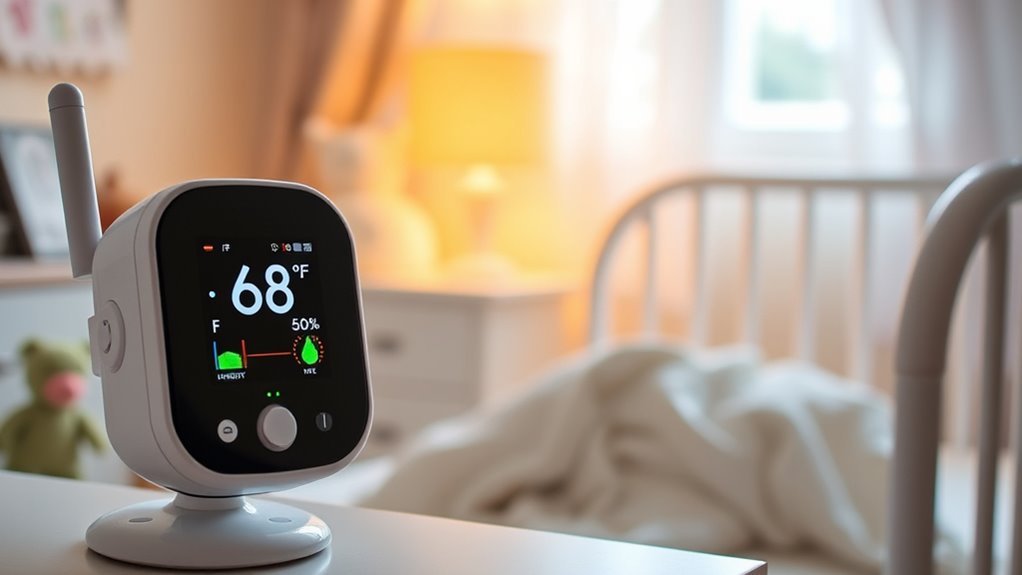
Ensuring the thermostat settings are correct is crucial for creating a safe sleep environment for your child. Proper temperature helps with sleep training and complements your nursery decor, making the space comfortable. Check that the thermostat is set between 68-72°F (20-22°C), avoiding drafts or hot spots. Use the table below to verify your settings:
| Setting | Recommended Range |
|---|---|
| Temperature | 68-72°F (20-22°C) |
| Humidity | 40-60% |
| Fan Mode | Auto |
Adjust the thermostat if needed, guaranteeing consistent temperature. Avoid sudden changes, which can disrupt sleep. Maintaining these ideal conditions helps your child sleep peacefully and safely through the night. Regular checks ensure the environment stays child-safe and conducive to restful sleep. Being aware of environmental controls can help you make informed adjustments to support your child’s health and comfort. Additionally, monitoring climate stability can prevent temperature fluctuations that may disturb sleep. Paying attention to thermal behavior can further optimize the nursery environment for your child’s safety and well-being. Regularly reviewing these settings can also help prevent temperature fluctuations, ensuring a consistent and stable sleep environment.
Check Humidity Levels
Are the humidity levels in your child’s sleep environment properly balanced? Poor air quality caused by dry air or excess humidity can disrupt sleep and affect your child’s comfort. Use a hygrometer to check current levels—ideally, they should be between 40-60%. If the air is too dry, consider a humidifier; if it’s too damp, use a dehumidifier. Also, ensure the room’s nightlight features don’t emit excessive heat or light that could impact air quality or disturb sleep. Proper humidity helps prevent dry skin, congestion, and respiratory issues. Regularly monitoring these levels ensures a safe, comfortable sleep environment, giving you peace of mind that your child is sleeping in ideal conditions. Understanding air quality and its effects can help you optimize your child’s sleep space even further. Maintaining an optimal indoor environment is essential for a restful night’s sleep and your child’s overall health. Additionally, selecting safe sleep tech with adjustable settings can further enhance safety and comfort during sleep. For example, integrating sauna and cold-plunge systems in your home environment can improve overall air circulation and climate control, contributing to better sleep conditions. Monitoring and adjusting air circulation can help maintain healthy humidity levels and promote restful sleep.
Use Reliable Monitors
To maintain a safe and comfortable sleep environment for your child, it’s essential to use reliable monitors that accurately verify temperature and humidity levels. Regularly check your monitor calibration to ensure readings are precise, as inaccurate data can compromise safety. Keep firmware updates current, since manufacturers often release improvements that enhance monitoring accuracy and security. Avoid relying on outdated devices, which may provide false readings or fail unexpectedly. Test your monitors periodically, verifying they respond correctly to environmental changes. Proper calibration and timely updates help you trust your device’s measurements, creating a safer sleep space for your child. Regular testing and maintenance further enhance the device’s reliability, ensuring ongoing safety and peace of mind. Additionally, consider monitor placement carefully to avoid false readings caused by direct sunlight or drafts, and be aware of sensor accuracy to ensure your device consistently provides trustworthy data. Being aware of device lifespan can also help you replace aging monitors before they become unreliable. Incorporating environmental sensors with advanced features can further improve your monitoring accuracy and overall safety.
Checking the Sleep Mode and Brightness Levels
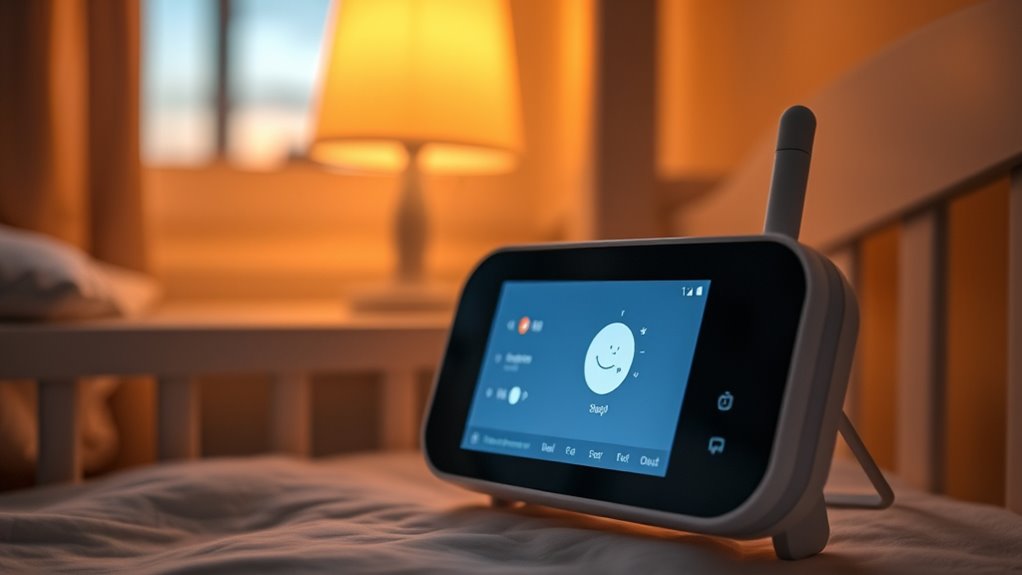
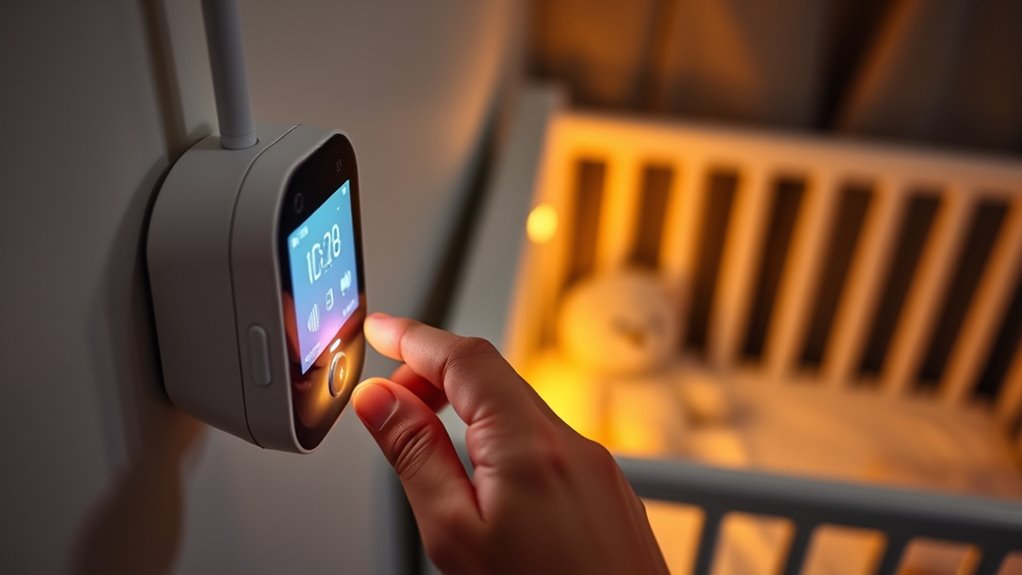
Checking the sleep mode and brightness levels on your child’s sleep tech is essential to create a safe and comfortable environment. Start by verifying the nightlight calibration to ensure it provides gentle, soothing light without being too bright or disruptive. Adjust the brightness levels so your child can fall asleep easily without overstimulation. Look into the sleep mode customization options to set the device to a quiet, low-light setting during sleep hours, preventing unnecessary noise or light disturbances. Confirm that the sleep mode automatically activates at bedtime and deactivates when needed. Properly calibrated nightlights and tailored sleep modes help promote restful sleep, reduce risks, and ensure your child’s safety throughout the night. Regular checks keep the settings aligned with your child’s evolving needs.
Ensuring Proper Connectivity and Security Measures
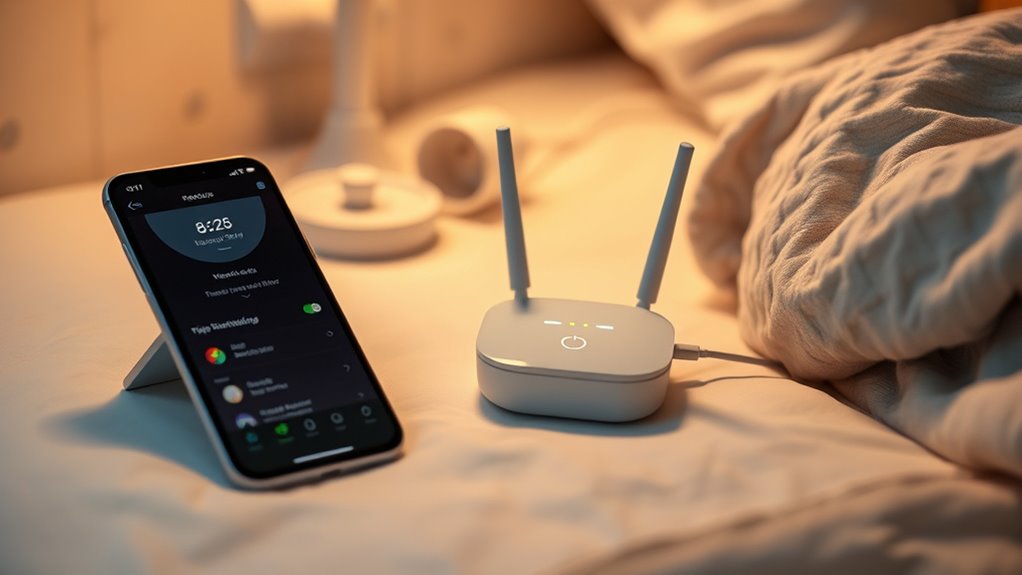
How can you guarantee that your child’s sleep tech stays secure and functions reliably? Start by ensuring strong device encryption, which protects data during transmission and storage. Implement user authentication, such as passwords or biometric verification, to prevent unauthorized access. Regularly update firmware to patch security vulnerabilities. Check the device’s connectivity, making sure it connects only to trusted networks. Use a separate Wi-Fi network for the sleep tech to isolate it from other devices.
| Security Measure | Purpose |
|---|---|
| Device Encryption | Protects data from interception |
| User Authentication | Restricts device access to authorized users |
| Firmware Updates | Fixes security flaws and bugs |
| Trusted Network Connection | Ensures reliable and secure connectivity |
| Network Segregation | Isolates sleep tech from other devices |
Adjusting the Sleep Schedule and Alerts

To keep your child’s sleep routine consistent and secure, you should set regular bedtimes and enable real-time alerts for unexpected disruptions. Adjusting sensitivity settings helps prevent false alarms while ensuring you’re notified of genuine concerns. These steps give you better control over your child’s sleep environment and peace of mind.
Set Consistent Bedtimes
Establishing a consistent bedtime is essential for your child’s sleep health, and adjusting the sleep schedule can make this easier. When you set regular bedtimes, you help shape healthy dream patterns and create a stable sleep environment. Consistent routines reduce confusion and improve sleep quality. Consider the table below, which highlights key benefits of a fixed schedule:
| Benefit | Explanation |
|---|---|
| Better dream patterns | Regular sleep times support REM cycles |
| Improved sleep quality | Less tossing and turning |
| Easier wake-up times | Child feels more refreshed |
| Reduced bedtime resistance | Less resistance to sleep |
| Consistent sleep environment | Reinforces bedtime cues |
Enable Real-Time Alerts
Implementing real-time alerts can substantially enhance your child’s sleep routine by providing immediate guidance and reinforcement. By monitoring sleep patterns, you stay informed about your child’s rest quality and identify issues early. To maximize their effectiveness, customize notification preferences so you only receive alerts relevant to your child’s needs, avoiding unnecessary interruptions. Enable alerts for significant events like bedtime, wake-up times, or sleep disruptions. These alerts help you quickly respond to issues, ensuring your child stays on track with their sleep schedule. Regularly review alert settings to adapt to any changes in your child’s routine. With real-time notifications, you gain peace of mind knowing you’re actively supporting healthy sleep habits and can intervene promptly if needed.
Adjust Sensitivity Settings
Adjusting sensitivity settings allows you to fine-tune your child’s sleep monitor so it responds appropriately to their sleep patterns. Proper noise reduction is essential to prevent false alarms caused by background sounds, while sensitivity calibration ensures the device detects genuine sleep activity. Start by lowering sensitivity if the monitor reacts to minor noises or movements, reducing unnecessary alerts. Conversely, increase sensitivity if the monitor misses subtle signs of wakefulness or distress. Regularly test and adjust these settings to match your child’s sleep environment, ensuring alerts are accurate and timely. Fine-tuning sensitivity helps balance responsiveness with noise reduction, giving you peace of mind without constant false alarms. Correct calibration is key to maintaining a safe and effective monitoring system tailored specifically to your child’s needs.
Inspecting the Device Placement and Mounting

Before using a child-safe sleep device, you should carefully check its placement and mounting to guarantee safety. Start by examining the camera placement to ensure it provides a clear, unobstructed view of the crib or sleep area. The camera should be positioned at a safe distance, avoiding direct exposure to sunlight or heat sources. Next, check the mounting stability—make sure the device is securely attached to its surface, whether mounted on a wall or placed on a stable surface. The device shouldn’t wobble or shift easily. Proper placement and secure mounting help prevent accidental falls or dislodging, ensuring reliable monitoring. Always verify that the device’s position offers thorough coverage without blind spots for the safest sleep environment.
Reviewing the Battery and Power Settings

To guarantee your child-safe sleep device remains reliable throughout the night, it’s essential to review its battery and power settings regularly. Start by checking the battery health; ensure it’s fully charged and not showing signs of deterioration. A weak battery can cause device shutdowns or false alarms, compromising safety. Activate power conservation features to extend battery life during use, especially if the device relies on batteries rather than constant power. Adjust sleep or standby modes to prevent unnecessary energy drain when the device isn’t actively monitoring. Regularly monitoring these settings helps maintain reliability and ensures the device functions properly overnight. By keeping an eye on battery health and optimizing power conservation, you safeguard your child’s sleep environment with consistent, dependable device performance.
Frequently Asked Questions
How Often Should I Update the Device’s Firmware for Safety?
You should update the device’s firmware as often as recommended by the manufacturer, typically every few months. Regular software updates ensure you get the latest security patches, which protect your child’s sleep environment from vulnerabilities. Check for firmware updates regularly through the device’s app or settings menu, and install them promptly. Staying current with updates helps maintain safety features and keeps your device functioning at its best, giving you peace of mind.
What Age-Specific Features Should I Consider for My Child’s Device?
You should consider age-specific features like ensuring access to age-appropriate content and customizable options tailored to your child’s developmental stage. Look for settings that allow you to control screen time, filter content, and adjust notifications. These features help you create a safer, more suitable environment for your child’s age, giving you peace of mind and supporting healthy tech habits as they grow.
Are There Any Hidden Settings That Could Compromise My Child’s Safety?
Yes, there are hidden settings that could compromise your child’s safety. You should carefully explore your device’s privacy settings and disable any options that allow unknown access or data sharing. Hidden settings like location tracking, app permissions, or remote access could pose privacy risks. Regularly update your device and review settings to guarantee no unintended features are enabled, keeping your child’s sleep environment safe and secure.
How Can I Test the Device’s Emergency Alert Functions Effectively?
To test your device’s emergency alert functions effectively, initiate the testing procedures recommended by the manufacturer. Activate the device alert feature, then trigger a test alert to see if you receive a prompt notification. Make sure to check all connected devices and apps to confirm the alert’s reach. Regular testing helps guarantee the system works properly during real emergencies, giving you peace of mind about your child’s safety.
What Parental Controls Are Available to Limit Device Access?
Think of parental controls as a lighthouse guiding your child’s digital journey. You can set screen time limits, ensuring they don’t drift into overuse, and apply app restrictions to prevent access to unsuitable content. These controls act as a protective barrier, helping your child navigate technology safely. By customizing these settings, you maintain a watchful eye while empowering them to explore responsibly within safe boundaries.
Conclusion
By checking these settings, you guarantee your child’s sleep environment is safe and comfortable. Yet, don’t forget that technology is only part of the picture—trusting your instincts and creating a calming routine are just as essential. While gadgets can protect, they can’t replace your watchful eye and love. Balancing tech checks with personal care offers true peace of mind, reminding you that safety is a blend of tools and tenderness.