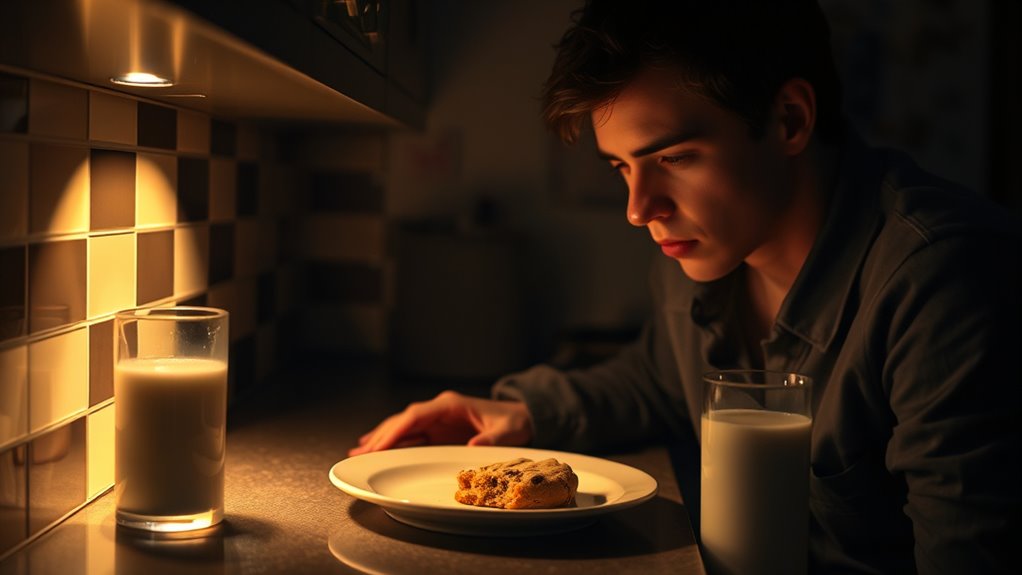

Late-night hunger is often more about habits and emotional triggers than true physical needs. Stress, boredom, and poor sleep can boost cravings, while emotional eating creates conditioned habits around late-night snacking. Eating sugary foods late can disrupt your metabolism and increase hunger hormones. If you want to better understand how your habits and feelings influence your late-night urges—and find ways to manage them—you’ll discover useful strategies below.
Key Takeaways
- Late-night hunger often stems from emotional triggers like stress or boredom rather than true physical hunger.
- Hormonal changes from poor sleep increase ghrelin and decrease leptin, amplifying late-night cravings.
- Eating sugary or refined carbs at night triggers insulin spikes, causing blood sugar dips and false hunger signals.
- Habitual late-night snacking can condition the brain, making hunger feel automatic even without physical need.
- Developing better sleep routines and mindful eating helps distinguish genuine hunger from psychological urges.

Late-night hunger can strike unexpectedly, disrupting your sleep and tempting you to reach for snacks that may not be the healthiest. But have you ever wondered whether this hunger is genuine or just a habit? Understanding the difference can help you make better choices and avoid unnecessary snacking. Often, late-night cravings are driven by emotional triggers rather than true physical hunger. Stress, boredom, loneliness, or even anxiety can create a psychological urge to eat, even when your body doesn’t need fuel. These emotional triggers activate the brain’s reward system, making food feel like a comforting solution to emotional discomfort. Recognizing this can help you differentiate between emotional hunger and actual physical hunger, which typically develops gradually and is accompanied by physical cues like a growling stomach or mild weakness.
Late-night hunger often signals emotional needs, not real physical hunger—recognize the difference to make healthier choices.
Your body’s metabolic responses also play a vital role in late-night hunger. When you eat late at night, especially foods high in sugar or refined carbs, your metabolism reacts by releasing insulin to handle the influx of glucose. This insulin spike can lead to a rapid drop in blood sugar levels afterward, which might trigger feelings of hunger even if you just ate. Over time, consistent late-night snacking can disrupt your natural circadian rhythm, making your body less efficient at regulating hunger and satiety. If you frequently eat late, your metabolism may become conditioned to expect food at odd hours, reinforcing the habit and making it harder to break the cycle.
Another factor worth examining is your sleep pattern. Poor or irregular sleep can increase levels of hunger-stimulating hormones like ghrelin while decreasing satiety hormones like leptin. When you’re sleep-deprived, your body perceives a need for more energy, which can lead to intense cravings for high-calorie foods during the late hours. This hormonal imbalance can turn normal feelings of hunger into persistent urges, even if you’ve had enough to eat earlier in the day. Additionally, habits like eating in front of screens or mindless snacking while watching TV can reinforce these emotional triggers, turning a routine into a conditioned response. Research indicates that disrupted sleep patterns affect hormonal regulation and contribute to increased late-night hunger, making it even more challenging to maintain healthy habits.
To combat late-night hunger, it’s essential to address both emotional triggers and metabolic responses. Developing healthier bedtime routines, managing stress through meditation or relaxation techniques, and maintaining a consistent sleep schedule can help. Also, choosing nutrient-dense, balanced snacks earlier in the evening can prevent blood sugar dips and reduce emotional triggers that prompt late-night eating. Recognizing whether your hunger stems from emotional needs or genuine physical signals allows you to make mindful decisions, helping you break the cycle of late-night snacking and improve your overall well-being.
Frequently Asked Questions
Can Late-Night Hunger Indicate a Medical Condition?
Yes, late-night hunger can indicate a medical condition. If you frequently experience this, it might be a sign of medical symptoms like hormonal imbalance or other health issues. You should pay attention to your body and consider consulting a healthcare professional to rule out underlying problems. Addressing hormonal imbalances or medical symptoms early can help you manage or prevent any potential health complications.
How Does Stress Influence Late-Night Eating Habits?
Stress influences your late-night eating habits by triggering stress-induced cravings, driven by cortisol, which can increase your appetite. When stress levels rise, your body seeks comfort foods, often high in sugar or fat, to soothe the mind. This hormonal response creates a cycle where stress causes hunger, and eating temporarily relieves it. Recognizing this link helps you manage stress better, reducing the urge to snack late at night.
Are Certain Foods Better for Late-Night Snacks?
Certain foods are better for late-night snacks because they support good food timing and help you avoid discomfort. Opt for protein-rich options like yogurt or nuts, which promote satiety and stabilize blood sugar. Avoid heavy, greasy foods that can disrupt sleep. Choosing healthy snack options can curb late-night hunger without causing digestion issues, making your food timing more effective and your overall sleep quality better.
Does Skipping Dinner Cause More Night-Time Hunger?
Skipping dinner can cause more nighttime hunger because your body experiences a metabolic slowdown, making you feel hungrier later. When you don’t consume enough calories, your calorie intake drops, prompting your body to signal for more food to replenish energy levels. This increased hunger isn’t just habit—it’s your body’s natural response to guarantee it gets the nutrients and energy it needs for proper functioning.
Can Late-Night Eating Affect Sleep Quality?
Late-night eating can disrupt your sleep quality by affecting your metabolic impact and calorie timing. When you eat late, your body works harder to digest, which can cause discomfort and interfere with falling asleep. Plus, consuming calories at night may lead to poorer sleep patterns and less restorative rest. To improve sleep, aim to finish eating a few hours before bed, giving your body time to wind down and process calories efficiently.
Conclusion
So, next time you find yourself craving a snack late at night, remember—you’re not just battling hunger, you’re fighting a relentless ghost that haunts your habits. Your midnight munchies might seem small, but they can wield the power to sabotage your health like a runaway train. Trust yourself enough to break the cycle; your willpower is stronger than you think. Don’t let late-night habits control you—take charge and turn the tide today.