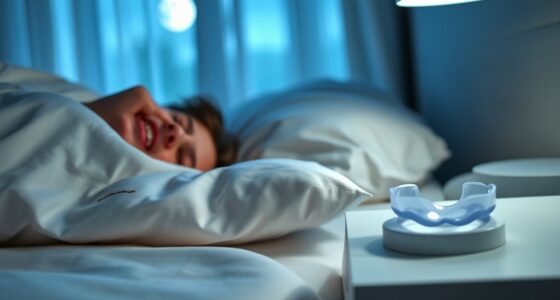

Lying down and relaxing isn’t the same as truly sleeping, because sleep involves active physiological processes essential for recovery. During sleep, your body repairs tissues, releases growth hormones, and boosts your immune system—things resting alone can’t do. Rest might help you feel temporarily better, but it doesn’t trigger the deep restorative functions sleep provides. Understanding this difference can help you improve your recovery and overall health if you keep exploring further.
Key Takeaways
- Rest involves lying down without entering the active biological processes that characterize sleep.
- Sleep triggers vital recovery functions like tissue repair, immune boosting, and hormone release.
- Simply lying down (rest) does not activate deep sleep stages necessary for physical healing.
- Without proper sleep, the body cannot efficiently replenish energy or repair tissues, risking health issues.
- Prioritizing quality sleep is essential, as rest alone offers only temporary relief without full recovery benefits.

While many people use the terms “sleep” and “rest” interchangeably, they actually refer to different states of recovery. Rest might involve lying down or taking a break, but sleep takes you into a distinct biological process. Understanding these differences helps you realize why simply lying down isn’t enough to fully recharge your body and mind. When you sleep, especially during the deeper stages, your body enters a phase focused on physical recovery. Your muscles repair, tissues regenerate, and your immune system gets a boost. This isn’t just about feeling relaxed; it’s about your body actively working behind the scenes to heal and strengthen itself. Rest, on the other hand, may help you relax temporarily, but it doesn’t trigger the same biological responses essential for physical recovery. physical recovery during sleep is far more profound than just lying down. When you sleep deeply, your body releases growth hormone, which is essential for repairing tissues and building muscle. It’s during these hours that your energy stores are replenished, and your bodily systems reset. Rest might help you temporarily feel better or less tense, but it doesn’t stimulate the same physiological processes. Without proper sleep, your body can’t perform these fundamental functions efficiently, making you more prone to fatigue, illness, and injury. Simply lying down without entering the deeper stages of sleep means missing out on the detailed physical recovery your body desperately needs. In essence, sleep is an active state that promotes healing, rejuvenation, and mental clarity, whereas rest is often passive and only provides temporary relief. Recognizing the distinction encourages you to prioritize quality sleep, not just time spent lying in bed. Your body and mind depend on it to function at their best, making sleep an indispensable part of your overall recovery process.
Frequently Asked Questions
Can Resting While Sitting Still Improve Health as Much as Sleeping?
Resting while sitting still can offer some health benefits, but it doesn’t match the restorative power of sleep. Sedentary recovery through seated relaxation helps reduce stress and refresh your mind, yet it doesn’t allow your body to fully repair and regenerate like sleep does. For ideal health, balance seated relaxation with regular sleep, ensuring your body gets the deep rest it needs to stay energized and healthy.
Does Lying Down Always Mean You’re Getting Rest?
Lying down isn’t always a guarantee you’re truly resting. Your muscles might still be tense, and your brain could be racing like a busy highway, preventing effective muscle recovery. While lying down can improve oxygen intake, it doesn’t guarantee your body gets the deep rest needed for repair and renewal. To truly rest, you need to relax both your mind and body, not just change your position.
How Does Mental Relaxation Differ From Physical Sleep?
Mental relaxation involves achieving mental calmness and reducing cognitive stress, allowing your mind to unwind without necessarily falling asleep. Physical sleep, on the other hand, requires your body to enter restorative stages, giving your muscles and organs a break. While mental relaxation helps you feel refreshed mentally, physical sleep restores your body’s energy. You can experience mental calmness during rest periods without fully sleeping, highlighting their distinct roles in overall well-being.
Can Short Naps Replace a Full Night’s Sleep Effectively?
Short naps can’t replace a full night’s sleep effectively because they don’t allow you to reach REM stages where dreaming awareness occurs, vital for mental restoration. Relying on naps may lead to sleep deprivation, which hinders memory, mood, and overall health. While naps can boost alertness temporarily, they don’t provide the deep, restorative sleep your body and brain need, making full sleep essential for long-term well-being.
Is It Possible to Feel Rested Without Actually Sleeping?
You can often feel rejuvenated without true sleep, like catching a gentle breeze after a storm. While brief rest can help with dream recovery and ease the effects of sleep deprivation, it doesn’t fully replace restorative sleep. To genuinely feel rested, your body needs deep, uninterrupted sleep cycles. Resting may temporarily lift your spirits, but only proper sleep restores your energy, clears mental fog, and keeps your body functioning at its best.
Conclusion
So, next time you lie down, remember that rest isn’t the same as sleep. While resting can refresh your body temporarily, true sleep is essential for your brain and body to recover fully. Don’t buy into the myth that lying down equals restful sleep—your health depends on understanding the difference. Prioritize genuine sleep over just resting, and you’ll wake up feeling truly refreshed and ready to tackle the day.