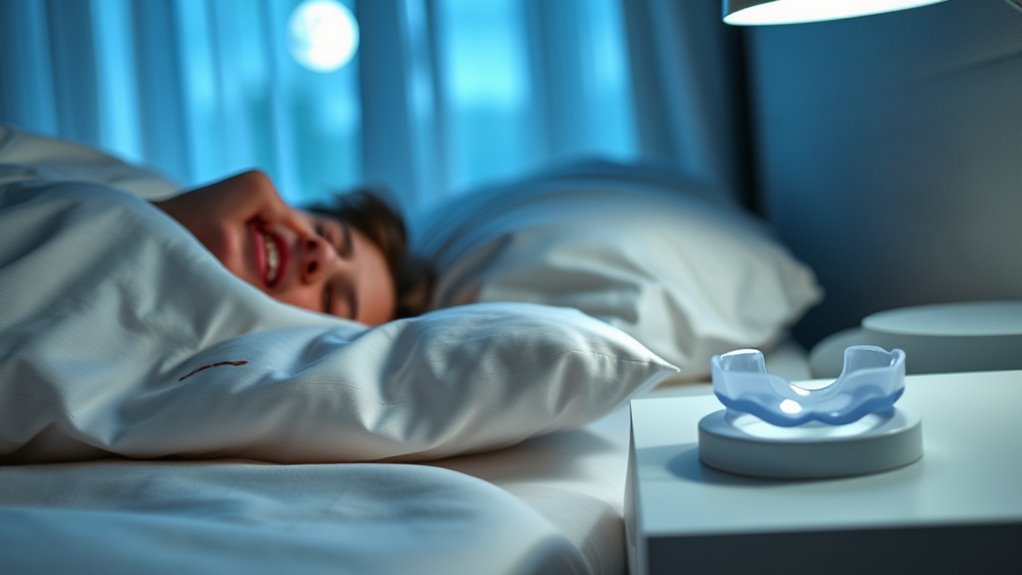

Teeth grinding at night, or bruxism, is often caused by stress or anxiety that leads your jaw muscles to tighten unconsciously while you sleep. Sleep disorders like sleep apnea can also trigger it, and your nightly habits, sleep environment, or underlying health issues may play a role. Managing stress, creating a relaxing sleep routine, and improving your sleep habits can help reduce grinding. Keep exploring to discover gentle solutions that protect your smile and promote better rest.
Key Takeaways
- Stress, anxiety, and sleep disorders trigger involuntary jaw muscle contractions during sleep, causing teeth grinding.
- Managing stress through relaxation techniques can reduce the frequency and severity of nighttime bruxism.
- Treating underlying sleep conditions like sleep apnea or restless leg syndrome can significantly decrease teeth grinding episodes.
- Creating a calming sleep environment and establishing consistent routines promote better sleep and lessen grinding.
- Using custom-fitted nightguards and addressing overall stress and sleep health provide gentle, effective long-term fixes.

Many people grind their teeth at night without realizing it, often as a response to stress, anxiety, or an uneven bite. This unconscious habit, known as bruxism, can happen during any stage of sleep, but it’s particularly prevalent among those with certain sleep disorders. If you often wake up with a sore jaw or tooth sensitivity, you might be unaware that your nightly grind is the culprit. Addressing this issue involves understanding the factors behind it, especially stress management and sleep health.
Teeth grinding often occurs unconsciously at night, linked to stress, anxiety, or sleep disorders.
Stress is a vital trigger for teeth grinding, especially when you’re under pressure during the day. Even if you don’t notice feeling stressed, your body may still be reacting to it subconsciously. When stress accumulates, it can lead to muscular tension, which in turn prompts your jaw muscles to tighten and grind your teeth during sleep. Managing stress through relaxation techniques, such as meditation, deep breathing, or gentle yoga, can reduce the frequency and intensity of bruxism. Establishing a calming bedtime routine can also signal your body to wind down, making it less likely to engage in grinding behaviors overnight.
Sleep disorders, like sleep apnea or restless leg syndrome, are often linked to bruxism. These conditions interfere with your normal sleep cycles, which can increase muscle activity and lead to teeth grinding as a secondary response. If you suspect a sleep disorder, consulting a healthcare professional for proper diagnosis and treatment is essential. Sometimes, treating the underlying sleep disorder can considerably reduce bruxism. For example, using a CPAP machine for sleep apnea or adjusting sleep positions can improve your overall sleep quality and decrease grinding episodes.
In addition to managing stress and addressing sleep disorders, creating a soothing sleep environment helps. Keep your bedroom cool, dark, and quiet, and avoid screens or stimulating activities before bed. Regular sleep schedules reinforce your body’s natural rhythms, decreasing the likelihood of involuntary muscle activity. If grinding persists, consider using a custom-fitted mouthguard prescribed by your dentist. This device acts as a barrier, protecting your teeth from damage while you sleep. Over-the-counter nightguards are available, but a custom option offers better comfort and effectiveness.
Ultimately, resolving teeth grinding involves a holistic approach. Prioritize stress management, seek treatment for sleep disorders if needed, and maintain good sleep habits. By doing so, you’ll not only protect your teeth but also improve your overall sleep quality and well-being. Recognizing the connection between your mental health, sleep patterns, and bruxism is key to finding gentle, effective fixes that work long-term. Addressing contributing factors such as sleep health can significantly improve outcomes.
Frequently Asked Questions
Can Teeth Grinding Cause Long-Term Dental Damage?
Yes, teeth grinding can cause long-term dental damage. You may notice jaw muscle fatigue from constant clenching, and over time, the pressure can lead to enamel erosion, weakening your teeth. This damage might cause sensitivity and increase your risk of cavities. Addressing grinding early helps protect your dental health, so consider using a night guard or consulting your dentist for personalized solutions.
Is Teeth Grinding More Common in Certain Age Groups?
Teeth grinding is more common in teenagers due to age-related prevalence and hormonal changes, but it can affect all ages. You might notice it less often as you grow older, though stress and habits can trigger grinding at any age. If you’re experiencing frequent grinding, regardless of age, it’s a good idea to consult your dentist for personalized advice and potential gentle fixes to protect your teeth.
Are There Specific Foods to Avoid to Reduce Grinding?
To reduce grinding, you should avoid certain dietary triggers like caffeine and alcohol, which can increase muscle activity. Also, steer clear of crunchy foods, as they can strain your jaw muscles and worsen grinding. Instead, opt for softer foods that don’t require much chewing. Being mindful of your diet helps lessen the frequency and intensity of teeth grinding, leading to a more relaxed jaw and healthier teeth.
How Can I Tell if I Grind My Teeth at Night?
Ever feel like your jaw is auditioning for a heavy metal concert? You might be grinding your teeth at night. To tell, notice if you wake up with sore jaw muscles or morning headaches. Ask your sleep partner if they’ve observed teeth grinding or a grinding noise during sleep. These signs point to nighttime grinding. Recognizing the clues helps you take steps to protect your teeth and reduce jaw muscle tension.
Does Stress Directly Cause Teeth Grinding?
Stress-related triggers can indeed cause you to grind your teeth, especially during tense moments or anxiety. When you’re stressed, it often leads to sleep disturbances, making you more prone to bruxism at night. While stress isn’t the sole cause, it markedly increases the likelihood of grinding. Managing stress through relaxation techniques, regular exercise, and proper sleep can help reduce your teeth grinding and protect your dental health.
Conclusion
Understanding why you grind your teeth at night can help you take gentle steps to stop it. Imagine Sarah, who started wearing a custom nightguard and noticed her jaw pain eased within weeks. By addressing stress and seeking simple fixes, you can protect your teeth and sleep better. Don’t wait—small changes like these can make a big difference in your nightly rest and overall oral health.