
Your sleep is regulated by key hormones: melatonin signals your body when it’s time to rest, rising in darkness and falling with sunlight, helping you stay on a regular schedule. Cortisol peaks in the morning to wake you up and drops as the day goes on, but stress or irregular routines can disrupt this. Adenosine builds up during waking hours, making you sleepy, and clears out during rest. Understanding these hormones can help you improve your sleep quality.

Get wellness gear delivered free with Prime
- Fast, free delivery on millions of items
- Prime Video, Amazon Music and more included
- Member-only deals all year
Key Takeaways
- Melatonin, produced by the pineal gland at night, signals the body to prepare for sleep and is suppressed by light.
- Cortisol, the stress hormone, peaks in the early morning to promote wakefulness and decreases throughout the day.
- Adenosine accumulates during waking hours, increasing sleepiness, and declines during sleep, helping you feel rested.
- Disruptions in hormone production, from screens or shift work, can impair sleep quality and circadian rhythm regulation.
- Maintaining regular sleep schedules and sleep hygiene supports hormonal balance for restorative sleep.
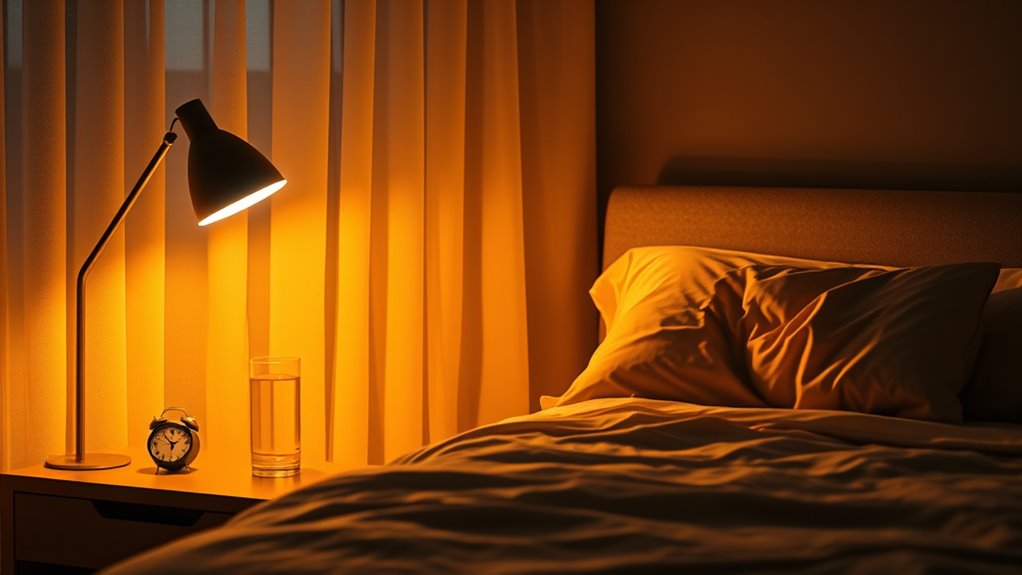
Ever wonder what controls your sleep and wake cycles? It all comes down to your body’s internal clock, known as circadian rhythms. These rhythms are like an intricate timekeeping system that aligns your sleep patterns with the 24-hour day-night cycle. Your brain uses signals from your environment, especially light, to keep these rhythms synchronized. When it gets dark, your circadian rhythms signal your body to prepare for sleep, and when daylight appears, they promote wakefulness. This system isn’t just about feeling sleepy; it also involves hormonal regulation, which fine-tunes your sleep-wake balance. Hormones act as messengers, sending signals that influence when you feel alert or sleepy. They work in harmony with your circadian rhythms to ensure your body functions efficiently.
Your body’s internal clock aligns sleep-wake cycles with light and dark cues for optimal rest.
One of the key players in this hormonal regulation is melatonin. As darkness falls, your brain’s pineal gland ramps up melatonin production, signaling to your body that it’s time to wind down. This hormone helps you feel sleepy and prepares your body for rest. Conversely, in the morning, exposure to light suppresses melatonin, signaling that it’s time to wake up. This delicate balance keeps your sleep patterns consistent and restorative. Any disruption to this hormonal rhythm—like shift work, jet lag, or exposure to screens before bed—can throw off your sleep, leading to difficulty falling asleep or feeling rested.
Cortisol, often called the stress hormone, also plays a crucial role in your sleep cycle. It follows a daily pattern, peaking in the early morning to help you wake up and gradually decreasing throughout the day. This hormonal regulation ensures you’re alert when needed and able to relax at night. When cortisol levels are out of sync—due to stress, poor sleep, or irregular schedules—you might find it harder to fall asleep or stay asleep. Elevated cortisol at night can interfere with melatonin’s effects, making restful sleep harder to achieve. Maintaining a regular sleep schedule and managing stress can help keep cortisol levels in check, supporting healthy sleep patterns.
Adenosine adds another layer to this complex system. It gradually builds up in your brain during waking hours, making you feel increasingly sleepy. As you rest, adenosine levels decline, helping you wake up feeling refreshed. Caffeine works by blocking adenosine receptors, temporarily reducing sleepiness and boosting alertness. Understanding how these hormones and chemicals interact with your circadian rhythms highlights the importance of good sleep hygiene. When your hormonal regulation aligns with your circadian rhythms, you enjoy more restful, rejuvenating sleep. Disruptions to this harmony can lead to sleep problems, but with awareness and healthy habits, you can help keep your internal clock running smoothly, supporting both your sleep quality and overall well-being. Additionally, incorporating energy-efficient ceiling fans in your sleeping environment can promote better sleep by maintaining a comfortable temperature and reducing noise disturbances.
Frequently Asked Questions
How Does Age Affect Sleep Hormone Production?
As you age, your body experiences hormonal aging, leading to an age-related decline in sleep hormone production. This means your melatonin levels drop, making it harder to fall asleep and stay asleep. Cortisol rhythms also shift, causing increased wakefulness at night. You might notice more fragmented sleep and less restorative rest. Understanding this helps you adapt your habits and seek strategies to support healthy sleep as you get older.
Can Sleep Hormones Be Artificially Manipulated Safely?
Yes, you can safely manipulate sleep hormones through pharmacological interventions and natural supplementation, but you should always consult a healthcare professional first. Medications like melatonin supplements can help regulate sleep, while lifestyle changes and natural remedies like herbs or relaxation techniques may boost your body’s natural hormone production. Avoid self-medicating, and prioritize safe, evidence-based approaches to improve your sleep quality effectively and responsibly.
What Lifestyle Factors Influence Melatonin Levels?
Your melatonin levels are like a delicate dance, easily influenced by your lifestyle. Too much light exposure at night, especially blue light from screens, can suppress melatonin production, making it harder to fall asleep. Caffeine consumption, especially in the evening, also disrupts this rhythm. To keep your melatonin in harmony, limit screen time before bed and avoid caffeine late in the day, helping your body naturally prepare for restful sleep.
Are Sleep Hormone Imbalances Linked to Mental Health Issues?
Yes, sleep hormone imbalances can be linked to mental health issues. When hormones like melatonin and cortisol are out of sync, you might experience anxiety, depression, or mood swings. Hormone therapy can help restore balance, improving your mental health. Paying attention to your sleep habits and managing stress can also support healthy hormone levels, making it easier to maintain emotional stability and overall well-being.
How Do Sleep Disorders Impact Hormone Regulation?
Sleep disorders throw your hormone regulation into chaos, making you a hostage to sleep deprivation. Your melatonin production dips, cortisol spikes, and adenosine struggles to balance the chaos. Hormone therapy might seem tempting, but it’s like putting a band-aid on a sinking ship. Instead, prioritize good sleep habits to restore your hormonal harmony. Because, let’s face it, your hormones deserve a night off, not a sleepless showdown.
Conclusion
Now that you know how melatonin, cortisol, and adenosine work together, you can better manage your sleep. Think of your hormones as a well-coordinated orchestra, keeping your sleep cycle in harmony. Remember, even Cleopatra knew the importance of a good night’s rest—so don’t forget to prioritize your sleep hygiene. With this knowledge, you’re now equipped to turn your nightly rest into a true masterpiece, just like a Renaissance artist perfecting their craft.
Cold & flu season Picks
humidifiers
As an affiliate, we earn on qualifying purchases.