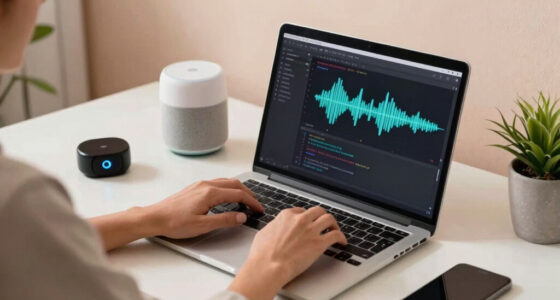
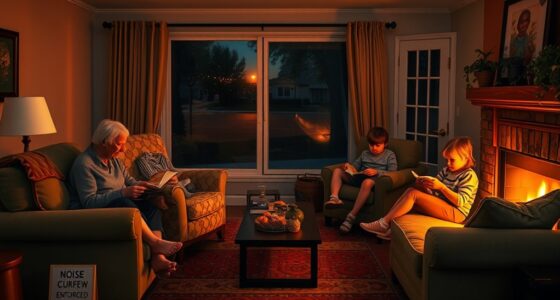
To keep your baby’s sleep undisturbed, aim to keep the noise level below 50 decibels, similar to a quiet conversation or soft shower. Loud sounds can disturb their sleep cycles, causing lighter, more restless sleep and frequent waking. Consistent moderate volume helps create a stable environment for restful sleep. If you’re concerned about noise, you’ll find helpful tips on maintaining the right sound levels and more guidelines to promote better sleep.

Get wellness gear delivered free — and shop member deals
- Fast, free delivery on millions of items
- Access to Prime Big Deal Days deals on October 6–7
- Prime Video, Amazon Music and more included
Key Takeaways
- Keep white noise levels below 50 decibels to prevent sleep disruption and discomfort.
- Signs of noise being too loud include baby fussiness, sudden awakenings, or irritability.
- Household sounds over 50 decibels, like loud TV or appliances, can disturb baby’s sleep cycles.
- Consistent moderate volume helps create a calming environment and promotes deeper sleep.
- Regularly monitor sound levels to ensure they stay within safe, sleep-friendly ranges.

Have you ever wondered how loud is too loud when it comes to your baby’s sleep environment? It’s a common concern for many parents trying to create the perfect setting for their little one to rest peacefully. The key is understanding what level of noise can disturb your baby’s sleep without being so loud that it becomes harmful. White noise is often recommended as a way to mask household noise that might otherwise wake your baby, but knowing how loud it should be is essential.
When using white noise, you want it to be loud enough to drown out background sounds, like vacuuming, conversations, or traffic outside, but not so loud that it causes discomfort or potential hearing issues. The general guideline is to keep the volume below 50 decibels, roughly equivalent to a soft shower or a quiet conversation. If you notice your baby fussing or waking up suddenly, it might be a sign that the noise level is too high or inconsistent. Conversely, if your baby seems undisturbed and sleeps soundly with the white noise on, you’re probably in a safe zone.
Household noise can be unpredictable, but you don’t need complete silence for your baby to sleep well. Too much noise, however, can disrupt sleep cycles and lead to lighter, more restless sleep. It’s especially important to monitor the volume of household appliances, TVs, or loud conversations happening nearby. If you notice that your baby wakes up or becomes fussy whenever household noise increases, it’s a clear sign that you should try to minimize or mask those sounds more effectively. Using a white noise machine at a consistent, moderate volume helps establish a stable environment, making it easier for your baby to settle down and stay asleep. Additionally, understanding sound levels and their impact on sleep can help parents better manage the noise environment for optimal rest.
white noise machine for baby sleep
As an affiliate, we earn on qualifying purchases.
As an affiliate, we earn on qualifying purchases.
Frequently Asked Questions
Can White Noise Machines Harm My Baby’s Hearing?
White noise machines can harm your baby’s hearing if used improperly. To guarantee white noise safety, keep the volume low—ideally below 50 decibels—and place the device at a safe distance from your baby’s crib. Using hearing protection, like a white noise monitor, can help you gauge safe levels. Always monitor your baby’s response and consult your pediatrician to prevent any risk of hearing damage.
What Is the Safest Volume Level for Baby Sleep?
You should keep sound levels for your baby’s sleep at or below 50 decibels to guarantee sleep safety. Use a sound meter to monitor the noise, and avoid loud environments or high-volume white noise. Maintaining a consistent, gentle sound environment helps your baby sleep peacefully and safely. Remember, quieter is usually better, and always prioritize your baby’s comfort and hearing health when managing sound levels.
How Does Loud Noise Affect a Baby’s Sleep Patterns?
Loud noise can considerably impact your baby’s sleep patterns by increasing sound sensitivity and causing sleep disruption. When exposed to loud sounds, your baby may wake more frequently or struggle to fall asleep, affecting overall rest. To promote healthy sleep, keep the environment calm and quiet, especially during nap times and bedtime, ensuring the noise level stays within a gentle, soothing range.
Are There Differences in Loudness Sensitivity Between Newborns and Older Infants?
You might think newborns are tougher than older infants when it comes to sound sensitivity, but surprisingly, developmental differences show they’re actually more vulnerable to loud noises. As babies grow, their auditory systems develop, making older infants more resilient. So, while you might assume they’re equally sensitive, it’s the little ones who need quieter environments to sleep peacefully, highlighting how sound sensitivity evolves during early development.
How Can I Tell if My Baby Is Disturbed by Noise During Sleep?
You can tell if your baby is disturbed by noise during sleep by watching for sleep disturbance cues like fussiness, crying, or stirring more than usual. Pay attention to signs of noise sensitivity, such as waking up abruptly or having trouble settling back down. If your baby seems easily disturbed or restless, it’s a good idea to reduce background noise or try white noise, creating a more soothing sleep environment.
As an affiliate, we earn on qualifying purchases.
Conclusion
Remember, your baby’s sleep is like a delicate flower in a breeze—too much noise can shake its petals and disturb its rest. Keep the environment gentle and calm, like a lullaby softly sung by the stars. When you mind the noise levels, you’re nurturing a peaceful haven where your little one can blossom and dream peacefully. Trust your instincts and create a quiet sanctuary—because a quiet night is the garden where sweet dreams grow.
As an affiliate, we earn on qualifying purchases.
white noise volume control for nursery
As an affiliate, we earn on qualifying purchases.
As an affiliate, we earn on qualifying purchases.
Fall Picks
fall essentials
As an affiliate, we earn on qualifying purchases.