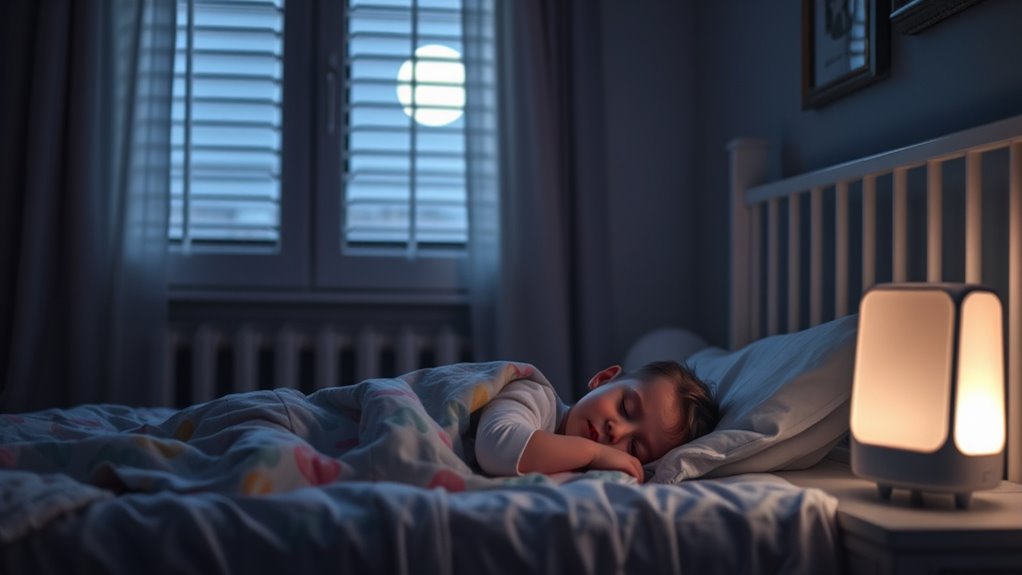

Silence at bedtime isn’t always the peaceful environment you might hope for. Sometimes, complete quiet can make you more aware of minor sounds or your own thoughts, which can hinder falling asleep. For some, it creates an eerie or unsettling atmosphere that increases anxiety or hyper-awareness. Adjusting your sleep space with gentle background noises or calming sounds may offer a better solution. Keep exploring to find what truly helps you relax and drift off easily.
Key Takeaways
- Silence can increase awareness of minor sounds, potentially disrupting sleep or causing anxiety for some individuals.
- For certain people, complete silence may feel eerie or unsettling, making it harder to relax and fall asleep.
- Lack of ambient noise can amplify hyper-awareness, leading to increased stress or difficulty initiating sleep.
- Personal preferences vary; some may find silence calming, while others benefit from gentle background sounds.
- Small adjustments like adding soft ambient noise can prevent silence from backfiring and promote better sleep.
Creating a quiet and calming environment at bedtime can make a significant difference in how easily you or your child fall asleep. When it comes to establishing effective bedtime routines, many people assume that complete silence is the best way to promote restful sleep. While silence can help reduce distractions and create a peaceful atmosphere, it doesn’t always work perfectly for everyone. Sometimes, total quiet can backfire and make falling asleep more difficult, especially if you or your child find silence unsettling or eerily quiet. The key is understanding that a sleep environment should be tailored to individual preferences and needs.
Your nighttime routines play a vital role in shaping your sleep environment. Incorporating calming activities—like reading, gentle stretching, or listening to soft music—can signal to your brain that it’s time to wind down. If you rely solely on silence, you might inadvertently create a setting that feels too stark or unnatural. Some people find that a little background noise, such as a white noise machine or a fan, helps mask external sounds and provides a consistent auditory backdrop that promotes relaxation. This doesn’t mean loud or disruptive noises; rather, a gentle hum can make the environment feel more secure and less isolating.
Adding gentle background noise can create a comforting, relaxing sleep environment.
It’s important to recognize that silence isn’t universally soothing. For some, complete quiet can amplify sounds that are usually ignored, like the ticking of a clock or distant traffic, which can become distracting or even anxiety-provoking. If you notice difficulty falling asleep in absolute silence, consider adjusting your sleep environment. Small changes, like adding a soft piece of music or nature sounds at a low volume, can create a more inviting atmosphere without disturbing your sleep cycles. These ambient sounds can help you or your child feel less alone in the quiet and reduce hyper-awareness of every little noise. Additionally, understanding sound masking techniques can further enhance comfort and aid relaxation during sleep.
Moreover, your sleep environment should foster a sense of safety and comfort. If silence feels unnatural or unsettling, it can lead to increased alertness rather than relaxation. Creating a space that balances tranquility with gentle background sounds can help ease the transition into sleep. It’s also worth experimenting to discover what works best—some might prefer total silence, while others thrive with a bit of ambient noise. The goal is to establish a consistent environment that cues your body to recognize it’s time to rest, without causing additional stress or discomfort.
Frequently Asked Questions
Can Silence Help Children Fall Asleep Faster Consistently?
Silence can help children fall asleep faster if it’s consistent and calming. Using white noise creates a steady sleep cue, signaling bedtime and promoting relaxation. If your child responds well to quiet environments, maintaining silence can reduce distractions and help them settle more quickly. However, if they find complete silence unsettling, incorporating gentle white noise might be the key to establishing effective sleep cues and improving their bedtime routine.
Does Silence Reduce Nighttime Anxiety or Fears?
Imagine a calm, moonlit night where silence gently wraps around your child like a soothing blanket. The benefits of quietness can reduce nighttime anxiety, making fears fade into shadows. However, the risks of silence include potential feelings of loneliness or heightened fears if your child associates quiet with being alone. You help by balancing peaceful silence with comforting reassurance, fostering a secure environment that eases fears without feeling isolating.
How Long Should Silence Be Maintained Before It Backfires?
Silence can backfire if maintained too long, especially if your child has noise sensitivity or if you’re unsure about the ideal duration. Generally, keep silence for 10 to 15 minutes; beyond that, it might cause frustration or anxiety. Pay attention to your child’s cues—if they start to fidget or become distressed, it’s time to reintroduce soft sounds or comfort. Adjust duration based on their comfort, avoiding excessive silence that could backfire.
Are There Age Differences in How Silence Affects Sleep?
Silence at bedtime can influence different ages uniquely, like a chameleon adapting to its surroundings. Younger children often find comfort in quiet, aligning with age-related sleep patterns that favor calmness. Adults, however, may interpret silence through cultural norms, sometimes feeling anxious instead. As you consider these differences, remember that understanding age-related sleep patterns and cultural silence norms helps tailor calming routines, ensuring silence becomes a soothing lullaby rather than a disruptive echo.
Can Silence Be Harmful for Children With Sleep Disorders?
Silence can sometimes be harmful for children with sleep disorders, especially if they rely on background noise like music therapy or parental presence to feel secure. Without these comforting sounds, your child may feel anxious or lonely, making it harder to fall asleep. To avoid this, consider gradually reducing noise levels or introducing calming routines, ensuring your child feels safe and supported as they shift to silence.
Conclusion
So, next time you think silence at bedtime is the ultimate solution, remember, even the quietest nights can turn into a comedy of errors. Maybe your kid’s imaginary monsters are simply waiting for some peace and quiet to throw a midnight party. Silence might seem golden, but it could just be the perfect recipe for restless nights and mischievous giggles. After all, who knew that silence could backfire so spectacularly? Sleep tight—or don’t.